
This lesson details the specific legal requirements and safety protocols for managing goods vehicle loading and unloading in Portugal. It is a critical component of your Category C training, helping you understand how to remain compliant while operating in industrial and urban delivery zones. You will build upon your knowledge of vehicle dimensions and road space to master professional logistics conduct.

Lesson content overview
Navigating the complex world of commercial vehicle operations requires a deep understanding of specific legal obligations, especially when it comes to managing cargo. This lesson, part of your Advanced Driving Theory for Goods Vehicles (Category C) in Portugal, focuses on the critical rules and responsibilities drivers must adhere to within designated load areas and unloading zones. Proper compliance ensures safety, maintains traffic flow, and prevents legal repercussions in commercial and urban environments.
Effective management of loading and unloading activities is not merely a matter of convenience; it is a fundamental aspect of traffic law, safety in industrial and commercial districts, and professional conduct. Failure to comply with these specific regulations can lead to significant fines, penalties, and increased risks of accidents, particularly in areas where goods vehicles interact frequently with pedestrians and other vehicles. This chapter will equip you with the knowledge to perform cargo handling operations efficiently and lawfully.
Specific areas on public roads or adjacent private properties are officially designated for the sole purpose of loading and unloading goods. These Zona de Carga (Load Area) and Zona de Descarga (Unloading Zone) are clearly indicated by distinctive road signs and markings. It is crucial for professional drivers of goods vehicles to understand that these are not general parking spaces but areas with specific conditions governing their use.
The primary purpose of these designated zones is to facilitate the essential economic activity of goods transport while simultaneously mitigating its potential negative impacts on traffic flow and public safety. Drivers are permitted to use these areas exclusively for handling cargo, and only under the precise conditions stipulated by the signage and the Código da Estrada (Road Code).
A Zona de Carga (Load Area) is a physically demarcated space, either on the roadway itself or directly adjacent to it, where goods may be loaded onto a vehicle. These zones are vital for commercial operations, providing a sanctioned spot for vehicles to pause and perform cargo transfers without unduly obstructing traffic. Identifying these areas correctly is the first step towards compliant operation.
Load areas can typically be categorized into two main types:
When operating in a Zona de Carga, professional drivers must strictly adhere to any posted time limits, activate hazard lights if the vehicle partially obstructs traffic, and ensure the vehicle does not extend beyond the designated area. It is a common misunderstanding to assume that loading can continue indefinitely if traffic appears light or to confuse a loading zone with a general parking space; these are serious violations. For example, a delivery van stopping in a marked Zona de Carga to deliver parcels must use its Luzes de Emergência (hazard lights) and vacate the zone as soon as the maximum allowed time expires, regardless of whether loading is fully complete.
Similar to load areas, a Zona de Descarga (Unloading Zone) is a specially designated area where cargo can be removed from a vehicle. While often co-located with loading zones, some areas might have distinct signage emphasizing "Descarga" (Unloading) due to specific operational needs or directional flows. The categorization of on-street and off-street applies equally to unloading zones.
The practical meaning for drivers is that they may stop in these areas solely to offload cargo. All displayed restrictions, particularly time limits, must be observed, and appropriate signals like hazard lights must be used if the vehicle causes any obstruction. Drivers must avoid confusing unloading zones with passenger drop-off points or neglecting to vacate the area promptly after the allowed time. A refrigerated truck, for instance, stopping at a supermarket loading bay to unload perishables must activate its hazard lights and depart immediately once the task is completed or the time limit reached.
Several core principles govern operations within loading and unloading zones, designed to protect public safety, maintain efficient traffic flow, and ensure that cargo handling does not impede other road users. Adherence to these principles is paramount for professional Category C drivers.
One of the most critical elements governing load and unload zones is the Tempo Máximo de Carga (Maximum Loading Time) sign. These signs define the maximum duration a vehicle may remain stationary for cargo handling, such as "Tempo Máximo de Carga 5 min" (Maximum Loading Time 5 min).
These signs can specify:
Drivers must meticulously track their stationary duration and ensure the zone is vacated before the limit expires. Exceeding this limit constitutes a traffic violation, irrespective of whether cargo handling is complete. A common misconception is treating the time limit as merely advisory or believing it resets if the driver momentarily leaves and returns. Such actions can lead to penalties. If a van stops at a loading bay with a 5-minute limit, it must leave after 5 minutes, even if the loading process is unfinished.
The appropriate use of Luzes de Emergência (hazard lights) is a fundamental safety requirement when a vehicle is stationary in a loading or unloading zone and potentially obstructing traffic. These lights signal to other road users that your vehicle is temporarily halted and may pose an unusual presence on the roadway.
Practical Meaning: If your goods vehicle, due to its size or the specific layout of the Zona de Carga, encroaches upon a traffic lane or reduces its effective width, hazard lights must be illuminated. This is mandatory to warn other drivers, especially in conditions of poor visibility, tight spaces, or high traffic volume. Neglecting to use them when required is a violation and significantly increases the risk of a rear-end collision or other accidents. It is important not to confuse this with using signal lights for turning or maneuvering; hazard lights are specifically for stationary hazard indication.
A core principle in traffic law is the Obstruction Prohibition, which mandates that a stationary vehicle must never impede the normal flow of traffic or block the usual use of the road beyond the specifically designated loading/unloading area. This principle extends beyond just vehicular traffic to include pedestrians and cyclists.
Practical Meaning: Goods vehicles should only occupy the space explicitly defined by the signs and road markings. Drivers must ensure their vehicle does not:
passeios) or bicycle lanes (pistas cicláveis).If an obstruction occurs, even unintentionally, the driver is liable for penalties and must immediately reposition the vehicle. It is incorrect to assume that partial lane blockage is permissible simply because the vehicle is actively loading or unloading. Maintaining situational awareness and considering all road users, including vulnerable ones like pedestrians and cyclists, is crucial. For example, a truck unloading in a designated zone must ensure it does not extend beyond the curb, thereby keeping the adjacent through lane clear for traffic.
Beyond parking the vehicle correctly, the driver holds significant responsibility for the safety of the cargo handling process itself. This encompasses securing the load and maintaining a safe environment around the vehicle.
While loading or unloading, the driver must ensure that the cargo itself does not pose a danger to other road users, pedestrians, or even the driver. This includes:
This principle ties directly into Lesson 3: Loads, Cargo Security, Stability and Safety Checks, reinforcing the idea that cargo safety is a continuous concern, not just limited to transit.
Adhering to the specific rules laid out in the Código da Estrada (Road Code) for loading and unloading zones is non-negotiable for Category C drivers. These rules are designed to ensure safety and efficiency across the road network.
A goods vehicle may only stop in a designated load or unload zone if the activity genuinely requires it, and only for the duration explicitly indicated on the signage or as otherwise prescribed by the Código da Estrada.
Zona de Carga to take a break or run a personal errand, exceeding the time allowed for actual loading/unloading.Hazard lights (Luzes de Emergência) must be activated whenever a vehicle stops in a loading/unloading zone and its presence reduces the effective width of the road or creates a potential hazard for other road users.
Zona de Carga that slightly overhangs into the adjacent lane immediately activates its hazard lights to warn oncoming traffic.Zona de Carga that partially blocks a lane but the driver fails to activate hazard lights, assuming the marked zone is sufficient warning.The maximum allotted time for loading or unloading, as specified by accompanying signage, must be strictly observed. Exceeding this time limit is considered an illegal parking violation, regardless of whether cargo operations are complete.
Zona de Carga and Zona de Descarga with time limit signage (Tempo Máximo de Carga).Zona de Carga before the 10-minute limit expires.Zona de Carga for 15 minutes when the limit is 5 minutes, resulting in a fine.Loading and unloading operations must be conducted in a manner that does not impede pedestrian pathways (passeios), bicycle lanes (pistas cicláveis), or block intersecting traffic at junctions. The vehicle must be positioned entirely within the space demarcated for cargo handling.
Zona de Carga, ensuring no part of the vehicle, cargo, or equipment extends onto the adjacent sidewalk or bike lane.All loading and unloading operations must be completed with all cargo properly secured, and any debris, packaging, or spills resulting from the activity must be removed immediately to prevent hazards.
Understanding common mistakes and knowing the correct behavior is crucial for avoiding penalties and ensuring safety.
Zona de Carga beyond the maximum posted duration.Luzes de Emergência.Zona de Carga markings or signage.Zona de Carga during specific periods when loading is explicitly prohibited (e.g., during rush hour, or outside of posted operational hours).The application of loading and unloading rules can vary based on several contextual factors. A professional Category C driver must assess these conditions and adapt their actions accordingly.
Luzes de Emergência becomes even more critical, even for short stops, to enhance the visibility of your stationary vehicle to other drivers.Zona de Carga, motorways (autoestradas) generally prohibit loading or unloading activities. Exceptions might exist in designated service areas or emergency pull-off zones, but these are rare and typically for emergencies only.veículo pesado de mercadorias) may have restricted maneuverability and a longer stopping distance. When maneuvering into or out of a loading zone, extra caution is required to avoid blocking lanes or other traffic. Be aware of your vehicle's dimensions, especially with trailers, as covered in Lesson 2: Vehicle Size, Weight, Dimensions and Road Space.ciclistas), the driver's responsibility to ensure safety is heightened. The vehicle must be positioned to allow full visibility, minimize obstruction, and prevent any risk to these vulnerable road users, linking to Lesson 7: Blind Spots, Vulnerable Road Users and Urban Delivery Risks.Zona de Carga have specific operational hours. Loading might be prohibited during peak traffic times (horas de ponta) to reduce congestion. Drivers must check for these time-based restrictions and plan their logistics accordingly, seeking alternative arrangements if necessary.Understanding the direct consequences of adhering to or violating loading zone rules helps reinforce their importance.
Luzes de Emergência) when required clearly alerts other drivers to your stationary vehicle, substantially reducing the risk of rear-end collisions, especially in challenging visibility conditions.To ensure efficient, safe, and legal goods vehicle operations within load and unload zones in Portugal, professional Category C drivers must internalize and apply these key principles:
Zona de Carga and Zona de Descarga.Tempo Máximo de Carga strictly. Vacate the zone promptly once the time limit is reached, regardless of whether operations are complete.Luzes de Emergência if your stationary vehicle reduces the effective width of the lane or creates any potential obstruction or hazard.passeios), bicycle lanes (pistas cicláveis), or intersecting vehicular traffic. Keep the designated area clear.Explore all units and lessons included in this driving theory course.
Lesson content overview
Explore all units and lessons included in this driving theory course.
Explore search topics learners often look for when studying Legal Obligations at Load Areas and Unloading Zones. These topics reflect common questions about road rules, driving situations, safety guidance, and lesson level theory preparation for learners in Portugal.
Browse additional driving theory lessons that cover connected traffic rules, road signs, and common driving situations related to this topic. Improve your understanding of how different rules interact across everyday traffic scenarios.
Explore the critical safety principles for goods vehicle drivers during cargo handling in urban settings. This lesson covers interaction with pedestrians and cyclists and maintaining safe loading and unloading operations.

This lesson details the specific safety protocols for urban deliveries. It covers selecting a safe place to stop, using hazard warning lights correctly, and being highly aware of public movement around the vehicle. Procedures for safely reversing onto a loading dock, often with the help of a banksman, are also explained.

This lesson addresses the challenges of operating a large vehicle in congested urban areas. It teaches techniques for navigating narrow streets, positioning for loading bays, and executing tight turns with minimal impact on other traffic. A high level of situational awareness and anticipation is required for these environments.

This lesson focuses on the heightened duty of care professional drivers have towards vulnerable road users. It covers common conflict points, such as junctions and roundabouts, and teaches techniques for anticipating the actions of pedestrians, cyclists, and motorcyclists. Giving extra space and being prepared to stop are key themes.

This lesson prepares drivers for the challenges of operating in older urban areas with restricted road space. It teaches how to assess if a street is passable, techniques for negotiating tight spaces, and rules of priority when meeting other large vehicles. The importance of slow, careful maneuvering to avoid damage is emphasized.

This lesson provides practical guidance on the methods used to secure cargo effectively. It covers the correct application of tie-downs, restraints, and blocking materials to prevent any movement of the load while driving. Proper cargo security is a legal requirement and is fundamental to preventing accidents.
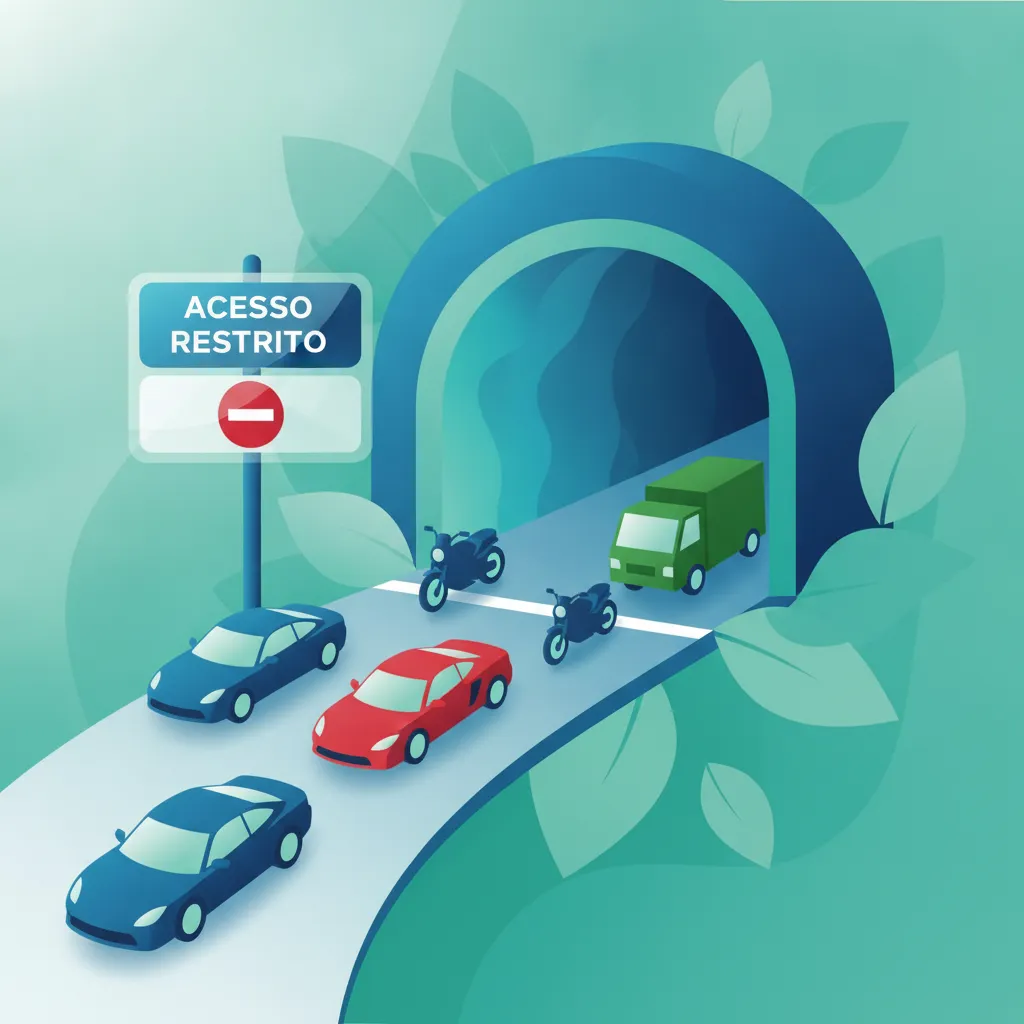
This lesson teaches drivers to recognize and adhere to access restrictions commonly found on the road network. It covers signs indicating weight, height, and width limits for structures like bridges and tunnels. Understanding these restrictions is vital for effective route planning and avoiding costly damage or fines.

This lesson provides essential safety guidance for interacting with large vehicles like buses and trucks. It emphasizes the importance of staying out of their extensive blind spots and allowing extra space due to their long stopping distances and wide turning circles. The content also offers advice on how to safely overtake such vehicles and navigate around public transport stops.

This lesson addresses the heightened risk of interaction with pedestrians and cyclists around bus stops. It explains right-of-way regulations and the importance of vigilance, particularly when turning or pulling away from the curb. The content provides strategies for anticipating the actions of vulnerable road users to prevent conflicts.

This lesson teaches the process of planning a route from start to finish for a heavy vehicle. It covers using specialized HGV navigation systems, considering factors like road restrictions, toll costs, low emission zones, and delivery time windows. Effective route planning improves efficiency, saves fuel, and enhances safety.
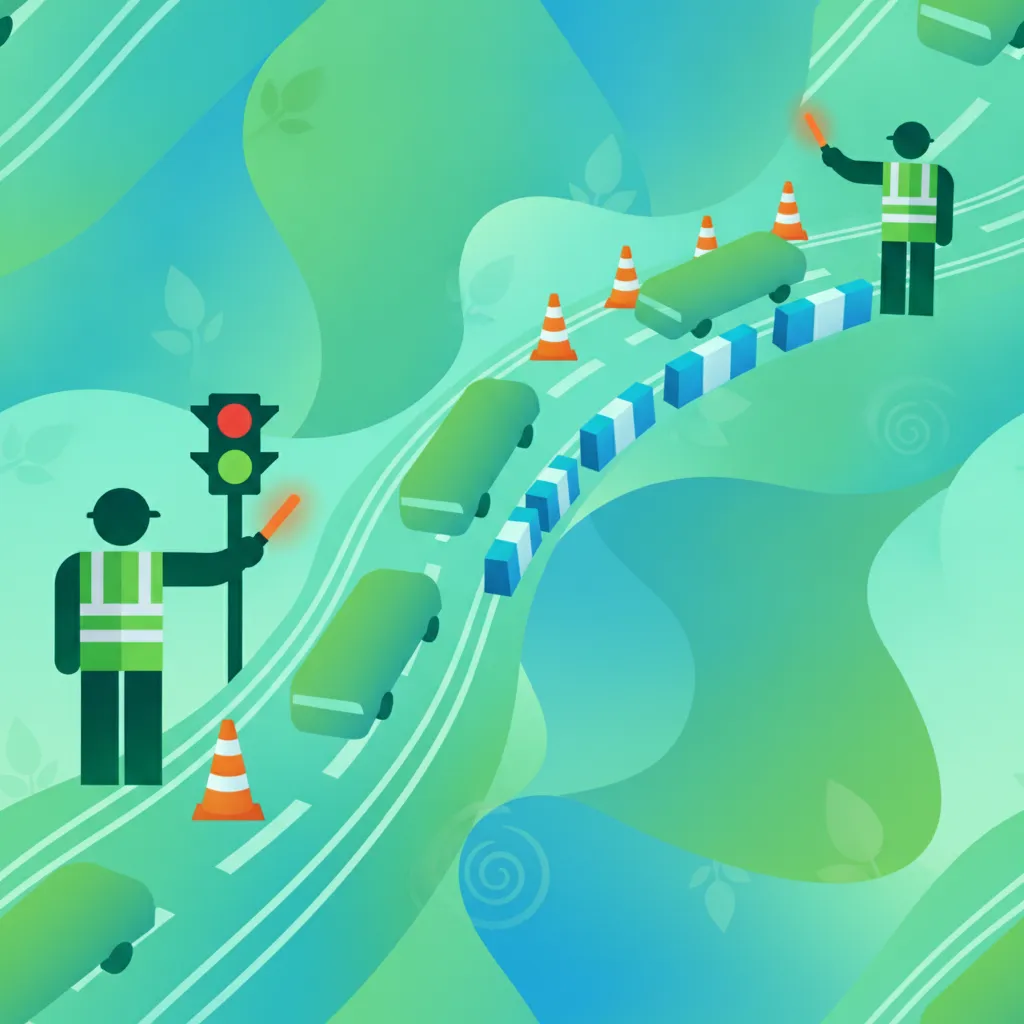
This lesson provides guidance on driving safely through roadwork zones. It covers the importance of obeying temporary speed limits, navigating narrow lanes and contraflow systems, and being highly aware of workers and machinery. A professional driver's vigilance is essential for preventing accidents in these potentially hazardous areas.
Understand the most frequent mistakes drivers make in designated loading and unloading zones in Portugal. Learn about the legal consequences, including fines and penalties, for non-compliance with time limits and obstruction rules.
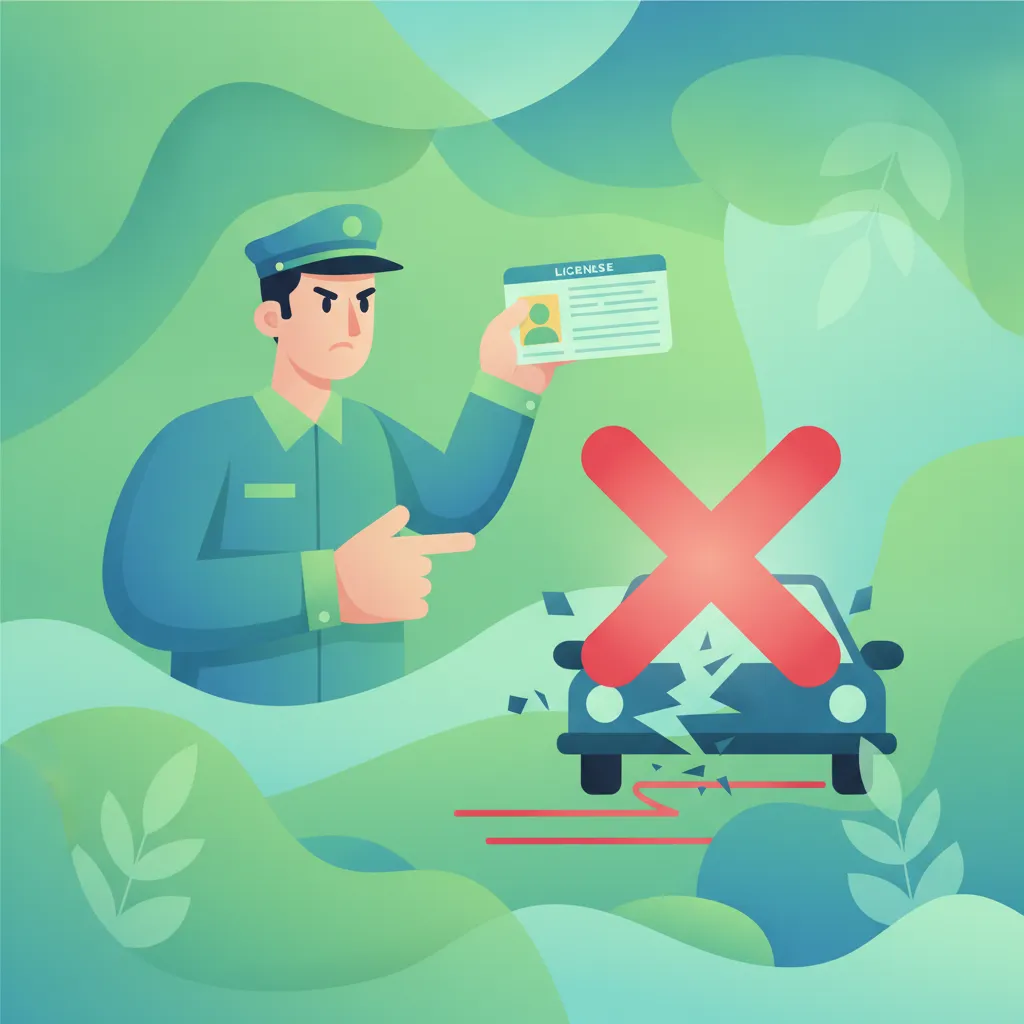
This lesson details the serious consequences of non-compliance with road transport law. It covers the graduated system of fines and penalties for various offenses, including infringements of drivers' hours rules. The concept of professional liability and how a driver can be held responsible for incidents is also explored.

This lesson outlines the range of penalties for non-compliance with transport regulations and the Código da Estrada. It covers administrative sanctions like fines and licence suspension, as well as the potential for criminal liability in severe cases. Understanding these consequences reinforces the importance of safe and lawful driving.
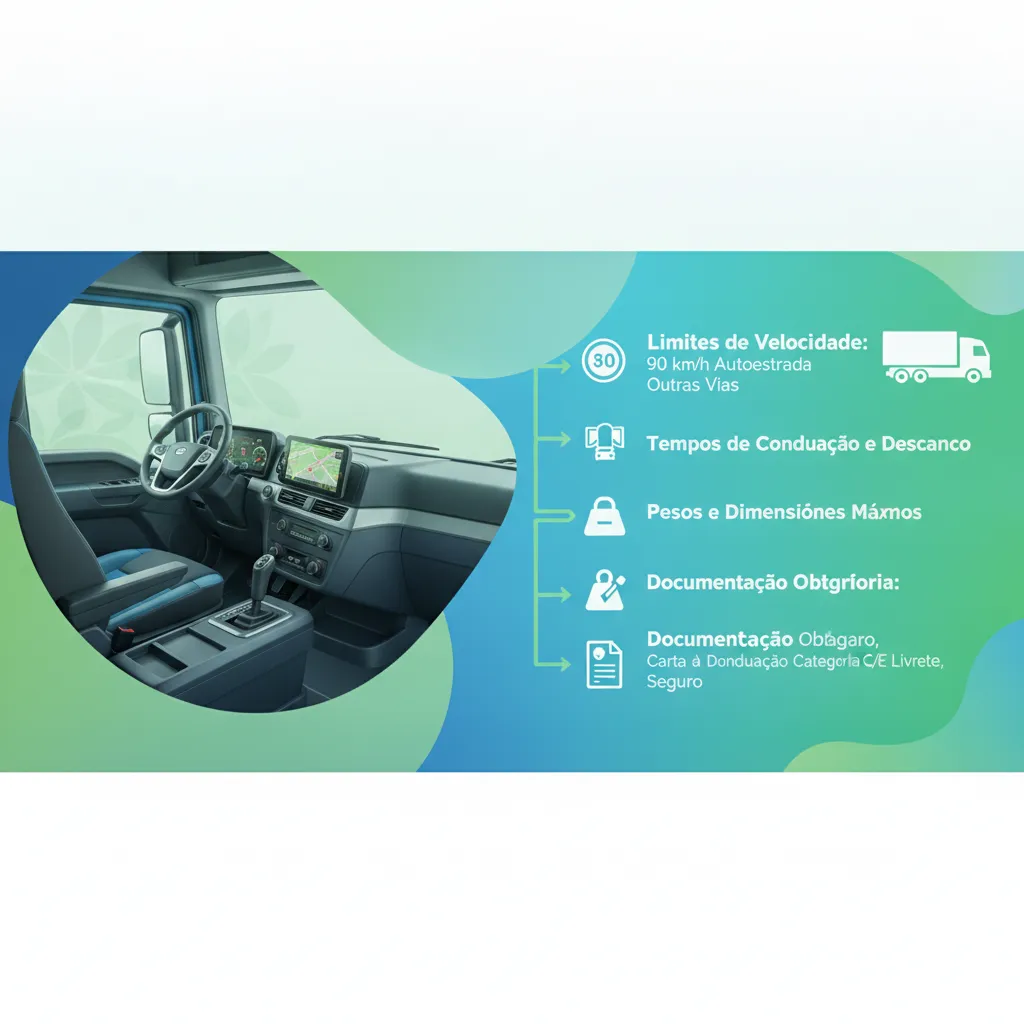
This lesson provides a detailed overview of the Portuguese legal framework governing goods vehicles. It covers key articles of the Código da Estrada relevant to vehicle classification, weight limits, and dimensions. Drivers will learn to identify their legal obligations and understand the role of enforcement authorities in ensuring road safety and compliance.
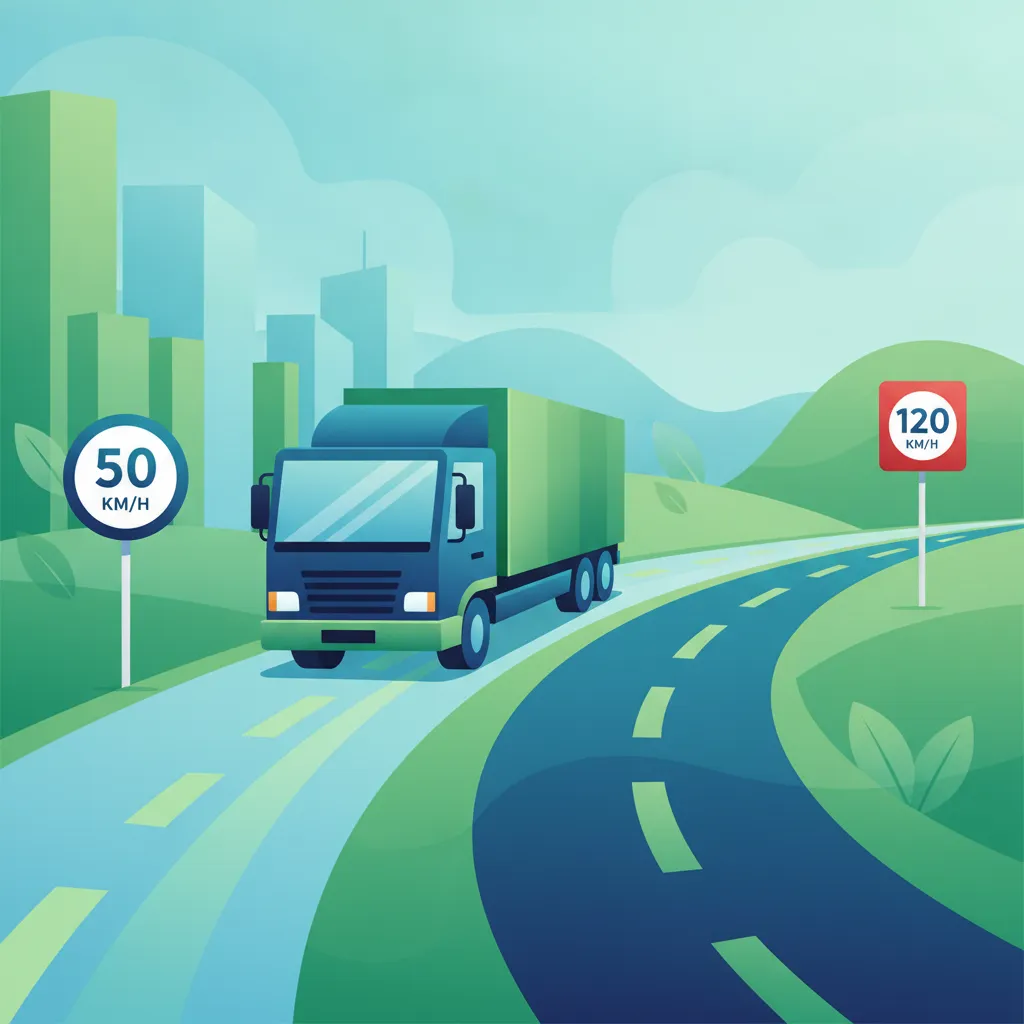
This lesson provides a clear breakdown of the legal speed limits for different categories of goods vehicles in Portugal. It covers the maximum speeds permitted on motorways, dual carriageways, rural roads, and within built-up areas. Adhering to these specific limits is a fundamental aspect of safe and legal professional driving.
This lesson outlines the legal framework and penalties associated with traffic violations in Portugal for professional drivers. It covers the system of fines and penalty points that can lead to license suspension. The content reviews common infractions specific to passenger vehicles and emphasizes the importance of full compliance with the law.

This lesson explains the principles of safely loading a vehicle to avoid negatively impacting its stability and handling. It covers the importance of even weight distribution, respecting the vehicle's maximum load capacity, and properly securing all items. The dangers of unsecured loads, both inside the cabin and on external racks, are highlighted as significant safety hazards.

This lesson details the critical documentation that must be carried in a goods vehicle at all times. It explains the purpose of the vehicle registration, technical inspection certificate, insurance, and cargo-specific documents like the CMR. Proper documentation is essential for regulatory compliance and avoiding fines during roadside inspections.
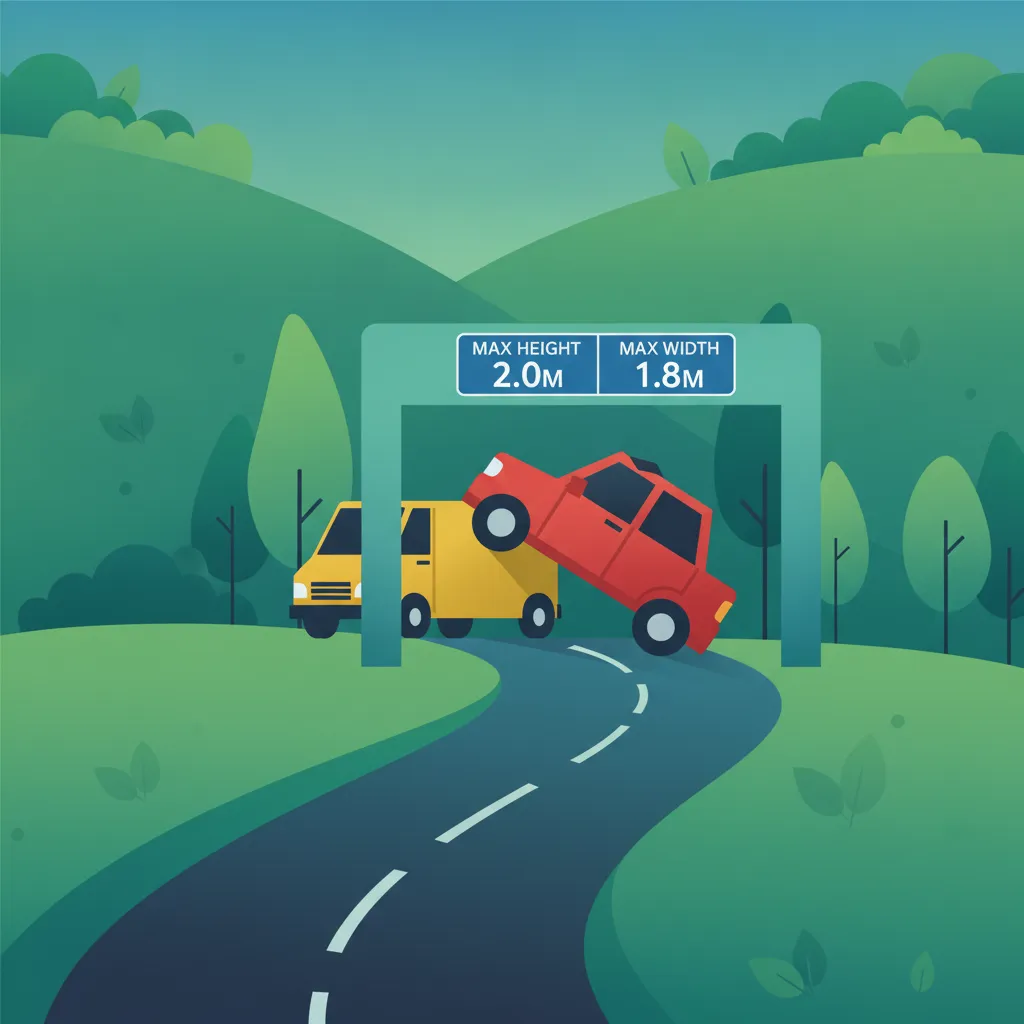
This lesson focuses on the structural and legal restrictions placed on the road network. It explains how to identify limits on bridges and in tunnels, and the consequences of ignoring them. Proper route planning based on these restrictions is a key skill for preventing accidents and infrastructure damage.
This lesson details the specific safety protocols for urban deliveries. It covers selecting a safe place to stop, using hazard warning lights correctly, and being highly aware of public movement around the vehicle. Procedures for safely reversing onto a loading dock, often with the help of a banksman, are also explained.
This lesson teaches drivers to recognize and adhere to access restrictions commonly found on the road network. It covers signs indicating weight, height, and width limits for structures like bridges and tunnels. Understanding these restrictions is vital for effective route planning and avoiding costly damage or fines.
Find clear answers to common questions learners have about Legal Obligations at Load Areas and Unloading Zones. Learn how the lesson is structured, which driving theory objectives it supports, and how it fits into the overall learning path of units and curriculum progression in Portugal. These explanations help you understand key concepts, lesson flow, and exam focused study goals.
No. In Portugal, loading zones are strictly for the active process of loading or unloading goods. Once the operation is complete, the vehicle must be moved immediately to a legal parking space to avoid fines.
As a Category C driver, you are expected to know the specific signs that designate loading bays. You must also ensure your vehicle does not obstruct traffic flow while loading, as heavy goods vehicles have a greater impact on road space than light vehicles.
Stopping in unauthorized areas is a violation of the Código da Estrada. You risk immediate administrative penalties, fines, and potential points on your licence, and you may also cause severe traffic congestion.
You must always have your driver's documentation and load papers available. While not always a 'sign', your vehicle must be clearly engaged in transport activities, and you must follow any local time restrictions posted at the site.
Utilize the powerful search tool to refine your Portuguese driving theory practice. Pinpoint questions related to specific traffic laws, road signs, or complex scenarios from the Código da Estrada. Begin targeted revision now to boost your understanding and confidently approach your IMT driving exam.