
This lesson explores the essential physics behind heavy vehicle braking, focusing on how mass and cargo distribution dramatically increase your stopping distance. It builds upon your understanding of vehicle dimensions and safety to ensure you can calculate safe following distances for the Category C theory exam and real-world professional driving.
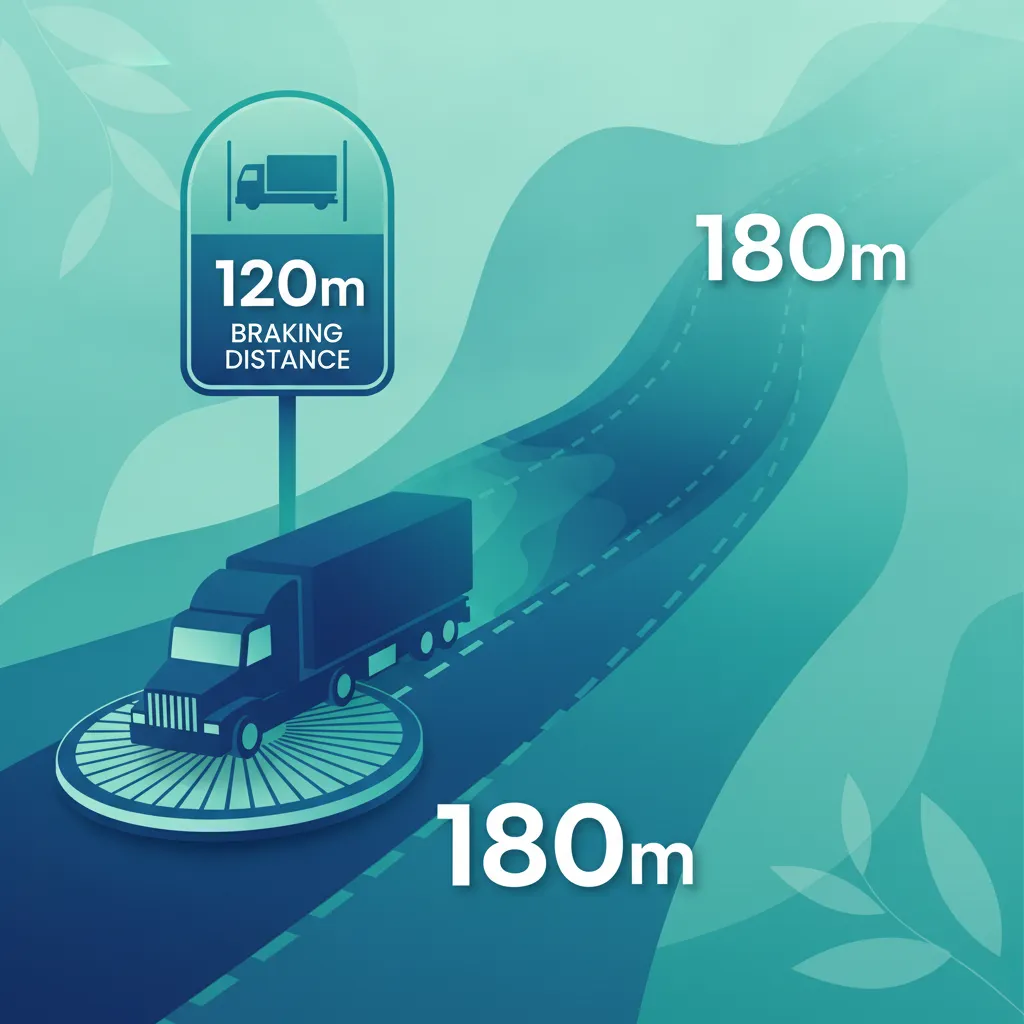
Lesson content overview
Driving heavy goods vehicles, particularly in Portugal, demands a profound understanding of how various factors influence stopping distances. Unlike passenger cars, the sheer mass of a commercial truck, especially when laden with cargo, dramatically alters its braking characteristics. This lesson delves into the intricate physics behind stopping a heavy vehicle, emphasizing the significant increase in distance required due to a heavy load and highlighting why maintaining a larger safety margin is non-negotiable for Category C drivers.
This lesson is crucial for all aspiring professional drivers undertaking the Advanced Driving Theory for Goods Vehicles (Category C) in Portugal, ensuring a comprehensive grasp of vehicle dynamics and safety protocols.
Total stopping distance represents the entire length a vehicle travels from the moment a driver perceives a hazard until the vehicle comes to a complete halt. It is a critical metric for road safety and is composed of three distinct phases: perception distance, reaction distance, and braking distance. Understanding each component is fundamental to mastering safe driving practices, especially with a heavy vehicle.
Perception distance is the span a vehicle covers during the time it takes for a driver to identify a hazard or event requiring a stop. This mental process involves seeing something, understanding its significance, and recognizing the need to react. Factors such as driver alertness, distractions, fatigue, and visibility conditions (light, weather) directly influence the length of this distance. For instance, a distracted or tired driver will have a longer perception time, thus increasing the perception distance. Even at moderate speeds, a significant distance can be covered before any action is taken.
For a Category C driver, this phase is paramount. The larger the vehicle, the more critical it is to perceive hazards early, as subsequent stopping phases will inherently be longer. There is no specific legal distance for perception, but it is implicitly accounted for within the overall requirement to maintain a safe stopping distance.
Following perception, reaction distance is the distance traveled while the driver processes the perceived hazard, decides on an appropriate action (e.g., to brake, steer, or both), and physically initiates that action. This period, known as reaction time, typically ranges from 0.75 to 1.5 seconds for an alert driver, but can be significantly longer under adverse conditions or impairment. During this time, the vehicle continues to travel at its current speed.
For example, a goods vehicle traveling at 80 km/h will cover approximately 22.2 meters per second. If the driver's reaction time is 1.5 seconds, the vehicle travels around 33.3 meters before the brakes are even applied. This distance is constant regardless of whether the vehicle is loaded or empty, as it precedes any mechanical braking. Professional drivers must train to minimize their reaction time, though the physical limits of human response mean it can never be eliminated.
Braking distance is the actual distance a vehicle travels from the moment the brakes are applied until it comes to a complete stop. This phase is where vehicle dynamics, especially mass and speed, exert their most significant influence. Unlike perception and reaction distances, braking distance is heavily dependent on the vehicle's physical characteristics, its load, the condition of the road surface, the efficiency of the braking system, and the speed at which the brakes were engaged.
For heavy goods vehicles, braking distance is typically much longer than for passenger cars due to their increased mass and inertia. This is the component of total stopping distance most profoundly affected by the considerations discussed in this lesson.
The combined distance a vehicle travels from the moment a hazard is perceived until it comes to a complete stop, encompassing perception distance, reaction distance, and braking distance.
The most distinguishing factor when calculating braking distance for goods vehicles is the vehicle's load. The additional mass from cargo or passengers dramatically alters the vehicle's dynamic behavior during braking, leading to substantially increased stopping distances. Understanding this relationship is not just a theoretical exercise; it is a fundamental aspect of safe and compliant driving for Category C vehicles in Portugal.
Inertia is the inherent resistance of any physical object to a change in its state of motion. An object at rest tends to stay at rest, and an object in motion tends to stay in motion with the same speed and in the same direction unless acted upon by an external force. Critically, inertia is directly proportional to an object's mass. This means a heavier vehicle possesses greater inertia than a lighter one.
When a driver applies the brakes, they are introducing a force (friction) to counteract the vehicle's forward motion. To stop a heavier vehicle (one with greater mass and thus greater inertia), a larger braking force is required over a longer period, or equivalently, over a greater distance, to overcome its resistance to deceleration. Simply put, there's more "momentum" to arrest. This is the primary physical reason why a loaded truck requires a significantly longer braking distance compared to an empty one, even when all other factors like speed, road conditions, and brake efficiency are identical.
The property of matter by which it continues in its existing state of rest or uniform motion in a straight line, unless that state is changed by an external force; directly proportional to mass.
Consider the stark difference in braking distances between an empty heavy goods vehicle and the same vehicle fully loaded to its Maximum Permissible Total Mass (MPT). At a given speed and on the same road surface, the empty truck will stop considerably faster. When fully loaded, the vehicle's mass could easily double or triple, translating to a substantial increase in its kinetic energy. More energy requires more work (braking force applied over distance) to dissipate.
For instance, at 80 km/h, an empty truck might stop within 30 meters on a dry road. The same truck, when fully loaded, could require 50 meters or more to come to a complete stop under identical conditions. This difference of 20 meters, which equates to multiple truck lengths, can be the deciding factor between a safe stop and a severe collision. Professional drivers must internalize this difference and adjust their driving habits accordingly, including maintaining significantly larger following distances.
While the total weight of the load is the primary factor, how that load is distributed and secured within the vehicle also profoundly impacts braking performance and overall vehicle stability. An improperly distributed load can lead to:
Therefore, Category C drivers must not only consider the total mass but also diligently ensure that the cargo is evenly distributed and securely fastened according to legal regulations and best practices. This ensures that the vehicle's braking system can operate optimally and safely.
Speed is arguably the single most influential factor on braking distance. Its relationship with stopping distance is not linear but quadratic, meaning that even a small increase in speed can lead to a disproportionately larger increase in the distance required to stop. For heavy goods vehicles, which already have extended braking distances due to their mass, the impact of speed is amplified, making responsible speed management a critical skill.
The kinetic energy of a moving object is calculated using the formula ½mv², where 'm' is mass and 'v' is velocity (speed). This formula reveals that kinetic energy increases with the square of the speed. To bring a vehicle to a stop, all of its kinetic energy must be dissipated through the braking system. Therefore, if a vehicle's speed doubles, its kinetic energy quadruples, and consequently, the braking distance required to dissipate that energy will also quadruple, assuming constant braking force.
Remember: Doubling your speed does not double your braking distance; it quadruples it! This is a common misconception with severe safety implications.
For a heavy goods vehicle, this quadratic relationship is particularly dangerous. If a loaded truck travels at 80 km/h and requires, for example, 50 meters to brake, increasing its speed to just 100 km/h could easily extend that braking distance to over 78 meters (if purely quadratic, 50 * (100/80)^2 = 50 * 1.5625 = 78.125m), and even more in real-world scenarios due to other compounding factors like brake heating. This demonstrates why even minor speed infractions can have profound consequences for heavy vehicles.
Given the exponential increase in braking distance with speed, Category C drivers must constantly adapt their speed to prevailing conditions, always err on the side of caution, and never assume that legal speed limits are necessarily safe speeds. While Portuguese law sets maximum speed limits for goods vehicles, a prudent driver will often travel below these limits, especially when:
The ability to accurately judge safe speeds in varied conditions is a hallmark of a skilled professional driver and is critical to preventing collisions involving heavy vehicles.
In Portugal, the Código da Estrada (Road Code) and European Union regulations lay down specific requirements for the operation of heavy goods vehicles. These rules are designed to mitigate the inherent risks associated with their size and weight, particularly concerning braking and stopping distances. Adherence to these regulations is not only a legal obligation but also a fundamental aspect of professional responsibility and road safety.
Distância de Segurança) for Goods VehiclesPortuguese law mandates that all drivers maintain a safe following distance (distância de segurança) from the vehicle ahead. This distance must be sufficient to allow the driver to stop safely without colliding, taking into account their speed, load, and road conditions. For heavy goods vehicles, this requirement is amplified due to their extended braking distances.
While specific distances can vary based on vehicle type and speed, a common rule of thumb for cars is the "two-second rule" in dry conditions. For a fully loaded heavy goods vehicle, a significantly greater buffer is required, often extending to a "four-second rule" or even more, particularly in adverse weather or on declines. The rationale is clear: prevent rear-end collisions, which can be devastating when involving heavy vehicles. Incorrect application involves tailgating, especially at higher speeds, which leaves insufficient time and space for safe braking.
Peso Bruto) RegulationsGoods vehicles in Portugal are subject to strict regulations regarding their Maximum Permissible Total Mass (MPT), often referred to as Peso Bruto or Gross Vehicle Weight (GVW). These limits are specified by the vehicle manufacturer and enshrined in law. Exceeding the MPT is a serious offense because it compromises vehicle safety, stability, and braking efficiency.
Overloading a heavy goods vehicle dramatically increases its inertia, extends braking distances beyond safe limits, and places undue stress on tires, suspension, and the braking system, leading to accelerated wear and potential failure.
Drivers must ensure that their vehicle, including its cargo and passengers, never exceeds its MPT or individual axle load limits. Regular checks using weighbridges are crucial, and cargo manifests must align with legal limits. Incorrect application typically involves overloading to maximize cargo revenue, a practice that directly jeopardizes road safety.
Limites de Velocidade) for Heavy VehiclesGoods vehicles in Portugal are subject to specific speed limits that are often lower than those for passenger cars, and these limits vary by road type and vehicle category (e.g., C1, C, CE). These lower limits are imposed precisely because of the increased kinetic energy and longer braking distances associated with heavy vehicles.
Autoestradas): Goods vehicles typically have lower limits than cars.Vias Rápidas): Similar to motorways, with specific limits.Estradas Nacionais): Generally lower limits, especially in built-up areas.Zonas Urbanas): Standard low-speed limits apply, where the risks to vulnerable road users are higher.Drivers must strictly adhere to these posted and statutory speed limits. Even if a particular stretch of road feels safe for a higher speed, the legal limits are set considering the general safety implications for heavy vehicles. Exceeding these limits, especially with a heavy load, dramatically increases the risk of not being able to stop in time to avoid a hazard.
Heavy goods vehicles in Portugal and across the EU are required to be equipped with and utilize auxiliary braking systems in addition to their service brakes. These systems, such as engine brakes (motor brake) or retarders (hydraulic or electromagnetic), are designed to slow the vehicle down without relying solely on the friction brakes.
A secondary braking system, such as an engine brake or retarder, used in heavy vehicles to assist the service brakes, particularly on long descents, to prevent overheating and maintain consistent braking performance.
The primary rationale for auxiliary brakes is to:
Professional drivers must integrate the use of auxiliary brakes into their standard driving technique, particularly when descending hills or needing to slow down from high speeds. Relying solely on service brakes in such situations is a dangerous error that can lead to catastrophic brake failure.
While load and speed are the most significant variables affecting braking distance, numerous other conditional factors play a critical role. Professional drivers must be adept at assessing these variations and adjusting their driving behavior accordingly to maintain safe stopping distances.
Drivers are legally responsible for ensuring their vehicle is in a roadworthy condition. Neglecting maintenance, particularly concerning braking systems and tires, directly contributes to unsafe braking distances.
Professional Category C drivers must be acutely aware of common mistakes related to braking distance and load, as these errors often lead to serious accidents. Understanding these pitfalls is the first step towards preventing them.
Overestimating Stopping Capability:
Neglecting Auxiliary Brakes on Declines:
Improper Cargo Management:
Exceeding Speed Limits with Heavy Load:
Following Too Closely (Distância de Segurança Violation):
Situation: A Category C driver is exiting a Portuguese motorway (autoestrada) with a fully loaded 40-tonne truck, approaching a traffic light at the end of the exit ramp, currently traveling at 80 km/h.
Correct Behavior: The driver should begin monitoring the traffic light well in advance. As soon as a red light is perceived or traffic ahead slows, they should smoothly engage the auxiliary braking system (e.g., engine brake) to begin decelerating, followed by progressive application of the service brakes. The goal is to reduce speed significantly before reaching the intersection, ensuring the truck comes to a complete, controlled stop well behind the stop line. A generous following distance from any vehicle ahead is maintained throughout.
Incorrect Behavior: Delaying braking until closer to the traffic light, relying solely on heavy application of service brakes. This risks overshooting the stop line, potentially entering the intersection against a red light due to the truck's extended braking distance under full load. It also places excessive strain on the service brakes.
Situation: A driver is following another loaded trailer at 50 km/h on a wet urban road in Portugal, where visibility is reduced due to rain.
Correct Behavior: The driver immediately recognizes the combined hazards of a heavy load, wet road, and reduced visibility. They should significantly increase their following distance (beyond the typical distância de segurança for dry conditions), giving themselves ample time for perception and reaction, and ensuring that the increased braking distance on a slippery surface is accounted for. Maintaining a lower, more cautious speed is also prudent.
Incorrect Behavior: Maintaining a following distance similar to that used on a dry road or when driving an empty vehicle. This leaves insufficient space to stop safely if the lead vehicle brakes suddenly, especially with the reduced friction on wet tarmac.
Situation: A driver is descending a steep, winding mountain pass (passo de montanha) in the Serra da Estrela, Portugal, with a partially loaded truck.
Correct Behavior: Before beginning the descent, the driver selects a low gear to engage the engine's braking effect. They then actively use the auxiliary braking system (engine brake or retarder) to control the vehicle's speed, allowing for only intermittent, light application of the service brakes as needed to maintain a safe, consistent speed. This prevents the service brakes from overheating and ensures they remain effective for emergencies.
Incorrect Behavior: Descending in a high gear and relying exclusively on continuous, heavy application of the service brakes to control speed. This will quickly cause the brakes to overheat, leading to severe brake fade and potentially a complete loss of braking capability, making the truck uncontrollable on the descent.
To solidify your understanding of braking distance, load considerations, and their practical implications for heavy goods vehicle driving in Portugal, explore these related topics.
Explore all units and lessons included in this driving theory course.
Lesson content overview
Explore all units and lessons included in this driving theory course.
Explore search topics learners often look for when studying Braking Distance Calculation with Load Considerations. These topics reflect common questions about road rules, driving situations, safety guidance, and lesson level theory preparation for learners in Portugal.
Browse additional driving theory lessons that cover connected traffic rules, road signs, and common driving situations related to this topic. Improve your understanding of how different rules interact across everyday traffic scenarios.
Understand the critical physics of inertia and mass on your heavy goods vehicle's braking distance. Learn why a loaded truck requires more space to stop and explore factors beyond just weight in Portuguese driving theory.
This lesson breaks down the concept of total stopping distance into its two key parts: the distance travelled during the driver's reaction time (thinking distance) and the distance the vehicle travels while braking. It explains how factors like speed, driver alertness, tyre condition, and road surface dramatically influence these distances. This knowledge is vital for understanding the consequences of driving too fast or too close.
This lesson focuses on effective braking techniques that ensure both safety and passenger comfort. It explains the principles of progressive braking and the function of the anti-lock braking system (ABS). Learners will understand how to calculate stopping distances based on vehicle load, speed, and environmental factors.

This lesson focuses on the practical application of maintaining a safe gap from the vehicle ahead. It explains time-based rules for calculating following distance and how to adjust this gap for adverse weather or poor visibility. Developing excellent hazard perception and anticipation skills is key to avoiding emergency braking situations.

This lesson focuses on the complexities of braking in dense urban environments. It explains how vehicle mass, passenger load, and road conditions influence the total stopping distance of a large vehicle. Learners will understand the importance of anticipatory driving and proactive speed management to ensure safe braking at all times.

This lesson explains the principles of safely loading a vehicle to avoid negatively impacting its stability and handling. It covers the importance of even weight distribution, respecting the vehicle's maximum load capacity, and properly securing all items. The dangers of unsecured loads, both inside the cabin and on external racks, are highlighted as significant safety hazards.
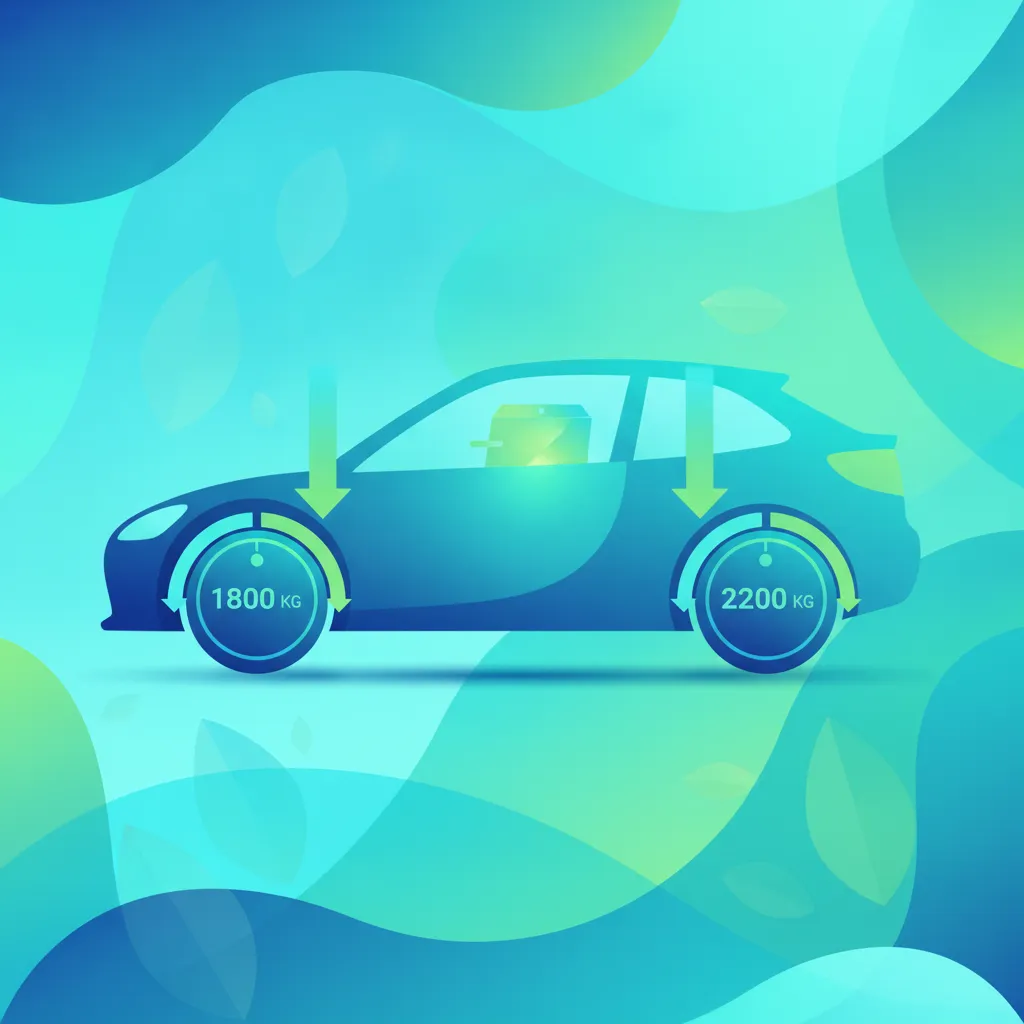
This lesson focuses on the critical importance of distributing weight correctly across the vehicle's axles. It explains how improper loading can negatively affect vehicle stability, handling, and braking effectiveness. Learners will understand how to comply with legal axle load limits to ensure safety and prevent excessive wear on the vehicle and roads.
This lesson explains the critical need for maintaining a safe following distance to compensate for the longer stopping time of a heavy vehicle. It introduces time-based following distance rules and describes how to adapt them for different speeds, road conditions, and weather. The content highlights the dangers of tailgating and provides strategies for proactive collision avoidance.

This lesson examines the significant impact of adverse weather on HGV dynamics. It explains how rain can lead to hydroplaning, how strong crosswinds can affect stability, and how ice dramatically increases braking distances. Drivers will learn the importance of reducing speed and increasing following distances in these conditions.

This lesson addresses the principles of speed management for heavy passenger vehicles. It explains how factors like vehicle mass, passenger load, and road gradient affect momentum and control. The content also covers the appropriate use of speed control systems and the importance of selecting a safe speed for conditions.

This lesson breaks down the concept of total stopping distance into thinking distance and braking distance. It provides instruction on how to use both front and rear brakes effectively and progressively to slow down smoothly and safely. The content also covers techniques for performing an emergency stop while maintaining control and how braking is affected by wet or loose road surfaces.
Explore practical driving scenarios illustrating how speed, road surface, weather, and auxiliary brakes impact heavy vehicle stopping distances. Essential theory for professional drivers in Portugal to master safe control and avoid common errors.
This lesson examines the significant impact of adverse weather on HGV dynamics. It explains how rain can lead to hydroplaning, how strong crosswinds can affect stability, and how ice dramatically increases braking distances. Drivers will learn the importance of reducing speed and increasing following distances in these conditions.
This lesson focuses on the practical application of maintaining a safe gap from the vehicle ahead. It explains time-based rules for calculating following distance and how to adjust this gap for adverse weather or poor visibility. Developing excellent hazard perception and anticipation skills is key to avoiding emergency braking situations.
This lesson focuses on effective braking techniques that ensure both safety and passenger comfort. It explains the principles of progressive braking and the function of the anti-lock braking system (ABS). Learners will understand how to calculate stopping distances based on vehicle load, speed, and environmental factors.
This lesson focuses on the complexities of braking in dense urban environments. It explains how vehicle mass, passenger load, and road conditions influence the total stopping distance of a large vehicle. Learners will understand the importance of anticipatory driving and proactive speed management to ensure safe braking at all times.
This lesson breaks down the concept of total stopping distance into its two key parts: the distance travelled during the driver's reaction time (thinking distance) and the distance the vehicle travels while braking. It explains how factors like speed, driver alertness, tyre condition, and road surface dramatically influence these distances. This knowledge is vital for understanding the consequences of driving too fast or too close.
This lesson focuses on the specific skills required for driving on high-speed motorways. It details the procedures for safely merging onto and exiting the motorway, maintaining proper lane discipline, and adhering to variable speed limits. The content also provides rules for safe overtaking and managing the vehicle's stability at high speeds.

This lesson focuses on adapting driving techniques for wet and foggy conditions, which significantly reduce visibility and tyre grip. It explains the phenomenon of aquaplaning and how to avoid it by reducing speed and ensuring proper tyre condition. The correct use of headlights, fog lights, and increasing following distances are presented as essential safety measures.

This lesson explains how adverse weather conditions like rain and fog compromise visibility and vehicle control. It provides clear guidance on reducing speed, increasing following distance, and using lights and wipers effectively. The content also covers the phenomenon of hydroplaning and how to prevent loss of traction on wet roads.
This lesson addresses the principles of speed management for heavy passenger vehicles. It explains how factors like vehicle mass, passenger load, and road gradient affect momentum and control. The content also covers the appropriate use of speed control systems and the importance of selecting a safe speed for conditions.

This lesson focuses on the specific skills and regulations for motorway driving. It covers correct lane usage for HGVs, safe procedures for overtaking slower traffic, and the rules for using the hard shoulder or emergency refuge areas. Maintaining consistent speed and awareness of surrounding traffic is key to motorway safety.
Find clear answers to common questions learners have about Braking Distance Calculation with Load Considerations. Learn how the lesson is structured, which driving theory objectives it supports, and how it fits into the overall learning path of units and curriculum progression in Portugal. These explanations help you understand key concepts, lesson flow, and exam focused study goals.
Braking distance is directly linked to kinetic energy and momentum. A heavier vehicle requires more force and distance for the brakes to dissipate the energy of the moving mass, meaning you must significantly increase your following distance as your load increases.
While your physical reaction time remains the same, the total stopping distance increases significantly because the braking distance component grows with mass. Professional drivers must be even more alert to potential hazards to compensate for the longer time needed to bring the vehicle to a complete stop.
You must increase your following distance significantly, doubling or tripling the normal gap depending on road grip. Adverse weather reduces tyre-to-road friction, compounding the difficulty of stopping a high-mass vehicle.
The exam focuses on your understanding of the principles and the necessity of adjusting your driving. You will be tested on your ability to recognize that stopping distance increases proportionally with speed and mass, and your commitment to maintaining a safe, professional distance.
Utilize the powerful search tool to refine your Portuguese driving theory practice. Pinpoint questions related to specific traffic laws, road signs, or complex scenarios from the Código da Estrada. Begin targeted revision now to boost your understanding and confidently approach your IMT driving exam.