
This lesson explores the critical physical dynamics of driving heavy goods vehicles in tight spaces. You will learn how to manage off-tracking and swing-out to navigate junctions and urban areas safely without hitting obstacles or infrastructure.

Lesson content overview
Driving goods vehicles, especially longer or articulated models, presents unique challenges when navigating turns. Unlike passenger cars, heavy vehicles exhibit specific dynamic behaviors known as off-tracking and front-end swing-out. Mastering these concepts is fundamental for any professional driver undertaking the Advanced Driving Theory for Goods Vehicles (Category C) in Portugal, ensuring safety for all road users and preventing vehicle damage. This lesson will detail these critical dynamics, providing strategies for safe and precise maneuvering through corners and junctions.
Off-tracking is a geometric phenomenon inherent to all motor vehicles, where the rear wheels follow a path of a smaller radius than the front wheels during a turn. This means that as your front wheels steer around a corner, the rear wheels will cut inward, closer to the inside of the turn. This effect is a direct consequence of the vehicle's wheelbase and steering geometry.
While all vehicles experience basic off-tracking, its magnitude is significantly enhanced in longer wheelbase vehicles, such as rigid lorries, buses, and especially articulated goods vehicles. The greater the distance between the front and rear axles (the wheelbase), the more pronounced the off-tracking effect will be.
Practical Implications of Off-Tracking: During a left-hand turn, the rear wheels of your goods vehicle will be positioned closer to the inner curb or road edge than your front wheels. If you initiate the turn without accounting for this, your rear wheels could strike the curb, traffic signs, parked vehicles, or even encroach on pedestrian areas. Similarly, in a right-hand turn, the rear wheels will track closer to the inside edge of the lane or shoulder.
To safely manage off-tracking, drivers must consciously adjust their vehicle's positioning before and during a turn. This involves taking a wider approach to corners than one might in a passenger car.
A frequent mistake is assuming the entire vehicle pivots around a single, fixed point, with all parts following the same arc. This ignores the crucial fact that the rear wheels are "pulled" by the front wheels, causing them to cut the corner. Another misunderstanding is neglecting that off-tracking can also occur at roundabouts, where drivers must ensure the trailer or rear wheels do not mount the central island or outer curbs.
Visual Cues for Off-Tracking: As you enter a turn, use your side mirrors to observe the path of your rear wheels relative to the curb or road edge. This visual feedback helps you learn to judge the necessary clearance.
While off-tracking concerns the rear of the vehicle, front-end swing-out describes the outward movement of the front part of a vehicle, particularly pronounced in articulated goods vehicles, during a turn. This occurs when the tractor unit's front end swings outward beyond the general turning path, especially in sharper turns or at certain articulation angles.
Front-end swing-out is primarily due to the design of articulated vehicles, which consist of a tractor unit and a trailer connected by a pivot point. As the tractor unit turns, the articulation angle changes, and the front of the tractor unit can extend further outward than the line established by the front wheels, particularly if the turn is sharp or if the trailer is pushing the tractor unit in a certain way. This effect can also be observed to a minor degree in rigid vehicles during high-speed, sharp turns, but it is far more significant in articulated lorries.
Practical Implications of Front-End Swing-Out: In a right-hand turn with an articulated lorry, the front of the tractor unit may swing further to the right than you might expect, potentially encroaching on adjacent lanes, sidewalks, or obstacles like parked cars, signs, or street furniture. Similarly, in a left-hand turn, the front-left corner could swing out. This requires careful consideration, especially when turning onto narrower roads or navigating tight junctions.
Managing front-end swing-out requires careful observation and precise vehicle positioning.
Drivers sometimes underestimate the lateral displacement of the front end, assuming it will simply follow the path of the initial steer. This can lead to striking objects on the outside of the turn. Another error is to overcompensate by swerving excessively, which can then cause problems with off-tracking on the inner side or encroachment into oncoming traffic.
Be Mindful of Vulnerable Road Users: Front-end swing-out can be particularly dangerous for cyclists or pedestrians who may be alongside your vehicle at an intersection. Always double-check your mirrors and blind spots before initiating a turn.
Clearance path planning is the strategic alignment of your vehicle's trajectory within a lane to safely accommodate both dynamic off-tracking and swing-out, maintaining adequate distances from all road boundaries, fixed objects, and other road users. This concept integrates the understanding of both off-tracking and swing-out to ensure the entire vehicle safely negotiates a turn.
To execute a safe turn, particularly in goods vehicles, a driver must select the appropriate lane and position the vehicle at the correct distance from lane markings and the road edge.
Approach Positioning:
Mirror Usage: Constantly use all mirrors (main and wide-angle) to monitor the entire length of your vehicle and trailer. Pay close attention to the rear wheels' proximity to the curb or obstacles and the front end's swing-out.
Gradual Steering and Speed: Reduce your speed before entering the turn. This allows for precise steering adjustments and gives you more time to react to unexpected movements or obstacles. Accelerate gently only after the vehicle is stable and aligned in the new direction.
Assess the Turn: Evaluate the sharpness, width of the junction, and potential obstacles.
Reduce Speed: Decelerate to a safe speed appropriate for the vehicle size and turn.
Position Correctly: Align your vehicle to create maximum clearance for both off-tracking and swing-out.
Monitor Continuously: Use mirrors to track the paths of your rear wheels and the front end.
Smooth Steering: Apply steering gradually and maintain a steady turning arc.
Exit Safely: Accelerate smoothly once the turn is completed and the vehicle is straight.
Adhering to the Código da Estrada (Portuguese Highway Code) is paramount for all drivers, especially those operating Category C vehicles. Specific rules govern turning maneuvers to prevent accidents and ensure the safety of all road users.
Drivers must navigate turns while keeping the vehicle entirely within its designated lane. This includes respecting the dynamic trajectories of both front and rear wheels, anticipating off-tracking and swing-out.
The driver must ensure that the rear wheels do not hit the kerb (curb) or roadside obstacles due to off-tracking. This requires intentional positioning away from the inner edge of the turn.
When driving an articulated vehicle (Category C1E, CE), the driver must account for the front-end swing-out during turns and position the vehicle accordingly. This often means initiating the turn further from the outer edge.
Drivers must reduce their speed appropriately before entering any turn to maintain full control over vehicle dynamics and accurately judge clearances. High speed exacerbates both off-tracking and swing-out effects.
Understanding common errors helps drivers avoid them. For goods vehicle drivers, misjudging turning dynamics can have severe consequences.
Cutting Corners Too Tight:
Overcompensating for Swing-Out:
Excessive Speed in Turns:
Ignoring Road Edge Markings:
Neglecting Trailer Articulation Effects:
The dynamics of off-tracking and swing-out are not static; they are influenced by various environmental and vehicle-specific factors.
Wet or icy roads significantly reduce tire grip and increase braking distances. In such conditions, drivers must reduce speed even further before turning to maintain control and to compensate for any unexpected slides or increased difficulty in judging clearances. Poor visibility due to fog or heavy rain also necessitates slower speeds and greater caution.
When cyclists, motorcyclists, or pedestrians are present, particularly at intersections, maintaining a significantly wider clearance from the curb and anticipating a larger swing-out area is essential. Goods vehicle blind spots are substantial, and dynamic movements like swing-out can quickly encroach on their space.
Night driving or periods of low visibility (e.g., dawn, dusk, fog) reduce depth perception and the ability to accurately judge distances. In these conditions, drivers must reduce speed, increase reliance on vehicle lighting, and use lane markings and road edge cues more carefully to plan their clearance path.
Understanding the causal links helps reinforce safe driving practices:
These examples illustrate how off-tracking and swing-out play out in real-world driving situations for goods vehicles.
Setting: A city street with a single painted lane for your direction and a concrete curb immediately to your left for an upcoming left turn. Parked cars line the street beyond the curb.
Relevant Rule: Maintain lane discipline while accounting for off-tracking and maintaining safe distance from the road edge (Rule 1 & 2).
Correct Behavior: As you approach the left turn, you position your goods vehicle slightly towards the right side of your lane. This creates a wider arc for your front wheels, allowing the longer wheelbase to execute the turn. You continuously check your left-side mirror to ensure the rear wheels, which will track inwards, remain clear of the curb and the parked cars. You initiate the turn smoothly at a reduced speed.
Incorrect Behavior: The driver turns sharply from the center of the lane, as they might in a passenger car. The rear wheels off-track significantly, striking the curb and potentially scraping a parked car or damaging the vehicle's tires.
Setting: A small, single-lane roundabout in an industrial estate with a compact central island.
Relevant Rule: Anticipate front-end swing-out and adjust lane entry, and maintain safe distance from obstacles (Rule 3 & 2).
Correct Behavior: Approaching the roundabout, the articulated lorry driver slows down considerably. Understanding the vehicle's length and articulation, they enter the roundabout by positioning the tractor unit slightly wider than usual. This anticipates the front-end swing-out as the tractor unit turns left around the island and also allows the trailer to follow a path that clears the central island without mounting it. The driver constantly monitors mirrors for both the front-end position and the trailer's path.
Incorrect Behavior: The driver underestimates the swing-out and enters too close to the central island. As the tractor unit turns, its front corner collides with or scrapes the central island, causing damage and potentially blocking traffic.
Setting: A narrow residential road at night, with parked cars tightly lining the right side. You need to make a left turn onto another equally narrow street. Visibility is limited.
Relevant Rule: Adjust speed for turn precision and maintain a safe clearance from road edges and parked vehicles, while accounting for off-tracking (Rule 4 & 2).
Correct Behavior: The driver significantly reduces speed, using the vehicle's headlights and available street lighting to illuminate the road edges and parked cars. Due to the limited width and parked cars, the driver must position the vehicle carefully before the left turn, aiming to give the rear wheels enough space to off-track without hitting the curb or parked vehicles, while also ensuring the front clears any obstacles on the left. Side mirrors are used extensively and repeatedly, with extra vigilance due to reduced visibility.
Incorrect Behavior: The driver maintains speed, misjudges the off-tracking in the dark, and turns too sharply. The rear wheels swing inward and come into contact with the curb or a parked car on the inner side of the turn.
Navigating turns safely in goods vehicles demands a comprehensive understanding of dynamic vehicle behaviors.
Explore all units and lessons included in this driving theory course.
Lesson content overview
Explore all units and lessons included in this driving theory course.
Explore search topics learners often look for when studying Turning Dynamics: Off-Tracking and Swing-Out. These topics reflect common questions about road rules, driving situations, safety guidance, and lesson level theory preparation for learners in Portugal.
Browse additional driving theory lessons that cover connected traffic rules, road signs, and common driving situations related to this topic. Improve your understanding of how different rules interact across everyday traffic scenarios.
Explore advanced techniques for navigating complex turns with goods vehicles, focusing on managing articulated trailer dynamics, understanding swing-out, and ensuring clearance path planning. Essential theory for safe heavy vehicle operation in Portugal.

This lesson focuses on the specific skills and regulations for motorway driving. It covers correct lane usage for HGVs, safe procedures for overtaking slower traffic, and the rules for using the hard shoulder or emergency refuge areas. Maintaining consistent speed and awareness of surrounding traffic is key to motorway safety.

This lesson provides a structured approach to reversing, one of the highest-risk maneuvers. It covers the importance of a 360-degree check before starting, continuous observation using mirrors, and controlling speed. Specific techniques for reversing with a trailer, including steering inputs and correcting jack-knifing, are also detailed.

This lesson maps out the significant blind spots—or 'no zones'—to the front, sides, and rear of a heavy goods vehicle. It explains how these blind spots change depending on the vehicle's configuration, such as when pulling a trailer. Proper mirror setup and scanning techniques are taught to minimize these areas of no visibility.
This lesson focuses on the technique of executing turns safely and smoothly in a large vehicle. It explains how to position the vehicle correctly before the turn to account for its long wheelbase and turning radius. The content emphasizes controlling speed and steering input to maintain stability and ensure passenger comfort.

This lesson addresses the specific challenges of driving alongside motorcyclists and large vehicles such as trucks and buses. It highlights the reduced visibility of motorcyclists and the extensive blind spots (no-zones) around heavy vehicles. Drivers will learn to provide extra space, anticipate wide turns, and adjust for factors like spray and wind turbulence.

This lesson provides essential safety guidance for interacting with large vehicles like buses and trucks. It emphasizes the importance of staying out of their extensive blind spots and allowing extra space due to their long stopping distances and wide turning circles. The content also offers advice on how to safely overtake such vehicles and navigate around public transport stops.

This lesson addresses the unique challenges of driving a large vehicle on rural roads. It teaches how to approach sharp bends, position the vehicle for maximum visibility, and deal with poor or unpaved surfaces. Drivers will also learn how to interact safely with agricultural machinery and other common rural hazards.
This lesson focuses on the specific skills required for driving on high-speed motorways. It details the procedures for safely merging onto and exiting the motorway, maintaining proper lane discipline, and adhering to variable speed limits. The content also provides rules for safe overtaking and managing the vehicle's stability at high speeds.
This lesson covers the fundamental techniques for executing turns at intersections and other locations. It details the correct approach, lane positioning, and signaling for right turns, left turns, and U-turns. Emphasis is placed on observation skills, including checking for pedestrians and other vehicles, to complete each manoeuvre safely and without impeding traffic.

This lesson emphasizes the importance of strict lane discipline for heavy vehicles. It covers how to maintain a central position in the lane, the correct procedure for signaling and checking before a lane change, and how to navigate multi-lane roundabouts. Proper lane discipline enhances safety and improves traffic flow for everyone.
Understand frequent mistakes drivers make when turning goods vehicles, such as misjudging off-tracking and swing-out. Learn how to prevent collisions and ensure safe passage through junctions and tight spaces based on Portuguese traffic law.
This lesson maps out the significant blind spots—or 'no zones'—to the front, sides, and rear of a heavy goods vehicle. It explains how these blind spots change depending on the vehicle's configuration, such as when pulling a trailer. Proper mirror setup and scanning techniques are taught to minimize these areas of no visibility.
This lesson provides a structured approach to reversing, one of the highest-risk maneuvers. It covers the importance of a 360-degree check before starting, continuous observation using mirrors, and controlling speed. Specific techniques for reversing with a trailer, including steering inputs and correcting jack-knifing, are also detailed.
This lesson emphasizes the importance of strict lane discipline for heavy vehicles. It covers how to maintain a central position in the lane, the correct procedure for signaling and checking before a lane change, and how to navigate multi-lane roundabouts. Proper lane discipline enhances safety and improves traffic flow for everyone.
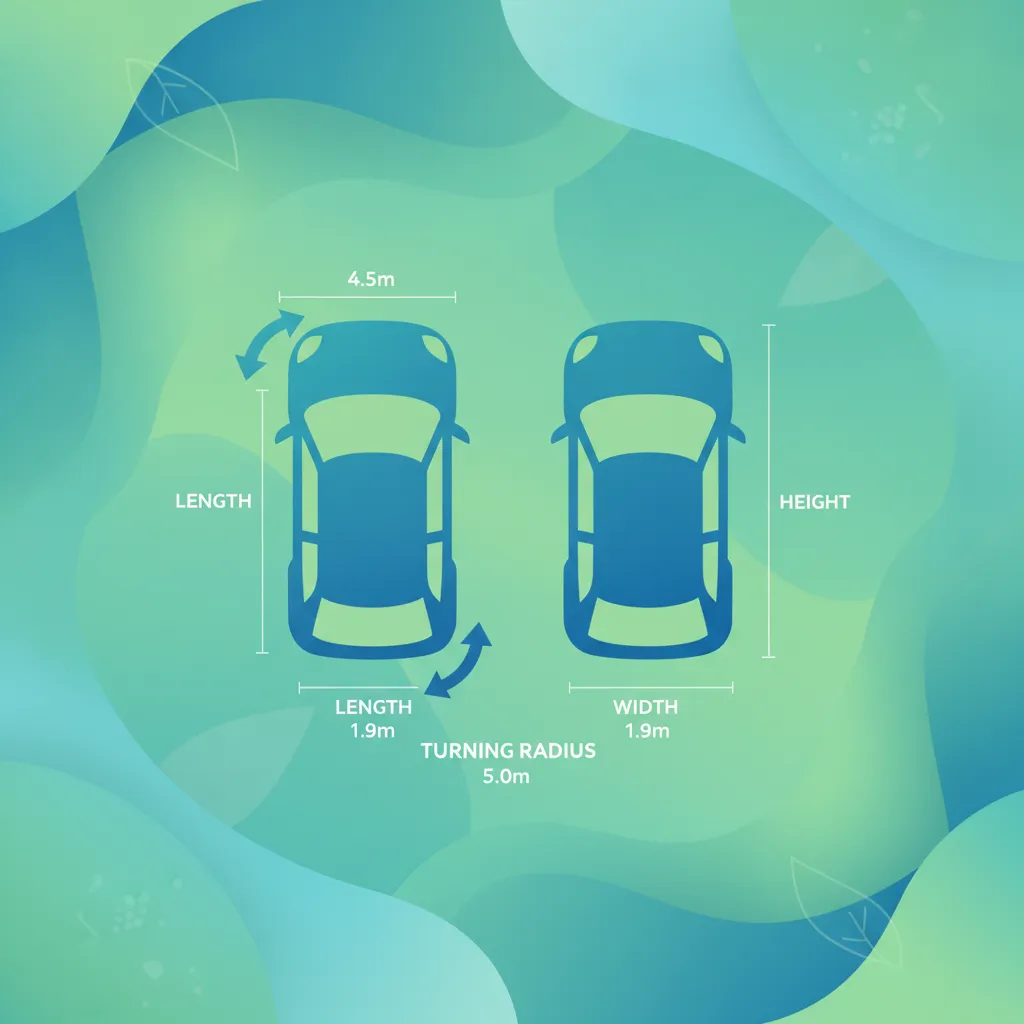
This lesson focuses on the physical dimensions of goods vehicles and their direct impact on driving. It covers legal limits for length, height, and width, and explains dynamic concepts like turning radius and off-tracking. A thorough understanding of these dimensions is essential for navigating urban areas and avoiding collisions.

This lesson examines how to manage space when riding near heavy vehicles such as trucks and buses. It covers creating and maintaining protective space, avoiding squeeze points, and accounting for wind turbulence. Appropriate lane positioning and awareness of truck turning paths are discussed to enhance safety in these situations.

This lesson focuses on the critical importance of distributing weight correctly across the vehicle's axles. It explains how improper loading can negatively affect vehicle stability, handling, and braking effectiveness. Learners will understand how to comply with legal axle load limits to ensure safety and prevent excessive wear on the vehicle and roads.
This lesson addresses the specific challenges of driving alongside motorcyclists and large vehicles such as trucks and buses. It highlights the reduced visibility of motorcyclists and the extensive blind spots (no-zones) around heavy vehicles. Drivers will learn to provide extra space, anticipate wide turns, and adjust for factors like spray and wind turbulence.
This lesson focuses on the technique of executing turns safely and smoothly in a large vehicle. It explains how to position the vehicle correctly before the turn to account for its long wheelbase and turning radius. The content emphasizes controlling speed and steering input to maintain stability and ensure passenger comfort.
This lesson provides essential safety guidance for interacting with large vehicles like buses and trucks. It emphasizes the importance of staying out of their extensive blind spots and allowing extra space due to their long stopping distances and wide turning circles. The content also offers advice on how to safely overtake such vehicles and navigate around public transport stops.
This lesson explains the physics behind braking a heavy vehicle, emphasizing the significant increase in stopping distance caused by a heavy load. It breaks down the components of total stopping distance, including perception, reaction, and braking distance. Drivers will learn why maintaining a larger safety margin is non-negotiable.
Find clear answers to common questions learners have about Turning Dynamics: Off-Tracking and Swing-Out. Learn how the lesson is structured, which driving theory objectives it supports, and how it fits into the overall learning path of units and curriculum progression in Portugal. These explanations help you understand key concepts, lesson flow, and exam focused study goals.
Off-tracking occurs when the rear wheels follow a shorter, tighter path than the front wheels during a turn. Swing-out happens when the front or rear end of the vehicle swings wide into an adjacent lane or space, which is critical to monitor to avoid side-swipe accidents.
The longer the vehicle, the more severe the off-tracking becomes. You must adjust your starting position and ensure you have enough clearance in the intended lane before initiating the turn to compensate for this physical reality.
The exam tests your awareness of the space your vehicle occupies in motion. Questions often present scenarios requiring you to identify the correct lane positioning to safely execute a turn without violating road rules or creating a safety hazard.
Yes, you must always ensure the lane you are entering or swinging into is clear. While some swing-out is physically necessary for large vehicles, failing to signal and verify that the maneuver is safe for other road users is a major driving error.
Utilize the powerful search tool to refine your Portuguese driving theory practice. Pinpoint questions related to specific traffic laws, road signs, or complex scenarios from the Código da Estrada. Begin targeted revision now to boost your understanding and confidently approach your IMT driving exam.