This lesson focuses on the specialized techniques required for operating large Category C vehicles in challenging urban environments. You will learn to assess passability, manage tight maneuvers, and correctly apply priority rules in narrow streets and historic centers.

Lesson content overview
Driving a goods vehicle, especially a large one, through the confined spaces of narrow streets and historic city centers presents a unique set of challenges. These environments are often characterized by limited road width, sharp turns, reduced visibility, and a mix of road users including pedestrians and cyclists. This lesson, part of your Advanced Driving Theory for Goods Vehicles (Category C) in Portugal, will equip you with the essential knowledge and techniques to safely navigate such challenging areas, minimizing the risk of collision, damage, and obstruction.
Successfully mastering these skills is not just about avoiding accidents; it is also crucial for maintaining vehicle integrity, ensuring the safety of all road users, and respecting the delicate infrastructure of historic urban landscapes. We will cover how to accurately assess road passability, apply effective maneuvering techniques for tight spaces, understand specific priority rules, and prioritize damage prevention through controlled driving.
Before entering any narrow street or historic center, a professional driver must perform a thorough assessment of whether the road segment can safely accommodate their goods vehicle. This critical evaluation is the first step in preventing conflict situations and potential damage. It requires a precise understanding of your vehicle's dimensions and the physical constraints of the road.
The primary concern when approaching a narrow street is determining if there is sufficient width for your vehicle to pass without incident. This involves comparing the actual road width to your vehicle's combined width, including any load overhangs or mirrors.
You must always aim to maintain a minimum safe clearance between your vehicle and any fixed objects, parked vehicles, or other road users. Under Portuguese traffic law, specifically the Código da Estrada, drivers are obligated to ensure adequate clearance to prevent damage. A general guideline is to allow at least 0.5 metres on either side of your vehicle. If the road width is less than double your vehicle's width plus this required clearance, then passage might be impossible or extremely risky.
Narrow streets, particularly in historic centers, are often not straight. They feature tight corners, sharp bends, and complex intersections that require precise turns. It is vital to assess if your vehicle's turning radius can accommodate these curvatures without encroaching on sidewalks, hitting street furniture, or colliding with buildings.
Factors such as your vehicle's wheelbase, overall length, and the presence of a trailer significantly impact its turning radius. A goods vehicle requires a much larger turning circle than a passenger car. Misjudging a turn radius is a common cause of accidents in confined urban areas, leading to damage to both the vehicle and surrounding property. Always consider your trailer's swing-out and cut-in when turning.
Beyond static dimensions, road passability also involves identifying dynamic or temporary obstacles. These can include:
A comprehensive assessment means not just looking at the immediate path but anticipating how these elements will interact with your vehicle's movement. If an assessment reveals that safe passage is doubtful, the correct decision is to seek an alternative route rather than attempting a risky maneuver.
Once you have determined that a narrow street or historic center is passable, the next step is to employ specific driving techniques that ensure a safe and controlled passage. These methods are crucial for maintaining vehicle control and preventing incidents in limited roadways, especially when encountering other large vehicles.
Planar positioning refers to how you align your vehicle within the available road space. In narrow streets, the goal is to position your goods vehicle centrally within the lane, or as centrally as possible, to maximize clearance on both sides. This technique helps distribute the available space evenly, reducing the risk of scraping the curb, hitting parked cars, or encroaching on pedestrian areas.
When passing another vehicle, particularly another large goods vehicle or a bus, both drivers must be acutely aware of their planar positioning to ensure maximum shared clearance. This often requires subtle adjustments, sometimes even stopping, to allow the other vehicle to pass safely.
Speed control is perhaps the most critical technique for navigating tight spaces. Reducing your speed to a crawl allows for:
In many narrow streets, especially those in historic districts, traffic calming measures and the inherent design of the road enforce low speeds. Aim for a speed that allows you to stop almost instantly if a hazard appears, typically no more than 20 km/h.
Your mirrors are indispensable tools in narrow environments. They provide crucial information about your vehicle's sides, rear, and blind spots. Regularly check all mirrors to:
Many modern goods vehicles are equipped with advanced assistance systems such as surround-view cameras, parking sensors, and blind-spot monitoring. Learn to use these systems effectively, but always remember that they are aids and should complement, not replace, your direct observation and judgment.
Conflict situations often arise when two large vehicles meet in a space too narrow for both to pass simultaneously. In such scenarios, understanding and applying the correct priority rules is essential to prevent gridlock or collisions. While general priority rules apply, specific considerations come into play due to vehicle size and limited maneuverability.
According to the Código da Estrada, the vehicle that is proceeding straight ahead generally has priority over vehicles that intend to turn or reverse. This fundamental rule applies strongly in narrow streets where turning maneuvers can be particularly disruptive and demanding of space.
If you are approaching a narrow section and an oncoming large vehicle is proceeding straight, you must be prepared to yield, especially if your intention is to turn into a side street or perform another maneuver that requires more space. This principle helps maintain a predictable flow in highly constrained environments.
Clear and timely signaling is paramount in narrow streets. Because space is limited and reaction times are shorter, other road users need ample warning of your intentions. Drivers of goods vehicles must signal their intention to turn, reverse, or change position well in advance.
Generally, in urban areas, you should activate your turn signal at least 50 metres before commencing your maneuver. This allows other drivers and pedestrians to anticipate your actions, adjust their speed, or find a safe waiting position. Failure to signal adequately can lead to confusion, sudden braking, and an increased risk of collisions.
Despite adherence to priority rules, situations may arise where two large vehicles meet head-on in a space where neither can easily pass, leading to a deadlock. In such cases, courtesy, common sense, and clear communication become paramount.
Remember, the goal is to resolve the conflict safely and efficiently, even if it means momentarily deviating from strict priority rules for practical reasons.
The confined nature of narrow streets and the substantial size of goods vehicles make damage prevention a continuous priority. Every maneuver must be executed with the utmost control to protect your vehicle, other vehicles, and the surrounding infrastructure.
As discussed, speed limiting is fundamental. In very narrow or congested areas, your speed should be reduced to a crawl, often no more than 20 km/h, and sometimes even slower, closer to 5-10 km/h, especially when passing parked vehicles, pedestrians, or complex obstructions.
When driving through particularly challenging sections, imagine there's a delicate object just slightly wider than your vehicle on both sides. This mental exercise helps reinforce the need for extreme precision and low speed.
This low speed provides the maximum possible reaction time, allowing you to gently brake, adjust your steering, or even stop completely if an unforeseen obstacle or road user appears. It also significantly reduces the kinetic energy in case of a minor collision, thereby minimizing damage.
A proactive approach to driving is crucial in narrow streets. Constantly anticipate potential conflicts and prepare to yield or stop. This involves:
By anticipating these elements, you can prepare your vehicle's position, speed, and braking well in advance, reducing the need for sudden, risky maneuvers.
In Portugal, the Código da Estrada (Road Code) sets out specific rules that govern driving behavior, many of which are particularly relevant to goods vehicles operating in narrow or historic areas. Adhering to these regulations is not only a legal obligation but also a fundamental aspect of safe driving.
Drivers must ensure sufficient lateral clearance when passing other vehicles, pedestrians, or fixed obstacles. While a specific numerical value for all situations might vary, the overarching principle is to avoid causing damage or danger.
A commonly accepted guideline for goods vehicles is to aim for at least a 0.5-meter clearance on either side of the vehicle. This standard applies rigidly where the road width is less than double your vehicle's width, emphasizing precision. Failing to maintain adequate clearance can result in fines and liability for any damage caused.
When two vehicles meet on a narrow road segment where passing is difficult or impossible, specific priority rules apply. As a general rule, the vehicle that is proceeding straight ahead has priority over a vehicle that is turning, reversing, or entering the narrow section from a side road. This rule is designed to prevent impasses and ensure smoother traffic flow.
In certain very narrow passages, specific road signs might dictate priority. For instance, the D5 - Prioridade de passagem (Priority over oncoming traffic) sign grants you priority, while the C18 - Cedência de passagem (Yield to oncoming traffic) sign requires you to give way. Always obey these specific signs.
Drivers must signal their intention to turn, change lanes, or reverse well in advance of the maneuver. This is especially critical in urban and historic streets where space is limited and other road users, including pedestrians and cyclists, may be in close proximity.
The Código da Estrada typically mandates signaling at least 50 metres before the commencement of the maneuver in urban environments. This provides sufficient warning to other road users, allowing them to react safely and predict your actions.
Drivers are required to adjust their speed to the prevailing road and traffic conditions, particularly in congested, narrow, or historic areas. While a universal speed limit for "narrow streets" doesn't exist, the principle of driving at a speed that allows safe reaction and stopping is enshrined in law.
For practical purposes and safety, maintaining speeds no greater than 20 km/h is often recommended in such areas, and even slower when encountering vulnerable road users or blind spots. Excessive speed in these environments is a common violation and significantly increases accident risk and severity.
Even experienced drivers can fall victim to common pitfalls when navigating narrow streets. Understanding these typical violations and challenging scenarios can help you avoid them.
Insufficient Clearance:
Failure to Yield in Narrow Passages:
Neglecting Proper Signaling:
Excessive Speed:
Incorrect Overtaking:
Misjudging Turn Radius:
Failure to Anticipate Oncoming Traffic:
Driving in narrow streets is rarely a static experience. Various external factors and road conditions demand adjustments to your driving strategy.
Understanding the direct links between your actions and their outcomes is fundamental to safe driving in confined spaces.
Let's explore some practical examples that integrate the principles discussed in this lesson.
Setting: You are driving a medium-sized goods vehicle (e.g., a delivery van) through a historic, cobbled alley that is only 3.5 metres wide. From the opposite direction, a passenger bus is approaching. There are no specific priority signs.
Relevant Rules:
Correct Behavior:
Incorrect Behavior:
Setting: You are driving a large goods vehicle (Category C truck) and need to make a sharp right turn from a moderately wide street into a very narrow, winding historic lane. A parked car is partially obstructing the corner, slightly protruding into your turning path.
Relevant Rules:
Correct Behavior:
Incorrect Behavior:
Successfully navigating conflict situations in narrow streets is a testament to a driver's professionalism and skill. The underlying principles for doing so are deeply rooted in safety and logic:
To recap, mastering conflict situations in narrow streets and historic centers requires a multi-faceted approach focused on assessment, technique, and adherence to rules:
By diligently applying these principles, goods vehicle drivers can navigate even the most challenging urban environments in Portugal safely, efficiently, and professionally.
Explore all units and lessons included in this driving theory course.
Lesson content overview
Explore all units and lessons included in this driving theory course.
Explore search topics learners often look for when studying Conflict Situations in Narrow Streets and Historic Centers. These topics reflect common questions about road rules, driving situations, safety guidance, and lesson level theory preparation for learners in Portugal.
Browse additional driving theory lessons that cover connected traffic rules, road signs, and common driving situations related to this topic. Improve your understanding of how different rules interact across everyday traffic scenarios.
Learn about specific hazards and conflict situations for goods vehicles in Portuguese narrow streets and historic centers. Covers vehicle dimension assessment, maneuvering challenges, and interactions with vulnerable road users. Essential for safe urban commercial driving.

This lesson addresses the challenges of operating a large vehicle in congested urban areas. It teaches techniques for navigating narrow streets, positioning for loading bays, and executing tight turns with minimal impact on other traffic. A high level of situational awareness and anticipation is required for these environments.

This lesson addresses the unique challenges of driving a large vehicle on rural roads. It teaches how to approach sharp bends, position the vehicle for maximum visibility, and deal with poor or unpaved surfaces. Drivers will also learn how to interact safely with agricultural machinery and other common rural hazards.
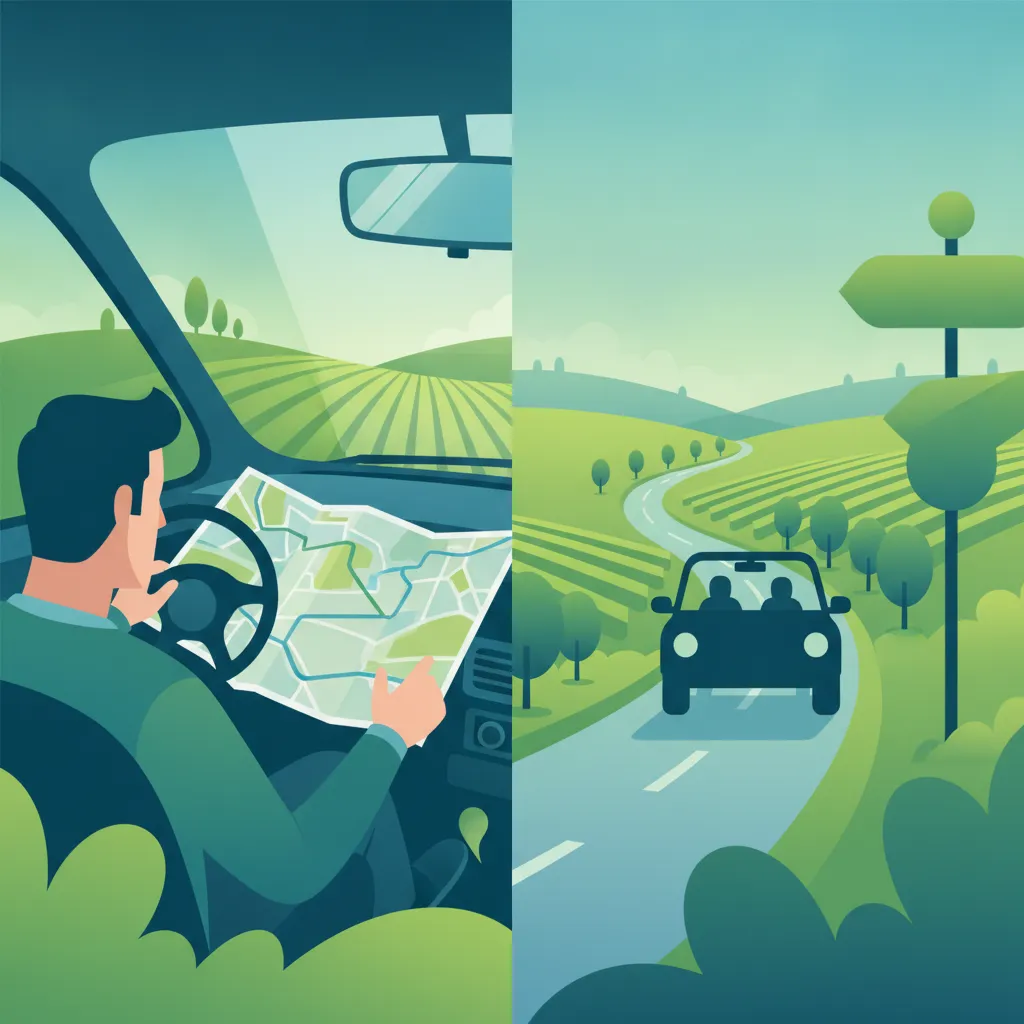
This lesson addresses the challenges of operating a large vehicle on rural roads, which often feature narrow lanes, sharp bends, and poor surfaces. It covers techniques for speed adaptation, gear selection for gradients, and maintaining lane position. The content emphasizes heightened awareness for hazards such as farm vehicles and animals.

This lesson addresses the specific challenges of driving alongside motorcyclists and large vehicles such as trucks and buses. It highlights the reduced visibility of motorcyclists and the extensive blind spots (no-zones) around heavy vehicles. Drivers will learn to provide extra space, anticipate wide turns, and adjust for factors like spray and wind turbulence.

This lesson provides essential safety guidance for interacting with large vehicles like buses and trucks. It emphasizes the importance of staying out of their extensive blind spots and allowing extra space due to their long stopping distances and wide turning circles. The content also offers advice on how to safely overtake such vehicles and navigate around public transport stops.

This lesson focuses on the complexities of braking in dense urban environments. It explains how vehicle mass, passenger load, and road conditions influence the total stopping distance of a large vehicle. Learners will understand the importance of anticipatory driving and proactive speed management to ensure safe braking at all times.

This lesson details the specific safety protocols for urban deliveries. It covers selecting a safe place to stop, using hazard warning lights correctly, and being highly aware of public movement around the vehicle. Procedures for safely reversing onto a loading dock, often with the help of a banksman, are also explained.

This lesson highlights the distinct risks associated with driving on rural roads, which often lack the safety features of major routes. It prepares drivers to anticipate and manage hazards such as sharp bends, limited visibility, poor road surfaces, and encounters with slow-moving agricultural vehicles or animals. Adapting speed and road positioning are emphasized as key defensive techniques.

This lesson emphasizes the importance of strict lane discipline for heavy vehicles. It covers how to maintain a central position in the lane, the correct procedure for signaling and checking before a lane change, and how to navigate multi-lane roundabouts. Proper lane discipline enhances safety and improves traffic flow for everyone.

This lesson focuses on the specific skills and regulations for motorway driving. It covers correct lane usage for HGVs, safe procedures for overtaking slower traffic, and the rules for using the hard shoulder or emergency refuge areas. Maintaining consistent speed and awareness of surrounding traffic is key to motorway safety.
Understand essential techniques for goods vehicle drivers navigating tight Portuguese urban spaces. Focuses on precise positioning, speed control, mirror usage, and priority rules when dealing with limited road width and complex turns. Crucial for avoiding damage and obstructions.
This lesson addresses the challenges of operating a large vehicle in congested urban areas. It teaches techniques for navigating narrow streets, positioning for loading bays, and executing tight turns with minimal impact on other traffic. A high level of situational awareness and anticipation is required for these environments.
This lesson details the specific safety protocols for urban deliveries. It covers selecting a safe place to stop, using hazard warning lights correctly, and being highly aware of public movement around the vehicle. Procedures for safely reversing onto a loading dock, often with the help of a banksman, are also explained.

This lesson provides guidance on operating within non-public road networks such as industrial estates, ports, and distribution centers. It covers understanding site layouts, following specific traffic flow rules, and maneuvering safely around loading bays and other operational areas. Adherence to site-specific safety protocols is paramount in these environments.
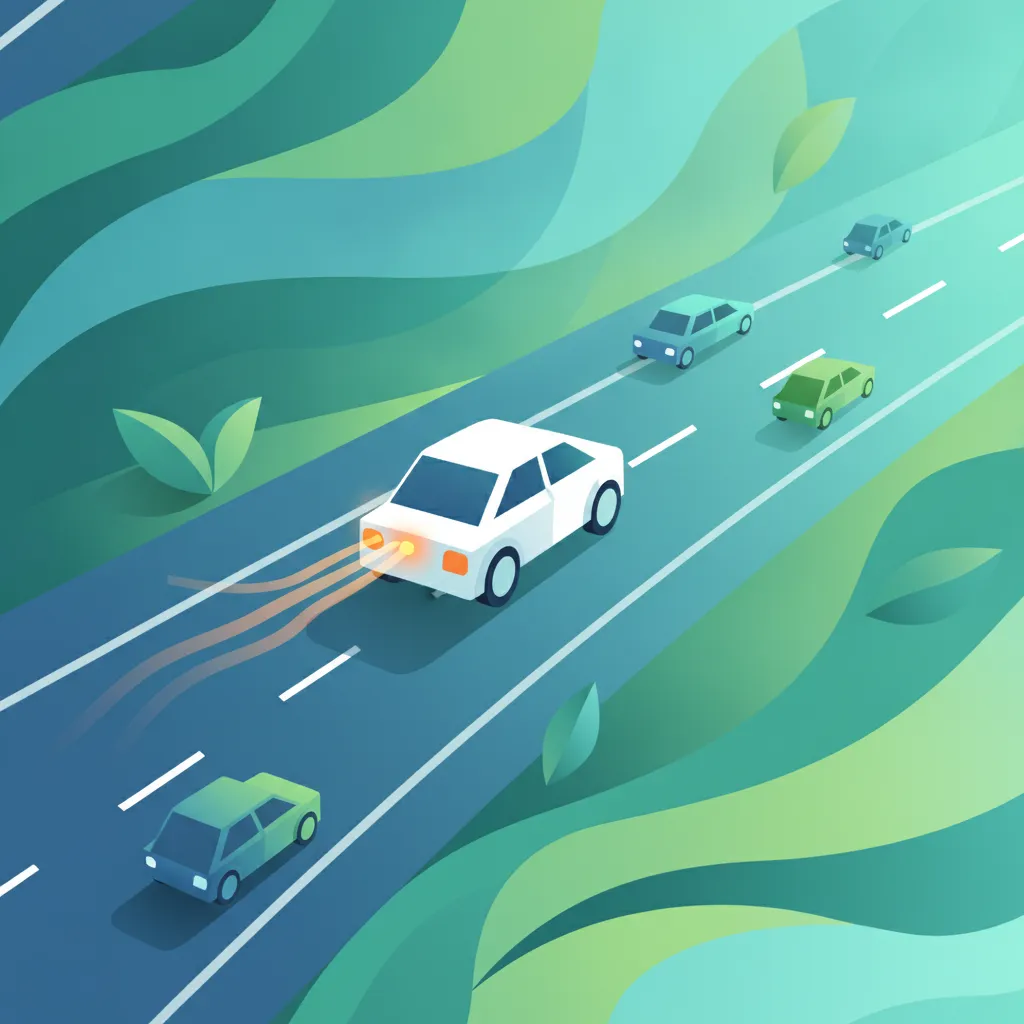
This lesson focuses on the specific skills required for driving on high-speed motorways. It details the procedures for safely merging onto and exiting the motorway, maintaining proper lane discipline, and adhering to variable speed limits. The content also provides rules for safe overtaking and managing the vehicle's stability at high speeds.
This lesson addresses the challenges of operating a large vehicle on rural roads, which often feature narrow lanes, sharp bends, and poor surfaces. It covers techniques for speed adaptation, gear selection for gradients, and maintaining lane position. The content emphasizes heightened awareness for hazards such as farm vehicles and animals.
This lesson addresses the unique challenges of driving a large vehicle on rural roads. It teaches how to approach sharp bends, position the vehicle for maximum visibility, and deal with poor or unpaved surfaces. Drivers will also learn how to interact safely with agricultural machinery and other common rural hazards.

This lesson focuses on riding safely on two-way roads and narrow lanes where space is limited. It emphasizes maintaining lane discipline, using the road edge when appropriate, and anticipating oncoming traffic. Techniques for safe passing, speed control, and positioning to maximize visibility and minimize collision risk are provided.
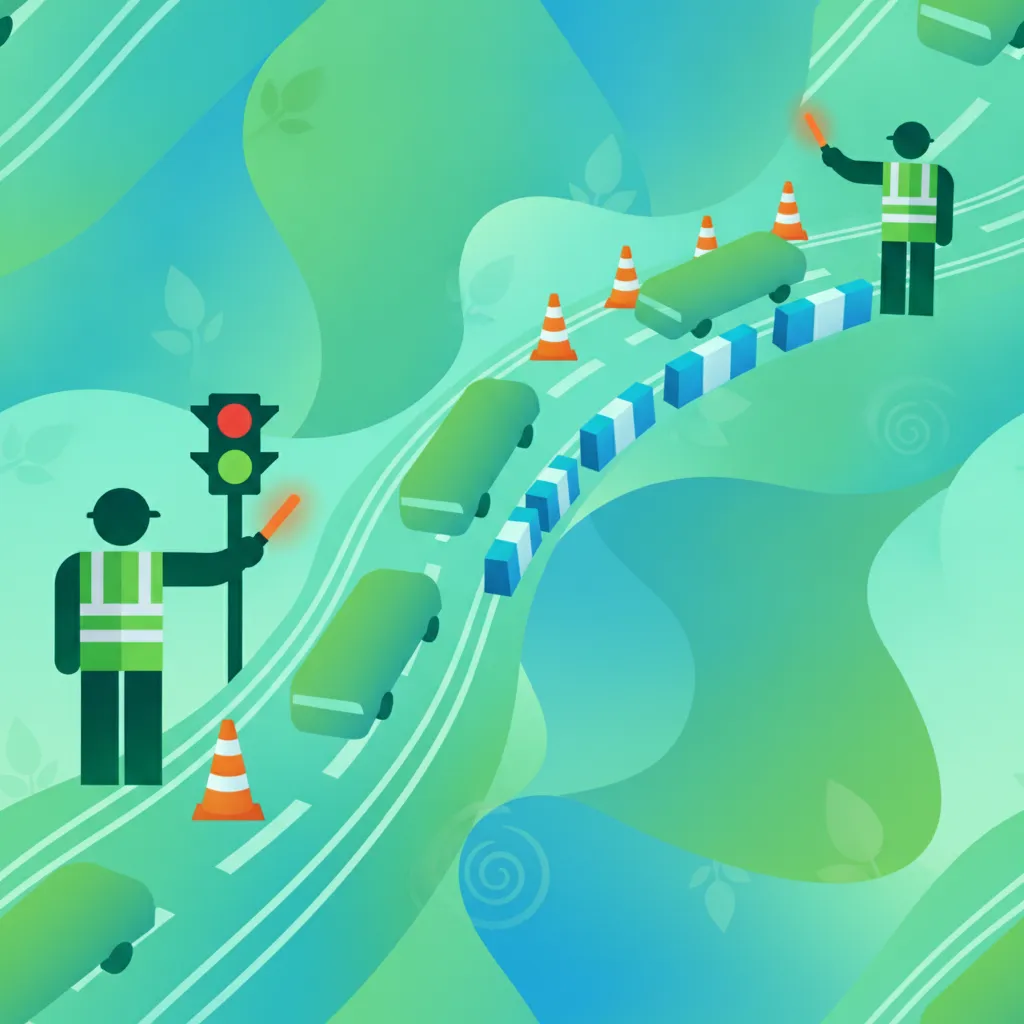
This lesson provides guidance on driving safely through roadwork zones. It covers the importance of obeying temporary speed limits, navigating narrow lanes and contraflow systems, and being highly aware of workers and machinery. A professional driver's vigilance is essential for preventing accidents in these potentially hazardous areas.
This lesson focuses on the specific skills and regulations for motorway driving. It covers correct lane usage for HGVs, safe procedures for overtaking slower traffic, and the rules for using the hard shoulder or emergency refuge areas. Maintaining consistent speed and awareness of surrounding traffic is key to motorway safety.
This lesson emphasizes the importance of strict lane discipline for heavy vehicles. It covers how to maintain a central position in the lane, the correct procedure for signaling and checking before a lane change, and how to navigate multi-lane roundabouts. Proper lane discipline enhances safety and improves traffic flow for everyone.
Find clear answers to common questions learners have about Conflict Situations in Narrow Streets and Historic Centers. Learn how the lesson is structured, which driving theory objectives it supports, and how it fits into the overall learning path of units and curriculum progression in Portugal. These explanations help you understand key concepts, lesson flow, and exam focused study goals.
Generally, if a street is too narrow for two heavy vehicles to pass, the driver who has the easier reversing path or the shorter distance to a wider section should yield, though specific road signs or local hierarchy often dictate priority.
Always consult your route plan and height/width restriction signs before entry. In the absence of signs, assess the street's width relative to your vehicle's widest point, accounting for mirrors and potential protruding balconies.
Yes, as a professional driver, any damage caused to public or private property is subject to strict liability. Maintaining slow speed and constant vigilance is required by the Código da Estrada to avoid such incidents.
Off-tracking causes your rear wheels to follow a tighter path than the front wheels. When turning in narrow streets, you must swing out slightly to ensure your rear wheels do not mount the curb or strike building corners.
Utilize the powerful search tool to refine your Portuguese driving theory practice. Pinpoint questions related to specific traffic laws, road signs, or complex scenarios from the Código da Estrada. Begin targeted revision now to boost your understanding and confidently approach your IMT driving exam.