
This lesson explores the critical relationship between weather conditions and the safe operation of heavy goods vehicles. As part of our Category C curriculum, you will learn how to adapt your driving to maintain control and safety when environmental factors challenge your vehicle's stability.
Lesson content overview
Driving heavy goods vehicles (HGVs) in Portugal, under the requirements of Advanced Driving Theory for Goods Vehicles (Category C), demands exceptional skill and awareness, particularly when faced with adverse weather conditions. Rain, strong winds, snow, and ice dramatically alter the dynamics of large vehicles, significantly impacting their stability, handling, and crucially, their braking performance. Understanding these effects is not merely good practice; it is fundamental to road safety and compliance with the Código da Estrada (Portuguese Road Code).
This lesson will delve into the science behind how weather phenomena interact with HGV characteristics, explaining core principles such as traction limitation, the dangers of hydroplaning, the destabilizing effects of crosswinds, and the drastic increase in braking distances on slippery surfaces. By mastering these concepts, professional Category C drivers can develop the proactive strategies necessary to maintain control, prevent accidents, and ensure the safe passage of their vehicle and its cargo, safeguarding both themselves and other road users.
Traction is the fundamental force that allows a vehicle to accelerate, brake, and steer. It represents the maximum frictional force between the tires and the road surface. For heavy goods vehicles, which rely on immense traction to manage their considerable weight and momentum, any reduction in this grip is a critical safety concern. Adverse weather conditions, particularly moisture and extreme temperatures, are primary culprits in reducing this essential friction.
When the road surface becomes wet, icy, or covered in snow, the coefficient of friction—a measure of the slipperiness of a surface—decreases significantly. This reduction directly translates to a diminished ability for the tires to "hold" the road. Consequently, HGVs experience reduced acceleration capability, impaired braking efficiency, and compromised stability when cornering. Professional drivers must internalize this principle and adjust their driving behavior accordingly to compensate for the compromised grip.
The interaction between a tire and the road surface is complex, involving mechanical interlock, adhesion, and deformation. On a dry, clear asphalt surface, tires can achieve high levels of friction, allowing for effective control. However, the introduction of water, ice, or snow creates a lubricating layer that disrupts this direct contact, drastically lowering the available friction.
For heavy vehicles, the problem is compounded by their mass. While their weight helps press the tires into the road, improving mechanical grip on dry surfaces, it also means that once traction is lost, the sheer inertia makes it incredibly difficult to regain control or stop the vehicle. Understanding this delicate balance between weight, speed, and friction is paramount for Category C drivers, as even a slight reduction in traction can have severe consequences for a multi-tonne vehicle.
One of the most insidious dangers on wet roads is hydroplaning, also known as aquaplaning. This condition occurs when a layer of water builds up between a vehicle's tires and the road surface, causing the tires to lose direct contact and ride on a film of water. When hydroplaning, the driver loses the ability to steer, brake, or accelerate effectively, essentially causing the vehicle to glide uncontrollably on the water.
Hydroplaning begins when the tires cannot displace water fast enough from their path. Factors contributing to hydroplaning include vehicle speed, tire tread depth and pressure, and the depth of the water on the road. For HGVs, the risk can be significant. While some might assume their weight makes them less susceptible, their wide tires, if not adequately maintained, can still create a water wedge at higher speeds. The immense inertia of a lorry means that once hydroplaning occurs, regaining control is extremely challenging and requires specific, smooth inputs.
There are generally two types of hydroplaning:
Preventing hydroplaning is critical for the safety of heavy vehicle operations. The most effective measure is to reduce speed on wet roads. Slower speeds allow the tires more time to displace water through their treads, maintaining contact with the road. Additionally, drivers should:
If you feel your HGV starting to hydroplane, resist the urge to brake sharply or make sudden steering corrections. Instead, ease your foot off the accelerator, keep the steering wheel pointed straight, and allow the vehicle to slow down naturally until the tires regain contact with the road.
Strong crosswinds pose another significant threat to the stability of heavy goods vehicles. Unlike cars, HGVs have a much larger side surface area and often a higher center of gravity, making them inherently more susceptible to lateral forces exerted by wind blowing perpendicular to their direction of travel.
When a powerful gust of wind hits the side of an HGV, it can exert substantial lateral force, pushing the vehicle sideways. This force can cause the vehicle to drift within its lane, or even into an adjacent lane, requiring constant steering corrections from the driver. Tall vehicles, such as those carrying empty containers or certain types of trailers (e.g., box trailers, car transporters), are particularly vulnerable due to their larger exposed surface area. An empty HGV can be more affected than a fully loaded one, as the reduced mass offers less resistance to external forces.
Bridges, elevated sections of motorways, open plains, and gaps between buildings are common areas where drivers may encounter sudden and powerful crosswinds. These conditions demand heightened vigilance and proactive driving adjustments.
To safely navigate strong crosswinds, Category C drivers should implement the following strategies:
Snow and ice represent the most extreme challenges for vehicle control, particularly for heavy goods vehicles. These frozen forms of moisture create incredibly low-friction surfaces that drastically reduce traction, making braking and steering exceptionally difficult.
On ice, the coefficient of friction can drop to a mere fraction of what it is on dry asphalt, sometimes by as much as 90%. This means that the braking distance for an HGV can increase by up to 400% compared to dry conditions. What might take 50 metres to stop on dry roads could require 200 metres or more on icy surfaces. The sheer mass of a heavy vehicle means it carries enormous momentum, and once it begins to slide on ice, bringing it to a controlled stop becomes a monumental task.
This drastic increase in required stopping distance underscores the critical need for significant speed reduction and greatly increased following distances. Drivers must understand that electronic braking systems (ABS) and traction control systems (TCS) can help manage wheel lock-up and maintain some degree of control, but they cannot magically create friction where none exists.
Navigating an HGV on snow and ice requires an entirely different approach to driving:
Black ice is one of the most dangerous road conditions. It is nearly invisible and offers almost no traction. Always assume shaded areas and bridges in cold, damp weather may harbor black ice.
A core responsibility of a Category C driver is to continuously assess risk and adapt their driving. This includes accurately calculating safe braking and following distances, which are profoundly affected by adverse weather conditions.
The physics behind braking distance dictates that it is inversely proportional to the coefficient of friction (μ) between the tires and the road. This means if friction halves, the braking distance doubles. Given that adverse weather can reduce friction by a substantial margin, the increase in stopping distance is not linear but exponential with speed.
For instance, at 70 km/h, a fully loaded HGV may require around 50-60 metres to stop on dry asphalt under ideal conditions. On a wet road, this could easily double to 100-120 metres. On ice, the required distance could stretch to 200-250 metres or more. These figures are illustrative but highlight the critical need for professional drivers to drastically increase their perception and reaction time, combined with reducing speed, to account for these extended stopping zones.
The concept of a "safe following distance" is crucial. While the common advice for cars might be a "two-second rule" in good conditions, professional HGV drivers are often advised to maintain at least a "four-second rule" even in clear weather, due to their longer stopping distances.
In adverse weather, this minimum must be significantly increased:
This extended following distance provides the critical time and space needed to perceive a hazard, react, and bring the heavy vehicle to a safe stop, even when traction is severely compromised. It also provides a buffer against sudden braking by vehicles ahead, which can be devastating for an HGV attempting to stop in slippery conditions.
In Portugal, the Código da Estrada (Road Code) explicitly mandates specific behaviors for drivers when faced with adverse weather. These regulations are designed to enhance safety and prevent accidents by compelling drivers, especially those operating heavy goods vehicles, to adapt their driving style to the prevailing conditions. Failure to adhere to these rules can result in significant penalties.
The Código da Estrada stipulates that drivers must adjust their speed to the prevailing road and weather conditions. This means that even if the posted speed limit is, for example, 90 km/h on a motorway, it is illegal and unsafe to maintain that speed during heavy rain, fog, snow, or strong winds. For heavy goods vehicles (Category C), this requirement is even more critical due to their longer stopping distances and greater susceptibility to weather effects. Drivers are expected to reduce their speed to a level that allows them to stop safely within the visible distance ahead and maintain full control of the vehicle.
Visibility is often severely reduced in adverse weather, making proper lighting essential. Portuguese regulations require:
Certain driving behaviors that might be permissible in good weather become dangerous and often illegal in adverse conditions. For HGVs, specific restrictions apply:
The table below summarizes key regulations and their implications for Category C drivers:
| Rule | Statement | Applicability | Legal Status | Rationale | Example of Correct Application | Example of Incorrect Application |
|---|---|---|---|---|---|---|
| Speed reduction in adverse weather | Drivers must adjust speed to road and weather conditions. | All road types under rain, snow, ice, fog, or strong winds. | Mandatory (Código da Estrada) | Reduces risk of loss of control and extends stopping distance allowance. | Reducing speed to 50 km/h on a motorway during heavy rain. | Maintaining the motorway speed limit of 90 km/h during a snowstorm. |
| Minimum safe following distance | Increase following distance when visibility or road grip is reduced. | All road types under adverse weather. | Mandatory | Allows sufficient reaction and braking time for heavy vehicles. | Doubling the normal four-second HGV gap to eight seconds during heavy rain. | Maintaining a four-second gap in dense fog, risking a rear-end collision. |
| Use of appropriate headlights | Switch to dipped beams in rain or fog, and use rear fog lights only when visibility < 100 m. | Urban, interurban, motorways under reduced visibility. | Mandatory | Improves visibility for the driver and makes the HGV visible to other road users. | Using dipped beams and front fog lights during heavy rain. | Driving with high beams in dense fog, causing severe glare for oncoming traffic. |
| Prohibition of harsh braking and steering | Avoid abrupt braking and steering in wet or icy conditions. | All road types under adverse weather. | Mandatory | Prevents loss of traction and vehicle skidding, especially critical for HGVs. | Applying gentle, progressive brake pressure and smooth steering on wet roads. | Sudden hard braking on an icy patch, leading to a jackknife or loss of control. |
| Special restrictions for HGVs in adverse weather | HGVs must reduce speed further and avoid overtaking on wet or icy roads unless absolutely necessary. | Motorways, major interurban roads under adverse weather. | Mandatory | HGVs have significantly longer stopping distances and are more affected by weather. | Reducing speed to 60 km/h on a motorway during moderate rain. | Attempting to overtake a slower vehicle in wet conditions, causing an accident. |
Even experienced Category C drivers can make mistakes in adverse weather. Recognizing these common errors and consciously adopting best practices is essential for safety.
Proactive hazard perception and early adaptation are your best defenses in adverse weather. Look far ahead, anticipate changes in road conditions, and adjust your speed and following distance before you encounter the hazard.
Mastering the challenges of adverse weather driving for heavy goods vehicles is a critical component of professional driving in Portugal. To further solidify your understanding and practical skills, explore related topics and engage in targeted practice.
Explore all units and lessons included in this driving theory course.
Lesson content overview
Explore all units and lessons included in this driving theory course.
Explore search topics learners often look for when studying Adverse Weather Effects on Vehicle Stability and Braking. These topics reflect common questions about road rules, driving situations, safety guidance, and lesson level theory preparation for learners in Portugal.
Browse additional driving theory lessons that cover connected traffic rules, road signs, and common driving situations related to this topic. Improve your understanding of how different rules interact across everyday traffic scenarios.
Explore the critical impact of rain, wind, and ice on heavy goods vehicle stability and braking. Learn essential Portuguese driving theory concepts for maintaining control and safety in challenging weather conditions. Essential for Category C licence holders.
This lesson explains how adverse weather conditions like rain and fog compromise visibility and vehicle control. It provides clear guidance on reducing speed, increasing following distance, and using lights and wipers effectively. The content also covers the phenomenon of hydroplaning and how to prevent loss of traction on wet roads.

This lesson focuses on adapting driving techniques for wet and foggy conditions, which significantly reduce visibility and tyre grip. It explains the phenomenon of aquaplaning and how to avoid it by reducing speed and ensuring proper tyre condition. The correct use of headlights, fog lights, and increasing following distances are presented as essential safety measures.

This lesson provides detailed guidance for riding in challenging weather conditions. It explains how rain affects braking distances and tire grip, and the importance of using lights correctly in fog to be seen. The content also offers practical advice on appropriate waterproof and high-visibility gear, as well as how strong winds can affect the stability of a lightweight vehicle.
This lesson addresses the specific challenges of driving alongside motorcyclists and large vehicles such as trucks and buses. It highlights the reduced visibility of motorcyclists and the extensive blind spots (no-zones) around heavy vehicles. Drivers will learn to provide extra space, anticipate wide turns, and adjust for factors like spray and wind turbulence.
This lesson teaches riders how to assess and adapt to the increased risks associated with adverse weather and road conditions. It explains how rain reduces tire grip and visibility, requiring lower speeds and gentler control inputs. The content also provides advice for dealing with other challenging conditions such as strong crosswinds, fog, and road surface hazards like potholes or gravel.

This lesson addresses the unique challenges of driving a large vehicle on rural roads. It teaches how to approach sharp bends, position the vehicle for maximum visibility, and deal with poor or unpaved surfaces. Drivers will also learn how to interact safely with agricultural machinery and other common rural hazards.

This lesson focuses on the specific skills and regulations for motorway driving. It covers correct lane usage for HGVs, safe procedures for overtaking slower traffic, and the rules for using the hard shoulder or emergency refuge areas. Maintaining consistent speed and awareness of surrounding traffic is key to motorway safety.

This lesson focuses on adapting riding techniques for rainy conditions and wet road surfaces. It covers the increased risk of hydroplaning, the need for longer braking distances, and adjustments to cornering and throttle control. Riders are advised on how to handle water accumulation and where to position themselves to maintain stability in wet conditions.
This lesson focuses on the specific skills required for driving on high-speed motorways. It details the procedures for safely merging onto and exiting the motorway, maintaining proper lane discipline, and adhering to variable speed limits. The content also provides rules for safe overtaking and managing the vehicle's stability at high speeds.

This lesson explains the dangerous phenomenon of brake fade, where brakes lose effectiveness due to overheating. It teaches drivers how to avoid this by using auxiliary braking systems and managing speed on long descents. The lesson also covers the techniques for executing a controlled emergency brake application in a critical situation.
Understand frequent mistakes made by heavy goods vehicle drivers in adverse weather like rain, wind, and ice. Learn best practices and essential adjustments for safe driving and compliance with Portuguese traffic regulations.
This lesson explains how adverse weather conditions like rain and fog compromise visibility and vehicle control. It provides clear guidance on reducing speed, increasing following distance, and using lights and wipers effectively. The content also covers the phenomenon of hydroplaning and how to prevent loss of traction on wet roads.
This lesson focuses on adapting driving techniques for wet and foggy conditions, which significantly reduce visibility and tyre grip. It explains the phenomenon of aquaplaning and how to avoid it by reducing speed and ensuring proper tyre condition. The correct use of headlights, fog lights, and increasing following distances are presented as essential safety measures.
This lesson emphasizes the importance of strict lane discipline for heavy vehicles. It covers how to maintain a central position in the lane, the correct procedure for signaling and checking before a lane change, and how to navigate multi-lane roundabouts. Proper lane discipline enhances safety and improves traffic flow for everyone.

This lesson focuses on the practical application of maintaining a safe gap from the vehicle ahead. It explains time-based rules for calculating following distance and how to adjust this gap for adverse weather or poor visibility. Developing excellent hazard perception and anticipation skills is key to avoiding emergency braking situations.
This lesson focuses on the specific skills and regulations for motorway driving. It covers correct lane usage for HGVs, safe procedures for overtaking slower traffic, and the rules for using the hard shoulder or emergency refuge areas. Maintaining consistent speed and awareness of surrounding traffic is key to motorway safety.
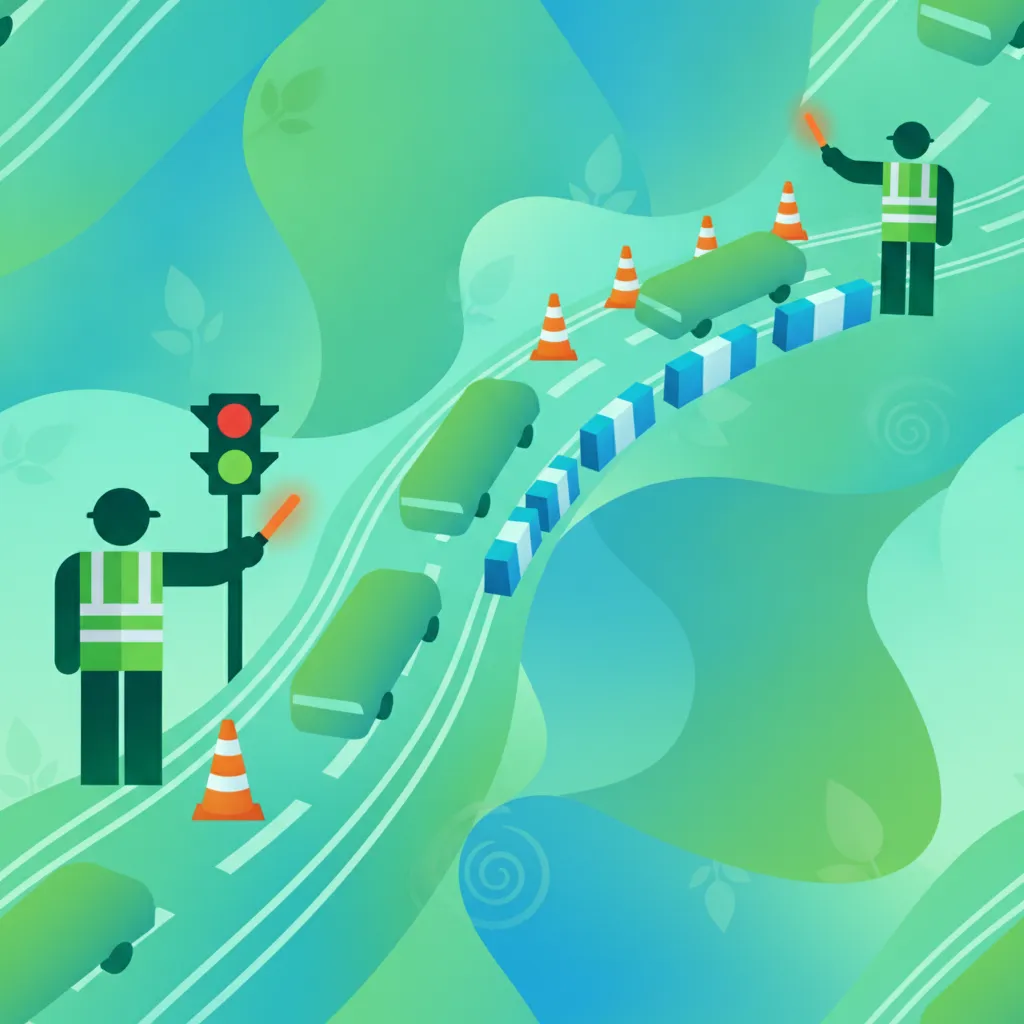
This lesson provides guidance on driving safely through roadwork zones. It covers the importance of obeying temporary speed limits, navigating narrow lanes and contraflow systems, and being highly aware of workers and machinery. A professional driver's vigilance is essential for preventing accidents in these potentially hazardous areas.
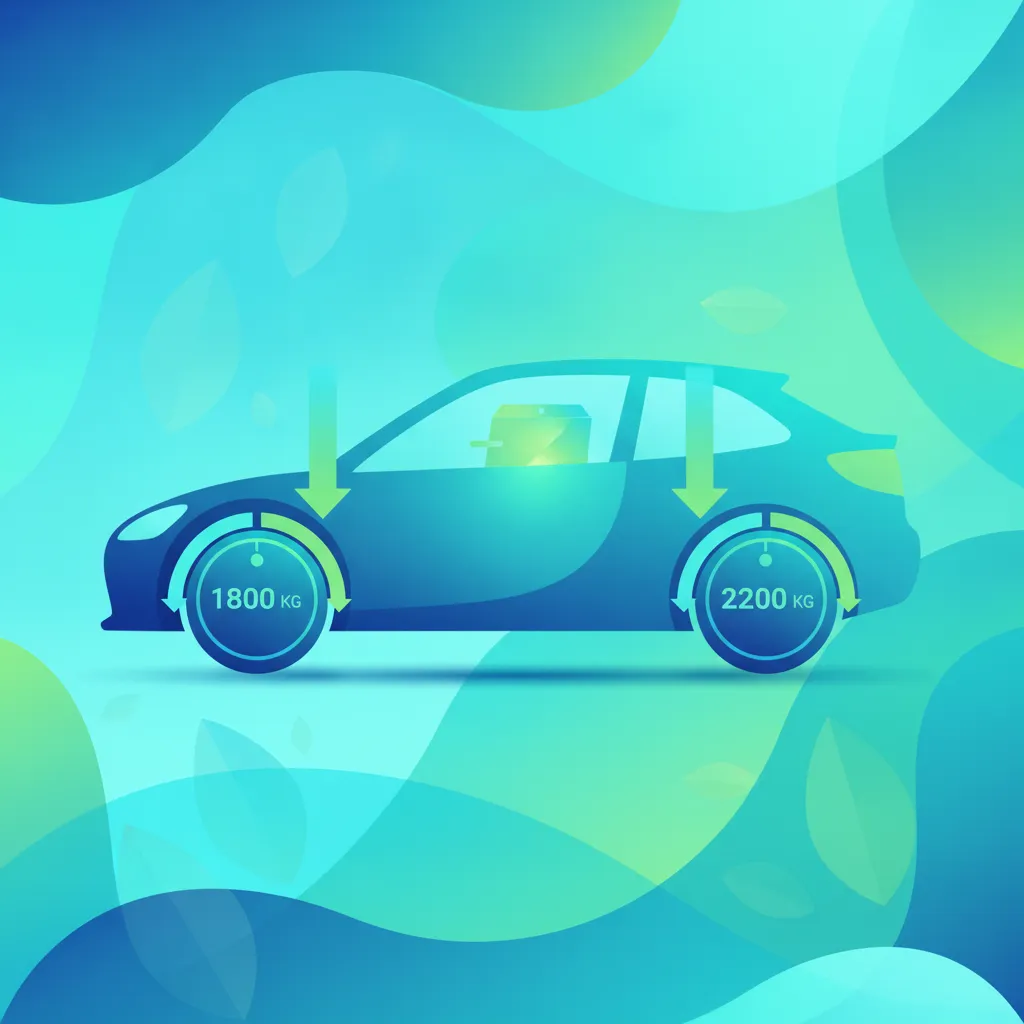
This lesson focuses on the critical importance of distributing weight correctly across the vehicle's axles. It explains how improper loading can negatively affect vehicle stability, handling, and braking effectiveness. Learners will understand how to comply with legal axle load limits to ensure safety and prevent excessive wear on the vehicle and roads.

This lesson provides a clear, step-by-step guide for managing on-road emergencies. It covers how to secure the vehicle and alert other traffic in a breakdown, the basic use of a fire extinguisher, and the driver's legal responsibilities after a collision. Knowing these procedures helps to protect everyone involved and manage the situation effectively.

This lesson covers the specific rules and legal responsibilities that apply when a vehicle is in a loading or unloading zone. It details regulations regarding parking, time limits, and the driver's role in ensuring a safe environment for themselves and others during cargo handling. Compliance is key to efficient and lawful logistics operations.
This lesson addresses the specific challenges of driving alongside motorcyclists and large vehicles such as trucks and buses. It highlights the reduced visibility of motorcyclists and the extensive blind spots (no-zones) around heavy vehicles. Drivers will learn to provide extra space, anticipate wide turns, and adjust for factors like spray and wind turbulence.
Find clear answers to common questions learners have about Adverse Weather Effects on Vehicle Stability and Braking. Learn how the lesson is structured, which driving theory objectives it supports, and how it fits into the overall learning path of units and curriculum progression in Portugal. These explanations help you understand key concepts, lesson flow, and exam focused study goals.
Category C vehicles have a high gross vehicle mass and rely on friction between the tyres and road. Water creates a film that reduces this grip, and the sheer weight of the vehicle increases inertia, meaning it takes much longer to come to a full stop compared to a lighter car.
If you experience hydroplaning, you must avoid sudden braking or steering. Gently ease off the accelerator to allow the speed to drop naturally until you feel the tyres regain contact with the road surface, then steer carefully to maintain control.
High-sided goods vehicles act like sails in strong crosswinds, which can cause the vehicle to drift or, in extreme cases, tip over. Drivers should slow down and be particularly cautious when emerging from tunnels or shielded areas onto open roads.
While legal speed limits are fixed, professional standards demand that you drive at a speed that is appropriate for conditions. If weather compromises visibility or stability, you are expected to reduce your speed well below the maximum limit to ensure safety.
Utilize the powerful search tool to refine your Portuguese driving theory practice. Pinpoint questions related to specific traffic laws, road signs, or complex scenarios from the Código da Estrada. Begin targeted revision now to boost your understanding and confidently approach your IMT driving exam.