
Logo
Portuguese Driving Theory Courses

Lesson 2 of the Weather, Motorways, Rural Roads, Roadworks and Emergency Situations unit

Portuguese Driving Theory C: Motorway Conduct: Lane Changes, Overtaking, and Stopping

This lesson guides you through the complexities of motorway driving for Category C vehicles, ensuring you understand how to navigate high-speed roads safely. It builds on your knowledge of vehicle dimensions and traffic flow, preparing you to handle lane discipline and emergency situations with professional competence. These skills are essential for both your theory exam and your future career as a goods vehicle driver in Portugal.

motorway drivingcategory C theorylane disciplineovertaking rulesheavy vehicle safety
Portuguese Driving Theory C: Motorway Conduct: Lane Changes, Overtaking, and Stopping

Lesson content overview

Portuguese Driving Theory C

Motorway Conduct for Goods Vehicles: Safe Lane Changes, Overtaking, and Emergency Stops in Portugal

Driving heavy goods vehicles (HGVs) on motorways, known as autoestradas in Portugal, demands a heightened level of skill, awareness, and adherence to specific regulations compared to driving a passenger car. This lesson, designed for aspiring professional drivers undertaking the Advanced Driving Theory for Goods Vehicles (Category C) in Portugal, focuses on the critical aspects of motorway conduct: disciplined lane usage, safe overtaking procedures, and the correct protocols for emergency stopping.

The unique characteristics of goods vehicles – their larger dimensions, heavier weights, longer braking distances, and larger blind spots – necessitate careful planning and execution of every maneuver. Mastering these aspects ensures not only your safety but also the safety of other road users, promotes smooth traffic flow, and guarantees compliance with the Portuguese Código da Estrada. This comprehensive guide will equip you with the knowledge to navigate Portuguese motorways efficiently and safely, preparing you for the challenges of professional driving.

Essential Lane Discipline for Heavy Goods Vehicles on Motorways

Effective lane discipline is fundamental to motorway safety and efficiency, especially for heavy goods vehicles. HGVs, due to their size and performance characteristics, have specific rules governing their use of motorway lanes in Portugal. The primary principle is to minimize disruption to traffic flow and reduce the risk of collisions.

Understanding Standard Lane Use for HGVs

On multi-lane motorways, goods vehicles are generally required to remain in the rightmost available lanes. This regulation prevents slower-moving or larger vehicles from impeding the flow of faster traffic, which typically uses the left lanes. The goal is to maintain a predictable and orderly traffic environment for all road users.

  • Default Position: Unless overtaking or unless road signs or markings dictate otherwise, a goods vehicle must always travel in the furthest right-hand lane suitable for its dimensions and speed.
  • Preventing Obstruction: Unnecessary occupation of left lanes by HGVs can lead to frustration among other drivers, encouraging unsafe overtaking maneuvers and increasing collision risks.
  • Lane Width Considerations: While typically confined to the right, in rare instances where the rightmost lane is demonstrably too narrow for a heavy vehicle, it may be permissible to use the adjacent lane, provided it is safe to do so and for the shortest duration possible. Always prioritize safety and follow road markings.

Rules for Using Overtaking Lanes

Goods vehicles are permitted to use the lane(s) to their immediate left for overtaking slower traffic. However, this must be done with extreme caution and strict adherence to specific procedures. It is not an invitation to remain in the left lane indefinitely.

  • Temporary Use: The overtaking lane (or lanes) should only be used for the duration necessary to safely pass a slower vehicle. Once the maneuver is complete, the driver must return to the rightmost appropriate lane.
  • No Prolonged Occupation: Driving in the left lane for extended periods when the right lanes are clear and suitable is a common violation of lane discipline and can result in penalties.
  • Anticipation and Planning: Due to their size and acceleration characteristics, HGV drivers must anticipate overtaking opportunities well in advance, ensuring there is sufficient space and time to complete the maneuver without causing disruption or danger.

Tip

Always assess the traffic situation several hundred meters ahead. Planning your lane changes early avoids sudden braking or forced maneuvers, enhancing safety for everyone.

Safe Overtaking Procedures (Manobra de Bloqueio e Siga) for Goods Vehicles

Overtaking, known as Manobra de Bloqueio e Siga in the Portuguese Driving Code, is a critical maneuver that, when executed incorrectly, poses significant risks, especially for heavy goods vehicles. Given their longer length, larger blind spots, and slower acceleration, HGV drivers must follow a precise and cautious procedure when passing other vehicles on the motorway.

Executing a Full Overtake Safely

A full overtake involves moving from your current lane into an adjacent lane, passing a slower vehicle, and then returning to your original lane. For HGVs, this sequence requires extra vigilance.

Step-by-Step Overtaking Procedure for HGVs

  1. Assess the Situation: Before considering an overtake, check your mirrors (rear-view and side-view) thoroughly. Look for any vehicles approaching rapidly from behind in the overtaking lane. Evaluate the speed of the vehicle you intend to overtake and ensure you have sufficient acceleration to complete the maneuver promptly.

  2. Check Blind Spots: Critical for HGVs. Perform a shoulder check by quickly glancing over your shoulder to confirm no vehicle is in your blind spot. HGVs have extensive blind spots along their sides.

  3. Signal Your Intention: Activate your left turn signal well in advance to alert other drivers of your intention to change lanes.

  4. Change Lanes Smoothly: Once safe, steer smoothly into the adjacent left lane. Maintain a consistent and appropriate speed, adhering to the legal speed limits for goods vehicles, while executing the lane change. Avoid abrupt movements.

  5. Accelerate and Pass: Gradually increase your speed to safely pass the slower vehicle. Ensure you maintain a safe lateral distance from the vehicle being overtaken. Do not exceed the maximum speed limit for your vehicle category on motorways.

  6. Signal to Return: Once you can see the overtaken vehicle completely in your right-side mirror (ensuring ample space between your rear and their front), activate your right turn signal.

  7. Return to Lane: Perform another quick mirror and blind spot check for your right side, then smoothly steer back into the rightmost appropriate lane. Deactivate your signal.

Avoiding Common Overtaking Mistakes

Several errors frequently occur during overtaking maneuvers by HGV drivers:

  • Overtaking on the Right: Except in specific circumstances (e.g., when traffic in the right lane is moving faster than the left lane due to congestion, or specific lane markings), overtaking on the right is generally prohibited and extremely dangerous. Always overtake from the left in Portugal.
  • Insufficient Speed or Space: Attempting to overtake without enough speed to complete the maneuver quickly or without sufficient space to return to the lane can lead to prolonged exposure in the overtaking lane, causing traffic build-up or forcing other drivers to brake.
  • Neglecting Blind Spots: The sheer size of an HGV means blind spots are larger and more critical. Failure to check them thoroughly is a common cause of side-swipe collisions.
Definition

Blind Spot

Areas around a vehicle that are not visible to the driver through direct vision or mirrors. For heavy goods vehicles, these areas are significantly larger and require extra vigilance.

Warning

Never attempt to 'block' or 'push' an overtaken vehicle. Maintain a safe distance and only return to your lane when you can see the entire front of the overtaken vehicle in your right-side mirror.

Emergency Stopping: Hard Shoulder (Acostamento) and Emergency Refuge Areas

The hard shoulder and designated emergency refuge areas are vital safety features on motorways, designed to provide a safe space for vehicles experiencing emergencies. Their correct use is paramount for HGV drivers, ensuring that emergency services can access incidents and that stopped vehicles do not pose additional hazards.

Strict Rules for Hard Shoulder (Acostamento) Usage

The Acostamento (hard shoulder) is the lane adjacent to the main carriageway, typically marked with a continuous white line. Its purpose is strictly for emergencies.

  • Emergency Only: You may only stop on the hard shoulder if your vehicle has broken down, you are involved in an accident, your vehicle poses a danger to traffic (e.g., due to a dangerous load shift), or if you are directed to do so by police or emergency services.
  • Prohibited Uses: It is strictly forbidden to use the hard shoulder for non-emergency reasons such as resting, taking a phone call, checking directions, or avoiding traffic jams. Such actions are illegal and create dangerous obstructions for genuine emergencies and rescue vehicles.
  • Immediate Action Post-Stop:
    1. Pull Over Safely: If an emergency occurs, signal, check your mirrors, and steer smoothly onto the hard shoulder, pulling as far to the left as safely possible, away from the flow of traffic.
    2. Activate Hazard Warning Lights: Immediately turn on your hazard warning lights (four-way flashers) to alert other drivers to your stationary vehicle.
    3. Ensure Driver Safety: If safe to do so, exit the vehicle from the left side (passenger side in right-hand drive countries, driver side in Portugal) and wait behind the safety barrier, if one exists, or at a safe distance from the vehicle and traffic.
    4. Place Warning Triangle: Place your reflective warning triangle at an appropriate distance behind your vehicle to further warn approaching traffic.
Definition

Hazard Warning Lights

Lights that flash simultaneously to indicate a vehicle is stationary or moving slowly and may pose a hazard to other traffic. Essential for emergency stops.

Utilizing Emergency Refuge Areas

Emergency refuge areas are specially designated stopping zones, often found on stretches of motorway without a continuous hard shoulder (e.g., in tunnels, on bridges, or areas where the shoulder is frequently obstructed) or at regular intervals on smart motorways.

  • Designated Safety Zones: These areas are distinct from the main carriageway and are typically marked with specific signage. They provide a safer, wider space than the hard shoulder.
  • Use When Hard Shoulder is Unavailable: HGV drivers should use emergency refuge areas if they experience a breakdown or other emergency and cannot safely reach or use the hard shoulder.
  • Not for Rest Stops: Like the hard shoulder, these areas are exclusively for emergencies. Drivers needing to rest should use designated service stations or rest stops (áreas de serviço or parques de estacionamento).
  • Procedure: If using an emergency refuge area, pull completely off the main carriageway, activate hazard lights, and follow the same safety protocols as for a hard shoulder stop (exit vehicle, stand behind barrier, deploy warning triangle).

Strategic Speed Management for Heavy Goods Vehicles on Motorways

Maintaining appropriate and consistent speed is a cornerstone of safe motorway driving, particularly for Category C vehicles. Due to their significant mass, HGVs have longer braking distances and different acceleration characteristics, making judicious speed management critical for preventing accidents and maintaining control.

In Portugal, goods vehicles have specific speed limits on motorways that are typically lower than those for passenger cars. It is imperative to know and respect these limits.

Note

Always be aware of the specific speed limits for your vehicle type (Category C) and load on Portuguese motorways. These limits can vary based on vehicle weight and configuration (e.g., with or without a trailer). Always observe posted signage, which takes precedence.

Adjusting Speed for Conditions

Beyond the posted limits, HGV drivers must dynamically adjust their speed based on a variety of factors:

  • Load Distribution and Weight: A fully loaded HGV requires significantly more distance to stop than an empty one. Drivers must reduce speed accordingly, especially in adverse conditions. Understanding your vehicle's load distribution, as covered in Lesson 3: Loads, Cargo Security, Stability and Safety Checks, is crucial.
  • Weather Conditions: Rain, fog, strong winds, or icy conditions drastically reduce grip, visibility, and vehicle stability. In such circumstances, speeds must be reduced considerably, and following distances increased. This builds on knowledge from Lesson 8.1: Adverse Weather Effects on Vehicle Stability and Braking.
  • Road Surface: Uneven, wet, or damaged road surfaces demand lower speeds to maintain traction and prevent loss of control.
  • Traffic Density: In heavy traffic, maintaining a lower, consistent speed reduces the need for sudden braking and allows for greater reaction time.
Definition

Following Distance

The safe space maintained between your vehicle and the vehicle directly in front of you, allowing sufficient time and distance to react and stop safely if needed. For HGVs, this distance must be substantially greater due to their longer braking distances.

Importance of Consistent Cruising Speed

Maintaining a consistent speed within legal limits contributes significantly to road safety and fuel efficiency.

  • Predictability: A steady speed makes your vehicle's behavior predictable to other drivers, reducing sudden braking incidents and facilitating smoother traffic flow.
  • Reduced Braking: Avoiding unnecessary acceleration and deceleration minimizes wear and tear on brakes and tires, and reduces the risk of brake fade, which is a particular concern for heavy vehicles on long descents.
  • Fuel Efficiency: Consistent speeds generally lead to better fuel consumption, an important economic factor for professional drivers.

Common Motorway Violations for Goods Vehicles and How to Avoid Them

Understanding and avoiding common errors is just as important as knowing the rules. Many incidents on motorways involving goods vehicles stem from a few recurring mistakes.

  1. Improper Lane Occupation:

    • Mistake: Driving in the leftmost lane for extended periods without actively overtaking.
    • Why it's wrong: Impedes faster traffic, causes congestion, and leads to dangerous overtaking by frustrated drivers.
    • Correct practice: Remain in the rightmost appropriate lane unless you are actively overtaking.
  2. Attempting to Overtake on the Right:

    • Mistake: Passing a slower vehicle from the right lane.
    • Why it's wrong: Generally prohibited by Portuguese law and extremely dangerous, especially given the extensive blind spots of HGVs.
    • Correct practice: Always overtake from the left, ensuring clear visibility and sufficient space.
  3. Stopping on the Hard Shoulder for Non-Emergencies:

    • Mistake: Using the Acostamento for rest, phone calls, or navigation.
    • Why it's wrong: Blocks the emergency lane for genuine breakdowns or emergency services, creating a severe hazard.
    • Correct practice: Use designated rest areas or service stations for non-emergency stops.
  4. Failure to Activate Hazard Warning Lights During an Emergency Stop:

    • Mistake: Pulling over for an emergency without immediately activating hazard lights.
    • Why it's wrong: Other drivers may not realize your vehicle is stationary, leading to potential rear-end collisions, particularly in low visibility.
    • Correct practice: Activate hazard lights the moment you pull over for an emergency.
  5. Incorrect Speed Adjustment for Load, Weather, or Traffic:

    • Mistake: Maintaining high speed with a full load in heavy rain or dense traffic.
    • Why it's wrong: Drastically increases braking distance, reduces vehicle control, and heightens the risk of hydroplaning or losing control.
    • Correct practice: Reduce your speed according to the vehicle's load, current weather, road conditions, and traffic density, even if it's below the posted limit.
  6. Lane Change Without Adequate Blind Spot Checks:

    • Mistake: Changing lanes after only checking mirrors, without a physical shoulder check.
    • Why it's wrong: HGV blind spots are significant; a vehicle can easily be hidden, leading to side-swipe collisions.
    • Correct practice: Always perform thorough mirror checks and a quick shoulder check before initiating any lane change.

Conditional Logic and Contextual Variations in Motorway Driving

Motorway conditions are rarely constant. HGV drivers must be adept at adjusting their driving behavior based on various contextual factors.

Impact of Weather and Visibility

  • Rain and Wet Roads: Increase following distances significantly. Reduce speed to prevent hydroplaning. Ensure wipers are effective and use dipped headlights (médios) to improve visibility for yourself and others.
  • Fog and Low Visibility: Reduce speed drastically. Use fog lights if equipped and mandatory for conditions. Increase following distance. Lane changes must be executed with extreme caution, using clear signals. The hard shoulder may be completely obscured; look for emergency refuge areas.
  • Strong Winds: HGVs, especially when empty or lightly loaded, are highly susceptible to strong crosswinds. Grip the steering wheel firmly and anticipate sudden pushes. Be extra careful when passing gaps in windbreaks or large vehicles that momentarily block the wind.

Road Type and Lane Configuration

  • Multi-lane Motorways: Most motorways have three or more lanes per direction. HGVs are typically restricted to the two rightmost lanes (e.g., in Portugal, the right and middle lane on a three-lane motorway). Never use the furthest left lane unless specifically permitted or directed.
  • Narrow Lanes/Roadworks: During roadworks or on older motorway sections, lanes may be temporarily narrowed. Drivers must exercise extreme caution, reduce speed, and ensure their vehicle can safely fit within the marked lane boundaries.

Vehicle State

  • Fully Loaded vs. Empty: A fully loaded HGV has vastly different handling and braking characteristics compared to an empty one. Always drive according to your current load's impact on vehicle dynamics.
  • Towing a Trailer: Vehicles towing trailers (e.g., articulated vehicles, road trains) have even longer overall lengths and require more space for maneuvers and longer braking distances. They also have specific speed limits and lane restrictions.

Interactions with Vulnerable Road Users

While rare on motorways, HGV drivers must remain vigilant for:

  • Broken-down vehicles or pedestrians: Emergency situations on the hard shoulder can involve people outside their vehicles.
  • Motorcyclists: They can be harder to spot, especially in blind spots.
  • Cyclists or pedestrians from slip roads: While highly uncommon, vigilance is always necessary near motorway entrances and exits.

Tip

Constantly scan the road far ahead and use all your mirrors to build a comprehensive mental picture of the traffic around you. This proactive approach helps anticipate hazards and react safely to changing conditions.

Fundamental Safety Principles and Reasoning Insights

Effective motorway conduct for goods vehicle drivers isn't just about memorizing rules; it's about understanding the underlying physics and safety principles that dictate these regulations.

  • Physics of Stopping: The greater the mass of a vehicle, the greater its kinetic energy, and thus the longer it takes to stop. For an HGV, this means significantly increased braking distances compared to passenger cars. This principle underpins the need for larger following distances and reduced speeds, especially when loaded, reinforcing concepts from Lesson 5: Speed, Braking, Following Distance, Gradients and Heavy Vehicle Control.
  • Blind Spot Management: The sheer dimensions of heavy goods vehicles create extensive blind spots. Understanding where these blind spots are and actively checking them (using mirrors and shoulder checks) before any maneuver is critical to avoid collisions.
  • Psychological Aspects and Predictability: Predictable driving behavior reduces stress for all road users. When HGV drivers maintain consistent speeds, signal clearly, and adhere to lane discipline, they contribute to a smoother, safer traffic flow, minimizing sudden reactions from other drivers.
  • Human Factors: Fatigue is a significant risk factor in professional driving. Long stretches on motorways can be monotonous, increasing the risk of fatigue. Drivers must recognize the signs of tiredness and take legally mandated breaks, planning their journeys to include rest stops at service stations, not on the hard shoulder.

Final Concept Summary: Mastering Motorway Conduct

To summarize, safe and compliant motorway conduct for heavy goods vehicle drivers in Portugal hinges on several core principles:

  • Lane Discipline: HGVs must predominantly use the rightmost lanes, reserving left lanes strictly for safe overtaking maneuvers.
  • Overtaking Safety: The Manobra de Bloqueio e Siga must be executed meticulously from the left, involving thorough mirror checks, blind spot checks, clear signaling, and a return to the appropriate lane once clear.
  • Emergency Stopping: The Acostamento (hard shoulder) and emergency refuge areas are for genuine emergencies only. Non-emergency stops are prohibited and dangerous. Hazard warning lights must always be activated.
  • Speed Management: Adhere strictly to HGV-specific speed limits and adjust speed proactively based on vehicle load, weather conditions, and traffic density. Maintain extended following distances.
  • Constant Awareness: Vigilance, anticipation, and comprehensive mirror scanning are crucial to managing the unique challenges of driving a heavy vehicle on motorways.

By consistently applying these principles, goods vehicle drivers contribute significantly to road safety and efficient traffic flow on Portuguese motorways, fulfilling their professional responsibilities.

Learn more with these articles

Check out these practice sets


Search topics related to Motorway Conduct: Lane Changes, Overtaking, and Stopping

Explore search topics learners often look for when studying Motorway Conduct: Lane Changes, Overtaking, and Stopping. These topics reflect common questions about road rules, driving situations, safety guidance, and lesson level theory preparation for learners in Portugal.

motorway rules for category C vehicles in Portugalhow to overtake as a truck driver theory testlane discipline on autoestradas for heavy vehiclesusing the hard shoulder rules Portugal driving theoryCategory C driving theory exam motorway questionssafe lane change techniques for goods vehiclesemergency refuge area rules Portugal theory exam

Related driving theory lessons for Motorway Conduct: Lane Changes, Overtaking, and Stopping

Browse additional driving theory lessons that cover connected traffic rules, road signs, and common driving situations related to this topic. Improve your understanding of how different rules interact across everyday traffic scenarios.

Advanced Motorway Lane Discipline and Priority for Goods Vehicles

Explore advanced strategies for lane discipline and priority management for heavy goods vehicles on Portuguese motorways. Understand nuanced rules for lane changes and overtaking to ensure safety and compliance.

motorwaylane disciplinepriority rulesgoods vehiclesadvanced driving theoryPortugal
Lane Discipline and Positioning on Multilane Roads lesson image

Lane Discipline and Positioning on Multilane Roads

This lesson emphasizes the importance of strict lane discipline for heavy vehicles. It covers how to maintain a central position in the lane, the correct procedure for signaling and checking before a lane change, and how to navigate multi-lane roundabouts. Proper lane discipline enhances safety and improves traffic flow for everyone.
Portuguese Driving Theory CLane Use, Turning, Reversing, Manoeuvring and Trailer Awareness
View lesson
Operating on Motorways and Express Roads lesson image

Operating on Motorways and Express Roads

This lesson focuses on the specific skills required for driving on high-speed motorways. It details the procedures for safely merging onto and exiting the motorway, maintaining proper lane discipline, and adhering to variable speed limits. The content also provides rules for safe overtaking and managing the vehicle's stability at high speeds.
Portuguese Driving Theory DWeather, Motorways, Rural Routes, Terminals and Long-Distance Service
View lesson
Lane Discipline and Use of Dedicated Bus Lanes lesson image

Lane Discipline and Use of Dedicated Bus Lanes

This lesson reinforces the importance of strict lane discipline for large vehicles. It details the rules for using dedicated bus lanes, including entry and exit points and operational time restrictions. The content also covers the procedures for safely changing lanes and overtaking in a multi-lane environment.

Portuguese Driving Theory DLane Use, Turning, Blind Spots, Reversing and Manoeuvring
View lesson
Lane Discipline and Overtaking Rules lesson image

Lane Discipline and Overtaking Rules

This lesson details the rules of lane discipline and the procedures for safe overtaking. It explains how to maintain correct lane positioning and how road markings and signs define where overtaking is allowed or forbidden. The lesson emphasizes the importance of the mirror-signal-manoeuvre routine and ensuring sufficient space and visibility before attempting to pass another vehicle.

Portuguese Driving Theory BRoad Markings, Lane Use and Traffic Directions
View lesson
Bus Lanes, Priority Rules and Restrictions lesson image

Bus Lanes, Priority Rules and Restrictions

This lesson explains the regulations governing the use of dedicated bus lanes, including operational hours and priority rules at junctions. It clarifies which other vehicles may use these lanes and under what circumstances. The content also discusses traffic signal priority systems and the legal implications of improper bus lane usage.
Portuguese Driving Theory DSigns, Bus Rules, Restrictions, Stops and Route Awareness
View lesson
Motorway Rules and Etiquette lesson image

Motorway Rules and Etiquette

This lesson explains the unique set of rules that apply to motorway driving to facilitate safe, high-speed travel. It covers the correct procedure for entering and exiting the motorway, principles of lane discipline (keeping left unless overtaking), and the rules for safe overtaking. The lesson also clarifies the proper use of the hard shoulder or emergency lane for genuine emergencies only.
Portuguese Driving Theory BWeather, Night Driving, Motorways, Rural Roads and Roadworks
View lesson
Riding on Motorways and Expressways: Speed Management and Lane Discipline lesson image

Riding on Motorways and Expressways: Speed Management and Lane Discipline

This lesson focuses on the specifics of riding on motorways, covering speed management, lane discipline, and safe entry and exit strategies. Riders will learn how to choose appropriate lanes, maintain safe following distances at high speeds, and execute overtaking safely. The impact of wind and understanding Portuguese motorway signage are also addressed.

Portuguese Motorcycle Theory AWeather, Road Surfaces, Night Riding and Motorway Riding
View lesson
Merging into Traffic and Lane Changes lesson image

Merging into Traffic and Lane Changes

This lesson details the systematic process for changing lanes and merging with traffic, particularly when entering a motorway from an acceleration lane. It emphasizes the critical importance of the mirror-signal-blind spot check routine. The content also explains how to judge a safe gap in the traffic and adjust vehicle speed to merge smoothly and without disrupting the flow.
Portuguese Driving Theory BManoeuvres, Parking, Reversing, Overtaking and Merging
View lesson
Reserved Lanes and Bus Lanes lesson image

Reserved Lanes and Bus Lanes

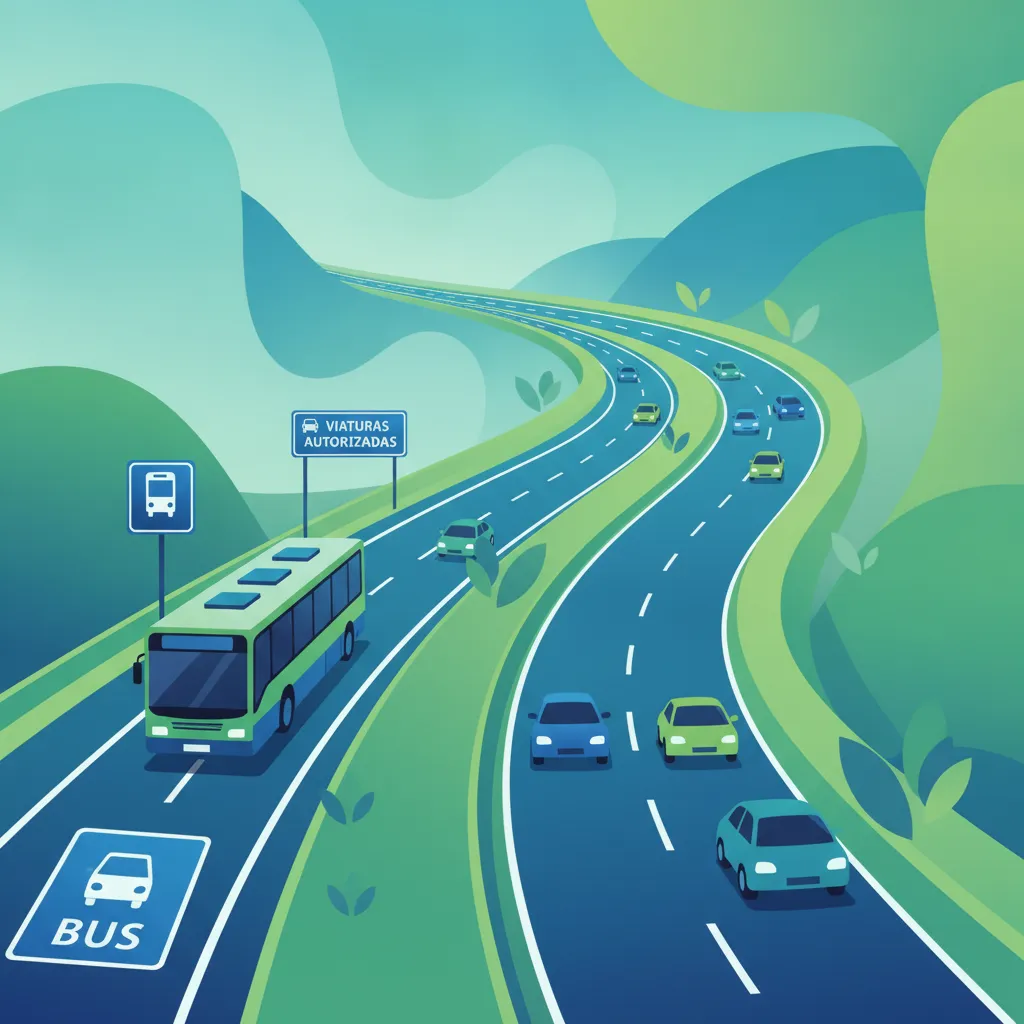
This lesson explains the purpose and rules of reserved lanes, such as those designated for buses, taxis, or cyclists. It covers how to identify these lanes through signage and road markings, and details the specific times they may be in operation. Drivers will learn when they are permitted to enter these lanes and the penalties for unauthorized use.
Portuguese Driving Theory BRoad Markings, Lane Use and Traffic Directions
View lesson
Managing Roadworks and Temporary Traffic Arrangements lesson image

Managing Roadworks and Temporary Traffic Arrangements

This lesson provides guidance on driving safely through roadwork zones. It covers the importance of obeying temporary speed limits, navigating narrow lanes and contraflow systems, and being highly aware of workers and machinery. A professional driver's vigilance is essential for preventing accidents in these potentially hazardous areas.

Portuguese Driving Theory CWeather, Motorways, Rural Roads, Roadworks and Emergency Situations
View lesson

Motorway Hazards and Emergency Procedures for HGVs in Portugal

Learn about common motorway hazards, correct procedures for emergency stops on the hard shoulder or refuge areas, and breakdown management for goods vehicles according to Portuguese traffic law.

motorwayhazardsemergency stopbreakdowngoods vehiclesdriving theoryPortugal
Emergency Procedures: Breakdowns, Fires, and Crashes lesson image

Emergency Procedures: Breakdowns, Fires, and Crashes

This lesson provides a clear, step-by-step guide for managing on-road emergencies. It covers how to secure the vehicle and alert other traffic in a breakdown, the basic use of a fire extinguisher, and the driver's legal responsibilities after a collision. Knowing these procedures helps to protect everyone involved and manage the situation effectively.

Portuguese Driving Theory CWeather, Motorways, Rural Roads, Roadworks and Emergency Situations
View lesson
Operating on Motorways and Express Roads lesson image

Operating on Motorways and Express Roads

This lesson focuses on the specific skills required for driving on high-speed motorways. It details the procedures for safely merging onto and exiting the motorway, maintaining proper lane discipline, and adhering to variable speed limits. The content also provides rules for safe overtaking and managing the vehicle's stability at high speeds.

Portuguese Driving Theory DWeather, Motorways, Rural Routes, Terminals and Long-Distance Service
View lesson
Managing Roadworks and Temporary Traffic Arrangements lesson image

Managing Roadworks and Temporary Traffic Arrangements

This lesson provides guidance on driving safely through roadwork zones. It covers the importance of obeying temporary speed limits, navigating narrow lanes and contraflow systems, and being highly aware of workers and machinery. A professional driver's vigilance is essential for preventing accidents in these potentially hazardous areas.

Portuguese Driving Theory CWeather, Motorways, Rural Roads, Roadworks and Emergency Situations
View lesson
Safe Following Distance and Stopping Strategies lesson image

Safe Following Distance and Stopping Strategies

This lesson focuses on the practical application of maintaining a safe gap from the vehicle ahead. It explains time-based rules for calculating following distance and how to adjust this gap for adverse weather or poor visibility. Developing excellent hazard perception and anticipation skills is key to avoiding emergency braking situations.
Portuguese Driving Theory CSpeed, Braking, Following Distance, Gradients and Heavy Vehicle Control
View lesson
Emergency Procedures and Evacuation Protocols lesson image

Emergency Procedures and Evacuation Protocols

This lesson provides critical instructions for managing emergencies such as a fire or breakdown. It details the protocol for stopping the vehicle safely, alerting authorities, and communicating clearly with passengers. The content includes a step-by-step guide to vehicle evacuation, including the use of emergency exits and assisting vulnerable passengers.

Portuguese Driving Theory DEmergencies, Evacuation, Fatigue, Penalties and Safe Passenger Service
View lesson
Emergency Procedures and Responsible Driving lesson image

Emergency Procedures and Responsible Driving

This lesson equips drivers with the essential knowledge for managing a roadside emergency. It outlines the correct steps to take following a vehicle breakdown or an accident, including securing the scene with a warning triangle, wearing a reflective vest, and contacting emergency services. The lesson concludes by reinforcing the principles of responsible and courteous driving as part of a positive road safety culture.

Portuguese Driving Theory BAlcohol, Drugs, Fatigue, Penalties, Emergencies and Responsible Driving
View lesson
Motorway Rules and Etiquette lesson image

Motorway Rules and Etiquette

This lesson explains the unique set of rules that apply to motorway driving to facilitate safe, high-speed travel. It covers the correct procedure for entering and exiting the motorway, principles of lane discipline (keeping left unless overtaking), and the rules for safe overtaking. The lesson also clarifies the proper use of the hard shoulder or emergency lane for genuine emergencies only.

Portuguese Driving Theory BWeather, Night Driving, Motorways, Rural Roads and Roadworks
View lesson
Rural Road Driving: Sharp Curves and Unpaved Surfaces lesson image

Rural Road Driving: Sharp Curves and Unpaved Surfaces

This lesson addresses the unique challenges of driving a large vehicle on rural roads. It teaches how to approach sharp bends, position the vehicle for maximum visibility, and deal with poor or unpaved surfaces. Drivers will also learn how to interact safely with agricultural machinery and other common rural hazards.

Portuguese Driving Theory CWeather, Motorways, Rural Roads, Roadworks and Emergency Situations
View lesson
Rural Road Driving and Route Planning lesson image

Rural Road Driving and Route Planning

This lesson addresses the challenges of operating a large vehicle on rural roads, which often feature narrow lanes, sharp bends, and poor surfaces. It covers techniques for speed adaptation, gear selection for gradients, and maintaining lane position. The content emphasizes heightened awareness for hazards such as farm vehicles and animals.

Portuguese Driving Theory DWeather, Motorways, Rural Routes, Terminals and Long-Distance Service
View lesson
Lane Discipline and Positioning on Multilane Roads lesson image

Lane Discipline and Positioning on Multilane Roads

This lesson emphasizes the importance of strict lane discipline for heavy vehicles. It covers how to maintain a central position in the lane, the correct procedure for signaling and checking before a lane change, and how to navigate multi-lane roundabouts. Proper lane discipline enhances safety and improves traffic flow for everyone.

Portuguese Driving Theory CLane Use, Turning, Reversing, Manoeuvring and Trailer Awareness
View lesson

Frequently asked questions about Motorway Conduct: Lane Changes, Overtaking, and Stopping

Find clear answers to common questions learners have about Motorway Conduct: Lane Changes, Overtaking, and Stopping. Learn how the lesson is structured, which driving theory objectives it supports, and how it fits into the overall learning path of units and curriculum progression in Portugal. These explanations help you understand key concepts, lesson flow, and exam focused study goals.

Can a Category C vehicle use all lanes on a three-lane motorway in Portugal?

Generally, Category C vehicles must use the rightmost lanes. You should only move to a middle or left lane when necessary to overtake or to allow traffic to enter from an access ramp, always returning to the right lane as soon as it is safe to do so.

What is the primary danger when changing lanes with a heavy vehicle?

The primary danger is the extensive blind spot. Always ensure you have sufficient space before starting your maneuver, use your extended mirrors correctly, and signal your intentions clearly to give other drivers enough time to react.

When am I legally allowed to use the hard shoulder?

The hard shoulder is reserved exclusively for emergency situations, such as a vehicle breakdown or medical necessity. It should never be used for overtaking or to avoid traffic congestion.

How does vehicle load affect my speed on a motorway?

Heavy loads increase your inertia and braking distance. You must adjust your speed to maintain a safe following distance that accounts for the added mass, ensuring you can stop safely even in unexpected traffic slowing.

Ready to Find Your Next Targeted Practice Session?

Utilize the powerful search tool to refine your Portuguese driving theory practice. Pinpoint questions related to specific traffic laws, road signs, or complex scenarios from the Código da Estrada. Begin targeted revision now to boost your understanding and confidently approach your IMT driving exam.

Search Practice Questions by Topic

Continue your Portuguese driving theory learning journey

Portuguese road signsPortuguese article topicsSearch Portuguese road signsPortuguese driving theory homePortuguese road sign categoriesPortuguese driving theory topicsSearch Portuguese theory articlesPortuguese driving theory coursesPortuguese Driving Theory B coursePortuguese Driving Theory C coursePortuguese Driving Theory D coursePortuguese driving theory articlesPortuguese driving theory practicePortuguese practice set categoriesPortuguese Driving Theory AM coursePortuguese Motorcycle Theory A coursePortuguese driving licence proceduresSearch Portuguese driving theory practicePortuguese driving theory terminology A–ZPortuguese driving theory terms and glossaryBraking, Cornering, Grip and Motorcycle Control unit in Portuguese Motorcycle Theory AMotorcycle Licence Basics and Rider Responsibility unit in Portuguese Motorcycle Theory ASigns, Restrictions, Route Planning and Access Limits unit in Portuguese Driving Theory CIntersections, Roundabouts, Crossings and Urban Riding unit in Portuguese Motorcycle Theory AWeather, Road Surfaces, Night Riding and Motorway Riding unit in Portuguese Motorcycle Theory AGoods Vehicle Licence Scope and Professional Responsibility unit in Portuguese Driving Theory CRisk Behaviour, Emergencies, Penalties and Defensive Riding unit in Portuguese Motorcycle Theory APassenger Vehicle Licence Scope and Professional Responsibility unit in Portuguese Driving Theory DLane Positioning, Blind Spots, Overtaking and Space Management unit in Portuguese Motorcycle Theory AAlcohol, Drugs, Fatigue, Penalties, Emergencies and Responsible Driving unit in Portuguese Driving Theory BEmergency Procedures: Breakdowns, Fires, and Crashes lesson in Weather, Motorways, Rural Roads, Roadworks and Emergency SituationsRural Road Driving: Sharp Curves and Unpaved Surfaces lesson in Weather, Motorways, Rural Roads, Roadworks and Emergency SituationsManaging Roadworks and Temporary Traffic Arrangements lesson in Weather, Motorways, Rural Roads, Roadworks and Emergency SituationsAdverse Weather Effects on Vehicle Stability and Braking lesson in Weather, Motorways, Rural Roads, Roadworks and Emergency SituationsMotorway Conduct: Lane Changes, Overtaking, and Stopping lesson in Weather, Motorways, Rural Roads, Roadworks and Emergency Situations