
This lesson covers the critical regulations for driving hours and mandatory rest periods for heavy goods vehicles. By mastering these rules, you will understand how to correctly operate tachographs and implement effective fatigue management strategies to ensure compliance with the Código da Estrada and professional safety standards.

Lesson content overview
Managing fatigue is paramount for professional drivers, particularly those operating goods vehicles in Category C. Adhering to legal driving hours and mandatory rest periods is not merely a bureaucratic requirement; it is a critical safety measure designed to protect drivers, other road users, and cargo. This lesson delves into the European regulations governing drivers' hours and explains the essential role of tachographs—both analogue and digital—in ensuring compliance and promoting road safety within the context of Advanced Driving Theory for Goods Vehicles (Category C) in Portugal.
Ignoring these rules can lead to severe consequences, from hefty fines and legal penalties to increased risk of accidents due to impaired judgment and delayed reaction times. A thorough understanding of these regulations is fundamental for any aspiring professional driver in Portugal.
To effectively manage your schedule and comply with regulations, it's crucial to distinguish between various time categories defined by law. These categories form the foundation of fatigue management legislation.
Driving Time refers to the period during which a driver is actively controlling a vehicle on a public road. This includes any time spent driving between loading and unloading sites, or simply moving the vehicle for any transport-related purpose. It is the most direct measure of time spent behind the wheel, which accumulates fatigue.
Regulations specifically limit this time to prevent drivers from becoming overly tired. It's important to differentiate driving time from other activities; for instance, waiting in a queue with the engine running but the vehicle stationary is generally considered working time, not active driving, unless the vehicle is moving in short bursts.
Working Time encompasses a broader range of activities than just driving. It includes not only driving time but also all other duties related to the transport task. This can involve loading and unloading goods, supervising loading and unloading, assisting passengers, cleaning and maintenance of the vehicle, conducting daily vehicle inspections, administrative paperwork, and any waiting periods where the driver is at their post or otherwise at the disposal of the employer.
The total working time, not just driving time, contributes to overall fatigue. Therefore, regulations also set limits on total working hours to ensure drivers are not overworked. Professional drivers must accurately record all these activities.
Rest Periods are uninterrupted periods during which a driver is free from any work duties and is able to recover physically and mentally. These periods are crucial for restoring alertness and reaction times. The law distinguishes between daily and weekly rest periods, each with specific minimum durations and requirements.
Crucially, rest periods are not simply breaks taken during a shift; they are designated blocks of time off duty, often including overnight stays, designed for complete recuperation.
Breaks are shorter periods of rest taken during working time, specifically designed to alleviate fatigue during long shifts. Unlike daily or weekly rest periods, breaks are integrated into the working day and do not count towards the mandatory daily or weekly rest requirements. They provide immediate relief, allowing drivers to stretch, refresh, and momentarily step away from their duties before resuming work.
The legal framework for drivers' hours and rest periods for goods vehicles (Category C) in Portugal is primarily governed by European Union regulations, specifically EC Regulation No 561/2006. These rules are designed to enhance road safety, improve working conditions for drivers, and ensure fair competition.
Professional drivers are permitted to drive for a maximum of 9 hours within a 24-hour period. This daily driving limit can be extended to 10 hours twice a week. It is vital to manage your schedule to ensure you do not exceed these limits, as every minute counts.
Plan your routes and stops meticulously to avoid exceeding the daily driving limit, especially when unexpected delays occur. Always have a contingency plan.
The total accumulated driving time over a single week (defined as a Monday 00:00 to Sunday 24:00 period) must not exceed 56 hours. This limit aims to prevent excessive cumulative fatigue throughout the work week.
To ensure long-term driver well-being and prevent chronic fatigue, there is also a limit on driving over any two consecutive weeks. A driver must not exceed 90 hours of driving time in any two consecutive weeks. This means if you drove 56 hours in one week, you would only have 34 hours available for driving in the subsequent week.
After completing a shift, a driver must take a minimum Daily Rest Period. A regular daily rest period is 11 consecutive hours within each 24-hour period.
It is possible to take a reduced daily rest period of at least 9 consecutive hours, but this can only be done a maximum of three times between any two weekly rest periods. Any reduction must be compensated by an equivalent period of rest taken en bloc before the end of the next week. This compensation adds to a regular daily or weekly rest period.
The 24-hour period for calculating daily rest starts from the moment you begin your work shift, not from midnight.
A regular weekly rest period must be at least 45 consecutive hours. This must be taken within any period of six 24-hour periods from the end of the previous weekly rest period.
Alternatively, a reduced weekly rest period of at least 24 consecutive hours is permitted. However, any reduction from the 45-hour regular rest must be compensated for by an equivalent period of rest. This compensatory rest must be taken en bloc before the end of the third week following the week in question, by attaching it to another rest period of at least 9 hours. For example, if you take a 24-hour reduced WRP (a reduction of 21 hours), you must add 21 hours to a future rest period within the next three weeks.
Drivers must take a minimum break of 45 minutes after a maximum of 4.5 hours of driving time. This break can be taken as a single 45-minute period or split into two parts:
The second break must be taken no later than the end of the 4.5-hour driving period. These breaks interrupt continuous driving and help combat immediate fatigue.
Tachographs are mandatory recording devices fitted in commercial vehicles to document drivers' activities, including driving time, other work, and rest periods. They are crucial for enforcing regulations and provide objective evidence of compliance. Professional drivers of goods vehicles (Category C) must be proficient in their use, whether operating an analogue or digital system.
The analogue tachograph is a mechanical device that records a driver's activities on a waxed paper chart. These charts are specific to each 24-hour period and driver.
Key aspects of analogue tachograph use:
Common mistakes with analogue tachographs include failing to properly annotate the chart, forgetting to change modes, and damaging the chart, which can lead to invalid records and penalties.
Digital tachographs are electronic devices that automatically record driving, work, and rest data onto an internal memory and onto a driver's digital smart card. This system offers greater accuracy and reduces opportunities for manipulation compared to analogue systems. Digital tachographs are mandatory for most new heavy goods vehicles registered after May 1, 2006.
Key aspects of digital tachograph use:
Insert your personal digital driver card into slot 1 of the tachograph unit. Ensure it is inserted correctly, chip-side up.
The tachograph will prompt you to confirm your country of start. Select the correct country (e.g., Portugal).
Review any manual entries the tachograph suggests from your last withdrawal, confirming or amending your previous rest period.
Ensure the tachograph displays the correct activity mode, usually "Rest" if you are starting after a rest period. Change to "Other Work" or "Availability" as needed before driving.
Forgetting to insert your digital driver card before starting work is a serious offense, as it results in unrecorded activity, making it impossible to prove compliance. Always verify the card is properly inserted and recognized.
Non-compliance with driving hours and rest period regulations carries significant legal penalties in Portugal, in line with EU mandates. Understanding common violations is the first step towards avoiding them.
In Portugal, inspections can occur at any time, anywhere. Be prepared to present your driver card and tachograph records for the current day and the previous 28 calendar days.
It is important to note that the transport undertaking (employer) also bears significant responsibility for ensuring drivers comply with these regulations. They must organize schedules, provide proper training, and ensure vehicles are equipped with functioning tachographs. Both drivers and companies can face penalties for non-compliance.
While adhering to the legal minimums is mandatory, a truly professional driver understands that effective fatigue management goes beyond mere compliance. Various contextual factors can increase fatigue, necessitating proactive adjustments.
Listen to your body. If you feel tired, pull over in a safe place and rest, even if you haven't reached your mandatory break time. Your safety and the safety of others on the road depend on your alertness.
The legal rationale behind these regulations is clear: fatigue impairs judgment, slows reaction times, and increases the likelihood of human error, which is a major contributing factor to road accidents. Data-driven evidence consistently shows a higher accident rate for drivers operating beyond regulated limits. By diligently managing driving hours, working time, and rest periods, and by using tachographs correctly, professional drivers uphold their legal obligations, safeguard their own health, and contribute significantly to overall road safety.
Explore all units and lessons included in this driving theory course.
Lesson content overview
Explore all units and lessons included in this driving theory course.
Explore search topics learners often look for when studying Fatigue Management and Legal Driving Hours. These topics reflect common questions about road rules, driving situations, safety guidance, and lesson level theory preparation for learners in Portugal.
Browse additional driving theory lessons that cover connected traffic rules, road signs, and common driving situations related to this topic. Improve your understanding of how different rules interact across everyday traffic scenarios.
Understand the European Union's legal framework for drivers' hours and rest periods applicable in Portugal. Learn how to correctly use analogue and digital tachographs to record driving, work, and rest times accurately.

This lesson provides a clear breakdown of the legal speed limits for different categories of goods vehicles in Portugal. It covers the maximum speeds permitted on motorways, dual carriageways, rural roads, and within built-up areas. Adhering to these specific limits is a fundamental aspect of safe and legal professional driving.

This lesson details the critical documentation that must be carried in a goods vehicle at all times. It explains the purpose of the vehicle registration, technical inspection certificate, insurance, and cargo-specific documents like the CMR. Proper documentation is essential for regulatory compliance and avoiding fines during roadside inspections.

This lesson covers the specific rules and legal responsibilities that apply when a vehicle is in a loading or unloading zone. It details regulations regarding parking, time limits, and the driver's role in ensuring a safe environment for themselves and others during cargo handling. Compliance is key to efficient and lawful logistics operations.
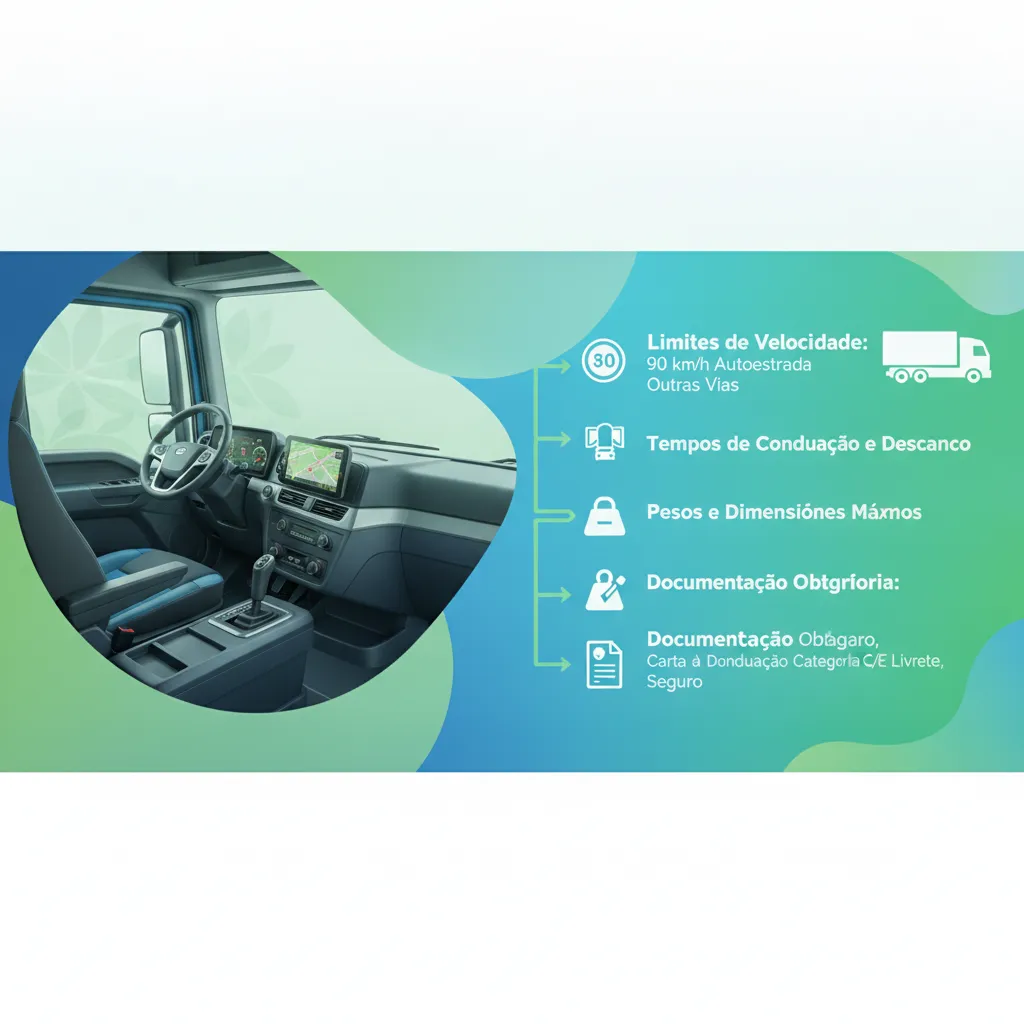
This lesson provides a detailed overview of the Portuguese legal framework governing goods vehicles. It covers key articles of the Código da Estrada relevant to vehicle classification, weight limits, and dimensions. Drivers will learn to identify their legal obligations and understand the role of enforcement authorities in ensuring road safety and compliance.

This lesson provides a comprehensive checklist of all the documentation a professional driver must have available for inspection. It covers the driver's own licence and qualification cards, the vehicle's legal documents, and the paperwork related to the specific load being transported. Having all documents in order is vital for smooth and legal transit.

This lesson provides a comprehensive guide to the road signs that are of particular importance to HGV drivers. It covers prohibitory signs that restrict access based on vehicle weight or dimensions, as well as mandatory signs that dictate lane use or direction. Correct interpretation of these signs is essential for legal and safe operation.

This lesson focuses on the specific skills and regulations for motorway driving. It covers correct lane usage for HGVs, safe procedures for overtaking slower traffic, and the rules for using the hard shoulder or emergency refuge areas. Maintaining consistent speed and awareness of surrounding traffic is key to motorway safety.

This lesson focuses on the specific skills required for driving on high-speed motorways. It details the procedures for safely merging onto and exiting the motorway, maintaining proper lane discipline, and adhering to variable speed limits. The content also provides rules for safe overtaking and managing the vehicle's stability at high speeds.

This lesson provides guidance on driving safely through roadwork zones. It covers the importance of obeying temporary speed limits, navigating narrow lanes and contraflow systems, and being highly aware of workers and machinery. A professional driver's vigilance is essential for preventing accidents in these potentially hazardous areas.
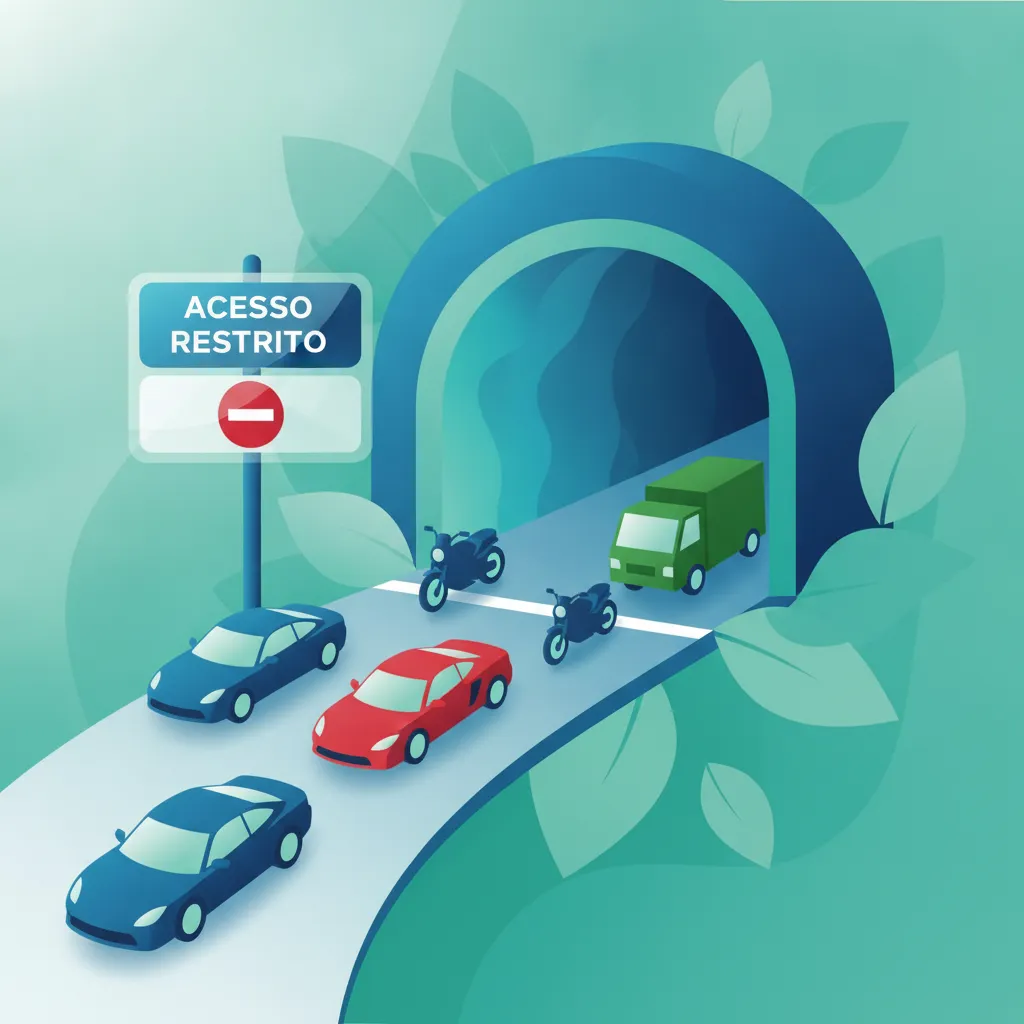
This lesson teaches drivers to recognize and adhere to access restrictions commonly found on the road network. It covers signs indicating weight, height, and width limits for structures like bridges and tunnels. Understanding these restrictions is vital for effective route planning and avoiding costly damage or fines.
Explore advanced strategies for managing driver fatigue that go beyond legal minimums. Learn how environmental factors, vehicle conditions, and personal well-being impact alertness and safety for professional drivers in Portugal.

This lesson addresses the serious risks of driving while fatigued, distracted, or stressed. It teaches drivers to recognize the early warning signs and explains the legal regulations regarding driving hours and rest periods. The content offers practical strategies for managing stress and minimizing distractions to maintain focus on the driving task.

This lesson highlights the serious danger of driving while fatigued, which can be as impairing as alcohol. It teaches drivers to recognize the early warning signs of tiredness, such as yawning, heavy eyelids, and difficulty concentrating. The importance of proper journey planning, including scheduling regular rest breaks, is emphasized as the primary strategy for preventing fatigue-related accidents.
Find clear answers to common questions learners have about Fatigue Management and Legal Driving Hours. Learn how the lesson is structured, which driving theory objectives it supports, and how it fits into the overall learning path of units and curriculum progression in Portugal. These explanations help you understand key concepts, lesson flow, and exam focused study goals.
The tachograph is a legal device used to record driving time, breaks, rest periods, and other work performed by the driver. It ensures that transport companies and drivers comply with European driving hour regulations.
The core regulations regarding daily driving limits and mandatory rest periods are generally consistent across the C-category spectrum within the European and Portuguese legal framework. Always verify specific load or trailer conditions that may impact your vehicle status.
Exam questions often present scenarios involving trip length, shift scheduling, or the identification of physical signs of tiredness. You must be able to apply the rules of mandatory breaks to these scenarios.
Failure to record activity accurately is a serious legal violation in Portugal, leading to heavy fines, potential licence suspension, and increased scrutiny from traffic authorities.
Utilize the powerful search tool to refine your Portuguese driving theory practice. Pinpoint questions related to specific traffic laws, road signs, or complex scenarios from the Código da Estrada. Begin targeted revision now to boost your understanding and confidently approach your IMT driving exam.