
This lesson explores the essential physics of braking and stopping distances for large passenger vehicles operating in dense urban areas. You will learn how vehicle mass, passenger load, and road surface conditions directly impact your stopping ability and how to apply proactive speed management. Understanding these principles is critical for maintaining safety and passing the Portuguese Category D theory exam.

Lesson content overview
Operating large passenger vehicles, such as buses and coaches, in dense urban environments presents unique challenges, especially concerning safe stopping distances. Unlike smaller cars, these vehicles possess significantly greater mass and inertia, which directly impacts the distance required to come to a complete stop. This lesson delves into the critical factors influencing stopping distances, the physics behind them, and the proactive strategies professional drivers must employ to ensure passenger safety and prevent collisions in city traffic.
Navigating urban landscapes means encountering frequent stops, diverse road users including pedestrians and cyclists, and variable traffic flows. For professional passenger vehicle operators in Portugal, mastering the management of stopping distances is not merely a skill; it is a fundamental professional responsibility encoded in the Código da Estrada. A comprehensive understanding of how factors like vehicle speed, passenger load, and road conditions influence the total distance required to stop safely is paramount for preventing accidents and ensuring smooth, comfortable journeys for passengers. This chapter will equip you with the knowledge to make informed decisions and maintain optimal safety margins at all times.
The act of stopping a moving vehicle is a physical process governed by several interconnected factors. To understand how to manage stopping distances effectively, it's essential to break down the total process into its core components: reaction time, reaction distance, and braking distance. Each plays a distinct role and is influenced by different variables.
Reaction time refers to the interval between a driver perceiving a hazard or a need to stop and the moment they physically initiate the braking action. This seemingly brief period is critical, especially for large, heavy vehicles that carry significant kinetic energy. For most professional drivers, a typical reaction time is often estimated to be around 1.5 seconds under ideal conditions. However, this can be significantly prolonged by factors such as driver fatigue, distraction, illness, or even unexpected events that require more cognitive processing time.
During this reaction time, the vehicle continues to travel at its current speed, covering a certain reaction distance. For a bus or coach, this distance can be substantial. For example, a bus traveling at 50 km/h (approximately 13.9 meters per second) will cover roughly 21 meters during a 1.5-second reaction period. This distance is covered before the brakes even begin to engage. Professional drivers must develop heightened situational awareness and anticipatory skills to minimize this reaction time and effectively shorten the overall stopping distance.
Once the driver applies the brakes, the vehicle begins to decelerate, covering the braking distance until it comes to a complete halt. This distance is influenced by a multitude of factors, making it highly variable. The most significant factor is speed: braking distance increases exponentially with speed. Specifically, if you double your speed, your braking distance quadruples. This is because the kinetic energy a vehicle possesses is proportional to the square of its speed (E ∝ v²), meaning more energy needs to be dissipated to stop the vehicle.
Other crucial factors affecting braking distance include:
The total stopping distance is the sum of the reaction distance and the braking distance. It represents the complete distance a vehicle travels from the moment a driver perceives a hazard until the vehicle comes to a full stop. In dynamic urban environments, calculating this distance precisely in real-time is impossible. Instead, professional drivers must continuously estimate and manage this distance by adjusting their speed, following distance, and level of anticipation.
Understanding that every additional kilometer per hour dramatically increases the total stopping distance is fundamental. This relationship underpins the need for cautious speed management, particularly for Category D vehicles operating in busy city areas where hazards can emerge without warning.
For professional passenger vehicle drivers, a nuanced understanding of how various factors interact to influence stopping distances is vital. These factors are not isolated but combine to create complex scenarios that demand constant vigilance and adaptation.
One of the most significant distinguishing factors for professional passenger vehicles is the variability of their load effect. A bus or coach can go from being empty at the start of a route to being fully laden with dozens of passengers and their luggage. Each additional kilogram of mass directly increases the vehicle's inertia and kinetic energy, which in turn extends the braking distance.
Drivers must be acutely aware of their current load. A bus carrying 50 passengers will require a significantly longer stopping distance than the same bus carrying only 5 passengers. This necessitates proactive adjustments to speed and following distance throughout the route as passengers board and alight.
The condition of the road surface is a primary determinant of the coefficient of friction, which directly impacts how effectively tires can grip the road.
Professional drivers must constantly assess road conditions and adjust their driving behavior accordingly. This often means reducing speed and increasing following distances well in advance of a potential stopping point.
Speed is the single most influential factor in determining stopping distance. As established, braking distance increases with the square of speed. This means that a small increase in speed results in a disproportionately larger increase in stopping distance.
Urban environments inherently have lower speed limits, often 50 km/h or even 30 km/h in residential areas, school zones, or historical centers, for precisely this reason. These limits are designed to:
Professional drivers must always adhere to posted speed limits, but more importantly, they must adjust their speed below the limit when conditions (load, weather, traffic, visibility) demand it. Driving at the posted limit when conditions are adverse is not necessarily safe or legal, as per Portuguese traffic law (Código da Estrada).
Remember the "Square Rule": If you double your speed, your braking distance quadruples. This critical principle underscores why even small speed reductions in urban areas yield significant safety benefits.
In the context of stopping distances, anticipatory driving transforms a reactive process into a proactive one. For large passenger vehicles, this approach is non-negotiable for safety, efficiency, and passenger comfort.
Anticipatory driving involves continuously scanning the road environment far ahead and to the sides, looking for potential hazards and predicting how they might develop. Instead of reacting to a sudden event, the driver aims to anticipate it and take action preemptively.
For a bus or coach driver in an urban setting, this means:
By processing this information early, the driver gains valuable extra seconds. These seconds allow for gradual deceleration, effectively shifting some of the "reaction distance" into "anticipation distance," leading to smoother, safer stops.
A safe following distance is the gap between your vehicle and the vehicle ahead that allows you to stop safely if the vehicle in front suddenly brakes. For large passenger vehicles, this distance must be significantly greater than for cars due to their longer stopping distances.
A common guideline is the "3-second rule" in ideal conditions:
Choose a fixed point ahead (e.g., a sign or a tree).
When the vehicle ahead passes that point, start counting "one thousand and one, one thousand and two, one thousand and three."
If your vehicle reaches the fixed point before you finish counting, you are following too closely.
Adjusting the 3-Second Rule: In adverse conditions (wet roads, heavy load, poor visibility, downhill slopes), this rule should be extended to 4, 5, or even more seconds. For large, heavy passenger vehicles, a 4-second gap is often recommended as a minimum in good conditions, increasing significantly in poor ones.
Maintaining an adequate following distance provides the necessary buffer for both your reaction time and the increased braking distance of a bus or coach. It also minimizes the need for abrupt braking, enhancing passenger comfort and safety.
Professional drivers are expected to operate their vehicles smoothly, which includes braking. Abrupt braking causes passengers to be thrown forward, potentially leading to injuries, discomfort, and even panic. It also puts undue stress on the vehicle's braking system and tires.
Smooth braking involves a gradual and controlled application of the brakes. This is achieved through anticipatory driving, allowing the driver to start decelerating early and gently.
The primary braking system of the vehicle, activated by the foot pedal, used for routine stopping and speed reduction.
The slowing effect produced by releasing the accelerator and/or downshifting gears, using the engine's resistance to motion to help decelerate the vehicle.
The Código da Estrada (Portuguese Road Code) lays down specific rules that implicitly and explicitly govern how drivers, particularly professional ones, must manage stopping distances. While it doesn't provide exact numerical stopping distances, it mandates behaviors that ensure safety.
Key regulatory principles for professional passenger vehicle drivers include:
Failure to adhere to these principles can lead to fines, penalties, and points on a driver's license, in addition to the severe consequences of a collision.
Even experienced drivers can fall prey to common errors related to stopping distances. Awareness of these pitfalls is the first step toward avoiding them.
Let's consider some real-world scenarios that demand an understanding of stopping distance management for a Category D professional driver in an urban setting.
Setting: A bus is traveling at 40 km/h on a wet urban road, approaching a traffic light that has just turned amber. There are other vehicles ahead, and pedestrians are waiting to cross. Decision Point: Deciding when and how to begin braking to stop safely before the intersection without an abrupt stop. Correct Behavior: The driver, having observed the wet road and the amber light, immediately reduces speed by easing off the accelerator and gently applying the brakes earlier than they would on a dry road. They increase the following distance to the vehicle ahead. This allows for smooth deceleration and a controlled stop at the stop line, accounting for the reduced friction and increased braking distance on the wet surface. Explanation: Wet conditions significantly extend braking distance. Anticipating the need to stop and initiating braking early, combined with a larger safety margin, prevents emergency braking, ensures passenger comfort, and allows for a safe stop at the traffic light.
Setting: A fully loaded bus (maximum capacity) is exiting a main urban avenue and entering a designated school zone during school dismissal hours. The speed limit changes from 50 km/h to 30 km/h. Decision Point: Adjusting speed for both the reduced limit and the increased vulnerability of children. Correct Behavior: Well before entering the school zone, the driver begins to smoothly reduce speed, using engine braking where appropriate, to be at or below the 30 km/h limit as they enter. They maintain a heightened awareness, scanning for children who might suddenly run into the street, and are prepared to stop immediately. The driver acknowledges the bus's heavy load, knowing it will require more distance to stop. Explanation: School zones demand the highest level of caution. The combination of a heavy load and the unpredictable behavior of children necessitates a significant reduction in speed and maximum anticipation to ensure that the total stopping distance is always within the driver's control and sight.
Setting: A bus is traveling in a designated bus lane at 35 km/h. Suddenly, a car illegally parked on the lane opens its door, protruding into the bus's path. Decision Point: Reacting safely to an immediate, unexpected hazard. Correct Behavior: The driver, continuously scanning ahead (anticipatory driving), spots the parked car and the potential for a door opening. As the door swings out, the driver immediately applies firm, but controlled, braking while checking mirrors for surrounding traffic before subtly steering to avoid the obstacle if there is space. The driver maintains a secure grip on the steering wheel, ready for any evasive action. Explanation: While anticipatory driving helps, unexpected events can still occur. Professional drivers must be prepared for emergency braking. Applying firm, controlled braking combined with maintaining steering control is crucial. Smooth braking techniques learned through practice help prevent total loss of control. The initial anticipation helps reduce the impact of the surprise.
Managing stopping distances in urban environments is a cornerstone of professional passenger vehicle operation. It requires a blend of theoretical understanding, continuous practice, and a commitment to safe driving principles.
By diligently applying these principles, professional Category D drivers can ensure predictable, safe, and comfortable journeys for their passengers, effectively mitigating the risks associated with stopping large vehicles in dynamic urban landscapes.
Explore all units and lessons included in this driving theory course.
Lesson content overview
Explore all units and lessons included in this driving theory course.
Explore search topics learners often look for when studying Managing Stopping Distances in Urban Environments. These topics reflect common questions about road rules, driving situations, safety guidance, and lesson level theory preparation for learners in Portugal.
Browse additional driving theory lessons that cover connected traffic rules, road signs, and common driving situations related to this topic. Improve your understanding of how different rules interact across everyday traffic scenarios.
Explore how speed, vehicle load, and road conditions impact stopping distances for professional passenger vehicles in Portugal. Understand the physics and critical elements for safe urban driving and braking.
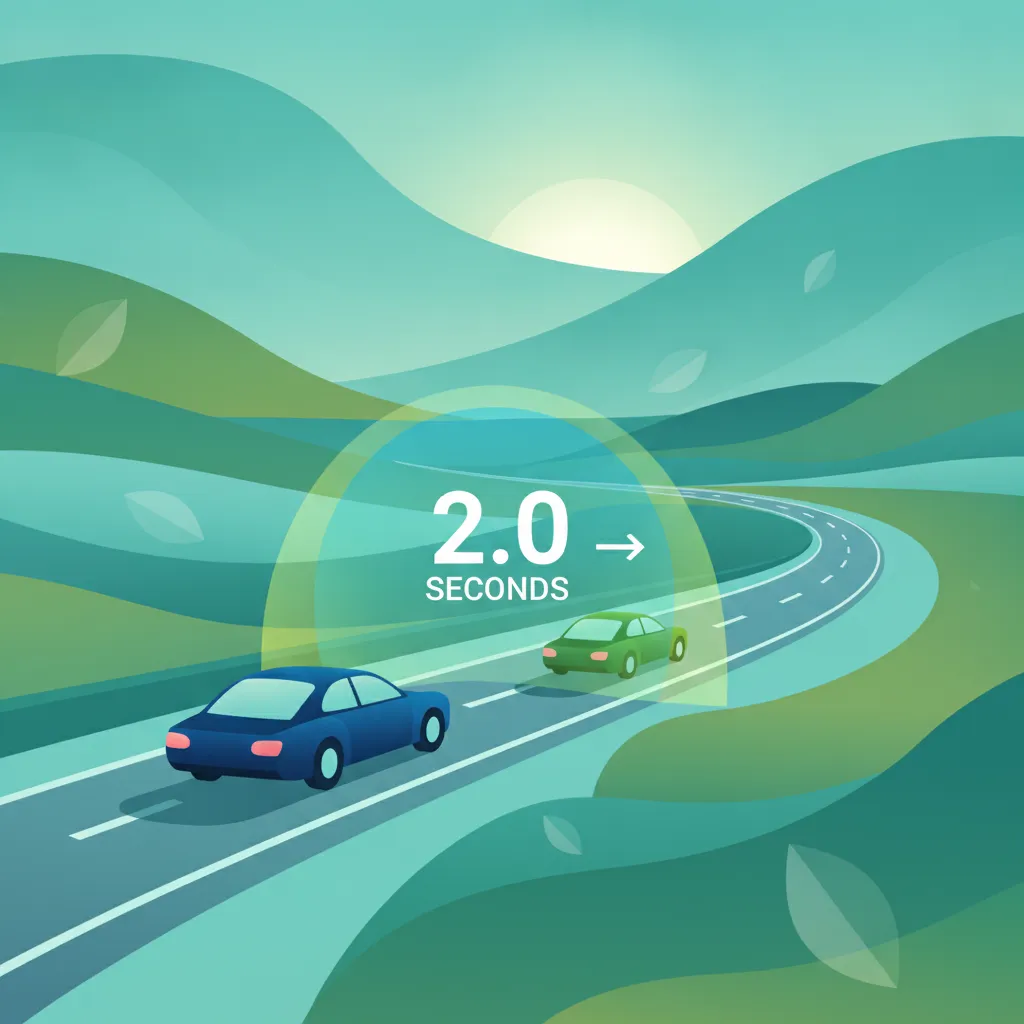
This lesson explains the critical need for maintaining a safe following distance to compensate for the longer stopping time of a heavy vehicle. It introduces time-based following distance rules and describes how to adapt them for different speeds, road conditions, and weather. The content highlights the dangers of tailgating and provides strategies for proactive collision avoidance.

This lesson outlines the step-by-step process for safely approaching a bus stop, emphasizing speed control and correct positioning. It covers the importance of ensuring the vehicle is fully stationary before operating the doors. The content also details the safety checks required before departing the stop and merging back into the flow of traffic.

This lesson addresses the principles of speed management for heavy passenger vehicles. It explains how factors like vehicle mass, passenger load, and road gradient affect momentum and control. The content also covers the appropriate use of speed control systems and the importance of selecting a safe speed for conditions.

This lesson addresses the heightened risk of interaction with pedestrians and cyclists around bus stops. It explains right-of-way regulations and the importance of vigilance, particularly when turning or pulling away from the curb. The content provides strategies for anticipating the actions of vulnerable road users to prevent conflicts.

This lesson explains the rules and etiquette for sharing the road with public transport vehicles like buses and trams. It covers the requirement to be cautious around bus stops, especially when passengers are boarding or alighting. A key focus is the legal obligation to yield to buses indicating their intention to pull out from a designated stop into the flow of traffic.

This lesson provides essential safety guidance for interacting with large vehicles like buses and trucks. It emphasizes the importance of staying out of their extensive blind spots and allowing extra space due to their long stopping distances and wide turning circles. The content also offers advice on how to safely overtake such vehicles and navigate around public transport stops.
This lesson covers the identification of official bus stop signage and the procedures for stopping at designated locations. It explains the importance of precise positioning to ensure passenger safety during boarding and alighting. The content also links the placement of bus stops to route planning and maintaining a consistent timetable.
This lesson breaks down the concept of total stopping distance into its two key parts: the distance travelled during the driver's reaction time (thinking distance) and the distance the vehicle travels while braking. It explains how factors like speed, driver alertness, tyre condition, and road surface dramatically influence these distances. This knowledge is vital for understanding the consequences of driving too fast or too close.
This lesson focuses on identifying and understanding road signs that directly impact passenger vehicle operation. It covers signage for bus lanes, height and weight restrictions, and prohibited movements. The content also explains the meaning of temporary signs used for diversions or roadworks that may affect planned routes.

This lesson focuses on the practical application of maintaining a safe gap from the vehicle ahead. It explains time-based rules for calculating following distance and how to adjust this gap for adverse weather or poor visibility. Developing excellent hazard perception and anticipation skills is key to avoiding emergency braking situations.
Learn about anticipatory driving, maintaining safe following distances, and smooth braking techniques essential for professional drivers to manage stopping distances effectively in busy urban traffic.
This lesson explains the critical need for maintaining a safe following distance to compensate for the longer stopping time of a heavy vehicle. It introduces time-based following distance rules and describes how to adapt them for different speeds, road conditions, and weather. The content highlights the dangers of tailgating and provides strategies for proactive collision avoidance.
This lesson focuses on the practical application of maintaining a safe gap from the vehicle ahead. It explains time-based rules for calculating following distance and how to adjust this gap for adverse weather or poor visibility. Developing excellent hazard perception and anticipation skills is key to avoiding emergency braking situations.
This lesson introduces the 'two-second rule' as a simple and effective method for establishing a safe following distance in good driving conditions. It explains the rationale behind this rule, linking it directly to average reaction and braking times. The lesson also emphasizes the need to extend this gap to three or more seconds in wet, icy, or low-visibility situations.
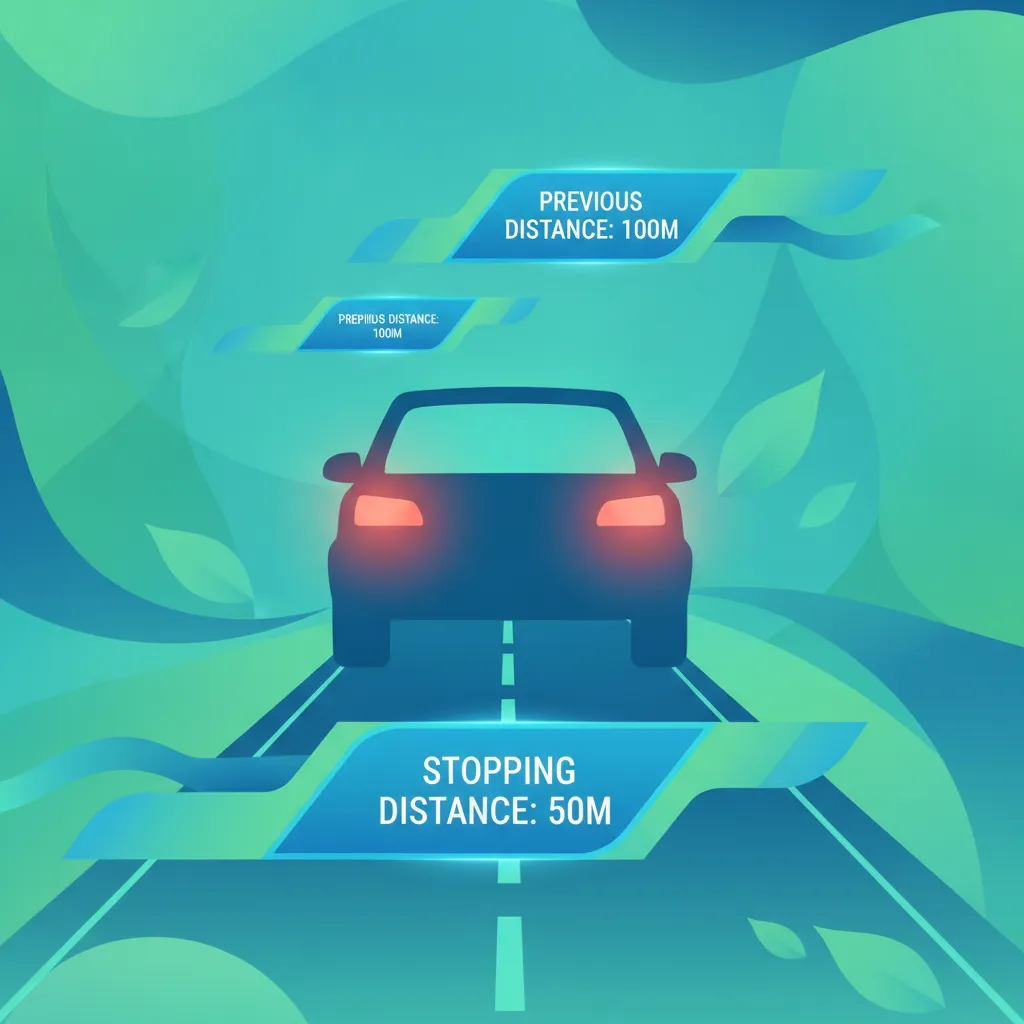
This lesson focuses on effective braking techniques that ensure both safety and passenger comfort. It explains the principles of progressive braking and the function of the anti-lock braking system (ABS). Learners will understand how to calculate stopping distances based on vehicle load, speed, and environmental factors.

This lesson addresses the challenges of operating a large vehicle in congested urban areas. It teaches techniques for navigating narrow streets, positioning for loading bays, and executing tight turns with minimal impact on other traffic. A high level of situational awareness and anticipation is required for these environments.
Find clear answers to common questions learners have about Managing Stopping Distances in Urban Environments. Learn how the lesson is structured, which driving theory objectives it supports, and how it fits into the overall learning path of units and curriculum progression in Portugal. These explanations help you understand key concepts, lesson flow, and exam focused study goals.
Increased mass gives the vehicle more kinetic energy, requiring more work from the braking system to dissipate that energy. Therefore, a fully loaded bus requires a greater distance to stop compared to an empty one at the same speed.
In urban environments, you must account for the bus's length and weight by increasing your following distance significantly compared to a standard car. Always follow the 3-second rule as a minimum, increasing it to 5 seconds or more in wet conditions or heavy traffic.
Yes, the theory exam often tests your understanding of reduced friction. You must know how to adjust your speed and braking pressure when roads are wet or greasy to avoid skidding and ensure passenger safety.
Absolutely. Abrupt braking can cause passengers standing in the aisle to fall and suffer injuries. Anticipatory driving allows you to decelerate gradually, ensuring both physical safety and overall passenger comfort.
Utilize the powerful search tool to refine your Portuguese driving theory practice. Pinpoint questions related to specific traffic laws, road signs, or complex scenarios from the Código da Estrada. Begin targeted revision now to boost your understanding and confidently approach your IMT driving exam.