
This lesson provides a critical look at how to manage the unique braking requirements of large passenger vehicles. By understanding the physics of stopping distances and the role of modern braking systems like ABS, you will be prepared to drive safely and comfortably in any professional context.
Lesson content overview
Effective braking is a fundamental skill for all drivers, but it takes on critical importance for operators of professional passenger vehicles (Category D). Mastering advanced braking techniques not only ensures the safety of everyone on board and other road users but also contributes significantly to passenger comfort and vehicle stability. This lesson delves into the principles of progressive braking, the functionality of anti-lock braking systems (ABS), and the crucial components of stopping distance, providing a comprehensive understanding vital for safe and responsible passenger transport.
Braking is more than just pressing a pedal; it's a sophisticated interaction between physics, vehicle mechanics, and driver skill. For large passenger vehicles, the sheer mass and inertia mean that braking requires careful anticipation and precise execution. The goal is always to reduce speed smoothly and effectively, bringing the vehicle to a controlled stop without causing discomfort or instability, especially in emergency situations. This knowledge is essential for maintaining control, preventing collisions, and adhering to legal requirements for professional drivers in Portugal.
Progressive braking is a refined technique that is indispensable for professional passenger vehicle drivers. It involves applying the brakes in a controlled, gradual manner, rather than an abrupt press, to achieve smooth deceleration. This method prioritizes passenger comfort and safety by preventing sudden lurches or jolts.
Progressive braking is defined as a two-stage method of deceleration. Initially, light brake pressure is applied to smoothly transfer the vehicle's weight forward and reduce momentum. This is then followed by a firmer, but still controlled, application of pressure as needed to achieve the desired stopping or slowing down. This technique ensures that standing passengers maintain their balance and seated passengers are not unduly disturbed.
The practical meaning of progressive braking lies in its ability to manage the vehicle's kinetic energy gracefully. For routine stops, such as approaching a bus stop or traffic light, gradual speed reduction is paramount. This contrasts sharply with urgent deceleration, where an unexpected hazard necessitates progressive pressing that leads to maximum braking force, albeit still in a controlled manner that leverages the vehicle's braking capabilities fully.
When operating a passenger vehicle, always anticipate stops. Applying brakes early and progressively allows for smoother deceleration, enhancing passenger comfort and safety, and reducing wear on the braking system.
This technique minimizes the forward momentum of standing passengers and avoids abrupt weight shifts, which could lead to injuries or discomfort. Drivers must develop a refined sense of timing and pressure application, adapting to the vehicle's load and road conditions. It's important to remember that while progressive braking is about smoothness, it must also be effective enough to achieve the required deceleration in a timely manner.
A common misconception among some drivers is that hard braking is always the most effective or necessary approach. However, for passenger vehicles, an overly aggressive braking style can cause significant passenger discomfort, potential injuries, and increased wear and tear on the vehicle. Progressive braking offers a safer, more professional, and often more effective approach by maintaining better control and stability.
The Anti-lock Braking System (ABS) is a critical safety feature designed to prevent the wheels from locking up during heavy braking. This system is particularly vital for large passenger vehicles, as it allows the driver to maintain steering control while braking sharply, significantly reducing the risk of skidding, especially on slippery surfaces.
ABS functions by rapidly modulating brake pressure to each wheel individually. Sensors detect if a wheel is about to lock up (i.e., stop rotating while the vehicle is still moving). If lock-up is imminent, the ABS temporarily releases the brake pressure to that wheel, allowing it to rotate again, then reapplies pressure. This process happens many times per second, effectively pumping the brakes far faster and more precisely than a human driver ever could.
The vibration or pulsating sensation felt in the brake pedal when the Anti-lock Braking System (ABS) is active. This is a normal indication that the system is working to prevent wheel lock-up.
When ABS activates, the driver will typically feel a pulsating or vibrating sensation in the brake pedal. This feedback is a crucial indicator that the system is engaged and working. It is imperative that drivers of ABS-equipped vehicles understand this sensation and do not release pressure on the brake pedal when it pulses. Instead, they should maintain firm, consistent pressure, allowing the system to perform its function. Releasing the pedal prematurely will reduce the effectiveness of the ABS.
The primary benefit of ABS is the ability to steer while braking, which is crucial for avoiding obstacles during an emergency stop. This is especially important for passenger vehicles, where maintaining control can mean the difference between avoiding a collision and a severe incident. On wet, icy, or uneven roads, ABS drastically improves safety by preventing uncontrolled skids and allowing the driver to navigate out of harm's way.
While ABS greatly enhances safety, it does not defy the laws of physics. It cannot compensate for excessive speed, insufficient following distance, or extreme road conditions. Drivers must still practice safe driving habits and adapt their speed to prevailing conditions.
Understanding stopping distance is fundamental for professional drivers to maintain safe following distances and anticipate hazards. The total stopping distance is comprised of three distinct phases: perception distance, brake reaction distance, and braking distance. Each component is affected by various factors, and accurate estimation is critical for collision prevention.
The distance a vehicle travels during the time it takes for the driver to perceive a hazard, recognize its importance, and decide to take action (e.g., brake).
This is the initial phase, where the driver's brain processes information. A professional driver's normal reaction time is typically around 1.5 seconds, but this can be significantly extended by factors such as fatigue, distraction, alcohol, drugs, or poor visibility. For example, at 60 km/h, a vehicle travels approximately 25 meters in 1.5 seconds before any physical braking action begins. Maintaining full alertness is paramount to minimizing perception distance.
The distance a vehicle travels from the moment the driver decides to brake and begins to move their foot to the brake pedal until the brakes actually start to engage and apply force.
Following perception, this phase covers the physical movement of the driver's foot from the accelerator to the brake pedal and the initial activation of the braking system. This typically adds another 0.5 seconds to the overall stopping process. For instance, at 80 km/h, a vehicle travels approximately 11 meters during this brake reaction phase. While a driver can anticipate braking needs to minimize this delay, it is still a measurable component of the total stopping distance.
The distance a vehicle travels from the moment the brakes are effectively applied until the vehicle comes to a complete stop.
This is the phase where the vehicle's braking system is actively decelerating the vehicle. Braking distance is influenced by numerous factors:
For example, a bus traveling at 80 km/h on a dry road might have a braking distance of approximately 45 meters, but on a wet road, this could easily extend to 70 meters or more.
The cumulative distance a vehicle travels from the moment a driver perceives a hazard to the point where the vehicle comes to a complete stop, calculated as the sum of perception distance, brake reaction distance, and braking distance.
The total stopping distance is the sum of all three components: Total Stopping Distance = Perception Distance + Brake Reaction Distance + Braking Distance
This comprehensive figure is what truly dictates the safe following distance a driver must maintain. Drivers must not only be aware of their vehicle's stopping capabilities under ideal conditions but must also constantly adjust their calculations for adverse conditions. Ignoring the impact of speed, load, and road conditions on total stopping distance is a critical error that can lead to collisions.
Several critical factors significantly influence how effectively a passenger vehicle can brake and how long it takes to stop. Professional drivers must constantly assess and adapt to these variables.
Wet, icy, or snowy roads drastically reduce the friction between tires and the road surface, leading to significantly longer braking distances. Fog or heavy rain also impair visibility, increasing perception distance. Drivers must reduce speed and increase following distance proportionally to account for these conditions. Different road types also present variations: urban environments demand frequent, precise stops, while motorways, despite higher speeds, require longer braking distances due to the speeds involved.
The resistance of a loaded vehicle to changes in its state of motion. A higher load means greater inertia, requiring more force and distance to accelerate or decelerate.
The weight of passengers and luggage directly affects the vehicle's inertia. A fully loaded bus has considerably more momentum than an empty one, requiring a much greater braking force and, consequently, a longer braking distance. Professional drivers must factor in the current passenger count and any cargo when calculating safe speeds and following distances. Overloading a vehicle not only compromises braking performance but is also illegal and can cause severe damage to vehicle components.
A driver's physical and mental state profoundly affects perception and reaction times. Fatigue, distraction, illness, or the influence of alcohol/drugs can severely delay the driver's ability to perceive a hazard and initiate braking. Poor visibility due to weather (fog, heavy rain), time of day (night driving), or obstacles can also delay a driver's perception, demanding earlier braking and increased following distances.
The condition of the vehicle's tires and braking system is paramount. Worn tire treads reduce grip, especially on wet surfaces. Under-inflated or over-inflated tires also compromise braking performance. Similarly, a well-maintained braking system, free from defects, is essential for optimal performance. Regular inspections and timely maintenance are non-negotiable for professional passenger vehicles.
The Código da Estrada (Portuguese Road Code) and specific regulations for professional passenger transport outline mandatory rules concerning braking and safe distances. Adherence to these is crucial for obtaining and maintaining a Category D license.
Drivers are legally required to maintain a safe following distance that allows them to stop completely if the vehicle ahead stops suddenly. This rule applies to all road types and is particularly vital for large vehicles, which have longer stopping distances. The exact distance is not always prescribed in meters but is based on the "two-second rule" or, for heavier vehicles, even longer intervals, adjusted for speed, weather, and load. For example, at 80 km/h, a bus driver should leave considerably more than the general car recommendation, possibly 70 meters or more on a dry road.
Vehicles equipped with ABS must have these systems fully functional. Drivers are legally obligated not to interfere with the ABS operation; this means applying firm, continuous pressure to the brake pedal during emergency stops and trusting the system to prevent wheel lock-up. Malfunctioning ABS must be repaired immediately.
A critical regulation for professional passenger vehicle drivers is the requirement to warn passengers before performing any abrupt stop, especially an emergency brake. This verbal warning allows passengers, particularly those standing or preparing to alight, to brace themselves and significantly reduces the risk of injury from sudden deceleration. Simple phrases like "Prepare to stop" are essential.
It is mandatory for passenger vehicles to operate within the manufacturer’s specified maximum allowable passenger capacity and gross vehicle weight. Overloading directly impairs braking performance by increasing load inertia, making it harder and longer to stop. It also strains the vehicle's components, including the brakes, and is a serious safety violation.
Even experienced drivers can fall prey to common mistakes or misinterpretations of braking scenarios. Understanding these pitfalls and how conditions modify braking requirements is crucial.
Let's explore practical scenarios to solidify the understanding of these braking techniques.
Setting: A busy city street, moderate traffic, dry weather, approaching a designated bus stop. Situation: The driver needs to bring the bus to a smooth, controlled stop at the marked stop, where several passengers are waiting to board. Correct Behavior: Approximately 50-100 meters before the stop, the driver announces, "Próxima paragem, por favor prepare-se" (Next stop, please prepare). The driver then applies light, initial brake pressure, allowing the bus to decelerate gently. As the bus gets closer to the stop, the driver progressively increases brake pressure to bring the vehicle to a complete, comfortable halt right at the stop, minimizing any jolt. Incorrect Behavior: The driver approaches the stop at speed, then brakes abruptly at the last moment without warning. This causes standing passengers to lurch forward, and seated passengers to experience discomfort. Why Correct: This demonstrates proactive safety and comfort. The warning allows passengers to prepare, and progressive braking ensures a smooth experience, reducing the risk of falls or injuries.
Setting: A two-lane highway, wet due to recent rain, moderate traffic. Situation: Suddenly, a vehicle two cars ahead swerves, revealing a large obstacle (e.g., a fallen cargo box) directly in the bus's lane. Correct Behavior: The driver immediately checks mirrors, announces a sharp warning, such as "Atenção, travagem de emergência!" (Attention, emergency braking!). The driver then applies firm, consistent pressure to the brake pedal, engaging the ABS. While feeling the ABS pulsation, the driver maintains pressure and uses subtle steering inputs to navigate around the obstacle if possible, or to keep the vehicle in a straight line if stopping is the only option. Incorrect Behavior: The driver slams the brakes, then releases pressure upon feeling the ABS pulsation, assuming a malfunction. This leads to wheel lock-up, loss of steering control, and a potential skid into the obstacle or other lanes. Why Correct: Understanding and trusting ABS is paramount in emergencies. Maintaining pedal pressure allows the system to prevent lock-up, granting the driver crucial steerability to mitigate the emergency.
Setting: A rural road with varying speeds (60-80 km/h), dry conditions, the bus is fully loaded with passengers. Situation: The bus is following a truck. The driver needs to decide how far to stay behind the truck. Correct Behavior: The driver considers the bus's full load, which increases its total stopping distance. At 80 km/h, on a dry road, a passenger vehicle might need 70-80 meters or more to stop. The driver visually estimates this distance, using road markers or fixed objects, and maintains an appropriate gap (e.g., 3-4 seconds behind the truck) that accounts for perception, reaction, and braking distances, plus a safety margin for the heavy load. Incorrect Behavior: The driver maintains a following distance suitable for a light car, or for an empty bus, without accounting for the increased mass. This leaves insufficient space to stop safely if the truck ahead brakes unexpectedly. Why Correct: A professional driver always adjusts following distance based on speed, vehicle load, and conditions. Recognizing the increased inertia of a fully loaded bus is crucial for preventing rear-end collisions.
Mastering braking techniques is more than a technical skill; it's a core component of professional responsibility for Category D drivers. It directly impacts the safety and comfort of passengers, the integrity of the vehicle, and the safety of all road users.
Código da Estrada requirements for safe following distances and ensure the full functionality of safety systems like ABS.By consistently applying these principles, professional passenger vehicle drivers can ensure safe, efficient, and comfortable journeys for everyone.
Explore all units and lessons included in this driving theory course.
Lesson content overview
Explore all units and lessons included in this driving theory course.
Explore search topics learners often look for when studying Braking Techniques and Stopping Distances. These topics reflect common questions about road rules, driving situations, safety guidance, and lesson level theory preparation for learners in Portugal.
Browse additional driving theory lessons that cover connected traffic rules, road signs, and common driving situations related to this topic. Improve your understanding of how different rules interact across everyday traffic scenarios.
Explore the intricacies of passenger vehicle braking systems, including ABS, and understand how to calculate total stopping distance. Learn to adapt braking for load, speed, and diverse road conditions in Portugal.
This lesson breaks down the concept of total stopping distance into its two key parts: the distance travelled during the driver's reaction time (thinking distance) and the distance the vehicle travels while braking. It explains how factors like speed, driver alertness, tyre condition, and road surface dramatically influence these distances. This knowledge is vital for understanding the consequences of driving too fast or too close.

This lesson breaks down the concept of total stopping distance into thinking distance and braking distance. It provides instruction on how to use both front and rear brakes effectively and progressively to slow down smoothly and safely. The content also covers techniques for performing an emergency stop while maintaining control and how braking is affected by wet or loose road surfaces.

This lesson focuses on the complexities of braking in dense urban environments. It explains how vehicle mass, passenger load, and road conditions influence the total stopping distance of a large vehicle. Learners will understand the importance of anticipatory driving and proactive speed management to ensure safe braking at all times.

This lesson focuses on the practical application of maintaining a safe gap from the vehicle ahead. It explains time-based rules for calculating following distance and how to adjust this gap for adverse weather or poor visibility. Developing excellent hazard perception and anticipation skills is key to avoiding emergency braking situations.
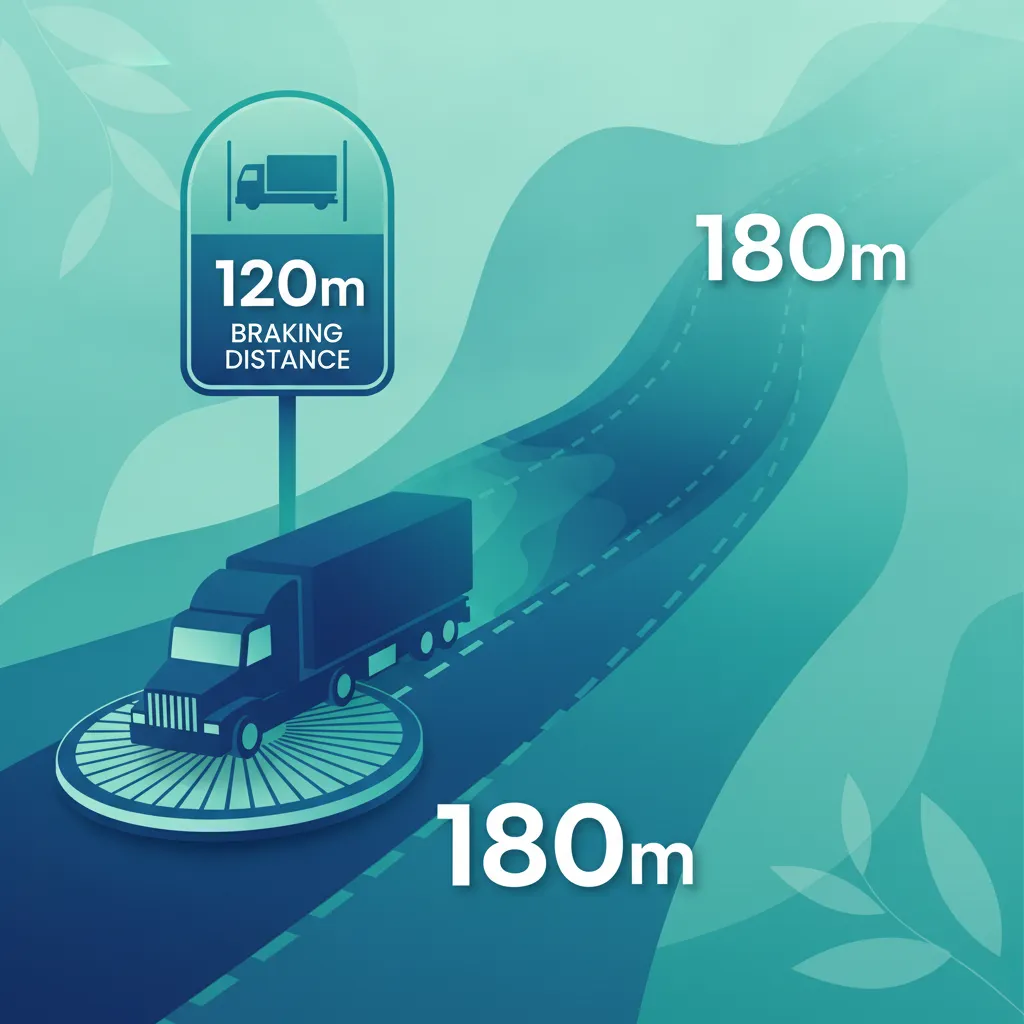
This lesson explains the physics behind braking a heavy vehicle, emphasizing the significant increase in stopping distance caused by a heavy load. It breaks down the components of total stopping distance, including perception, reaction, and braking distance. Drivers will learn why maintaining a larger safety margin is non-negotiable.
This lesson introduces the 'two-second rule' as a simple and effective method for establishing a safe following distance in good driving conditions. It explains the rationale behind this rule, linking it directly to average reaction and braking times. The lesson also emphasizes the need to extend this gap to three or more seconds in wet, icy, or low-visibility situations.

This lesson explains the dangerous phenomenon of brake fade, where brakes lose effectiveness due to overheating. It teaches drivers how to avoid this by using auxiliary braking systems and managing speed on long descents. The lesson also covers the techniques for executing a controlled emergency brake application in a critical situation.
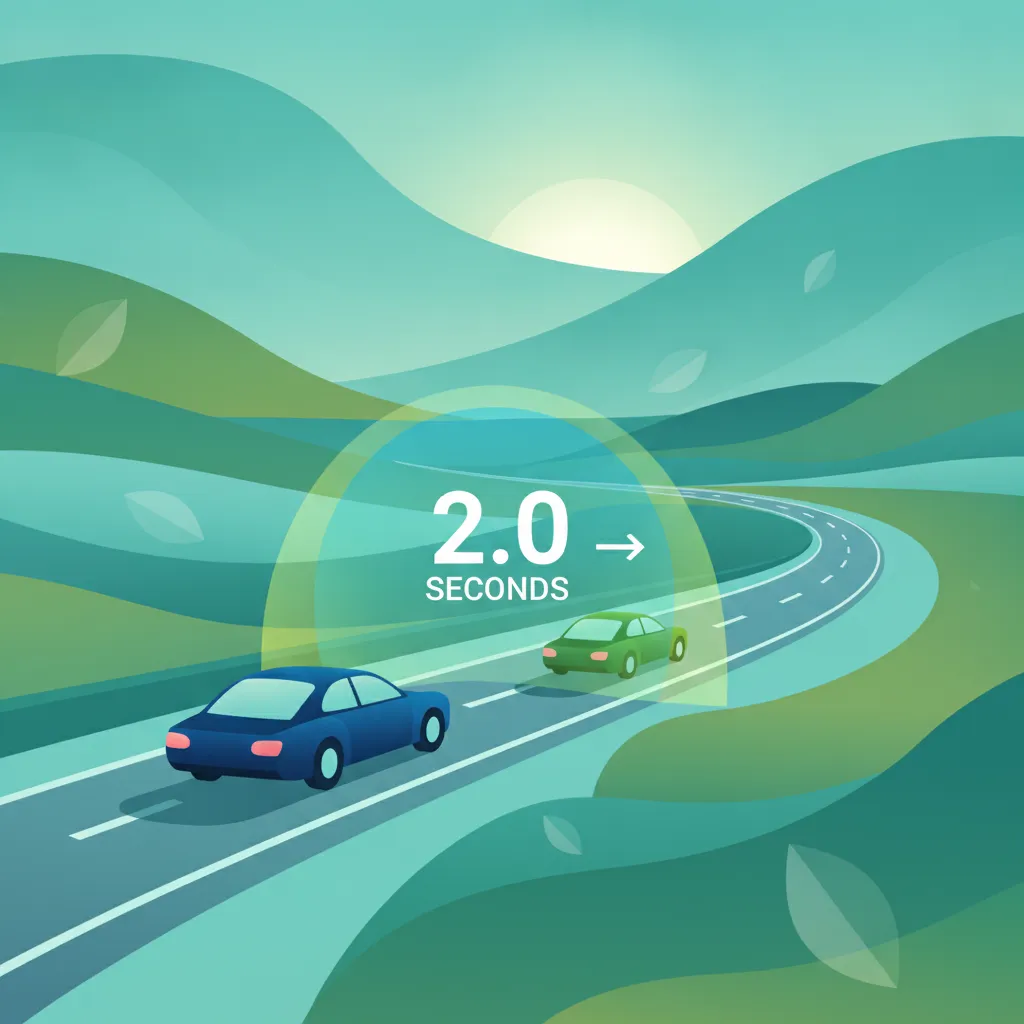
This lesson explains the critical need for maintaining a safe following distance to compensate for the longer stopping time of a heavy vehicle. It introduces time-based following distance rules and describes how to adapt them for different speeds, road conditions, and weather. The content highlights the dangers of tailgating and provides strategies for proactive collision avoidance.

Focusing on advanced braking techniques, this lesson covers progressive braking and the safe execution of emergency stops. It discusses the optimal front-rear brake balance, the effect of load transfer on stability, and how ABS assists in preventing wheel lock. Scenarios such as braking on wet surfaces and in corners are also examined.

This lesson outlines the step-by-step process for safely approaching a bus stop, emphasizing speed control and correct positioning. It covers the importance of ensuring the vehicle is fully stationary before operating the doors. The content also details the safety checks required before departing the stop and merging back into the flow of traffic.
Identify typical braking mistakes made by drivers and learn the correct, safe approaches for various situations. Focus on passenger comfort, vehicle control, and adherence to Portuguese road regulations.

This lesson provides a detailed overview of the legal requirements and safe driving practices for school zones and pedestrian crossings. It covers mandatory speed limits, the meaning of various signs and signals, and the importance of yielding to pedestrians. The content stresses heightened awareness due to the unpredictable nature of children's behavior near roads.
This lesson outlines the legal framework and penalties associated with traffic violations in Portugal for professional drivers. It covers the system of fines and penalty points that can lead to license suspension. The content reviews common infractions specific to passenger vehicles and emphasizes the importance of full compliance with the law.
This lesson outlines the step-by-step process for safely approaching a bus stop, emphasizing speed control and correct positioning. It covers the importance of ensuring the vehicle is fully stationary before operating the doors. The content also details the safety checks required before departing the stop and merging back into the flow of traffic.
This lesson focuses on the practical application of maintaining a safe gap from the vehicle ahead. It explains time-based rules for calculating following distance and how to adjust this gap for adverse weather or poor visibility. Developing excellent hazard perception and anticipation skills is key to avoiding emergency braking situations.
This lesson focuses on the specific skills required for driving on high-speed motorways. It details the procedures for safely merging onto and exiting the motorway, maintaining proper lane discipline, and adhering to variable speed limits. The content also provides rules for safe overtaking and managing the vehicle's stability at high speeds.
This lesson explains the critical need for maintaining a safe following distance to compensate for the longer stopping time of a heavy vehicle. It introduces time-based following distance rules and describes how to adapt them for different speeds, road conditions, and weather. The content highlights the dangers of tailgating and provides strategies for proactive collision avoidance.

This lesson provides essential safety guidance for interacting with large vehicles like buses and trucks. It emphasizes the importance of staying out of their extensive blind spots and allowing extra space due to their long stopping distances and wide turning circles. The content also offers advice on how to safely overtake such vehicles and navigate around public transport stops.

This lesson focuses on the legal concept of duty of care, detailing a professional driver's obligations to passengers and other road users. It examines how negligence and failure to comply with traffic laws can result in liability and legal penalties. The content also emphasizes adherence to safety regulations and proper incident reporting procedures.

This lesson focuses on the heightened duty of care professional drivers have towards vulnerable road users. It covers common conflict points, such as junctions and roundabouts, and teaches techniques for anticipating the actions of pedestrians, cyclists, and motorcyclists. Giving extra space and being prepared to stop are key themes.
This lesson details the serious consequences of non-compliance with road transport law. It covers the graduated system of fines and penalties for various offenses, including infringements of drivers' hours rules. The concept of professional liability and how a driver can be held responsible for incidents is also explored.
Find clear answers to common questions learners have about Braking Techniques and Stopping Distances. Learn how the lesson is structured, which driving theory objectives it supports, and how it fits into the overall learning path of units and curriculum progression in Portugal. These explanations help you understand key concepts, lesson flow, and exam focused study goals.
Increased mass requires more energy to stop. When your bus is fully loaded with passengers and luggage, your total stopping distance will increase significantly compared to when the vehicle is empty, requiring earlier anticipation and smoother braking.
ABS prevents the wheels from locking up during hard braking, which allows you to maintain steering control. It is vital for Category D drivers to understand that ABS is a safety aid and does not shorten stopping distances on all surfaces.
Progressive braking involves a gradual application of the brake pedal, which minimizes vehicle pitch. For a bus driver, this is essential to ensure passenger comfort, prevent falls, and maintain professional standards of service.
Yes, the theory exam often tests your ability to adjust stopping distances when road surfaces are wet, oily, or icy. You must demonstrate an understanding that friction is reduced in these conditions, necessitating a greater safety buffer.
Utilize the powerful search tool to refine your Portuguese driving theory practice. Pinpoint questions related to specific traffic laws, road signs, or complex scenarios from the Código da Estrada. Begin targeted revision now to boost your understanding and confidently approach your IMT driving exam.