
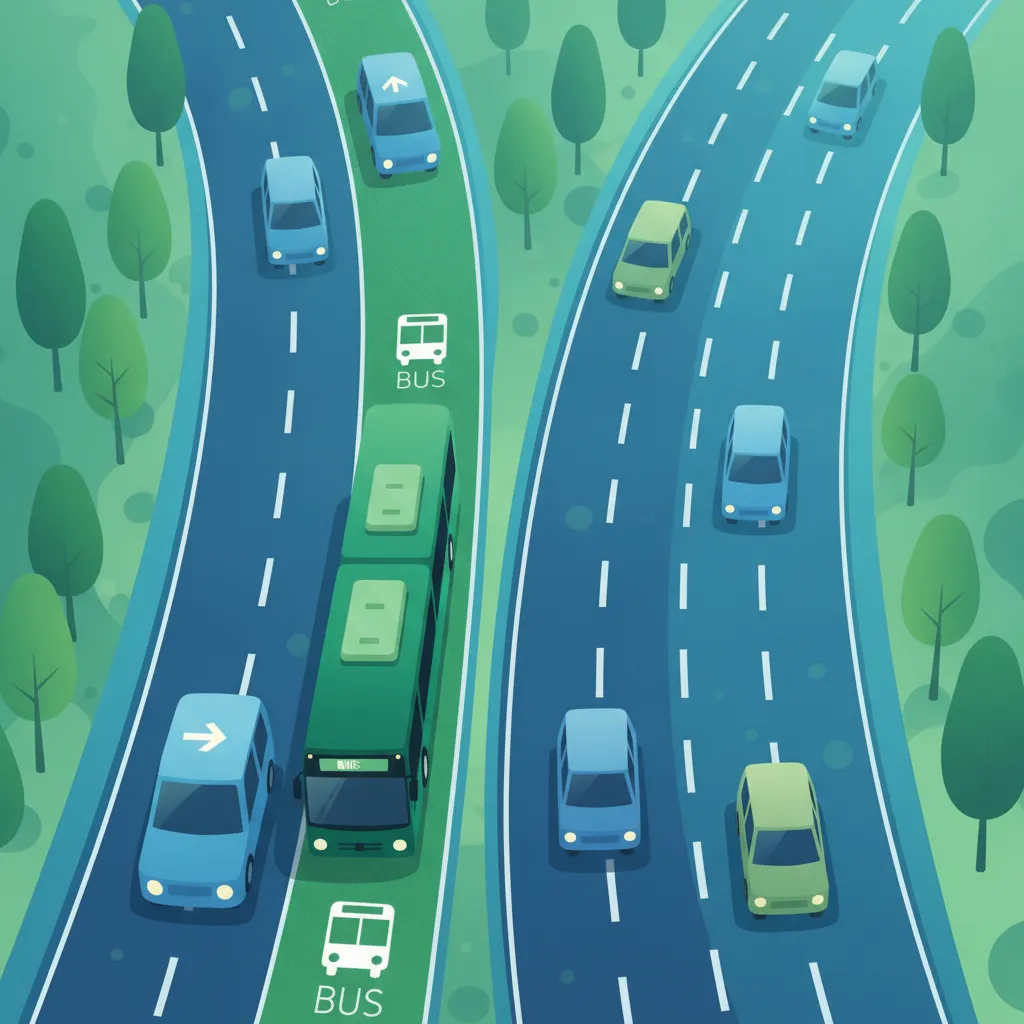
This lesson provides a deep dive into the lane discipline requirements and bus lane regulations necessary for operating Category D vehicles. You will learn how to navigate multi-lane roads, manage lane positioning, and adhere to specific bus lane restrictions, all of which are critical for both your theory exam and daily professional practice.
Lesson content overview
For professional passenger vehicle drivers operating in Portugal, particularly those holding a Category D license, adhering to strict lane discipline and understanding the specific rules for dedicated bus lanes is paramount. This lesson provides an in-depth guide to these essential driving principles, ensuring safety, efficiency, and compliance with the Código da Estrada (Portuguese Traffic Code).
Lane discipline is a fundamental aspect of safe and efficient driving, especially when operating large vehicles like buses and coaches. It involves maintaining an orderly and predictable position on the road, which is critical for preventing accidents and ensuring smooth traffic flow. For professional drivers, whose primary responsibility is the safety of their passengers, consistent and correct lane usage is non-negotiable.
The adherence to lane rules, including staying within designated lane markings, signaling before any lane changes, and maintaining a consistent and predictable driving pattern.
The primary purpose of strict lane discipline is to foster predictability on the road. When all drivers, especially those of large vehicles, maintain their lanes and signal intentions clearly, other road users can anticipate their movements. This reduces the likelihood of sudden braking or swerving, which can lead to collisions, particularly in dense urban environments or on high-speed motorways.
Buses and coaches, due to their size, weight, and passenger capacity, require extra attention to lane discipline. A sudden lane change or drift by a large vehicle can have severe consequences, including:
Maintaining a stable and central position within the lane helps reduce the risk of side collisions with other vehicles or road infrastructure. It also provides a buffer zone, allowing more reaction time in unexpected situations.
Dedicated bus lanes are a critical component of urban public transport systems, designed to improve the speed, reliability, and efficiency of bus and coach services. For professional passenger vehicle drivers, understanding and correctly utilizing these lanes is essential for maintaining schedules and complying with traffic regulations.
Dedicated bus lanes are clearly identified by specific traffic signs and road markings. Drivers must be able to recognize these indicators to ensure correct usage.
This sign indicates a lane reserved for public transport vehicles. Often, supplementary panels may specify the types of vehicles allowed (e.g., "Autocarros" for buses, "Táxis" for taxis).
In addition to signs, dedicated bus lanes are typically marked with specific road markings:
Not all dedicated bus lanes operate under the same rules. It's crucial for drivers to distinguish between:
D4 sign. For example, a sign might read "7:00-19:00 Dias Úteis" (7:00-19:00 Weekdays).Always check the supplementary panels below the bus lane signage for specific time restrictions. Misinterpreting these can lead to fines and traffic violations.
The fundamental rule for dedicated bus lanes is exclusivity. Only vehicles specifically authorized may use them during their operational hours. In Portugal, this typically includes:
D4 sign).Unauthorized vehicles, such as private cars or motorcycles, are strictly prohibited from using these lanes during their operational hours. Violating this rule can result in significant fines and contribute to congestion for public transport.
Vehicles authorized to use bus lanes must adhere to specific entry and exit procedures to ensure safety and maintain traffic flow.
Plan Ahead: Anticipate the need to enter or exit a bus lane well in advance.
Identify Designated Points: Look for specific entry and exit points, which are typically marked by breaks in the solid white line, arrows on the road, and sometimes supplementary signs.
Signal Intent: Activate your turn indicator well before the designated entry/exit point to inform other drivers of your intention.
Check Mirrors and Blind Spots: Thoroughly check your side mirrors and perform a head check to ensure the adjacent lane is clear and there are no vehicles in your blind spot.
Merge Smoothly: When clear, smoothly steer your vehicle into or out of the bus lane, maintaining a consistent speed if safe to do so. Avoid abrupt or sudden movements.
Maintain Speed: Once in the bus lane, maintain a suitable speed for the conditions and the flow of traffic, always respecting speed limits.
Beyond unauthorized entry, certain actions are prohibited even for authorized vehicles within bus lanes:
Changing lanes is a routine maneuver on multi-lane roads, but it requires careful execution, especially for professional passenger vehicle drivers. Improper lane changes are a common cause of collisions.
A systematic approach to changing lanes ensures maximum safety and predictability.
Assess Necessity and Plan: Determine if a lane change is necessary (e.g., for an upcoming turn, to overtake, or to enter a bus lane). Plan your move well in advance to avoid last-minute, rushed maneuvers.
Check Mirrors: Use your interior and exterior mirrors to assess the traffic situation in the lane you intend to enter, as well as the lanes behind you. Identify any vehicles that might be affected by your maneuver.
Signal Intent: Activate your turn indicator early enough to give other drivers ample warning of your intention. The signal should be active for a sufficient duration before you begin the physical lane change.
Check Blind Spots (Head Check): This is a critical step. Briefly turn your head to glance over your shoulder in the direction of the intended lane change. This allows you to see any vehicles that may be in your blind spot, which mirrors cannot reveal.
Ensure Sufficient Gap: Verify that there is a safe and adequate gap in traffic in the adjacent lane. Do not force your way into a gap that is too small. Remember, large vehicles require more space.
Smoothly Steer: Once the path is clear, steer smoothly into the new lane, maintaining your speed if conditions permit. Avoid abrupt or jerky movements.
Cancel Signal: Once fully established in the new lane, cancel your turn indicator.
Professional drivers must develop a habit of continuous mirror checking. For large vehicles, blind spots are significantly larger than in a passenger car.
An area around a vehicle that cannot be seen using the rearview or side mirrors, requiring a direct head check to identify potential hazards.
Before any lane change, the head check is non-negotiable. It only takes a fraction of a second but can prevent a serious collision, especially with smaller vehicles like motorcycles or bicycles that can easily disappear into a bus's blind spot.
Rushed lane changes are dangerous. For professional passenger vehicle drivers, planning is key:
Overtaking, or passing another vehicle, is a maneuver that requires precision and adherence to specific rules, particularly for large professional vehicles.
In Portugal, general overtaking rules dictate that you should typically overtake on the left. However, on multi-lane roads where traffic is moving in queues, it is permissible to overtake on the right if that lane is moving faster. For Category D vehicles:
Overtaking within a dedicated bus lane by another bus or authorized vehicle is generally permitted, provided it can be done safely and without obstructing the flow of public transport. However, it's crucial to exercise extreme caution:
Never attempt to overtake within a single lane of traffic or on the curb side, as this is illegal and extremely dangerous.
Overtaking is explicitly prohibited in several situations to prevent accidents:
Effective lane discipline also encompasses maintaining a correct and consistent position within your chosen lane. This skill is particularly vital for drivers of large professional vehicles due to their dimensions.
The general rule is to keep your vehicle as centered as possible within your lane markings. This practice offers several benefits:
In Portugal's urban areas, where roads can be narrow and traffic dense, maintaining precise lane positioning prevents encroachment into adjacent lanes or onto pavements, which could endanger pedestrians or damage your vehicle.
Lane positioning needs to be dynamic and adapted to changing conditions:
Always be mindful of your vehicle's overall width and length, especially when navigating tight turns or congested areas. Your mirrors are essential tools for verifying your position relative to lane markings and other road users.
Professional drivers must be acutely aware of common mistakes related to lane discipline and bus lane usage, as violations carry significant consequences.
Unauthorized Entry into a Dedicated Bus Lane:
Cutting in Without Signaling When Changing Lanes:
Entering or Exiting a Bus Lane at an Unauthorized Point:
Drifting Between Lanes in Heavy Traffic:
Attempting to Overtake a Bus on the Curb Side in a Dedicated Lane:
Overtaking in Prohibited Zones (e.g., at Intersections, Pedestrian Crossings, or with Solid Lines):
The application of lane discipline and bus lane rules is not static; it must adapt to various driving conditions and environmental factors. Professional drivers need to continuously assess their surroundings and adjust their driving behavior accordingly.
Professional drivers frequently encounter pedestrians, cyclists, and motorcyclists, especially in urban areas and when using dedicated lanes.
Mastering lane discipline and the correct use of dedicated bus lanes is fundamental for professional passenger vehicle drivers in Portugal. These practices not only ensure compliance with the Código da Estrada but also significantly contribute to road safety, passenger comfort, and the efficiency of public transport services.
By consistently applying these principles, professional Category D drivers can ensure they operate safely, efficiently, and responsibly on Portugal's roads, contributing to a better experience for their passengers and all road users.
Explore all units and lessons included in this driving theory course.
Lesson content overview
Explore all units and lessons included in this driving theory course.
Explore search topics learners often look for when studying Lane Discipline and Use of Dedicated Bus Lanes. These topics reflect common questions about road rules, driving situations, safety guidance, and lesson level theory preparation for learners in Portugal.
Browse additional driving theory lessons that cover connected traffic rules, road signs, and common driving situations related to this topic. Improve your understanding of how different rules interact across everyday traffic scenarios.
Deepen your understanding of lane discipline, focusing on advanced techniques for safe lane changes, blind spot management, and precise vehicle positioning. Essential for professional drivers in complex traffic situations in Portugal.

This lesson emphasizes the importance of strict lane discipline for heavy vehicles. It covers how to maintain a central position in the lane, the correct procedure for signaling and checking before a lane change, and how to navigate multi-lane roundabouts. Proper lane discipline enhances safety and improves traffic flow for everyone.

This lesson details the systematic process for changing lanes and merging with traffic, particularly when entering a motorway from an acceleration lane. It emphasizes the critical importance of the mirror-signal-blind spot check routine. The content also explains how to judge a safe gap in the traffic and adjust vehicle speed to merge smoothly and without disrupting the flow.

This lesson details the rules of lane discipline and the procedures for safe overtaking. It explains how to maintain correct lane positioning and how road markings and signs define where overtaking is allowed or forbidden. The lesson emphasizes the importance of the mirror-signal-manoeuvre routine and ensuring sufficient space and visibility before attempting to pass another vehicle.

This lesson focuses on the specific skills required for driving on high-speed motorways. It details the procedures for safely merging onto and exiting the motorway, maintaining proper lane discipline, and adhering to variable speed limits. The content also provides rules for safe overtaking and managing the vehicle's stability at high speeds.

This lesson focuses on the specific skills and regulations for motorway driving. It covers correct lane usage for HGVs, safe procedures for overtaking slower traffic, and the rules for using the hard shoulder or emergency refuge areas. Maintaining consistent speed and awareness of surrounding traffic is key to motorway safety.

This lesson focuses on the specifics of riding on motorways, covering speed management, lane discipline, and safe entry and exit strategies. Riders will learn how to choose appropriate lanes, maintain safe following distances at high speeds, and execute overtaking safely. The impact of wind and understanding Portuguese motorway signage are also addressed.

This lesson focuses on riding safely on two-way roads and narrow lanes where space is limited. It emphasizes maintaining lane discipline, using the road edge when appropriate, and anticipating oncoming traffic. Techniques for safe passing, speed control, and positioning to maximize visibility and minimize collision risk are provided.
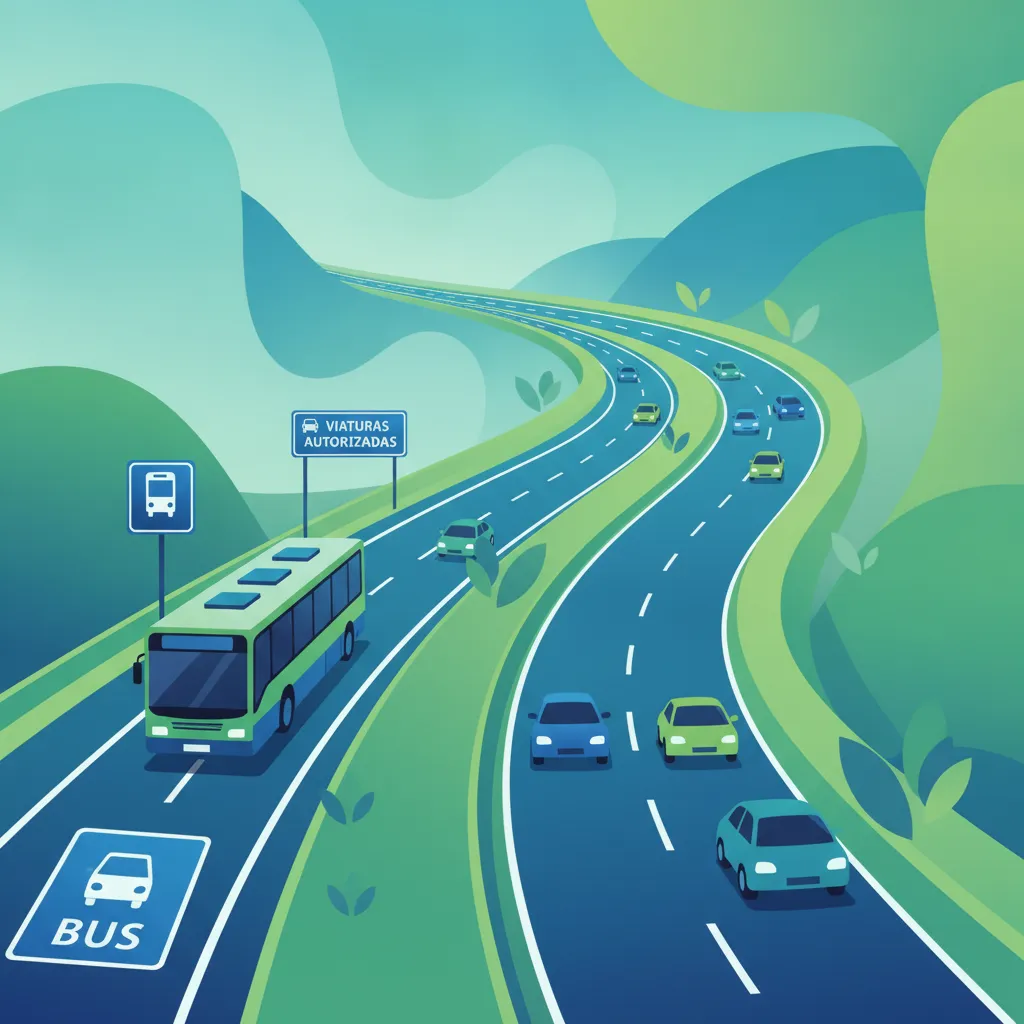
This lesson explains the purpose and rules of reserved lanes, such as those designated for buses, taxis, or cyclists. It covers how to identify these lanes through signage and road markings, and details the specific times they may be in operation. Drivers will learn when they are permitted to enter these lanes and the penalties for unauthorized use.

This lesson teaches riders how to position themselves optimally within a lane to maximize visibility and safety. It covers the pros and cons of different positions within the lane, taking into account traffic flow and upcoming hazards. Strategies for maintaining a safe lane position that enhances rider visibility are discussed in detail.
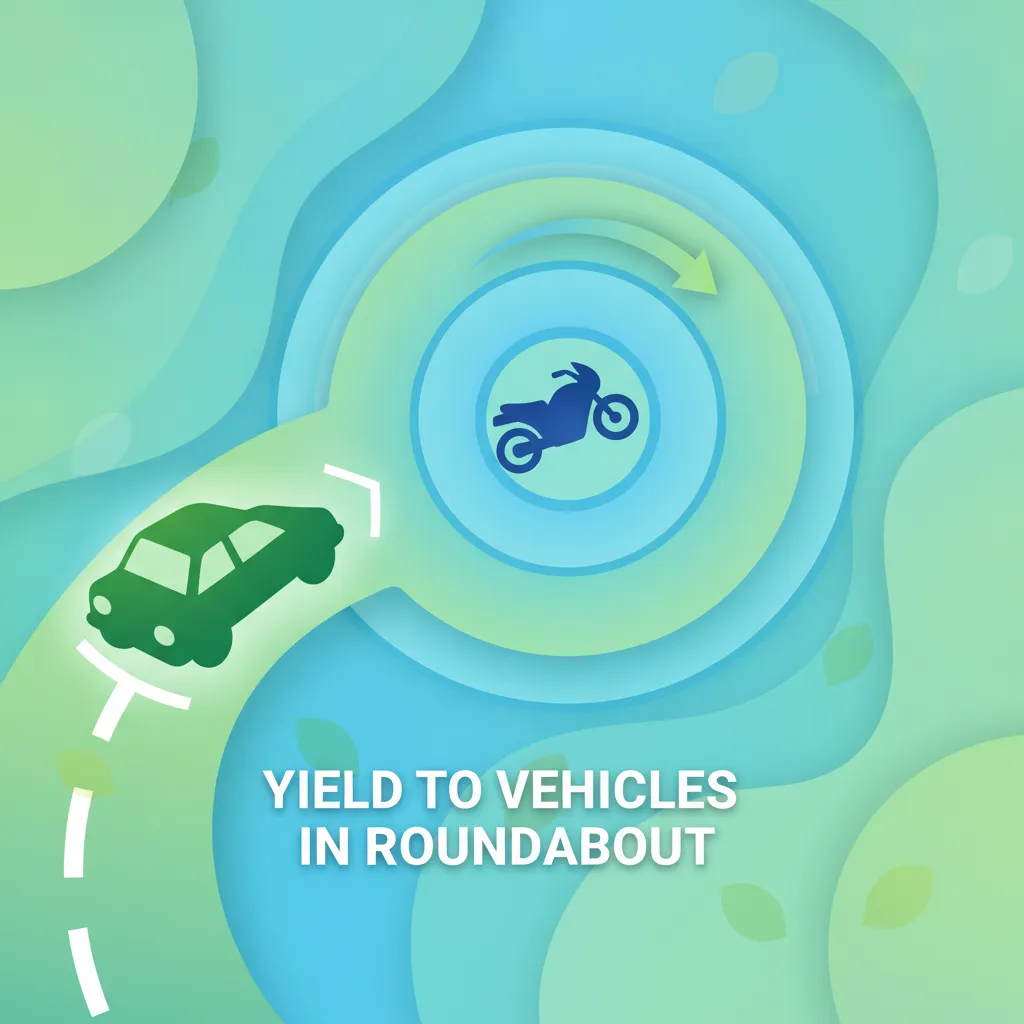
This lesson provides a step-by-step guide to navigating roundabouts in Portugal. It emphasizes the primary rule of yielding to traffic already circulating within the roundabout before entering. The content covers correct lane selection based on the intended exit, proper use of indicators for exiting, and managing the complexities of multi-lane roundabouts.
Learn the specific rules for operating in dedicated bus lanes in Portugal, covering signage, time restrictions, authorized vehicle usage, and safe entry/exit procedures. Crucial for efficient and compliant driving.
This lesson explains the purpose and rules of reserved lanes, such as those designated for buses, taxis, or cyclists. It covers how to identify these lanes through signage and road markings, and details the specific times they may be in operation. Drivers will learn when they are permitted to enter these lanes and the penalties for unauthorized use.

This lesson explains the regulations governing the use of dedicated bus lanes, including operational hours and priority rules at junctions. It clarifies which other vehicles may use these lanes and under what circumstances. The content also discusses traffic signal priority systems and the legal implications of improper bus lane usage.
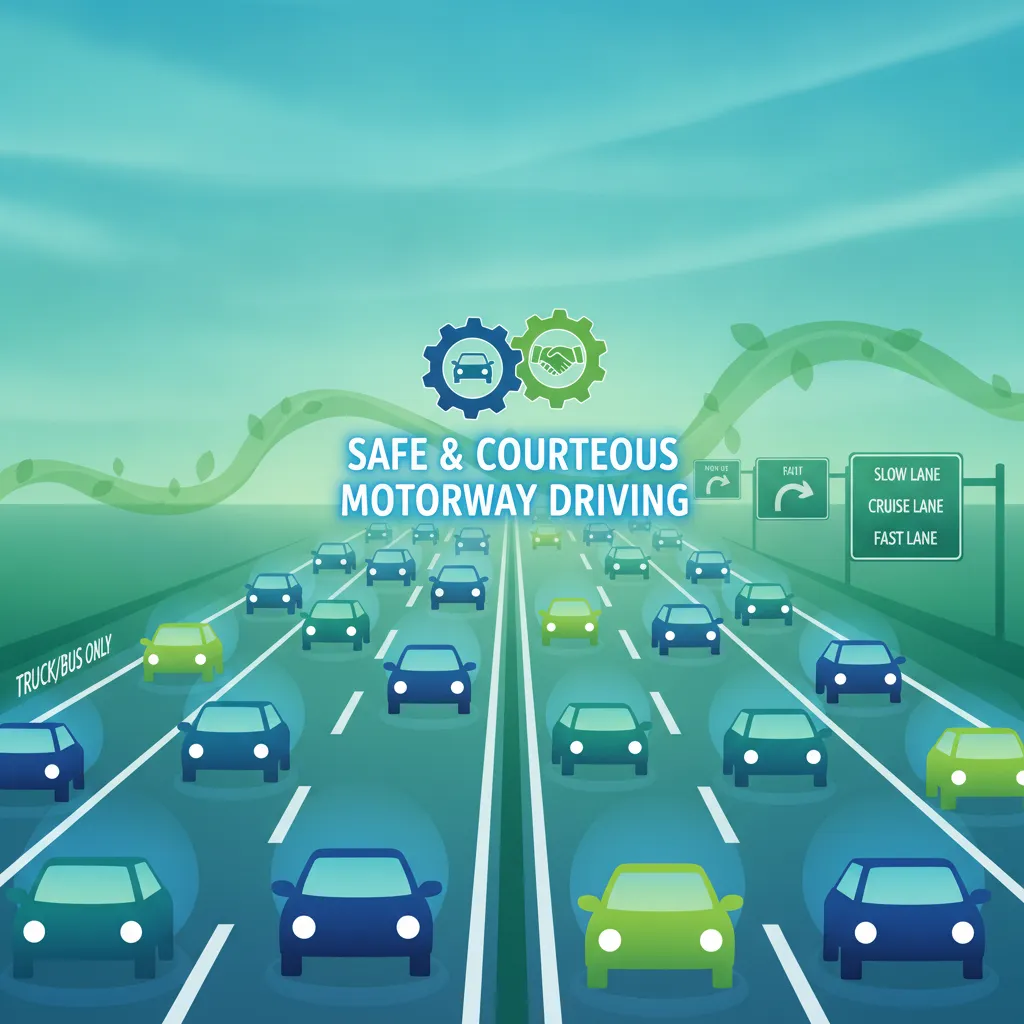
This lesson explains the unique set of rules that apply to motorway driving to facilitate safe, high-speed travel. It covers the correct procedure for entering and exiting the motorway, principles of lane discipline (keeping left unless overtaking), and the rules for safe overtaking. The lesson also clarifies the proper use of the hard shoulder or emergency lane for genuine emergencies only.

This lesson explains the rules and etiquette for sharing the road with public transport vehicles like buses and trams. It covers the requirement to be cautious around bus stops, especially when passengers are boarding or alighting. A key focus is the legal obligation to yield to buses indicating their intention to pull out from a designated stop into the flow of traffic.

This lesson focuses on safe interaction with cyclists on the road. It covers the identification of dedicated bicycle lanes and the rules regarding cyclist priority in various situations. Key topics include maintaining a safe lateral distance when overtaking cyclists and the importance of checking blind spots for them before turning or changing lanes.

This lesson examines how bus priority measures, such as dedicated lanes and signal preemption, function in urban traffic. It teaches drivers how to utilize these systems effectively to maintain schedules and improve service reliability. The content also discusses how to navigate general traffic congestion when priority systems are not available.
This lesson focuses on the specific skills required for driving on high-speed motorways. It details the procedures for safely merging onto and exiting the motorway, maintaining proper lane discipline, and adhering to variable speed limits. The content also provides rules for safe overtaking and managing the vehicle's stability at high speeds.
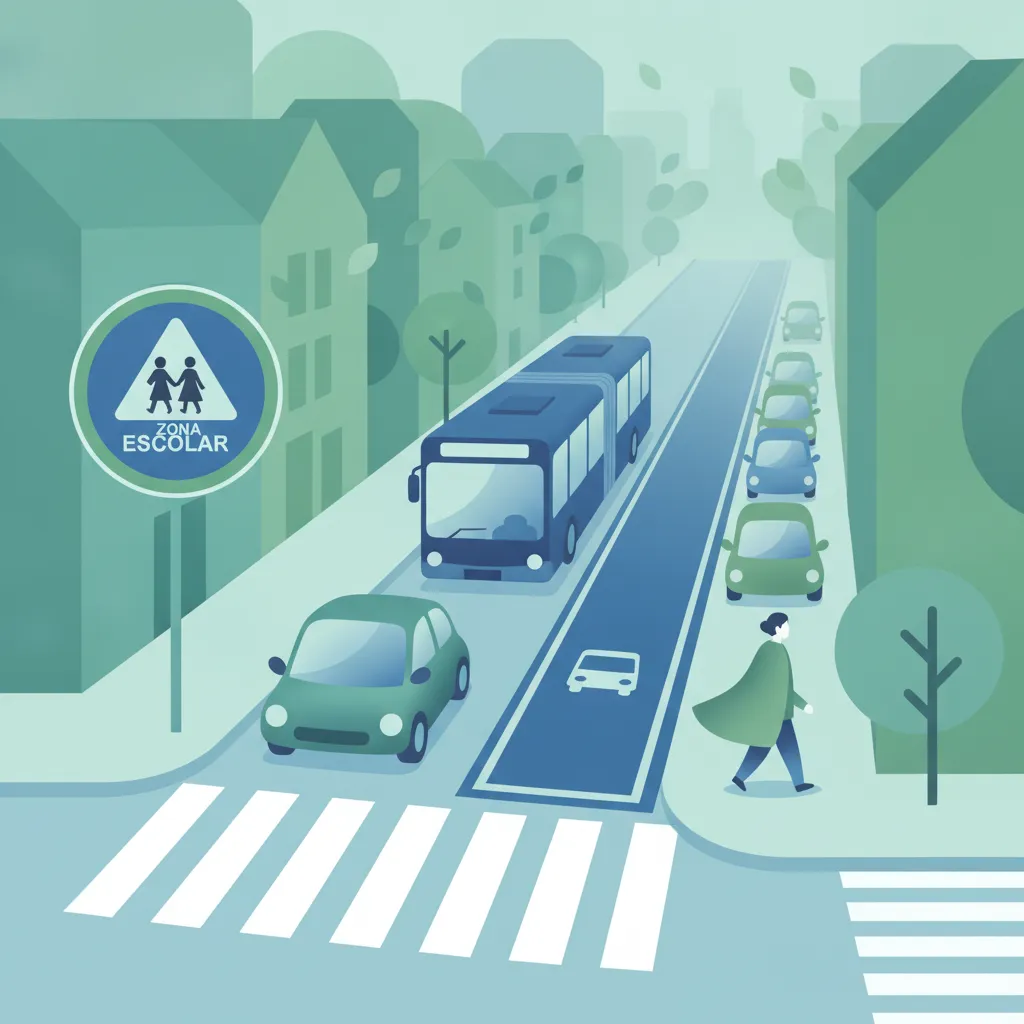
This lesson focuses on special zones within urban environments, such as school areas, bus lanes, and residential streets, where specific traffic rules apply. It covers reduced speed limits, restricted lane usage, and heightened pedestrian activity. Riders learn to recognize these zones and adjust their riding behavior to ensure safety for themselves and others.

This lesson addresses the heightened risk of interaction with pedestrians and cyclists around bus stops. It explains right-of-way regulations and the importance of vigilance, particularly when turning or pulling away from the curb. The content provides strategies for anticipating the actions of vulnerable road users to prevent conflicts.
This lesson details the rules of lane discipline and the procedures for safe overtaking. It explains how to maintain correct lane positioning and how road markings and signs define where overtaking is allowed or forbidden. The lesson emphasizes the importance of the mirror-signal-manoeuvre routine and ensuring sufficient space and visibility before attempting to pass another vehicle.
Find clear answers to common questions learners have about Lane Discipline and Use of Dedicated Bus Lanes. Learn how the lesson is structured, which driving theory objectives it supports, and how it fits into the overall learning path of units and curriculum progression in Portugal. These explanations help you understand key concepts, lesson flow, and exam focused study goals.
Yes, if the road markings indicate that a bus lane must be crossed or entered briefly to make a permitted turn, you may do so. However, you must always yield to authorized vehicles and ensure you only enter the bus lane at the designated break in the solid line.
Some bus lanes are restricted by time or type of service. You must always check for auxiliary plates beneath signs that indicate specific operational hours or vehicle-type exclusions.
Due to the size and mass of a Category D vehicle, you must maintain a more consistent lane position and avoid sudden lateral movements. You are also more restricted in lane selection on multi-lane motorways to ensure safety for other road users.
The primary risk is the enlarged blind spot area. You must perform systematic mirror checks and, if equipped, use additional proximity sensors or cameras before signaling and initiating any lateral movement.
Utilize the powerful search tool to refine your Portuguese driving theory practice. Pinpoint questions related to specific traffic laws, road signs, or complex scenarios from the Código da Estrada. Begin targeted revision now to boost your understanding and confidently approach your IMT driving exam.