
This lesson provides a critical guide to managing blind spots and performing systematic mirror checks for large passenger vehicles. As part of your professional Category D training, you will learn to adjust your mirrors correctly to maximize your field of view and reduce the risks associated with the significant dimensions of buses and coaches. These techniques are essential for safe maneuvering and passing the Portuguese theory exam.
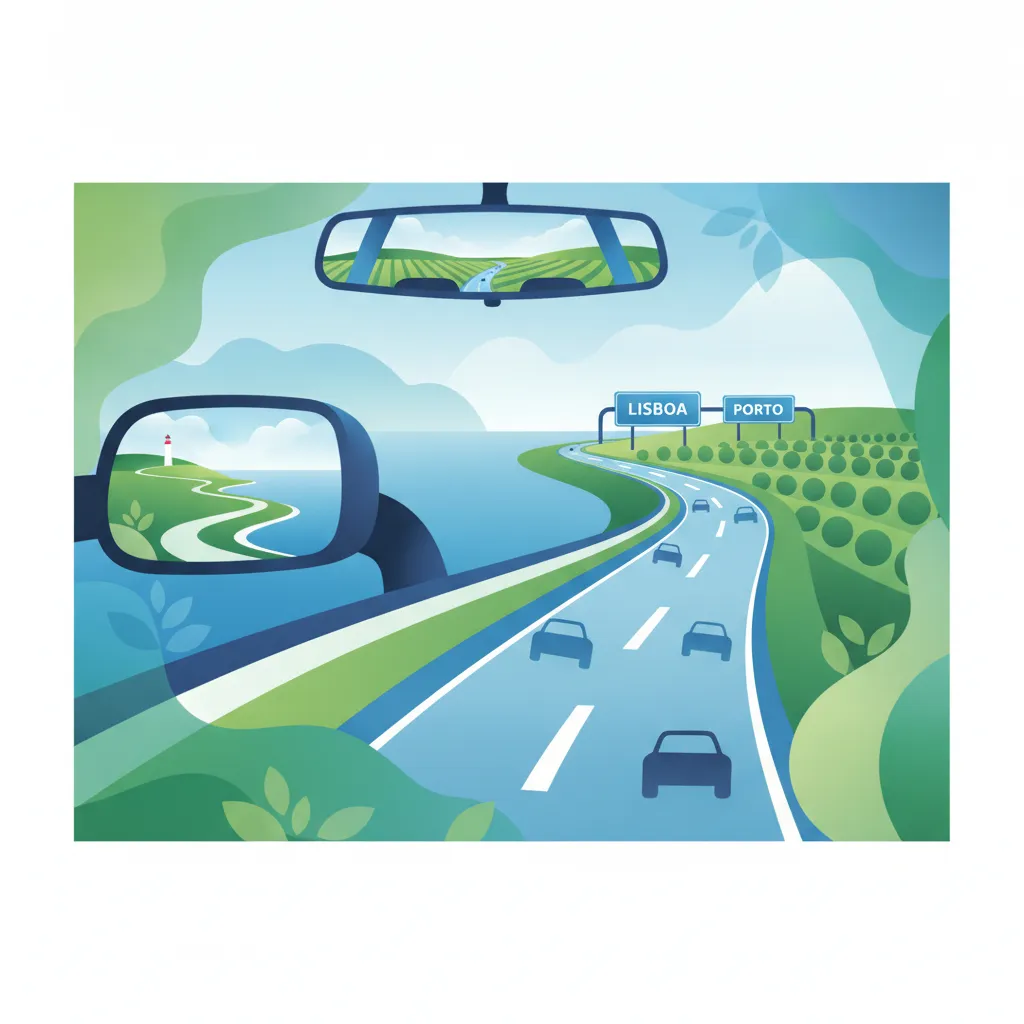
Lesson content overview
Operating a professional passenger vehicle, such as a bus or coach, demands an elevated level of vigilance and skill, especially concerning areas around the vehicle that are not directly visible. These areas, known as blind spots, pose significant risks if not managed correctly. This lesson provides a comprehensive guide to understanding, identifying, and effectively mitigating the dangers associated with blind spots through systematic mirror checks and direct observation. Mastering these techniques is fundamental for the safety of passengers, other road users, and the vehicle itself, making it a cornerstone of professional driving in Portugal.
Blind spots are inherent to all vehicles, but their size and complexity are significantly amplified in larger passenger vehicles. Recognizing and compensating for these hidden zones is a primary responsibility for any professional driver.
An area around a vehicle that cannot be seen by the driver using either the interior rear-view mirror or the exterior side mirrors. Other road users, such as smaller vehicles, motorcycles, or cyclists, can become completely obscured within these zones.
Blind spots represent critical gaps in a driver's field of view. While mirrors offer an indirect view of the surroundings, they cannot cover every angle. These unseen areas are particularly dangerous because they can hide fast-moving traffic or vulnerable road users who might be alongside or just behind your vehicle. Failing to check these areas thoroughly before a maneuver is a leading cause of collisions.
For Category D vehicles (buses, coaches), blind spots are substantially larger and more numerous than in a standard car. They can be broadly categorized into:
Understanding the specific dimensions and areas of your vehicle's blind spots is essential. This knowledge dictates where and when to perform additional checks beyond what mirrors provide.
Correct mirror adjustment is the first and most fundamental step in minimizing blind spots and maximizing your field of view. Properly set mirrors provide the widest possible view of the road and surrounding traffic, reducing the need for excessive head movements and increasing reaction time.
While less common or even absent in many large passenger vehicles due to their design (e.g., full passenger compartments), if your vehicle is equipped with an interior rear-view mirror, it should be adjusted to:
The primary purpose of this mirror, if present, is to monitor traffic approaching from directly behind.
Side mirrors are critical for professional passenger vehicle drivers. Most Category D vehicles are equipped with multiple large side mirrors on each side, often including wide-angle or convex mirrors to expand the field of view.
Initial Position: Sit comfortably in your normal driving position.
Right Side Mirror: Adjust this mirror so you can just see a small sliver of the right side of your vehicle's body in the innermost part of the mirror. The rest of the mirror should show the lane directly adjacent to your vehicle and the road stretching behind. This minimizes the blind spot on the right side.
Left Side Mirror: Adjust this mirror similarly. You should just see a small portion of the left side of your vehicle's body in the innermost part of the mirror. The majority of the mirror should display the adjacent left lane and the road behind. This helps to merge the view from your peripheral vision with the mirror view, reducing the blind spot.
Wide-Angle/Convex Mirrors: If your vehicle has these, adjust them to cover the broadest possible area. These are invaluable for detecting vehicles further out from your immediate adjacent lane or those just entering your blind spot.
Re-check Post-Adjustment: After adjustment, lean slightly left and right. If you momentarily lose sight of a vehicle you were tracking, your mirrors might be set too far in or out.
Professional Insight: For large vehicles, a common method is to adjust mirrors so that when a vehicle disappears from your central rear-view mirror (if present), it should immediately appear in your side mirror. When it disappears from your side mirror, it should be visible in your peripheral vision or through a head turn. This creates an overlapping field of view.
Properly adjusted mirrors are only effective if they are used systematically and frequently. A consistent pattern of mirror checks, combined with direct observation, is known as the "mirror scan" or "mirror-signal-maneuver" routine.
As a professional passenger vehicle driver, you are responsible for the safety of many. This demands continuous situational awareness – always knowing what is happening around your vehicle. Mirror checks are not just for specific maneuvers; they are part of an ongoing process of monitoring the traffic environment. This proactive approach allows for early detection of potential hazards and sufficient time to react.
A systematic mirror check ensures no area is overlooked and reduces reliance on memory. While the exact sequence can vary slightly, a common and effective pattern is:
Interior Rear-View Mirror (if applicable): Quickly check for traffic directly behind you. This gives you a baseline of the general traffic flow.
Left Side Mirror: Scan the left adjacent lane and behind your vehicle. Look for vehicles, motorcycles, or cyclists.
Right Side Mirror: Scan the right adjacent lane and behind your vehicle. Again, look for any road users.
Head Turn (Shoulder Check): This is the crucial final step for confirming blind spots are clear before any lateral movement.
This sequence should be performed rapidly and fluidly, becoming second nature. The entire process takes only a few seconds but provides invaluable information.
The head turn, often called a "shoulder check" or "life saver," is indispensable for managing blind spots, especially for larger vehicles. It is a direct visual confirmation that complements the information gathered from mirrors.
A rapid but thorough turn of the head to look directly over the shoulder, typically to the left or right, to visually confirm that the blind spot is clear of any other road users before initiating a lane change, merge, or turn.
The effectiveness of mirror checks is not just about performing them, but when you perform them. Timing is critical to ensure the information you gather is current and relevant to your intended maneuver.
Any time you plan to alter your vehicle's path – whether it's changing lanes, turning at an intersection, merging, or even braking significantly – you must check your mirrors.
For Category D vehicles, lane changes and overtaking require extended vigilance due to their length and reduced acceleration.
In urban areas or heavy traffic, the environment changes very quickly. Other vehicles, motorcycles, and cyclists are constantly moving in and out of your blind spots.
Never assume your blind spot is clear. Always verify with both mirror checks and a head turn before making any lateral movement.
In Portugal, as in most European countries, the use and adjustment of mirrors, along with blind spot checks, are not merely recommendations but legal requirements for safe driving, especially for professional drivers. While specific articles of the Portuguese Highway Code (Código da Estrada) may detail these, the underlying principles are universally mandatory.
Drivers are legally obligated to ensure that any lane change can be performed safely without impeding or endangering other road users. This explicitly includes checking mirrors and, crucially, performing a head turn to cover blind spots.
The law stipulates that mirrors must be correctly adjusted to provide the driver with the maximum possible field of view before commencing a journey and whenever necessary during driving (e.g., after a driver change or significant load shift).
While signaling indicates your intention, it does not grant you the right of way. Drivers are required to check mirrors both before signaling and again immediately after signaling, just before executing the maneuver.
While not always explicitly detailed as a distinct 'rule,' the general duty of care and continuous observation implied in driving regulations means that professional drivers must maintain constant vigilance, particularly in high-risk environments like congested urban areas. Rapidly changing traffic conditions in such areas elevate the importance of frequent mirror checks.
Even experienced drivers can make mistakes concerning blind spots. Awareness of these common errors is the first step toward prevention.
Effective blind spot management requires adapting your techniques to various environmental, vehicle, and traffic conditions.
A professional passenger vehicle's blind spots can change depending on its load.
Pedestrians, cyclists, and motorcyclists are particularly vulnerable because they are smaller and can easily be obscured in a large vehicle's blind spots.
The rigorous procedures for managing blind spots and conducting mirror checks are not arbitrary rules; they are rooted in fundamental principles of road safety and human perception.
Develop a Habit: Make mirror checks and head turns a subconscious habit. The more you practice, the more naturally and effectively you will integrate them into your driving routine.
Understanding blind spots and mirror checks in theory is important, but applying this knowledge in real-world scenarios is paramount for professional Category D drivers.
Situation: You are driving a fully loaded coach in the middle lane of a three-lane highway in Portugal, intending to move to the left-most lane to overtake a slower vehicle.
Correct Action:
Incorrect Action: Signaling and then immediately moving left after only a quick mirror glance, potentially colliding with a smaller car that was hidden in your coach's extensive left blind spot.
Situation: You are driving an empty bus on a motorway on-ramp, needing to merge safely into fast-moving traffic on the motorway.
Correct Action:
Incorrect Action: Accelerating and merging without thoroughly checking the left side mirror and performing a head turn, potentially cutting off a vehicle or causing an emergency braking situation.
Situation: You are operating a bus on a two-lane road (one lane in each direction), planning to overtake a tractor.
Correct Action:
Incorrect Action: Initiating the overtake after only glancing in the interior mirror, missing a motorcycle that was about to pass you from behind.
Explore all units and lessons included in this driving theory course.
Lesson content overview
Explore all units and lessons included in this driving theory course.
Explore search topics learners often look for when studying Managing Blind Spots and Mirror Checks. These topics reflect common questions about road rules, driving situations, safety guidance, and lesson level theory preparation for learners in Portugal.
Browse additional driving theory lessons that cover connected traffic rules, road signs, and common driving situations related to this topic. Improve your understanding of how different rules interact across everyday traffic scenarios.
Learn to identify and manage common blind spots encountered in busy Portuguese urban traffic. This lesson focuses on practical application of mirror checks and head turns in city driving, crucial for passenger vehicle safety.

This lesson maps out the significant blind spots—or 'no zones'—to the front, sides, and rear of a heavy goods vehicle. It explains how these blind spots change depending on the vehicle's configuration, such as when pulling a trailer. Proper mirror setup and scanning techniques are taught to minimize these areas of no visibility.

This lesson explains how to correctly set up and use the complex mirror systems on a modern HGV to minimize blind spots. It also covers the operation of technological aids like reversing cameras, proximity sensors, and blind spot information systems. Drivers learn that these systems are aids, not replacements for all-around observation.

This lesson specifically addresses the significant danger posed by the blind spots of larger vehicles. It identifies the 'no-zones' around trucks and buses where a moped can become invisible to the driver. The content provides clear instructions on how to manage lane position, avoid lingering in blind spots, and execute overtaking maneuvers safely to ensure visibility.
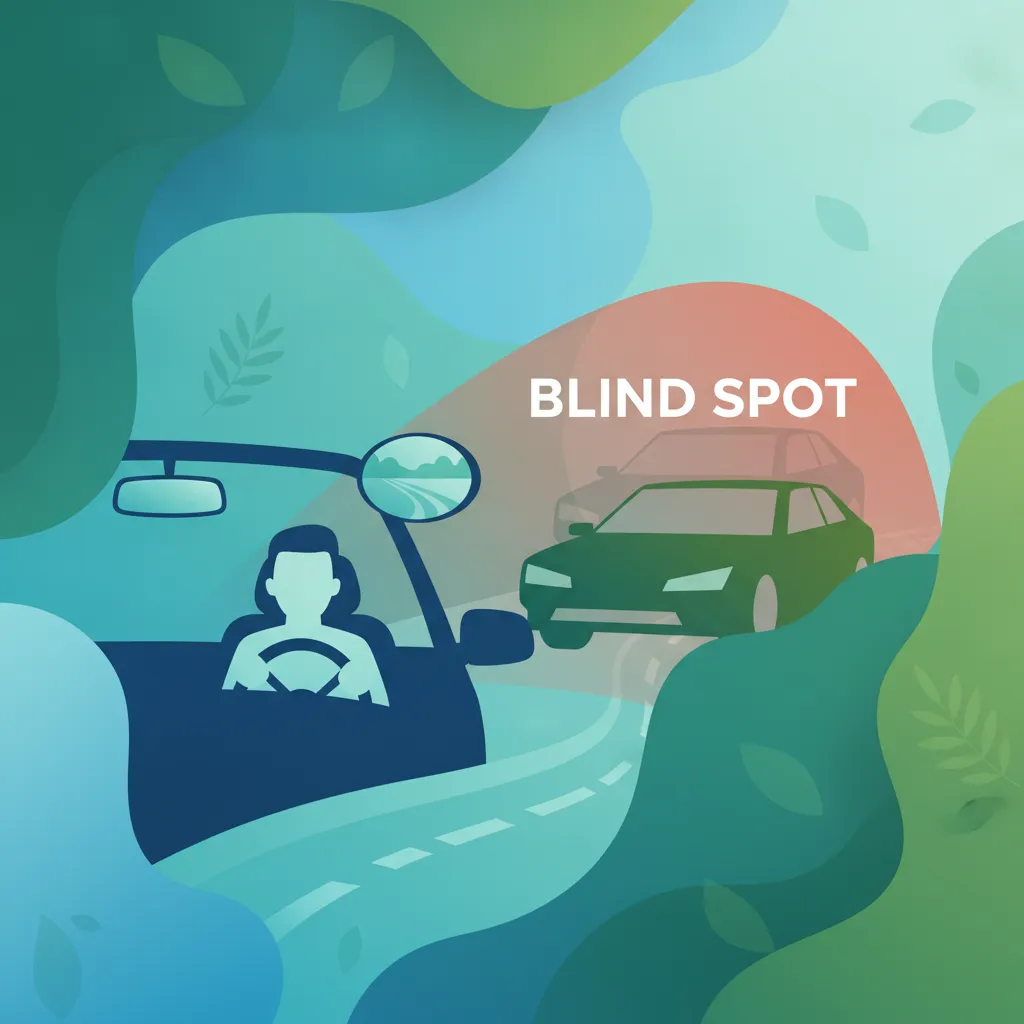
Focusing on blind spots, this lesson explains the areas where riders may become invisible to drivers of larger vehicles. It discusses how to assess and avoid these zones, especially during overtaking or when riding alongside other vehicles. Techniques for positioning oneself safely and ensuring visibility to other drivers are provided to reduce collision risk.
This lesson explains how the large dimensions of passenger vehicles influence their handling and maneuverability. It details the concept of turning radius and identifies the significant blind spots around the vehicle. The content emphasizes the critical importance of correct mirror adjustment to maximize visibility and reduce operational risks.

This lesson focuses on the high-risk manoeuvre of reversing and outlines a safe and systematic approach. It stresses the importance of all-around observation (360-degree check) before and during the manoeuvre to identify obstacles and pedestrians. The content covers the correct use of mirrors and reference points, as well as maintaining slow, steady control of the vehicle.

This lesson provides essential safety guidance for interacting with large vehicles like buses and trucks. It emphasizes the importance of staying out of their extensive blind spots and allowing extra space due to their long stopping distances and wide turning circles. The content also offers advice on how to safely overtake such vehicles and navigate around public transport stops.
This lesson addresses the high-risk maneuver of reversing a large vehicle. It outlines a safe, slow, and controlled procedure using all available visual aids like mirrors and cameras. The content also covers the importance of establishing a clear safety zone around the vehicle and using a ground guide when necessary.

This lesson addresses the specific challenges of driving alongside motorcyclists and large vehicles such as trucks and buses. It highlights the reduced visibility of motorcyclists and the extensive blind spots (no-zones) around heavy vehicles. Drivers will learn to provide extra space, anticipate wide turns, and adjust for factors like spray and wind turbulence.

This lesson provides strategies for safe driving after dark, addressing challenges like reduced visibility and headlight glare. It details the correct situations for using main beams (high beams) and the importance of dipping them for oncoming or followed vehicles. Techniques for minimizing the effect of glare and being aware of less visible hazards like pedestrians are also covered.
Explore advanced strategies for adjusting vehicle mirrors and performing critical blind spot checks. This lesson builds upon fundamental techniques to ensure maximum visibility and safety for professional drivers operating large vehicles.
This lesson explains how to correctly set up and use the complex mirror systems on a modern HGV to minimize blind spots. It also covers the operation of technological aids like reversing cameras, proximity sensors, and blind spot information systems. Drivers learn that these systems are aids, not replacements for all-around observation.
This lesson explains how the large dimensions of passenger vehicles influence their handling and maneuverability. It details the concept of turning radius and identifies the significant blind spots around the vehicle. The content emphasizes the critical importance of correct mirror adjustment to maximize visibility and reduce operational risks.
This lesson maps out the significant blind spots—or 'no zones'—to the front, sides, and rear of a heavy goods vehicle. It explains how these blind spots change depending on the vehicle's configuration, such as when pulling a trailer. Proper mirror setup and scanning techniques are taught to minimize these areas of no visibility.
Find clear answers to common questions learners have about Managing Blind Spots and Mirror Checks. Learn how the lesson is structured, which driving theory objectives it supports, and how it fits into the overall learning path of units and curriculum progression in Portugal. These explanations help you understand key concepts, lesson flow, and exam focused study goals.
Due to their size and length, Category D vehicles have significant blind spots. Proper adjustment ensures you can monitor the vehicle's sides and rear effectively, which is vital for safe lane changes and turn executions.
You must perform a systematic pattern of mirror checks constantly. In the context of your Category D theory exam, you should check your mirrors before every maneuver, such as signaling, braking, turning, or changing lanes.
No, mirrors do not eliminate all blind spots. The official Portuguese driving theory requires you to combine mirror checks with direct observation of the surrounding environment, especially when turning or pulling away from a bus stop.
The biggest risk is failing to detect vulnerable road users like cyclists or motorcyclists alongside the vehicle. Proper mirror management and periodic direct head checks are the primary defenses against this danger.
Utilize the powerful search tool to refine your Portuguese driving theory practice. Pinpoint questions related to specific traffic laws, road signs, or complex scenarios from the Código da Estrada. Begin targeted revision now to boost your understanding and confidently approach your IMT driving exam.