
This lesson explores the specific regulations and best practices for operating large passenger vehicles on high-speed motorways and express roads in Portugal. You will build upon your foundation of vehicle handling to understand how to navigate complex lane systems and maintain safety at higher speeds. Mastering these skills is essential for your Category D professional theory exam and for ensuring passenger comfort.

Lesson content overview
Driving a professional passenger vehicle on motorways (autoestradas) and express roads (vias rápidas) in Portugal requires a specialized skillset and a deep understanding of specific regulations. These high-speed, controlled-access highways are designed for efficient traffic flow, but they also present unique challenges for drivers of large vehicles, such as coaches and buses. Mastery of motorway operations is not only crucial for safety but also a legal requirement under the Código da Estrada, Portugal's Highway Code. This lesson provides a comprehensive guide to navigating these critical road networks safely and efficiently.
Motorways and express roads are designed to facilitate high-speed travel over long distances by minimizing interruptions. Unlike conventional roads, they feature controlled access points, multiple lanes, and typically no intersections at grade level. This design demands precise driving techniques, especially for professional passenger vehicle operators, who are responsible for the safety and comfort of their passengers.
Motorways and express roads play a vital role in national and international transport, connecting major cities and regions. Their primary purpose is to allow vehicles to maintain higher average speeds, reducing travel times and improving logistical efficiency. For professional passenger vehicle drivers, this means adhering to strict rules regarding speed, lane usage, and interaction with other high-speed traffic. The unique challenges include managing vehicle stability at speed, handling increased braking distances, and ensuring smooth passenger journeys.
Entering and exiting motorways and express roads safely are critical maneuvers that demand full attention and precise execution. Abrupt speed changes or poor judgment during these phases are common causes of accidents. Professional drivers must master the use of acceleration and deceleration lanes to seamlessly integrate with or separate from high-speed traffic.
When entering a motorway, vehicles must use an acceleration lane (via de aceleração). This dedicated lane runs parallel to the main carriageway, allowing drivers to increase their speed to match that of the traffic already on the motorway.
Signal Early: Activate your left turn indicator well in advance to signal your intention to merge.
Assess Traffic Flow: Continuously observe traffic on the main carriageway using your mirrors and by turning your head to check your blind spot. Identify a safe gap in the traffic.
Accelerate Decisively: Use the full length of the acceleration lane to build up speed, aiming to match the speed of vehicles in the rightmost lane of the motorway.
Merge Smoothly: When a safe and sufficient gap is available, steer smoothly into the right lane. Do not stop at the end of the acceleration lane unless absolutely necessary to avoid a collision.
Adjust Speed and Distance: Once merged, adjust your speed to the prevailing traffic flow and establish a safe following distance.
Stopping on the acceleration lane or attempting to merge at a speed significantly lower than the motorway traffic can create a dangerous obstruction and lead to rear-end collisions. Similarly, never reverse on an acceleration lane or the main carriageway.
Exiting a motorway requires equally careful planning and execution using a deceleration lane (via de desaceleração) or exit lane. This lane allows you to reduce speed without impeding the flow of traffic on the main carriageway.
Plan Ahead: Identify your exit well in advance and prepare for the maneuver. Look for advance directional signs.
Signal Early: Activate your right turn indicator well before reaching the start of the deceleration lane, typically 300 to 500 meters before the exit, to inform other drivers of your intention.
Move into Exit Lane: Gently move into the designated exit lane while maintaining motorway speed. Do not slow down on the main carriageway.
Decelerate Gradually: Once fully in the deceleration lane, begin to reduce your speed smoothly. Use the full length of the lane to adjust to a speed appropriate for the upcoming road or ramp.
Watch for Posted Limits: Pay close attention to any speed limits posted on the exit ramp, as these will be significantly lower than motorway speeds.
Proper lane discipline is fundamental to maintaining smooth traffic flow and preventing accidents on motorways. Large passenger vehicles, due to their size and reduced maneuverability, must adhere strictly to these rules. The Código da Estrada in Portugal dictates specific lane usage, particularly regarding staying right and overtaking.
On motorways and express roads with multiple lanes in the same direction, the general rule is to keep to the rightmost lane available for normal travel. This ensures that faster traffic can utilize the left lanes for overtaking without being obstructed. Professional drivers operating coaches or buses must diligently follow this principle.
After completing an overtaking maneuver, always return to the rightmost lane as soon as it is safe to do so, without cutting off the vehicle you have just passed. Do not "hog" the overtaking lane.
The leftmost lanes on motorways are typically designated as overtaking lanes (faixas de ultrapassagem). These lanes are specifically for passing slower vehicles and should not be used for continuous travel.
Assess Need and Safety: Only overtake when necessary and when it is entirely safe to do so. Ensure you have clear visibility and sufficient space.
Signal Intention: Activate your left turn indicator well in advance to signal your intention to move into the overtaking lane.
Check Mirrors and Blind Spots: Thoroughly check your rear-view and side mirrors, and perform a head check for any vehicles in your blind spot before changing lanes.
Accelerate to Overtake: Move into the overtaking lane smoothly and accelerate sufficiently to pass the slower vehicle quickly and safely.
Maintain Safe Lateral Distance: Ensure you leave ample space between your vehicle and the vehicle you are overtaking.
Signal Return: Once you have passed the vehicle and can see it clearly in your right-side mirror, activate your right turn indicator to signal your intention to return to the right lane.
Return to Right Lane: Steer smoothly back into the rightmost lane when safe, ensuring you do not cut off the overtaken vehicle.
The act of passing a slower vehicle moving in the same direction, typically by moving into an adjacent lane.
Prohibited Overtaking:
Managing speed and maintaining a safe following distance are paramount on motorways, especially for large professional passenger vehicles. The higher speeds amplify the consequences of any misjudgment or sudden event, demanding increased vigilance.
Motorways have posted fixed speed limits (limites de velocidade fixos) that must always be obeyed. However, drivers must also be aware of and comply with variable speed limits (limites de velocidade variáveis) displayed on electronic signs. These variable limits are adjusted by traffic management systems in response to real-time conditions such as traffic density, congestion, accidents, or adverse weather.
Ignoring a variable speed limit sign, even if the road appears clear, can lead to dangerous situations and severe penalties. These limits are set for safety reasons under specific conditions.
Professional passenger vehicle operators must consider the specific speed limits applicable to their vehicle category. In Portugal, coaches and buses typically have lower maximum speed limits than passenger cars on motorways.
Maintaining a safe following distance (distância de segurança) is crucial on high-speed roads. The "two-second rule" is a widely recognized guideline: drivers should leave at least a two-second gap between their vehicle and the vehicle directly in front.
Identify a Fixed Point: As the vehicle ahead passes a fixed point on the road (e.g., a sign, a bridge, a road marking).
Count "One-Thousand-One, One-Thousand-Two": Begin counting.
Check Your Position: You should not reach that same fixed point before you finish counting.
Adjusting Following Distance:
A minimum time-based following distance, where a driver should be at least two seconds behind the vehicle in front, extended in adverse conditions.
Operating a professional passenger vehicle on motorways demands constant awareness and the ability to adapt to varying conditions. Several factors can significantly impact safety and require adjustments to driving behavior.
The hard shoulder (berma) is an emergency lane on motorways. Its use is strictly prohibited for normal driving, overtaking, or stopping, except in genuine emergencies such as a vehicle breakdown, medical emergency, or collision.
If you must stop on the hard shoulder, activate your hazard warning lights immediately. Move your passengers to a safe location away from the road, behind a safety barrier if possible. Place your warning triangle (sinal de pré-sinalização de perigo) at an appropriate distance (typically 30 meters) behind your vehicle, as required by the Código da Estrada.
Motorways can become significantly more hazardous in adverse weather. Professional drivers must adjust their driving style proactively:
Driving at night on motorways introduces challenges such as reduced visibility and glare from oncoming headlights. Professional drivers should:
The weight and distribution of passengers and luggage significantly affect the handling and braking of a coach or bus.
The Código da Estrada outlines the legal framework for driving in Portugal, including specific provisions for motorways and express roads. Compliance is mandatory for all drivers, particularly professional operators.
Operating professional passenger vehicles on motorways and express roads requires a high level of skill, discipline, and adherence to specific rules. Professional drivers must consistently:
By integrating these principles and adhering to the Código da Estrada, professional passenger vehicle drivers contribute to safer and more efficient journeys on Portugal's high-speed road networks.
Explore all units and lessons included in this driving theory course.
Lesson content overview
Explore all units and lessons included in this driving theory course.
Explore search topics learners often look for when studying Operating on Motorways and Express Roads. These topics reflect common questions about road rules, driving situations, safety guidance, and lesson level theory preparation for learners in Portugal.
Browse additional driving theory lessons that cover connected traffic rules, road signs, and common driving situations related to this topic. Improve your understanding of how different rules interact across everyday traffic scenarios.
Learn advanced techniques and specific rules for operating passenger vehicles on Portuguese motorways. Covers complex merging, lane discipline, speed management, and safe overtaking strategies, aligned with the Código da Estrada.
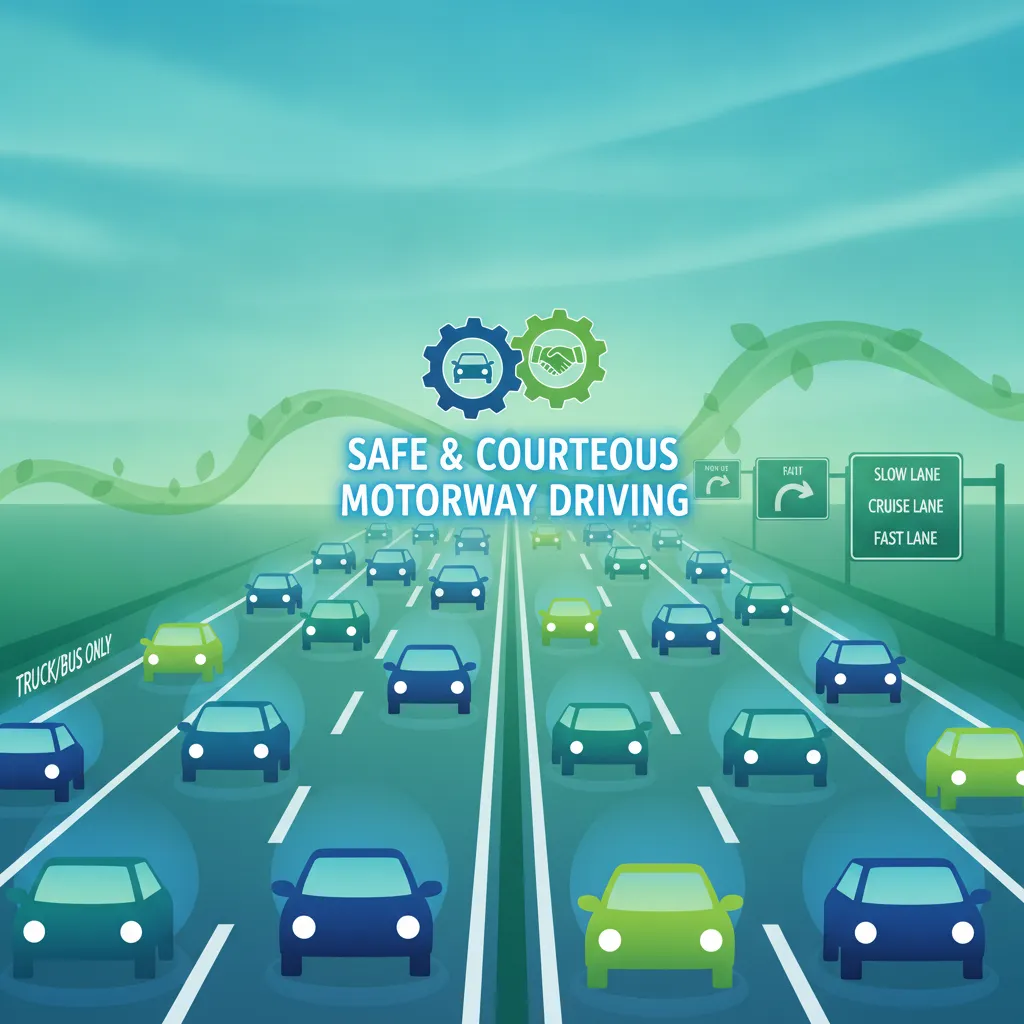
This lesson explains the unique set of rules that apply to motorway driving to facilitate safe, high-speed travel. It covers the correct procedure for entering and exiting the motorway, principles of lane discipline (keeping left unless overtaking), and the rules for safe overtaking. The lesson also clarifies the proper use of the hard shoulder or emergency lane for genuine emergencies only.
This lesson focuses on the specifics of riding on motorways, covering speed management, lane discipline, and safe entry and exit strategies. Riders will learn how to choose appropriate lanes, maintain safe following distances at high speeds, and execute overtaking safely. The impact of wind and understanding Portuguese motorway signage are also addressed.

This lesson focuses on the specific skills and regulations for motorway driving. It covers correct lane usage for HGVs, safe procedures for overtaking slower traffic, and the rules for using the hard shoulder or emergency refuge areas. Maintaining consistent speed and awareness of surrounding traffic is key to motorway safety.

This lesson details the systematic process for changing lanes and merging with traffic, particularly when entering a motorway from an acceleration lane. It emphasizes the critical importance of the mirror-signal-blind spot check routine. The content also explains how to judge a safe gap in the traffic and adjust vehicle speed to merge smoothly and without disrupting the flow.

This lesson details the rules of lane discipline and the procedures for safe overtaking. It explains how to maintain correct lane positioning and how road markings and signs define where overtaking is allowed or forbidden. The lesson emphasizes the importance of the mirror-signal-manoeuvre routine and ensuring sufficient space and visibility before attempting to pass another vehicle.

This lesson provides a detailed guide to the rules and safety considerations for overtaking. It covers how to assess if an overtake is necessary and safe, considering factors like road markings, visibility, and oncoming traffic. The correct procedure, from initial checks and signaling to returning safely to the lane, is explained in full.

This lesson explains the regulations governing the use of dedicated bus lanes, including operational hours and priority rules at junctions. It clarifies which other vehicles may use these lanes and under what circumstances. The content also discusses traffic signal priority systems and the legal implications of improper bus lane usage.

This lesson emphasizes the importance of strict lane discipline for heavy vehicles. It covers how to maintain a central position in the lane, the correct procedure for signaling and checking before a lane change, and how to navigate multi-lane roundabouts. Proper lane discipline enhances safety and improves traffic flow for everyone.

This lesson addresses the challenges of operating a large vehicle on rural roads, which often feature narrow lanes, sharp bends, and poor surfaces. It covers techniques for speed adaptation, gear selection for gradients, and maintaining lane position. The content emphasizes heightened awareness for hazards such as farm vehicles and animals.
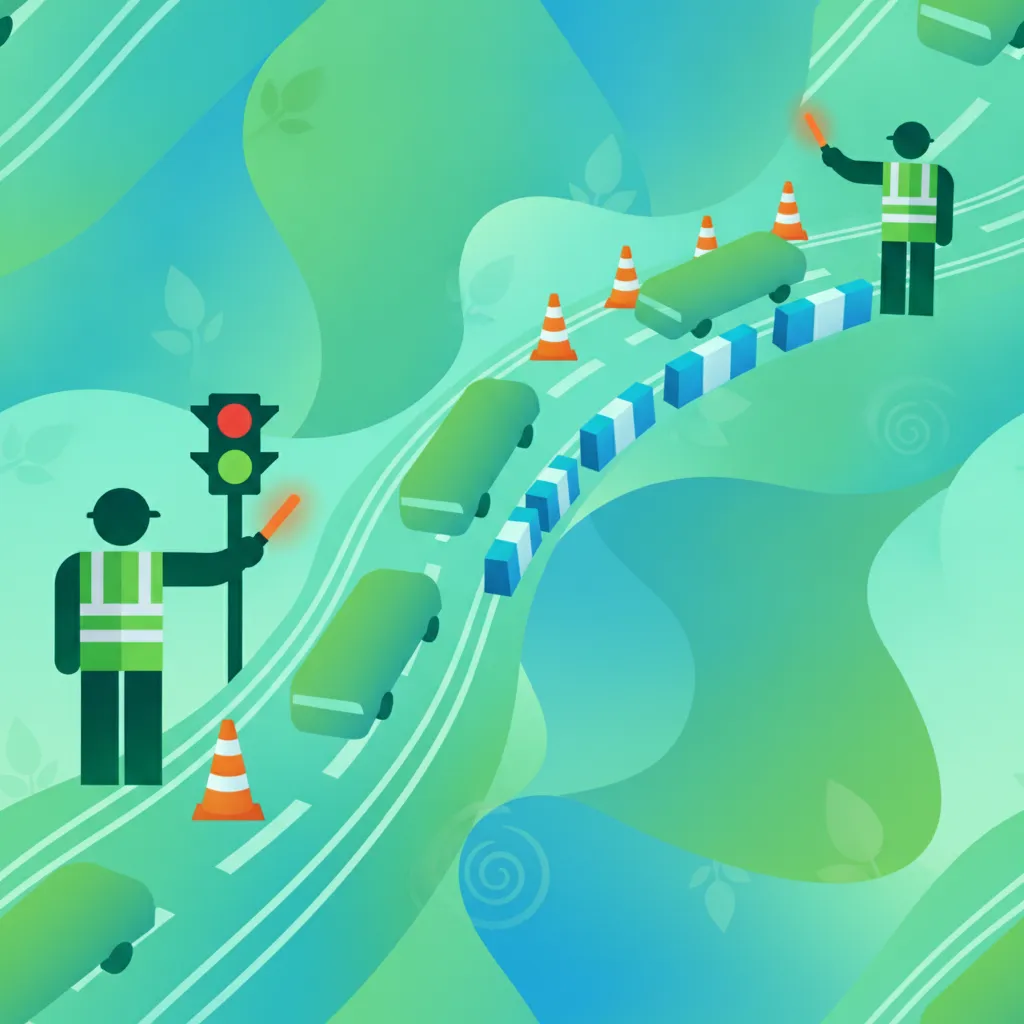
This lesson provides guidance on driving safely through roadwork zones. It covers the importance of obeying temporary speed limits, navigating narrow lanes and contraflow systems, and being highly aware of workers and machinery. A professional driver's vigilance is essential for preventing accidents in these potentially hazardous areas.
Understand how weather, night driving, and vehicle load impact driving on motorways. This lesson details emergency procedures and safe practices essential for professional passenger vehicle operators in Portugal.

This lesson focuses on adapting driving techniques for wet and foggy conditions, which significantly reduce visibility and tyre grip. It explains the phenomenon of aquaplaning and how to avoid it by reducing speed and ensuring proper tyre condition. The correct use of headlights, fog lights, and increasing following distances are presented as essential safety measures.

This lesson explains how adverse weather conditions like rain and fog compromise visibility and vehicle control. It provides clear guidance on reducing speed, increasing following distance, and using lights and wipers effectively. The content also covers the phenomenon of hydroplaning and how to prevent loss of traction on wet roads.

This lesson equips drivers with the essential knowledge for managing a roadside emergency. It outlines the correct steps to take following a vehicle breakdown or an accident, including securing the scene with a warning triangle, wearing a reflective vest, and contacting emergency services. The lesson concludes by reinforcing the principles of responsible and courteous driving as part of a positive road safety culture.

This lesson teaches the crucial skill of selecting a safe and appropriate speed that considers the prevailing conditions. It explains why the legal speed limit is often not the safest speed in adverse weather, heavy traffic, or poor visibility. Drivers will learn to assess the environment and modify their speed to maintain control and allow for adequate stopping distance.

This lesson provides strategies for safe driving after dark, addressing challenges like reduced visibility and headlight glare. It details the correct situations for using main beams (high beams) and the importance of dipping them for oncoming or followed vehicles. Techniques for minimizing the effect of glare and being aware of less visible hazards like pedestrians are also covered.
This lesson explains the unique set of rules that apply to motorway driving to facilitate safe, high-speed travel. It covers the correct procedure for entering and exiting the motorway, principles of lane discipline (keeping left unless overtaking), and the rules for safe overtaking. The lesson also clarifies the proper use of the hard shoulder or emergency lane for genuine emergencies only.

This lesson provides detailed guidance for riding in challenging weather conditions. It explains how rain affects braking distances and tire grip, and the importance of using lights correctly in fog to be seen. The content also offers practical advice on appropriate waterproof and high-visibility gear, as well as how strong winds can affect the stability of a lightweight vehicle.
This lesson focuses on the specific skills and regulations for motorway driving. It covers correct lane usage for HGVs, safe procedures for overtaking slower traffic, and the rules for using the hard shoulder or emergency refuge areas. Maintaining consistent speed and awareness of surrounding traffic is key to motorway safety.

This lesson teaches riders how to assess and adapt to the increased risks associated with adverse weather and road conditions. It explains how rain reduces tire grip and visibility, requiring lower speeds and gentler control inputs. The content also provides advice for dealing with other challenging conditions such as strong crosswinds, fog, and road surface hazards like potholes or gravel.

This lesson focuses on adapting riding techniques for rainy conditions and wet road surfaces. It covers the increased risk of hydroplaning, the need for longer braking distances, and adjustments to cornering and throttle control. Riders are advised on how to handle water accumulation and where to position themselves to maintain stability in wet conditions.
Find clear answers to common questions learners have about Operating on Motorways and Express Roads. Learn how the lesson is structured, which driving theory objectives it supports, and how it fits into the overall learning path of units and curriculum progression in Portugal. These explanations help you understand key concepts, lesson flow, and exam focused study goals.
Yes, heavy passenger vehicles are often restricted from using the far-left lane on motorways with three or more lanes, except for overtaking or when traffic conditions require it. Always consult current Código da Estrada regulations for specific lane usage.
You must adjust your speed on the acceleration lane to match the speed of the motorway traffic while looking for a safe gap. Given your vehicle's size, you need a larger gap than a standard car, so proactive scanning and clear signaling are vital.
Yes, the IMT theory exam frequently tests your knowledge of variable speed limits signaled by electronic overhead signs. As a professional driver, you are expected to strictly adhere to these limits regardless of the vehicle's capability.
The most common mistake is failing to maintain a sufficient following distance, which is critical due to the increased stopping distance of a fully loaded coach compared to smaller vehicles.
Utilize the powerful search tool to refine your Portuguese driving theory practice. Pinpoint questions related to specific traffic laws, road signs, or complex scenarios from the Código da Estrada. Begin targeted revision now to boost your understanding and confidently approach your IMT driving exam.