
This lesson details the critical safety procedures required for professional passenger vehicle drivers in Portugal. You will learn how to manage emergencies, safely evacuate your vehicle, and follow the correct protocols to protect your passengers during a breakdown or incident.
Lesson content overview
As a professional passenger vehicle driver, particularly for Category D vehicles in Portugal, mastering emergency procedures and evacuation protocols is not just a regulatory requirement; it is a fundamental aspect of your duty of care. This comprehensive guide outlines the critical steps and responsibilities involved in managing various emergencies, from mechanical breakdowns and fires to accidents, ensuring the paramount safety of your passengers. Understanding and practicing these protocols will enable you to act decisively and effectively under pressure, minimizing risks and upholding your professional reputation.
Effective emergency response hinges on a set of core principles designed to protect life, minimize injury, and mitigate further damage. These principles serve as the foundation for all subsequent actions during a critical incident involving a passenger vehicle.
The ultimate goal in any emergency is the safety and well-being of passengers and the driver. This takes precedence over all other considerations, including vehicle preservation. Acting with speed and precision is crucial, as delayed or incorrect actions can escalate a situation rapidly. Clear, calm, and authoritative communication helps prevent panic and ensures passengers follow instructions, facilitating an orderly response.
Safety First Always: In any emergency scenario, your first priority is the lives and health of your passengers and yourself, followed by securing the scene and vehicle.
Prompt communication with emergency services is vital. Providing accurate information about your location, the nature of the incident, and the number of people involved allows for timely dispatch of appropriate assistance. This not only includes emergency services but also your company, keeping them informed of the situation.
Passengers look to the driver for leadership in an emergency. Your ability to provide clear, concise instructions, coupled with reassurance, can significantly reduce anxiety and ensure a smooth evacuation. Familiarity with all emergency exits and procedures, along with a plan for assisting vulnerable passengers, is essential for an efficient and safe evacuation. After everyone is safely out, performing a headcount ensures no one is left behind.
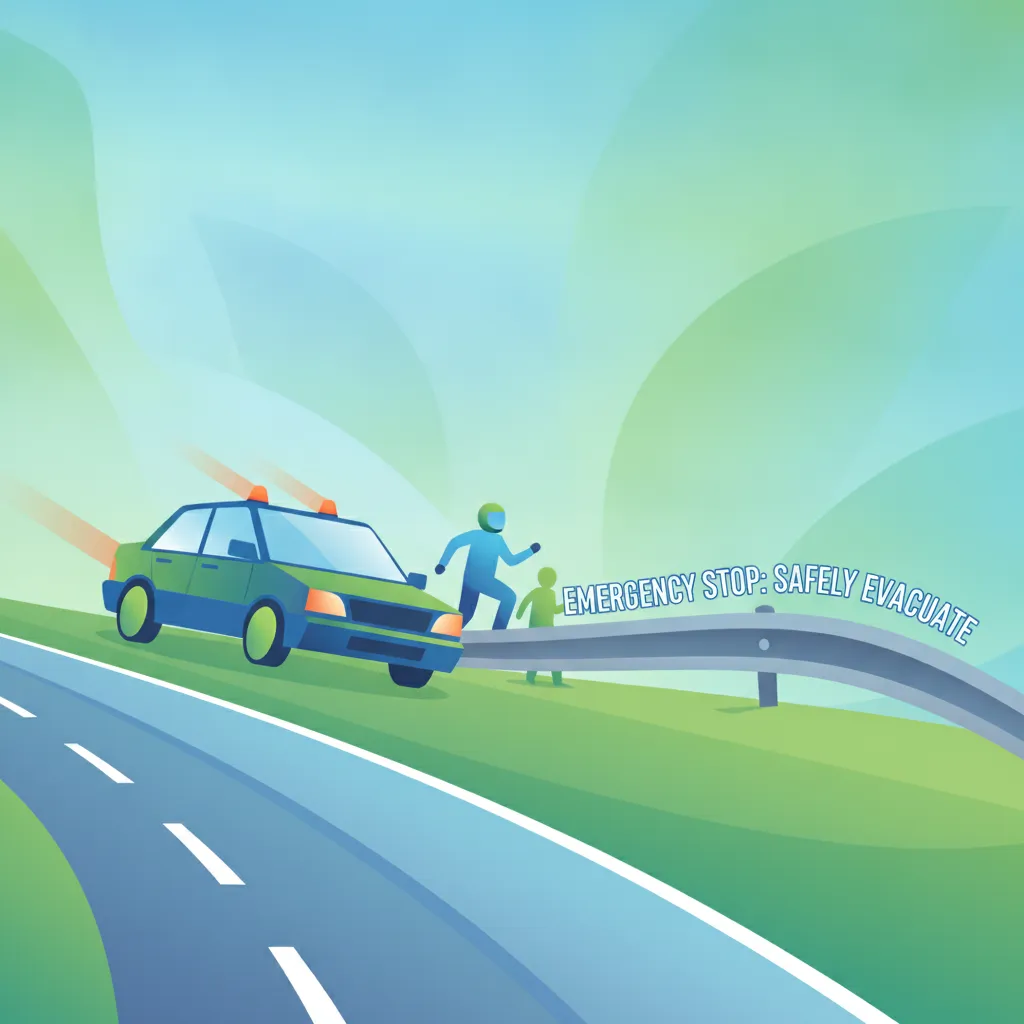
The very first actions you take when an emergency occurs are crucial for containing the situation and preventing secondary incidents. This involves safely bringing the vehicle to a halt and immediately alerting other road users to the danger.
When an emergency arises, bringing your passenger vehicle to a safe and controlled stop is paramount. This action requires careful assessment of your surroundings to choose the safest possible location to halt the vehicle. The primary objective is to avoid obstructing traffic flow or creating new hazards for other road users. According to the Código da Estrada (Portuguese Traffic Code), particularly Article 68.3 and 68.4, you must stop at a place where the vehicle does not endanger others or impede traffic.
Consider the type of road you are on. On a motorway (autoestrada), the emergency lane (via de emergência) is the designated safe haven. On urban roads, pulling over to the far right, away from active lanes and intersections, is generally the best approach. Avoid stopping suddenly, if possible, especially with a fully loaded vehicle, as this can cause passengers to lose balance or lead to rear-end collisions. Gradually reduce speed, maintain control, and steer towards the safest available spot.
Assess the Situation: Quickly determine the nature of the emergency and the immediate risks.
Scan Your Surroundings: Look for the safest place to stop, considering traffic, road conditions, and proximity to hazards.
Activate Hazard Warning Lights: Turn on your hazard lights immediately as you begin to slow down or maneuver to stop.
Gradually Reduce Speed: Avoid abrupt braking unless absolutely necessary. A controlled deceleration prevents passenger injury and maintains vehicle stability.
Steer to a Safe Location: Guide the vehicle off the main carriageway if possible, onto a shoulder, emergency lane, or a wide service area.
Secure the Vehicle: Once stopped, engage the parking brake firmly and turn off the engine. If on an incline, consider additional measures like chocking the wheels if safe to do so.
The activation of hazard warning lights (piscas de emergência or sinal de perigo) is a critical step in signaling an emergency stop to other road users. These lights cause both the front and rear indicator lights to flash simultaneously, clearly indicating that your vehicle is stationary and potentially hazardous.
The Código da Estrada, Article 70.1, mandates that hazard lights must be used whenever a vehicle stops unexpectedly on the roadway due to a breakdown, accident, or any situation that may cause danger. Their purpose is to alert approaching traffic, giving them sufficient time to react and maneuver safely around your stopped vehicle. This significantly reduces the risk of secondary collisions. It is crucial to remember that hazard lights are for stationary vehicles only; using them while driving is illegal and can confuse other drivers.
Do NOT use hazard lights while moving. This is a common misunderstanding and can mislead other drivers about your intentions, potentially causing accidents. Hazard lights are strictly for stationary vehicles indicating a temporary obstruction or danger.
Once the vehicle is safely stopped and secured, immediate and effective communication becomes your next priority. This involves two main channels: contacting emergency services and guiding your passengers.
In Portugal, as throughout Europe, 112 is the universal emergency telephone number for police, fire, and medical services. Contacting this number without delay is mandatory, especially in cases of accidents or incidents requiring immediate professional intervention. Article 63 of the Código da Estrada legally obliges drivers involved in accidents to report them.
When you call 112, be prepared to provide precise and accurate information. This includes:
Speak calmly and clearly, and do not hang up until instructed to do so. They may have follow-up questions or specific instructions for you. If possible, use a hands-free device to keep your hands free for other tasks or to monitor the situation.
Your communication with passengers during an emergency is critical for maintaining order, preventing panic, and ensuring a smooth evacuation. Your tone, clarity, and authority will greatly influence how passengers react.
Begin by using a calm, clear, and reassuring voice. If your vehicle is equipped with a public address (PA) system, use it. Clearly state that an emergency has occurred and provide concise instructions on the next steps. Avoid technical jargon or excessive detail. Reassure passengers that you are taking control and that help is on the way.
Key Communication Points:
Use gestures to reinforce your instructions, pointing to exits or directing the flow of passengers. Your goal is to instill confidence and guide passengers systematically to safety. Drivers have a legal "duty of care" (Código da Estrada, Article 23) to ensure passenger safety, which includes effective communication during emergencies.
Once the vehicle is safely stopped and emergency services are contacted, the decision to evacuate is paramount, especially in situations like fire, serious accident, or immediate danger to occupants. The evacuation procedure must be systematic, orderly, and account for all individuals.
A well-executed evacuation minimizes chaos and injury. It is a structured sequence of actions designed to move all occupants from the vehicle to a safe assembly point.
Alert Passengers: Using the PA system or your voice, calmly inform passengers of the need to evacuate.
Activate Hazard Lights: Ensure these are already on to warn other traffic.
Stop and Secure Vehicle: Confirm the vehicle is safely stopped, parking brake engaged, and engine off.
Open Primary Exits: Open the main entrance/exit doors first.
Direct Passengers to Exits: Instruct passengers to move towards the nearest safe emergency exit. Start with those closest to the primary exits, and then guide others to emergency exits.
Prioritize Vulnerable Passengers: Assist children, the elderly, pregnant individuals, and those with reduced mobility first. Designate specific staff members or able-bodied passengers to help if available.
Utilize All Emergency Exits: Once primary exits are in use, open and direct passengers to all other available emergency exits (windows, roof hatches, rear exits).
Guide to a Safe Assembly Point: Direct passengers away from the vehicle and the road to a designated safe area, such as behind a barrier, upwind from smoke, or a safe distance from the incident.
Perform a Headcount: Once all passengers are believed to be out, conduct a thorough headcount.
Report to Emergency Services: Update 112 with the status of the evacuation and the headcount results.
Leave Personal Belongings Behind: Stress to passengers the importance of leaving bags and other personal items to expedite the evacuation process. Time is critical.
Professional passenger vehicles are equipped with multiple emergency exits designed for rapid egress in critical situations. These exits can include additional doors, emergency windows, and roof hatches. It is a regulatory requirement in Portugal that all passenger vehicles of a certain size must have at least two clearly marked and functional emergency exits (Law no. 50/2018, Annex III).
Familiarity with Emergency Exits: As a driver, you must be thoroughly familiar with the location and operation of every emergency exit on your vehicle before you start your service. Practice opening them.
During an evacuation, clearly instruct passengers on how to open the nearest emergency exit. If necessary, demonstrate or assist. Encourage an orderly flow, reminding passengers not to push or shove.
Special attention and assistance must be provided to vulnerable passengers, who may include children, the elderly, individuals with disabilities or reduced mobility, pregnant women, and those with sensory impairments. The Código da Estrada (Article 124) specifically mandates that drivers assist passengers with reduced mobility.
Strategies for Assisting Vulnerable Passengers:
Never assume vulnerable passengers can evacuate themselves without help. Your proactive assistance is a legal and moral obligation.
After all passengers are believed to have evacuated the vehicle and reached a safe assembly point, conducting a thorough headcount is a crucial step. The purpose of a headcount is to ensure everyone is accounted for and to promptly identify any missing individuals for emergency services.
Headcount Procedure:
The Código da Estrada, Article 124, implies the driver's responsibility to ensure no passengers are left unattended or missing after an evacuation. This final check is vital for human safety and for subsequent rescue efforts.
Even after the immediate danger has passed and passengers are safe, your responsibilities as a professional driver continue. This phase involves accurate reporting and cooperation with authorities.
Once the initial emergency response and evacuation are complete, you have a legal duty to report the incident to the appropriate authorities. This is not only for legal compliance but also for internal company records, insurance claims, and incident investigation.
Reporting Requirements:
Accurate and timely reporting is crucial for legal purposes, for learning from the incident, and for demonstrating your adherence to professional standards.
Professional passenger vehicle operations in Portugal are governed by specific legal provisions designed to ensure the highest safety standards, especially during emergencies. Adherence to these regulations is mandatory for all Category D drivers.
The Código da Estrada lays down the fundamental rules for road use in Portugal, with several articles directly pertaining to a driver's duties during emergencies:
Beyond the Código da Estrada, specific legislation governs the design and functionality of passenger vehicles themselves, particularly concerning emergency features:
Compliance with these regulations is not just about avoiding penalties; it's about providing the maximum level of safety for your passengers in unforeseen circumstances.
Even experienced drivers can make mistakes under pressure. Being aware of common pitfalls can help you avoid them and respond more effectively.
Emergency situations are rarely identical. External factors such as weather, road type, and the vehicle's specific condition can significantly influence the appropriate response.
Regular Training: Participate in regular emergency drills and training exercises provided by your company. This practical experience is invaluable for responding effectively under real pressure.
For professional passenger vehicle drivers in Portugal, emergency procedures and evacuation protocols are not merely theoretical knowledge; they are life-saving skills. This lesson has provided a comprehensive overview of the essential steps, legal obligations under the Código da Estrada and Law no. 50/2018, and best practices for managing critical incidents.
Your ability to respond calmly, competently, and decisively in an emergency is the hallmark of a true professional. By internalizing these procedures—from safely stopping the vehicle and activating hazard lights to communicating effectively with passengers and emergency services, and executing a systematic evacuation with a headcount—you fulfill your paramount duty of care. Continuous vigilance, regular familiarization with your vehicle's safety features, and a commitment to professional conduct ensure that you are always prepared to protect your passengers and navigate any unforeseen challenge on the road.
Explore all units and lessons included in this driving theory course.
Lesson content overview
Explore all units and lessons included in this driving theory course.
Explore search topics learners often look for when studying Emergency Procedures and Evacuation Protocols. These topics reflect common questions about road rules, driving situations, safety guidance, and lesson level theory preparation for learners in Portugal.
Browse additional driving theory lessons that cover connected traffic rules, road signs, and common driving situations related to this topic. Improve your understanding of how different rules interact across everyday traffic scenarios.
Explore the legal framework and driver responsibilities outlined in the Portuguese Código da Estrada regarding passenger safety during emergencies. Understand your duty of care in vehicle evacuation procedures.
This lesson focuses on the legal concept of duty of care, detailing a professional driver's obligations to passengers and other road users. It examines how negligence and failure to comply with traffic laws can result in liability and legal penalties. The content also emphasizes adherence to safety regulations and proper incident reporting procedures.
This lesson provides a clear, step-by-step guide for managing on-road emergencies. It covers how to secure the vehicle and alert other traffic in a breakdown, the basic use of a fire extinguisher, and the driver's legal responsibilities after a collision. Knowing these procedures helps to protect everyone involved and manage the situation effectively.

This lesson equips drivers with the essential knowledge for managing a roadside emergency. It outlines the correct steps to take following a vehicle breakdown or an accident, including securing the scene with a warning triangle, wearing a reflective vest, and contacting emergency services. The lesson concludes by reinforcing the principles of responsible and courteous driving as part of a positive road safety culture.
This lesson provides a clear, step-by-step guide for handling on-road emergencies. It covers what to do in case of a mechanical breakdown, including how to move the vehicle to a safe location and make it visible to others. It also details the correct procedure at an accident scene: securing the area, assessing casualties, calling emergency services (112), and providing basic first aid if trained.
This lesson covers the professional conduct expected of passenger vehicle drivers. It explains the importance of punctuality, clear communication, and effective conflict resolution to ensure a positive passenger experience. The content highlights the need to build public trust through reliable service and a professional demeanor at all times.

This lesson details the regulations and proper application of passenger restraints, including seat belts and child safety seats. It explains the principles of safe luggage storage and how correct load distribution is critical for maintaining vehicle stability. The content also provides guidance on managing standing passengers to ensure their safety during transit.

This lesson focuses on the high standards of professional conduct expected from goods vehicle drivers. It covers ethical obligations such as ensuring road safety for all users, providing excellent customer service, and maintaining the vehicle's condition. A professional driver's actions reflect on their employer and the entire logistics industry.

This lesson outlines the safety equipment legally required to be carried in a vehicle in Portugal. It covers the correct use of the warning triangle and reflective vest in the event of a breakdown or accident. Understanding the function and location of this equipment is vital for ensuring safety during a roadside emergency.
This lesson details the fundamental legal obligations every driver must follow under the Código da Estrada. It covers adherence to speed limits, traffic signals, and road signs, as well as the mandatory use of safety equipment like seatbelts and child restraints. The content also emphasizes the importance of maintaining driver attentiveness and the strict prohibition of using mobile phones while driving.
This lesson focuses on the legal and practical requirements for transporting passengers with reduced mobility and children. It explains the operation of accessibility features like wheelchair ramps and the importance of priority seating. The content also addresses the safe transport of children, including the use of appropriate restraints and collaboration with caregivers.
Learn the critical steps for safely stopping a passenger vehicle in an emergency and the proper use of hazard warning lights in Portugal. Understand how to alert other road users to potential dangers.
This lesson provides a clear, step-by-step guide for managing on-road emergencies. It covers how to secure the vehicle and alert other traffic in a breakdown, the basic use of a fire extinguisher, and the driver's legal responsibilities after a collision. Knowing these procedures helps to protect everyone involved and manage the situation effectively.

This lesson details the functions of the various lights on a vehicle and the regulations governing their use. It explains the appropriate conditions for using dipped headlights, main beams, and fog lights to maximize visibility without dazzling other road users. The correct use of indicators and hazard warning lights as communication tools is also thoroughly covered.
This lesson provides a clear, step-by-step guide for handling on-road emergencies. It covers what to do in case of a mechanical breakdown, including how to move the vehicle to a safe location and make it visible to others. It also details the correct procedure at an accident scene: securing the area, assessing casualties, calling emergency services (112), and providing basic first aid if trained.

This lesson provides a step-by-step guide for handling breakdowns and accidents safely. It covers the use of hazard lights, positioning on the roadside, and deploying safety triangles. Procedures for contacting emergency services, delivering information, and basic first aid measures are discussed, along with guidelines for managing the aftermath.
This lesson equips drivers with the essential knowledge for managing a roadside emergency. It outlines the correct steps to take following a vehicle breakdown or an accident, including securing the scene with a warning triangle, wearing a reflective vest, and contacting emergency services. The lesson concludes by reinforcing the principles of responsible and courteous driving as part of a positive road safety culture.

This lesson explains the function of warning signs, which are designed to alert drivers to potential dangers ahead. It covers a wide range of signs indicating hazards like sharp bends, slippery surfaces, and the presence of schools or pedestrian crossings. The content stresses the importance of adjusting speed and increasing alertness in response to these warnings to maintain safety.

This lesson introduces warning signs, designed to alert drivers to potential hazards ahead. It details the meanings of signs indicating sharp curves, steep hills, slippery surfaces, and the possible presence of pedestrians or animals. Proper interpretation of these signs allows drivers to adjust their speed and increase their vigilance to navigate potential dangers safely.

This lesson focuses on the practical application of maintaining a safe gap from the vehicle ahead. It explains time-based rules for calculating following distance and how to adjust this gap for adverse weather or poor visibility. Developing excellent hazard perception and anticipation skills is key to avoiding emergency braking situations.
This lesson outlines the safety equipment legally required to be carried in a vehicle in Portugal. It covers the correct use of the warning triangle and reflective vest in the event of a breakdown or accident. Understanding the function and location of this equipment is vital for ensuring safety during a roadside emergency.

This lesson outlines the step-by-step process for safely approaching a bus stop, emphasizing speed control and correct positioning. It covers the importance of ensuring the vehicle is fully stationary before operating the doors. The content also details the safety checks required before departing the stop and merging back into the flow of traffic.
Find clear answers to common questions learners have about Emergency Procedures and Evacuation Protocols. Learn how the lesson is structured, which driving theory objectives it supports, and how it fits into the overall learning path of units and curriculum progression in Portugal. These explanations help you understand key concepts, lesson flow, and exam focused study goals.
You must attempt to move the vehicle to a safe location like an emergency lane or service area if possible. If the vehicle must stop on the road, engage hazard lights, apply the parking brake, and immediately warn other traffic using the prescribed safety triangle before attending to passengers.
Use a clear, firm, and calm tone. Provide short, simple instructions regarding which exits to use and where to gather away from the traffic. Ensure you maintain control of the environment to prevent panic.
Yes. These passengers require priority assistance and should be moved to a safe location first. Always ensure you are familiar with the specific accessibility features of your vehicle, such as ramps or lifts, which may need manual operation if power is lost.
Evacuation is mandatory if there is a fire, a significant risk of fire, or if the vehicle is in a high-risk location like the middle of a busy carriageway where remaining inside poses a danger to passengers. Always prioritize the safety of the interior over the safety of the vehicle.
Utilize the powerful search tool to refine your Portuguese driving theory practice. Pinpoint questions related to specific traffic laws, road signs, or complex scenarios from the Código da Estrada. Begin targeted revision now to boost your understanding and confidently approach your IMT driving exam.