
Lane selection signs are crucial for navigating complex junctions and ensuring you're in the right place for your intended route. These signs inform you about which lanes lead to specific destinations or are designated for particular movements, allowing you to prepare well in advance. Understanding them is key to smooth, safe driving and will undoubtedly boost your confidence for the theory exam.
An explanation of how Lane Selection Signs road signs apply in real traffic situations in Portugal. Learn where these signs are typically placed, what drivers are expected to do when they appear, and how correct reactions help you stay safe, avoid fines, and succeed in your Portuguese driving theory exam.
You will encounter lane selection signs most frequently as you approach junctions, exits, or complex intersections, particularly on larger roads, dual carriageways, or motorways. They appear well before the point of decision, giving you ample time to react. For example, you might see a sign indicating that the left lane is for continuing straight ahead and the right lane is for turning right, or that a specific lane is designated for traffic heading towards a particular city or a motorway exit. It's vital to read these signs early to avoid sudden lane changes, which can be hazardous to yourself and other road users. Early recognition allows for a calmer, more predictable manoeuvre, enhancing overall road safety and ensuring you don't miss your intended exit or route.
An overview of the key learning outcomes when studying the Lane Selection Signs road sign category. Understand the main concepts, sign meanings, and traffic situations covered here so you can recognise patterns, answer theory questions more confidently, and build a solid foundation for safe driving in Portugal.
Lane selection signs in Portugal are crucial for directing you to the correct lane for your intended route or manoeuvre. Understanding their meanings helps you plan your movements in advance, crucial for passing your theory test and ensuring safe driving, especially on complex roads and motorways. Study these signs to improve your route planning and lane discipline.
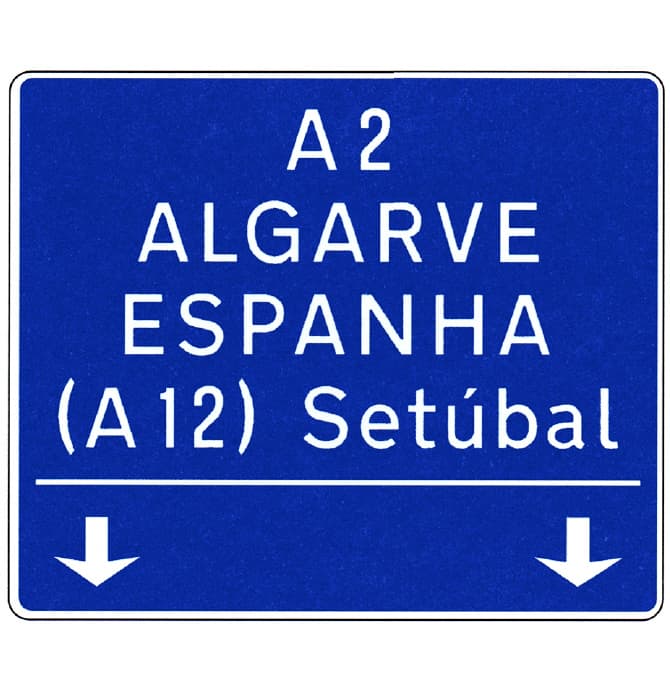
E1 Sign: Navigate Your Lane for Your Chosen Destination
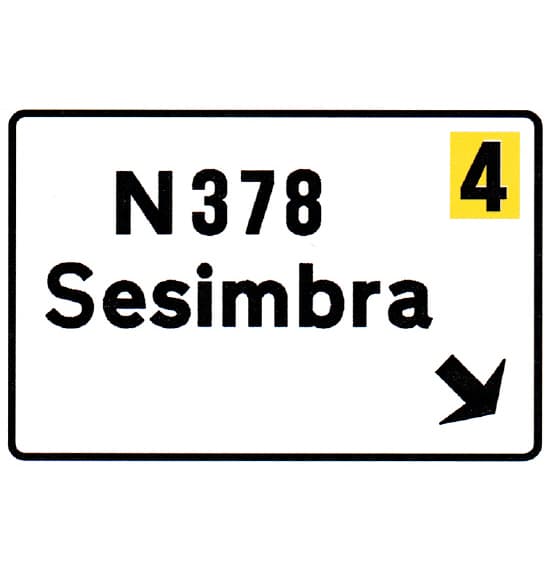
E2 'Destinos de saída' Sign: Choose Your Lane for Exits Early
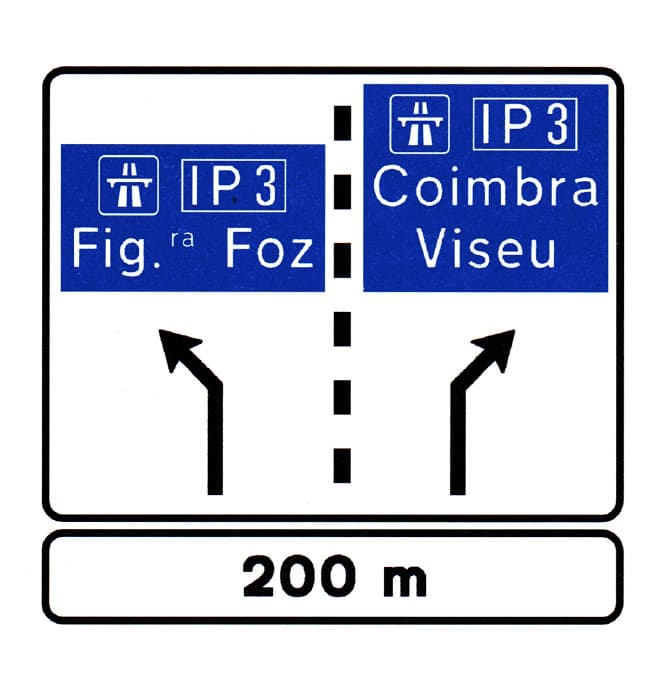
E3 Lateral Selection Sign: Understand Lane Allocation for Your Route
Clear answers to common questions about the Lane Selection Signs road sign category. Use this FAQ to review tricky rules, understand how these signs appear in exam scenarios, and remove confusion that often leads to mistakes in the Portuguese driving theory exam in Portugal.
Reading lane selection signs early is critical because they allow you to choose the correct lane smoothly and safely without last-minute, potentially dangerous manoeuvres. By understanding your route and the lane options well in advance, you can signal and position your vehicle predictably, making it easier for other drivers to anticipate your actions and preventing confusion or accidents near junctions.
Destination signs primarily show the cities or landmarks you can reach via a particular route. Lane selection signs build upon this by specifically indicating which physical lane on the road corresponds to which destination or required movement (like turning left or right). They are about selecting the correct path on the road, often incorporating destination information.
Lane selection signs and road markings work together to guide you. The signs provide the advance warning and information, while the road markings (like arrows on the tarmac) confirm the allowed movements from each lane. You should always look for both to ensure you are making the correct decision. If a sign indicates a left turn from a lane, you should expect to see a left-turn arrow marking on the road within that lane.
If you realise you are in the wrong lane after passing the lane selection sign, do not panic or attempt a sudden lane change, especially if it involves crossing solid lines or cutting in front of other vehicles. It is safer to continue on your current path and find a safe place to re-route or turn around, such as the next junction or a designated U-turn area if permitted. Missing a sign is a common mistake; the priority is to react safely, not necessarily to correct the error immediately.
Deepen your understanding of Portuguese road signs by exploring each category. This structured approach helps reinforce knowledge of specific sign types and their implications on the road, crucial for effective preparation for the IMT driving theory exam. Systematically review sign groups.
Browse Road Sign Categories