This section covers essential priority and yield road signs that dictate who has the right of way. Understanding these signs is crucial for safe navigation through junctions, roundabouts, and narrow road sections. Mastering them will not only help you pass your theory exam but also ensure smoother, safer interactions with other road users in real-world driving scenarios.
An explanation of how Priority and Yield Signs road signs apply in real traffic situations in Portugal. Learn where these signs are typically placed, what drivers are expected to do when they appear, and how correct reactions help you stay safe, avoid fines, and succeed in your Portuguese driving theory exam.
Priority and yield signs are commonly encountered at intersections, junctions, and areas where traffic flow needs careful management. You'll see 'Give Way' (B1) and 'Stop' (B2) signs frequently before entering busier roads or from less significant side roads. Signs indicating a 'Priority Road' (B3) or the 'End of Priority Road' (B4) inform you of your right of way on certain routes, often on main roads or roads designated for faster traffic. In situations where a road narrows, signs like 'Yield at Narrowing' (B5) or 'Priority at Narrowing' (B6) will specify which direction of traffic must give way to allow passage, preventing conflicts. Approaching a roundabout is often signaled by a 'Approaching Roundabout' sign (B7), which serves as a warning to prepare for yielding to traffic already in the circle. The various 'Junction with Minor Road' signs (B9a-d) often accompany 'Give Way' or 'Stop' requirements, explicitly showing the configuration of the junction where you must yield to traffic from the major road.
An overview of the key learning outcomes when studying the Priority and Yield Signs road sign category. Understand the main concepts, sign meanings, and traffic situations covered here so you can recognise patterns, answer theory questions more confidently, and build a solid foundation for safe driving in Portugal.
Understand Portugal's priority and yield road signs to navigate junctions safely and pass your theory test. These signs dictate who has the right of way, crucial for avoiding conflicts and demonstrating your driving knowledge. Study these critical traffic signs for confident exam preparation.
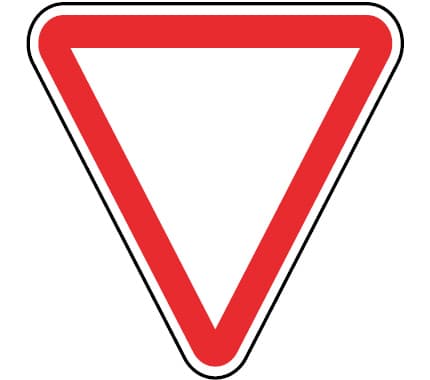
The B1 'Give Way' sign means you must yield to oncoming traffic.

B2 Stop and Give Way: Mandatory Stop at Intersections
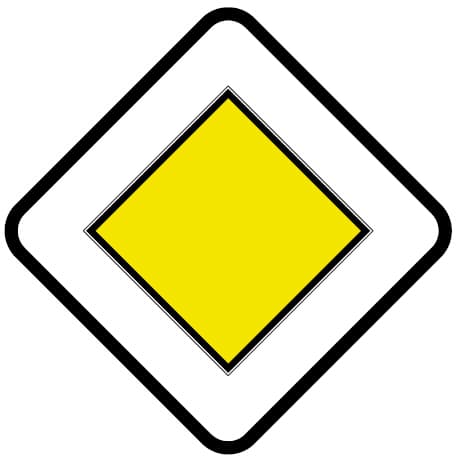
B3 Via com prioridade: You Have Priority at the Next Intersection
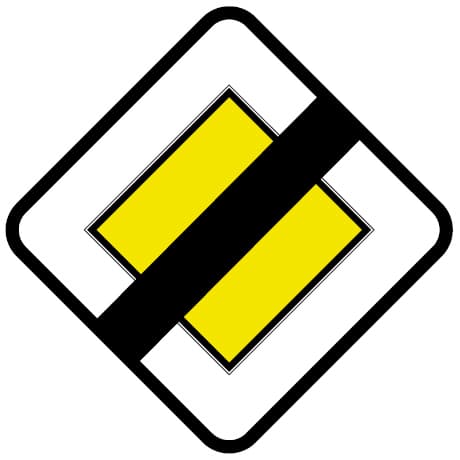
End of Priority Road Sign (B4)
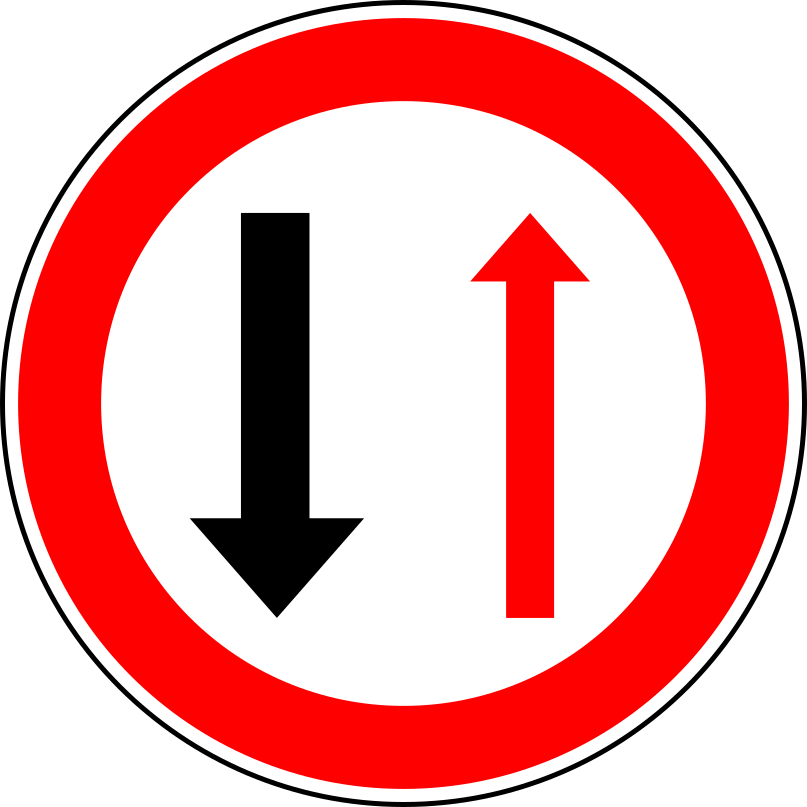
The B5 Sign: Yielding to Oncoming Traffic at Narrow Roads
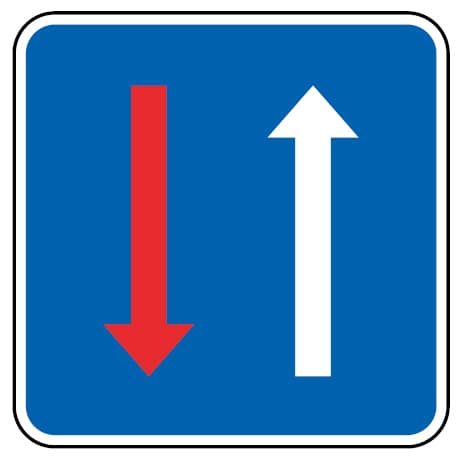
B6: You have priority at narrow roads in Portugal.
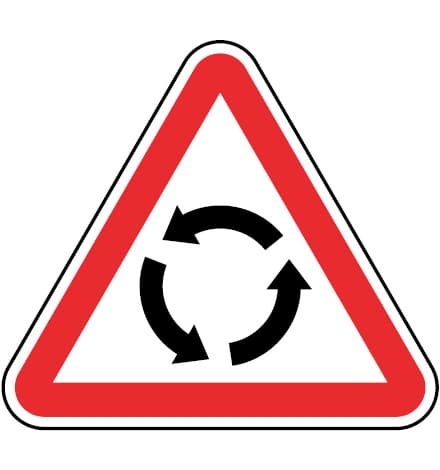
B7: Prepare to Approach a Roundabout
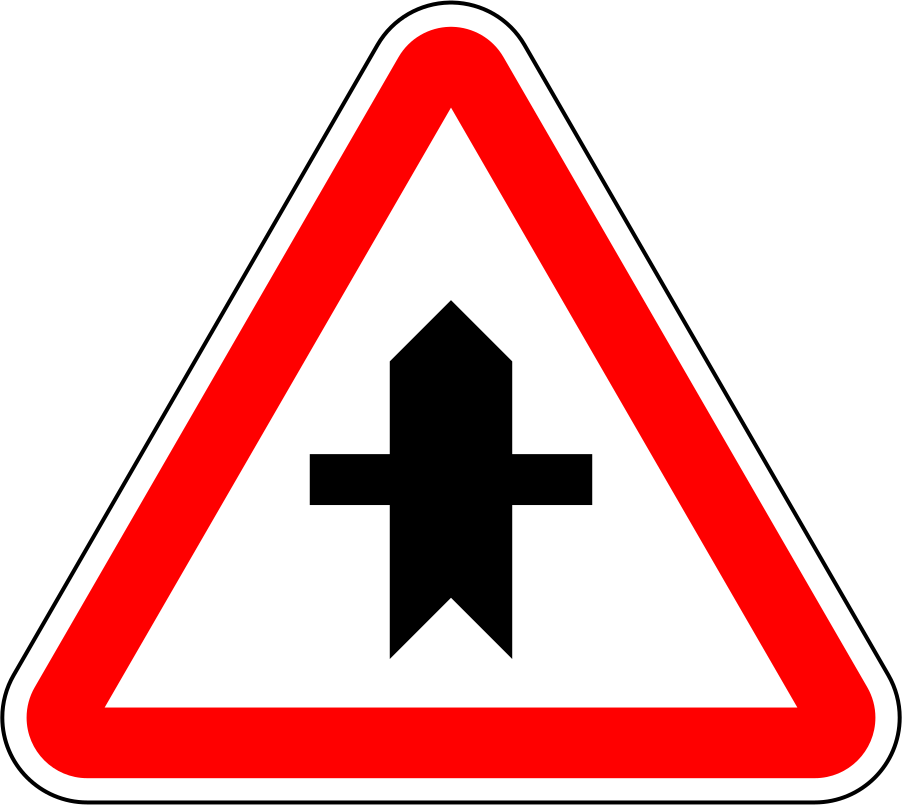
B8 Cruzamento com via sem prioridade: Yield to traffic from the right at unsignalled junctions.
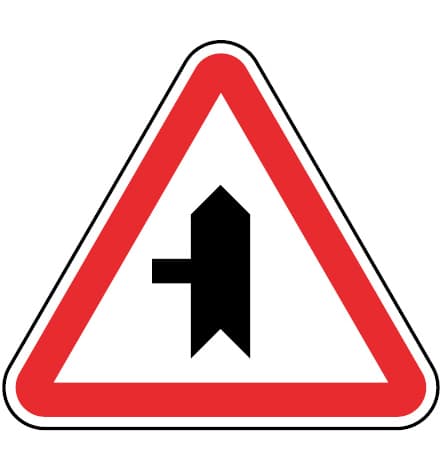
Yield to Traffic on the Right at this Junction: B9a 'Entroncamento com via sem prioridade' Sign
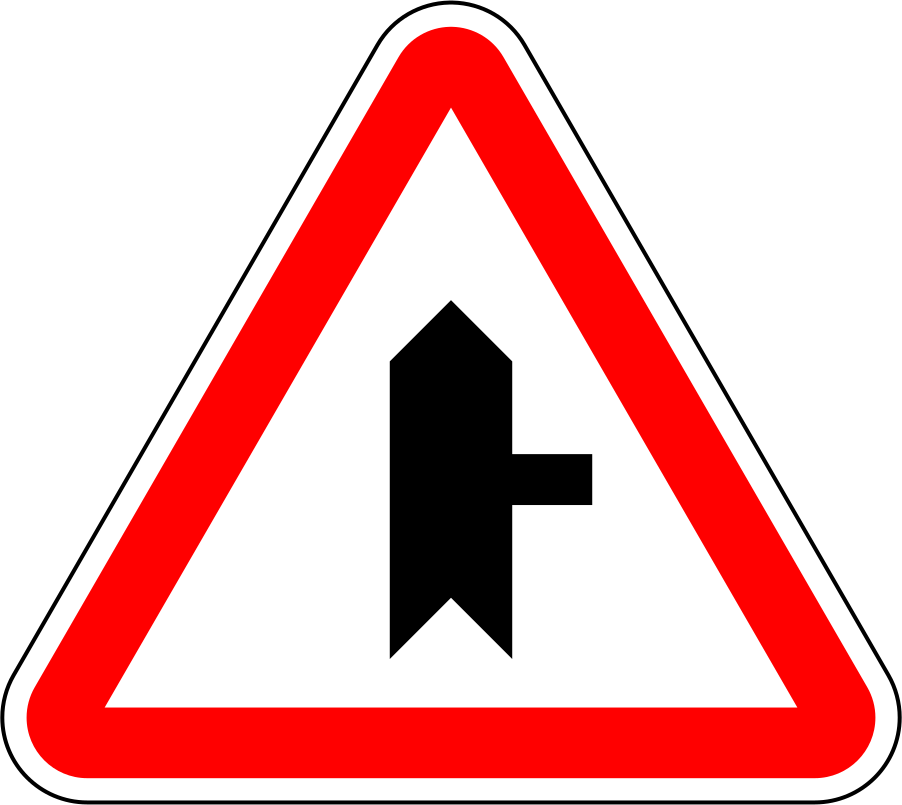
Portugal's B9b Sign: Yield to Traffic from the Right at Uncontrolled Junctions
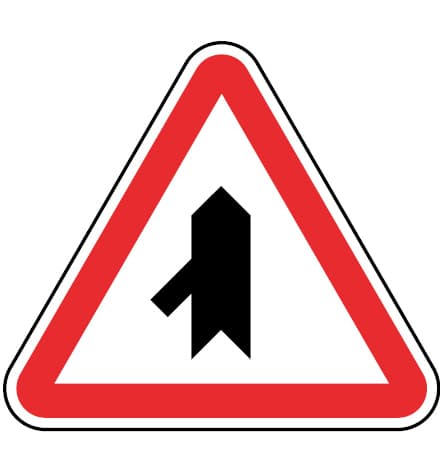
Understand the B9c sign: Yield to traffic on the intersecting road.
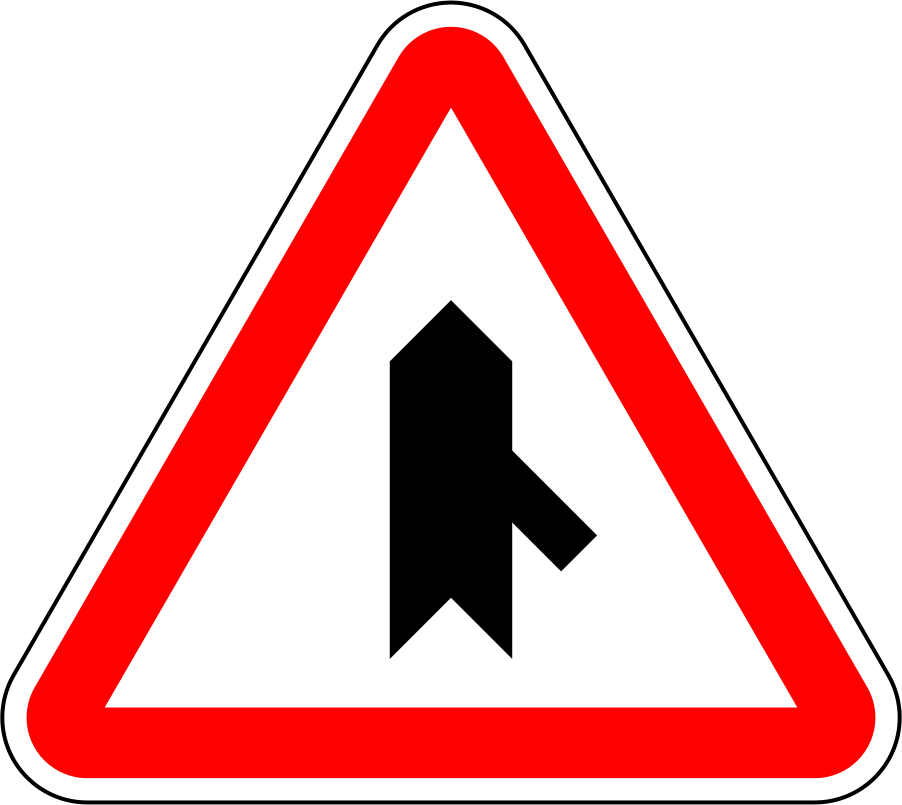
B9d: Entroncamento com via sem prioridade – Yield to traffic on the intersecting road.
Clear answers to common questions about the Priority and Yield Signs road sign category. Use this FAQ to review tricky rules, understand how these signs appear in exam scenarios, and remove confusion that often leads to mistakes in the Portuguese driving theory exam in Portugal.
A 'Give Way' sign (B1) means you must slow down and be prepared to stop if necessary to let other traffic pass before you proceed. A 'Stop' sign (B2) is more absolute; you must always come to a complete stop at the designated line before checking for traffic and proceeding only when it is safe. Failing to stop at a 'Stop' sign is a serious offence.
When you see signs indicating a road narrowing (B5 or B6), it means the road ahead becomes narrower, often only allowing one vehicle to pass at a time. If you see the 'Yield at Narrowing' sign (B5), you must give way to oncoming traffic. If you see the 'Priority at Narrowing' sign (B6), you have the right of way and oncoming traffic must wait for you. Always proceed with caution in these areas.
Ordinary junction rules, often referred to as the 'right-hand rule', are overridden by priority signs. If you are on a road marked with a 'Priority Road' sign (B3), you generally have priority over vehicles entering from side roads without priority signs. Conversely, if you see a sign indicating the end of your priority road (B4), you must be prepared to yield to traffic from your right or from roads that now have priority.
The 'Approaching Roundabout' sign (B7) is a warning that a roundabout is ahead. It prompts you to check your mirrors, slow down, and prepare to give way to traffic already circulating within the roundabout, especially if there isn't a specific 'Give Way' or 'Stop' sign at the entrance. You must always yield to vehicles already on the roundabout.
Signs like B9a-d typically show the layout of a junction where your current road meets a busier, or 'major', road. These signs are almost always accompanied by a 'Give Way' or 'Stop' sign for you. The diagrams illustrate the roads that have priority, and you must yield to all traffic on those priority roads as indicated by the accompanying sign.
Deepen your understanding of Portuguese road signs by exploring each category. This structured approach helps reinforce knowledge of specific sign types and their implications on the road, crucial for effective preparation for the IMT driving theory exam. Systematically review sign groups.
Browse Road Sign Categories