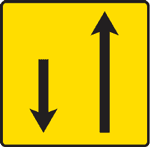
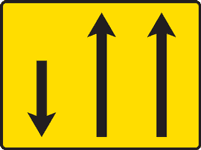
The ST1c sign, officially "Número e sentido das vias de trânsito", is a vital temporary vertical sign in Portugal used during road works or incidents. It indicates a modified road layout, instructing you to adapt to new lane numbers, directions, and potential hazards. Always slow down, follow the guidance provided by temporary markings and equipment, and be prepared for changes in road conditions until you pass the affected area.
This temporary sign, ST1c, provides critical instructions on lane numbers and directions, adapting to changing road layouts. Mastering its interpretation is key for safe navigation and successful theory test revision, especially during road works or incidents.
ST1c - Número e sentido das vias de trânsito (Número e sentido das vias de trânsito) belongs to the Portuguese temporary vertical signs category in the Regulamento de Sinalização do Trânsito. Visually, this belongs to the temporary-road-signing environment, where yellow signs, movable equipment, barriers, cones, beacons, or alignment devices guide traffic around works, closures, obstacles, and temporary hazards. The official wording is: número e sentido das vias de trânsito. It reflects the current temporary layout and must be treated as the active instruction where works, incidents, closures, or obstacles change normal conditions. For theory preparation, connect the sign to a concrete driving decision: where to look, when to slow, whether to stop or yield, which route or lane to choose, and whether any panel changes the scope of the rule. On the road, interpret it together with markings, traffic lights, police directions, temporary works signs, and any additional panel placed with it. A strong exam answer explains both recognition and behaviour: not only what the sign is called, but what a safe and lawful driver must do next.
ST1c - Número e sentido das vias de trânsito (Número e sentido das vias de trânsito) means that the driver must understand and apply this official Portuguese instruction: número e sentido das vias de trânsito. In practical terms, you should slow down, follow the temporary channel or instruction, and expect lanes, priorities, workers, obstacles, or carriageway limits to differ from normal.
Get clear, practical answers to the most common questions about the ST1c - ST1c - Número e sentido das vias de trânsito (Número e sentido das vias de trânsito) road sign. Learn how the sign works, what rules it represents, and how it affects real driving situations. This FAQ strengthens your understanding and supports accurate decision making for the Portuguese driving theory exam in Portugal.
This Portuguese sign means that the number and direction of traffic lanes have been temporarily changed. You must follow the current layout indicated by temporary signs, cones, or barriers, as normal road conditions are altered due to works or other incidents.
When you see the ST1c sign, you must slow down and pay close attention to temporary lane markings and directional signs. Be extra cautious of workers, machinery, and unexpected obstacles. Your priority is to follow the temporary route or lane instructions until the signage indicates normal conditions have resumed.
A common trap is assuming the permanent road layout is still in effect. Always treat temporary signs like ST1c as the active instruction. Another trap is not reducing speed sufficiently when passing workers or narrow lanes indicated by this sign; safety is paramount in these temporary situations.
Not necessarily. The ST1c sign indicates a change to the normal number and direction of lanes. This could mean lanes are closed, narrowed, redirected, or that the number of available lanes has changed. You must follow the specific instructions provided by the temporary signage on-site.
This phrase, "Número e sentido das vias de trânsito", is the official Portuguese wording for the ST1c sign and falls under temporary road signage (sinalização temporária). These temporary signs are crucial as they override permanent layouts when road conditions are altered, ensuring traffic adapts safely to works or hazards, as governed by articles 90 and onwards of the RST.
A clear reference image of the ST1c - ST1c - Número e sentido das vias de trânsito (Número e sentido das vias de trânsito) road sign used in Portugal.
The ST1c - ST1c - Número e sentido das vias de trânsito (Número e sentido das vias de trânsito) road sign may also be known by these alternative names or terms.
The ST1c - ST1c - Número e sentido das vias de trânsito (Número e sentido das vias de trânsito) road sign is part of the Temporary Vertical Signs category, which groups together signs with similar rules and functions.
Strengthen your theory test revision by reviewing similar road signs. Understanding the distinctions between related signs like ST1c helps improve sign recognition and reduces confusion, crucial for exam preparation and safe driving.
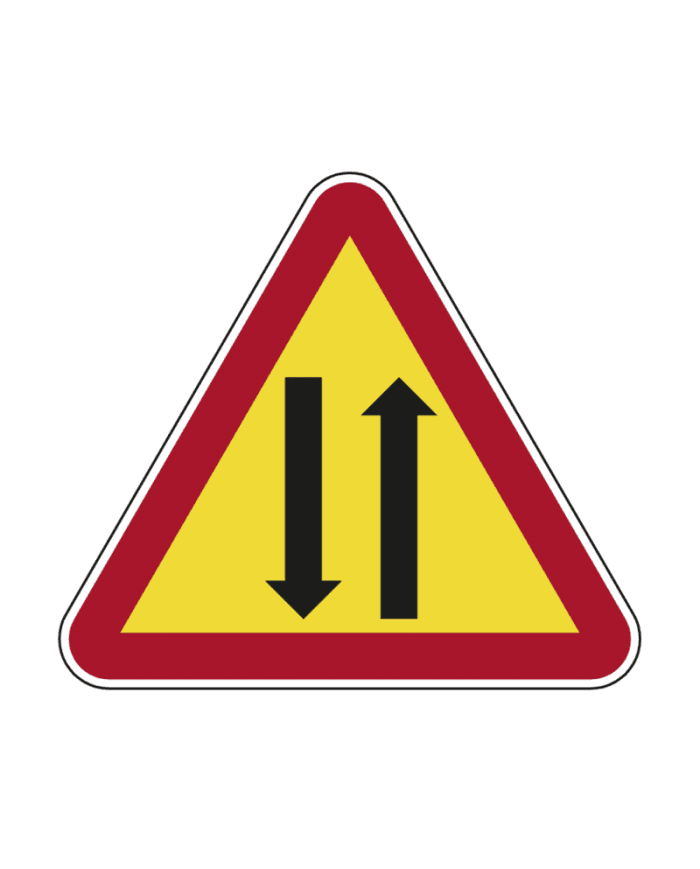
ST10 Circulação Alternada: Navigating Temporary Traffic Flow
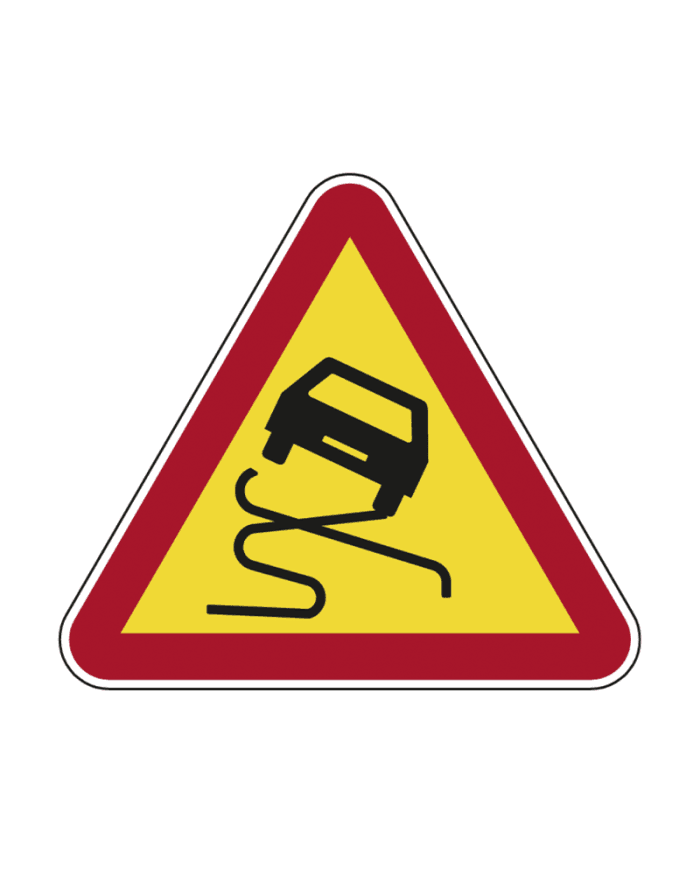
ST11 Trânsito sujeito a demora: Prepare for Delays and Temporary Road Changes
ST12: Understand the Emergency Telephone Sign for Temporary Traffic Management
ST13 Accident Sign: Navigate Safely Around Incident Sites
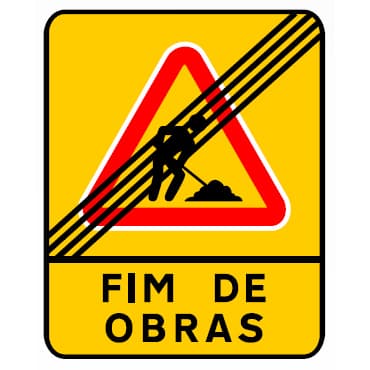
ST14 Fim de Obras: End of Temporary Roadworks Zone Sign

ST1a: Understand the Number and Direction of Traffic Lanes
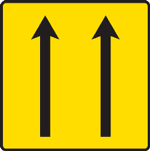
ST1b: Follow Temporary Lane Numbers and Directions
Understand Temporary Lane Changes with the ST1d Sign
After reviewing the full list, explore signs by specific categories such as warning, regulatory, or informational to deepen your understanding. Practise recognizing signs in context and prepare effectively for your Portuguese driving licence theory test.
All Portuguese Road Signs List