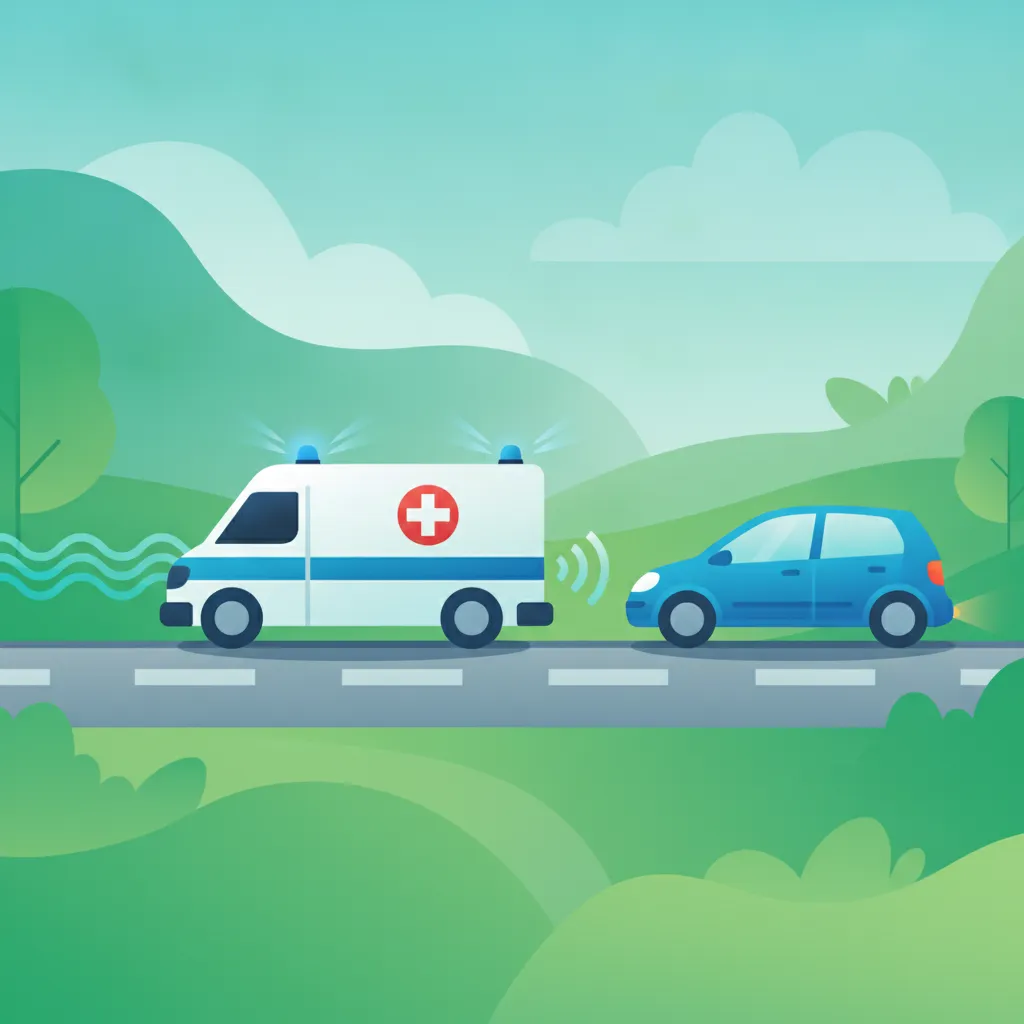
When an emergency vehicle, such as an ambulance, police car, or fire truck, approaches with its distinctive blue flashing lights and/or siren, all other drivers must facilitate its passage. This guide explains your responsibilities under the Portuguese Código da Estrada to safely create a clear path, avoiding dangerous maneuvers and ensuring emergency responders can reach their destination without delay.
Theory topic content overview
Read the full theory topic guide for Emergency Vehicle Priority with structured, easy-to-scan content built for learners in Portugal. This detailed section explains the exact rule, meaning, traffic context, comparison points, and exam logic behind this Portuguese driving theory topic so you can study faster, understand the concept more clearly, and avoid common interpretation mistakes on the theory test.
In Portugal, understanding and correctly applying the rules for emergency vehicle priority is not just a legal obligation but a critical component of road safety. Drivers must know how to react safely and predictably when an ambulance, police vehicle, or fire truck is on an urgent mission, ensuring they can reach their destination without unnecessary delay. The Portuguese Código da Estrada (Road Code) outlines these responsibilities clearly, and mastering them is essential for both your IMT driving theory exam and real-world driving.
Veículos Prioritários em Missão Urgente)?Emergency vehicle priority refers to the legal right of certain vehicles to have precedence on the road when they are responding to an urgent situation. In Portugal, these veículos prioritários (priority vehicles) include:
Ambulâncias): Operated by services like INEM (Instituto Nacional de Emergência Médica).Viaturas da Polícia): Such as GNR (Guarda Nacional Republicana) and PSP (Polícia de Segurança Pública).Veículos de Bombeiros): From local fire brigades.Serviço Urgente de Interesse Público): As defined by law, performing critical tasks.Crucially, these vehicles only have priority when they are signaling an urgent mission (missão urgente) using distinctive blue flashing lights and/or an audible siren. A priority vehicle on regular duty, without these signals, must obey all standard traffic rules like any other vehicle. This distinction is a frequent point of confusion and a common test question in the Portuguese driving exam.
The swift passage of emergency vehicles can be the difference between life and death, or the containment of a dangerous situation. Your actions directly impact:
Código da Estrada makes it a legal requirement to facilitate their passage. Failure to do so can result in significant fines and penalties.When you detect an approaching emergency vehicle on an urgent mission, your primary goal is to create a clear, safe path for it without causing new hazards. This requires calm, predictable actions:
Observe and Anticipate:
Signal and Slow Down:
Create a Clear Path (Corredor de Segurança):
berma (shoulder). Ensure you do not endanger pedestrians, cyclists, or other vehicles, or block driveways.Autoestradas): On motorways or multi-lane roads, drivers typically create a corredor de emergência (emergency corridor). Vehicles in the leftmost lane should move left, and vehicles in all other lanes should move right. This creates a clear path down the middle or between lanes.Wait for Passage:
At Intersections (Cruzamentos / Entroncamentos):
Código da Estrada), but only after taking due precautions and ensuring other road users are aware. You, however, must stop and wait.In Roundabouts (Rotundas):
rotunda.Queued or Slow-Moving Traffic (Fila de Trânsito):
berma (shoulder). However, the berma is primarily for breakdowns or emergencies and should only be used to yield if it is safe to do so, without hitting pedestrians, cyclists, or debris, and without causing further obstruction.Learners and even experienced drivers often make mistakes when yielding to emergency vehicles. In the Portuguese driving theory exam, answers involving these mistakes are usually incorrect:
cruzamento or passadeira (pedestrian crossing) can prevent the emergency vehicle from turning or endanger pedestrians.Passeio) Unsafely: While moving aside, never mount the pavement if it's unsafe or if it endangers pedestrians.The core principle for emergency vehicle priority in Portugal is facilitar passagem com segurança – facilitate passage safely. Be vigilant, anticipate, and act predictably. Your actions, guided by the Código da Estrada, are crucial for allowing emergency responders to carry out their vital work efficiently, contributing to overall road safety for everyone. Always prioritize safe and calm maneuvers over rushed, dangerous ones.
Start with a short, direct summary of Emergency Vehicle Priority before reading the full explanation below.
In Portugal, drivers must immediately and safely yield priority to emergency vehicles (like ambulances, police, and fire trucks) when they are signaling an urgent mission with blue flashing lights and/or sirens. This involves slowing down, moving to the side of the road, or stopping in a safe location to create a clear path, always ensuring not to cause new hazards or obstruct traffic unnecessarily.
Review the most important terms, rule signals, and traffic concepts linked to Emergency Vehicle Priority.
Explore related theory topic pages connected to Emergency Vehicle Priority and continue with the next useful rule explanation.
See the common search queries learners use when trying to understand Emergency Vehicle Priority in Portugal.

Continue your preparation for the Portuguese driving test by exploring specific theory topics in detail. Understand the Código da Estrada, review road signs, and clarify complex traffic regulations to ensure you're fully prepared for the IMT examination.
Explore Driving Theory TopicsTheory topic content overview
Start with a short, direct summary of Emergency Vehicle Priority before reading the full explanation below.
In Portugal, drivers must immediately and safely yield priority to emergency vehicles (like ambulances, police, and fire trucks) when they are signaling an urgent mission with blue flashing lights and/or sirens. This involves slowing down, moving to the side of the road, or stopping in a safe location to create a clear path, always ensuring not to cause new hazards or obstruct traffic unnecessarily.
Review the most important terms, rule signals, and traffic concepts linked to Emergency Vehicle Priority.
Explore related theory topic pages connected to Emergency Vehicle Priority and continue with the next useful rule explanation.
See the common search queries learners use when trying to understand Emergency Vehicle Priority in Portugal.
Continue your preparation for the Portuguese driving test by exploring specific theory topics in detail. Understand the Código da Estrada, review road signs, and clarify complex traffic regulations to ensure you're fully prepared for the IMT examination.
Explore Driving Theory TopicsUse this exam-focused revision tip to understand how Emergency Vehicle Priority is likely to appear in theory questions for learners in Portugal. This section helps you identify the most testable part of the rule, avoid common traps, and remember the concept more effectively during Portuguese driving theory exam preparation.
In Portuguese driving theory exams, questions about emergency vehicles often test your ability to react safely and predictably, not just to yield. Avoid answers that involve panic braking, blocking intersections, or violating rules unsafely. Always choose the option that prioritizes both giving way and maintaining overall road safety.
Read direct answers to the most common learner questions about Emergency Vehicle Priority in Portugal. This FAQ focuses on rule confusion, practical meaning, comparison with similar concepts, and the exact uncertainties that appear most often in Portuguese driving theory revision and exam preparation.
Emergency vehicles in Portugal, referred to as 'veículos prioritários', only have priority when they are on an urgent mission ('missão urgente') and are signaling this adequately with blue flashing lights and/or sirens. Without these signals, they must follow normal traffic rules.
If an emergency vehicle approaches from behind with signals, you should calmly and safely move to the right side of the road or, if on a multi-lane road, help form an emergency corridor ('corredor de emergência') by moving to the nearest safe lane edge. Avoid sudden braking or steering.
No, you should not violate traffic laws or create new dangers to make way. While you must facilitate passage, you cannot endanger yourself or others. Emergency vehicles themselves may have exemptions, but ordinary drivers do not. Always prioritize safety over immediate compliance.
If an emergency vehicle with signals is approaching an intersection, you should stop and allow it to pass safely, even if you have a green light. However, ensure you do not block the intersection or create a hazard by stopping abruptly.
An 'emergency corridor' (or 'corredor') is a lane created by drivers moving to the side to allow emergency vehicles to pass through congested traffic, especially on motorways or multi-lane roads. It ensures a clear path for responders.
Yes, even in a roundabout, an emergency vehicle on an urgent mission has priority. You must facilitate its passage safely, which may involve yielding right of way or momentarily stopping if absolutely necessary to avoid obstruction, always ensuring your maneuver doesn't cause danger.
Utilize the powerful search tool to refine your Portuguese driving theory practice. Pinpoint questions related to specific traffic laws, road signs, or complex scenarios from the Código da Estrada. Begin targeted revision now to boost your understanding and confidently approach your IMT driving exam.