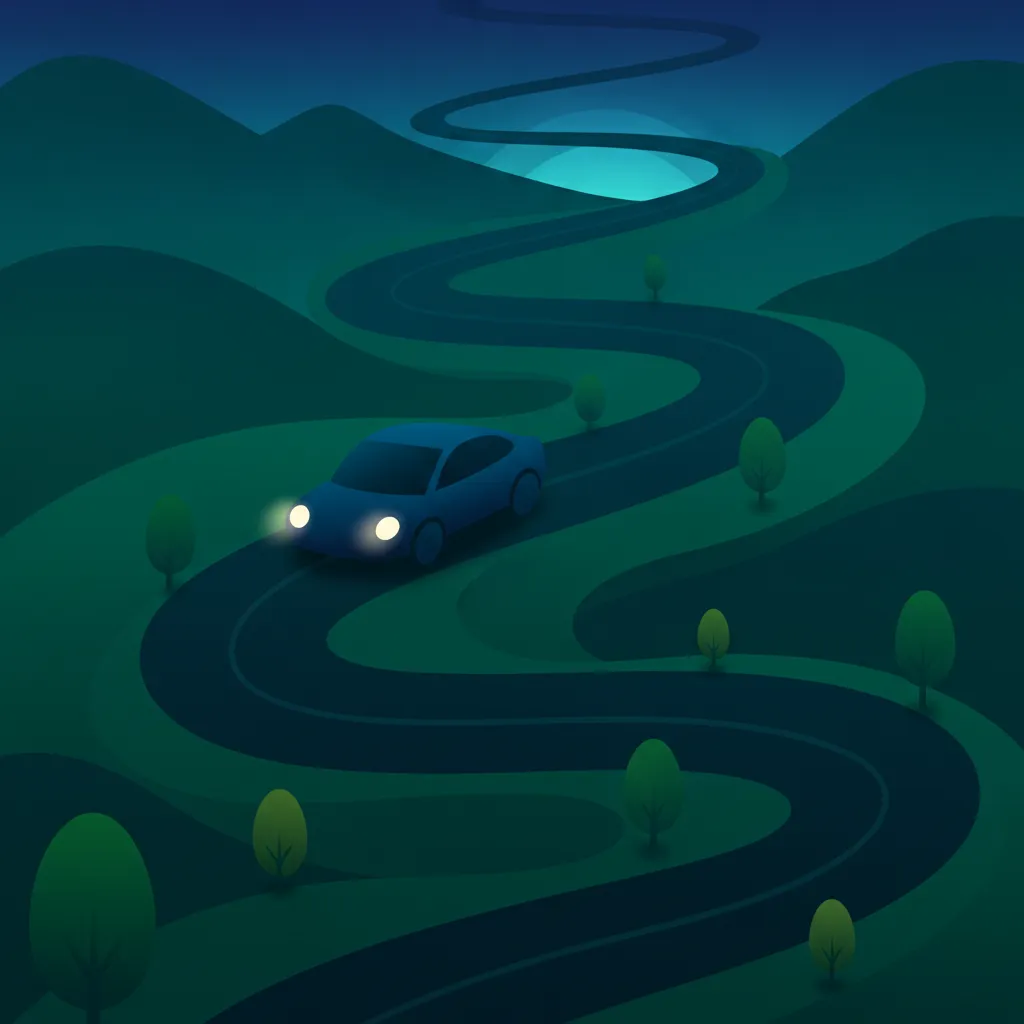
Vehicle lighting serves two critical purposes: illuminating the road ahead for the driver and making the vehicle visible to other road users. In Portugal, the Código da Estrada outlines specific requirements for when and how to use different lights, adapting to conditions from clear daylight to dense fog or darkness. Mastering these rules is vital for preventing accidents and successfully navigating your driving theory exam.
Theory topic content overview
Read the full theory topic guide for Headlights & Visibility with structured, easy-to-scan content built for learners in Portugal. This detailed section explains the exact rule, meaning, traffic context, comparison points, and exam logic behind this Portuguese driving theory topic so you can study faster, understand the concept more clearly, and avoid common interpretation mistakes on the theory test.
Vehicle lighting serves a fundamental dual purpose for safe driving on Portuguese roads: it allows the driver to see the road ahead and ensures the vehicle is clearly seen by other road users. In Portugal, the Código da Estrada (Road Code) provides explicit rules for the use of various vehicle lights, reflecting their critical role in preventing accidents, particularly during periods of reduced natural light or adverse weather.
Proper use of headlights and other vehicle lights is not merely about convenience; it's a core component of road safety and a key area of assessment in the Portuguese driving theory exam. Misunderstanding these rules can lead to dangerous situations and penalties.
The importance of vehicle lighting in Portugal stems from several factors:
Código da Estrada, particularly Articles 60.º and 61.º, meticulously defines when and how lights must be used. Non-compliance can result in fines.Encandeamento (Dazzling): Specific rules exist to prevent drivers from temporarily blinding others, a common cause of accidents, especially at night.autoestradas (motorways) and tunnels.The Código da Estrada (Art. 60.º) specifies the main types of illumination devices and their primary purposes:
Luzes de Cruzamento (Low Beam Headlights)These are the most commonly used headlights.
anoitecer (dusk) to amanhecer (dawn).luzes de estrada are not appropriate.Luzes de Estrada (High Beam Headlights)Also known as "máximos," these provide maximum illumination.
Luzes de Cruzamento:
Luzes de Nevoeiro (Fog Lights)These are specialized lights for severely reduced visibility.
nevoeiro denso), heavy rain (chuva intensa), snowfall (queda de neve), or clouds of smoke or dust. They are positioned low to cut through the haze more effectively than headlights.encandeamento for drivers behind you.Luzes de Presença (Position/Parking Lights)luzes de cruzamento when visibility is genuinely reduced (e.g., in rain or tunnels).piscas): Essential for signaling turns, lane changes, and other maneuvers.luzes de travagem): Illuminate when braking, warning following drivers.luz de marcha atrás): Indicate that the vehicle is moving backward or about to.According to Art. 61.º of the Código da Estrada, vehicle lights are generally mandatory:
anoitecer (dusk) to amanhecer (dawn). This period legally requires the use of at least luzes de cruzamento (low beams) for driving.Nevoeiro (fog)Chuva intensa (heavy rain)Queda de neve (snowfall)Nuvens de fumo (smoke clouds)Pó (dust clouds)luzes de cruzamento, even if well-lit.Encandeamento (Dazzling): This is a critical concept in Portuguese driving theory. Using luzes de estrada inappropriately can cause encandeamento, temporarily blinding other drivers. The 100-meter rule for switching to luzes de cruzamento is paramount to avoid this. Looking away from oncoming headlights towards the right edge of the road can help mitigate glare.Velocidade Moderada - Art. 25.º): In conditions of reduced visibility, your speed must always be compatible with the distance you can see ahead. If your low beams only illuminate 30 meters, you must be able to stop safely within that 30-meter distance. Relying solely on headlights without reducing speed is dangerous.Estrada Nacional at night: If the road is unlit and clear of other traffic, use luzes de estrada for maximum visibility. However, if you see an approaching vehicle, or are about to overtake, or encounter a pedestrian or animal, immediately switch to luzes de cruzamento to avoid dazzling.Autoestrada: Even if it's broad daylight, you must activate your luzes de cruzamento before entering and keep them on throughout the tunnel, switching them off only after exiting. This ensures you are visible to other drivers and illuminates the often lower-lit tunnel environment.A1 (motorway): When chuva intensa significantly reduces visibility, activate your luzes de cruzamento. If conditions become extremely severe, with visibility dropping below 50 meters, and your vehicle is equipped, you may also use front fog lights. Avoid rear fog lights unless visibility is truly abysmal to prevent dazzling.luzes de estrada when encountering other vehicles, causing encandeamento.Luzes de Nevoeiro: A very common mistake is using fog lights (especially rear ones) in light rain or mild fog, which can blind drivers behind them. Remember they are for severe conditions only.luzes de cruzamento is often overlooked.luzes de cruzamento in tunnels or adverse weather.Código da Estrada.Mastering the use of headlights and vehicle visibility rules in Portugal is about more than just passing your exam; it's about making conscious, safe decisions every time you drive. Always assess the conditions, both for yourself (seeing) and for others (being seen). Remember the Código da Estrada rules, especially concerning luzes de cruzamento (low beams) for general driving and avoiding encandeamento when using luzes de estrada (high beams). Regular checks of your vehicle's lighting system are also essential for your safety and compliance.
Start with a short, direct summary of Headlights & Visibility before reading the full explanation below.
In Portugal, drivers must use appropriate vehicle lights whenever visibility is reduced, from dusk till dawn, in tunnels, or during adverse weather like heavy rain, fog, or snow. This includes knowing when to switch between low beam ('luzes de cruzamento'), high beam ('luzes de estrada'), and fog lights ('luzes de nevoeiro') to ensure optimal visibility without dazzling others. Correct lighting is a key element of road safety, helping to prevent collisions by improving perception and communication on the road.
Review the most important terms, rule signals, and traffic concepts linked to Headlights & Visibility.
Explore related theory topic pages connected to Headlights & Visibility and continue with the next useful rule explanation.
See the common search queries learners use when trying to understand Headlights & Visibility in Portugal.

Continue your preparation for the Portuguese driving test by exploring specific theory topics in detail. Understand the Código da Estrada, review road signs, and clarify complex traffic regulations to ensure you're fully prepared for the IMT examination.
Explore Driving Theory TopicsTheory topic content overview
Start with a short, direct summary of Headlights & Visibility before reading the full explanation below.
In Portugal, drivers must use appropriate vehicle lights whenever visibility is reduced, from dusk till dawn, in tunnels, or during adverse weather like heavy rain, fog, or snow. This includes knowing when to switch between low beam ('luzes de cruzamento'), high beam ('luzes de estrada'), and fog lights ('luzes de nevoeiro') to ensure optimal visibility without dazzling others. Correct lighting is a key element of road safety, helping to prevent collisions by improving perception and communication on the road.
Review the most important terms, rule signals, and traffic concepts linked to Headlights & Visibility.
Explore related theory topic pages connected to Headlights & Visibility and continue with the next useful rule explanation.
See the common search queries learners use when trying to understand Headlights & Visibility in Portugal.
Continue your preparation for the Portuguese driving test by exploring specific theory topics in detail. Understand the Código da Estrada, review road signs, and clarify complex traffic regulations to ensure you're fully prepared for the IMT examination.
Explore Driving Theory TopicsUse this exam-focused revision tip to understand how Headlights & Visibility is likely to appear in theory questions for learners in Portugal. This section helps you identify the most testable part of the rule, avoid common traps, and remember the concept more effectively during Portuguese driving theory exam preparation.
A common exam trap involves knowing when to use high beams versus low beams. Remember to always switch to low beams when another vehicle is within 100 meters, whether oncoming or in front of you. Also, be aware that fog lights are for specific, severe conditions, not just light rain or dusk.
Read direct answers to the most common learner questions about Headlights & Visibility in Portugal. This FAQ focuses on rule confusion, practical meaning, comparison with similar concepts, and the exact uncertainties that appear most often in Portuguese driving theory revision and exam preparation.
You must use headlights from dusk ('anoitecer') until dawn ('amanhecer'), and during the day whenever visibility is insufficient due to weather (e.g., fog, heavy rain, snow, smoke, dust) or environmental conditions (e.g., tunnels).
'Luzes de cruzamento' (low beam) illuminate the road up to 30 meters ahead and are used when encountering other vehicles or in well-lit areas. 'Luzes de estrada' (high beam) illuminate at least 100 meters ahead and are for unlit roads without oncoming traffic or vehicles ahead.
Front fog lights can be used in cases of fog, heavy rain, or snowfall. Rear fog lights should only be used in very dense fog or heavy snowfall when visibility is severely reduced, as they are very bright and can dazzle following drivers.
No, you must switch from high beams to low beams ('médios' or 'luzes de cruzamento') when driving in built-up areas, encountering oncoming vehicles, or when following another vehicle at a distance of less than 100 meters, to avoid dazzling other drivers.
Driving with defective or improperly used lights in Portugal can result in fines and points on your license, as it compromises safety and is a violation of the Código da Estrada. It's crucial to check all lights regularly.
No. While DRLs improve your vehicle's visibility during clear daylight, they are generally not sufficient for night driving or during adverse weather conditions. You must switch to low beam headlights in these situations as required by law.
Utilize the powerful search tool to refine your Portuguese driving theory practice. Pinpoint questions related to specific traffic laws, road signs, or complex scenarios from the Código da Estrada. Begin targeted revision now to boost your understanding and confidently approach your IMT driving exam.