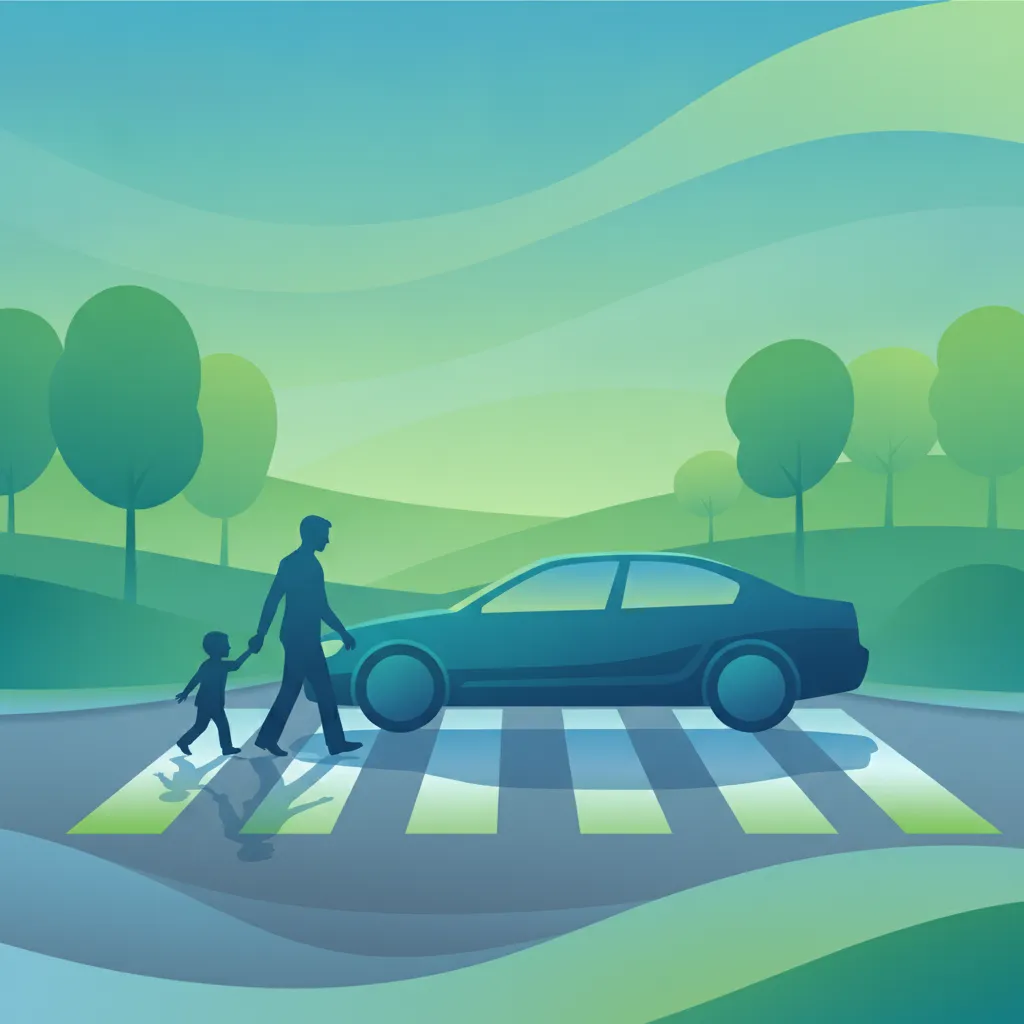
Pedestrian priority defines specific situations where drivers must give way to people on foot, particularly at designated crossings and intersections. In Portugal, the Código da Estrada emphasizes the heightened responsibility drivers have towards vulnerable road users like pedestrians. Mastering these rules is essential for both passing your theory test and driving safely, preventing accidents and ensuring the smooth flow of traffic.
Theory topic content overview
Read the full theory topic guide for Pedestrian Priority Rules with structured, easy-to-scan content built for learners in Portugal. This detailed section explains the exact rule, meaning, traffic context, comparison points, and exam logic behind this Portuguese driving theory topic so you can study faster, understand the concept more clearly, and avoid common interpretation mistakes on the theory test.
Pedestrian priority, in Portuguese traffic, refers to the fundamental principle that drivers must yield the right of way to pedestrians in specific situations, ensuring their safety as vulnerable road users. This concept is central to the Código da Estrada (Portuguese Highway Code) and a critical component of safe driving in Portugal, particularly for those preparing for the IMT driving theory exam. It reflects a core responsibility drivers have to protect those on foot, who lack the physical protection of a vehicle.
Understanding and applying pedestrian priority rules is vital for several reasons:
Drivers must be acutely aware of specific locations and situations where pedestrians are granted priority:
These are the most common and clear-cut examples of pedestrian priority. In Portugal, these are typically marked by white "zebra" stripes across the road, often accompanied by a triangular warning sign (A7a) indicating a pedestrian crossing ahead.
When a driver is turning right or left at an intersection, they often cross paths with pedestrians who are simultaneously crossing the road they are entering.
These are specific urban areas, identified by signage (usually a blue square sign with symbols of a pedestrian, child, and car), where pedestrians and vehicles share the same space.
While less formally defined as "priority," the Código da Estrada also places a general duty of care on drivers towards vulnerable road users in other situations:
The Portuguese legal framework emphasizes proactive driver behaviour:
To master pedestrian priority, it's crucial to distinguish between similar scenarios:
Learners frequently make mistakes related to pedestrian priority due to:
The Código da Estrada explicitly addresses pedestrian behaviour and driver obligations. Artigo 61.º covers transverse markings like passadeiras, and Artigo 74.º details signals for pedestrians. The Instituto da Mobilidade e dos Transportes (IMT) emphasizes these areas heavily in their theory test questions. Learners must not only know the rules but also understand the spirit of the law, which prioritizes the protection of vulnerable road users.
Always remember that driving is a shared responsibility. In Portugal, pedestrian priority is not just a rule, but a deeply ingrained principle of road safety. Adopt a defensive driving mindset: always anticipate the presence of pedestrians, especially at marked crossings, intersections where you are turning, and within Zonas de Coexistência. Moderate your speed, be prepared to stop, and ensure the safety of pedestrians before proceeding. Your actions as a driver directly impact the well-being of the most vulnerable on our roads.
Start with a short, direct summary of Pedestrian Priority Rules before reading the full explanation below.
Pedestrian priority means drivers must yield to pedestrians who are crossing or intending to cross the road, especially at marked pedestrian crossings or when turning at an intersection. This rule is fundamental in Portuguese traffic law (Código da Estrada) to protect pedestrians, who are considered vulnerable road users. Drivers must always approach these areas cautiously, prepared to stop if a pedestrian is present.
Review the most important terms, rule signals, and traffic concepts linked to Pedestrian Priority Rules.
Explore related theory topic pages connected to Pedestrian Priority Rules and continue with the next useful rule explanation.
See the common search queries learners use when trying to understand Pedestrian Priority Rules in Portugal.

Continue your preparation for the Portuguese driving test by exploring specific theory topics in detail. Understand the Código da Estrada, review road signs, and clarify complex traffic regulations to ensure you're fully prepared for the IMT examination.
Explore Driving Theory TopicsTheory topic content overview
Start with a short, direct summary of Pedestrian Priority Rules before reading the full explanation below.
Pedestrian priority means drivers must yield to pedestrians who are crossing or intending to cross the road, especially at marked pedestrian crossings or when turning at an intersection. This rule is fundamental in Portuguese traffic law (Código da Estrada) to protect pedestrians, who are considered vulnerable road users. Drivers must always approach these areas cautiously, prepared to stop if a pedestrian is present.
Review the most important terms, rule signals, and traffic concepts linked to Pedestrian Priority Rules.
Explore related theory topic pages connected to Pedestrian Priority Rules and continue with the next useful rule explanation.
See the common search queries learners use when trying to understand Pedestrian Priority Rules in Portugal.
Continue your preparation for the Portuguese driving test by exploring specific theory topics in detail. Understand the Código da Estrada, review road signs, and clarify complex traffic regulations to ensure you're fully prepared for the IMT examination.
Explore Driving Theory TopicsUse this exam-focused revision tip to understand how Pedestrian Priority Rules is likely to appear in theory questions for learners in Portugal. This section helps you identify the most testable part of the rule, avoid common traps, and remember the concept more effectively during Portuguese driving theory exam preparation.
In the Portuguese theory exam, pay close attention to scenarios involving pedestrian crossings, especially when visibility is limited or vehicles are turning. Remember that even if a pedestrian is not yet on the crossing, if they clearly indicate intent to cross, you must be prepared to yield. The exam often tests your ability to anticipate pedestrian movement, not just react to it.
Read direct answers to the most common learner questions about Pedestrian Priority Rules in Portugal. This FAQ focuses on rule confusion, practical meaning, comparison with similar concepts, and the exact uncertainties that appear most often in Portuguese driving theory revision and exam preparation.
In Portugal, pedestrian priority signifies that drivers must stop or slow down to allow pedestrians to cross the road safely, particularly at marked crossings or when pedestrians are already crossing at an intersection.
Yes, at marked zebra crossings (passadeiras), drivers in Portugal are legally obliged to yield to pedestrians who are on the crossing or clearly indicating intent to cross.
Drivers have a primary responsibility to protect vulnerable road users, including pedestrians, by maintaining a moderate speed, being attentive, and yielding priority when required to prevent accidents.
Yes, according to Portuguese traffic law, vehicles turning into a road must generally yield to pedestrians who are already crossing or are about to cross that road, even without explicit markings.
Failing to yield to pedestrians with priority is a serious traffic violation in Portugal, leading to fines and penalty points, and can result in dangerous accidents or contravenções graves.
The Código da Estrada (Portuguese Highway Code) outlines all specific rules regarding pedestrian priority, driver duties, and the protection of vulnerable road users, forming the legal basis for these regulations.
Utilize the powerful search tool to refine your Portuguese driving theory practice. Pinpoint questions related to specific traffic laws, road signs, or complex scenarios from the Código da Estrada. Begin targeted revision now to boost your understanding and confidently approach your IMT driving exam.