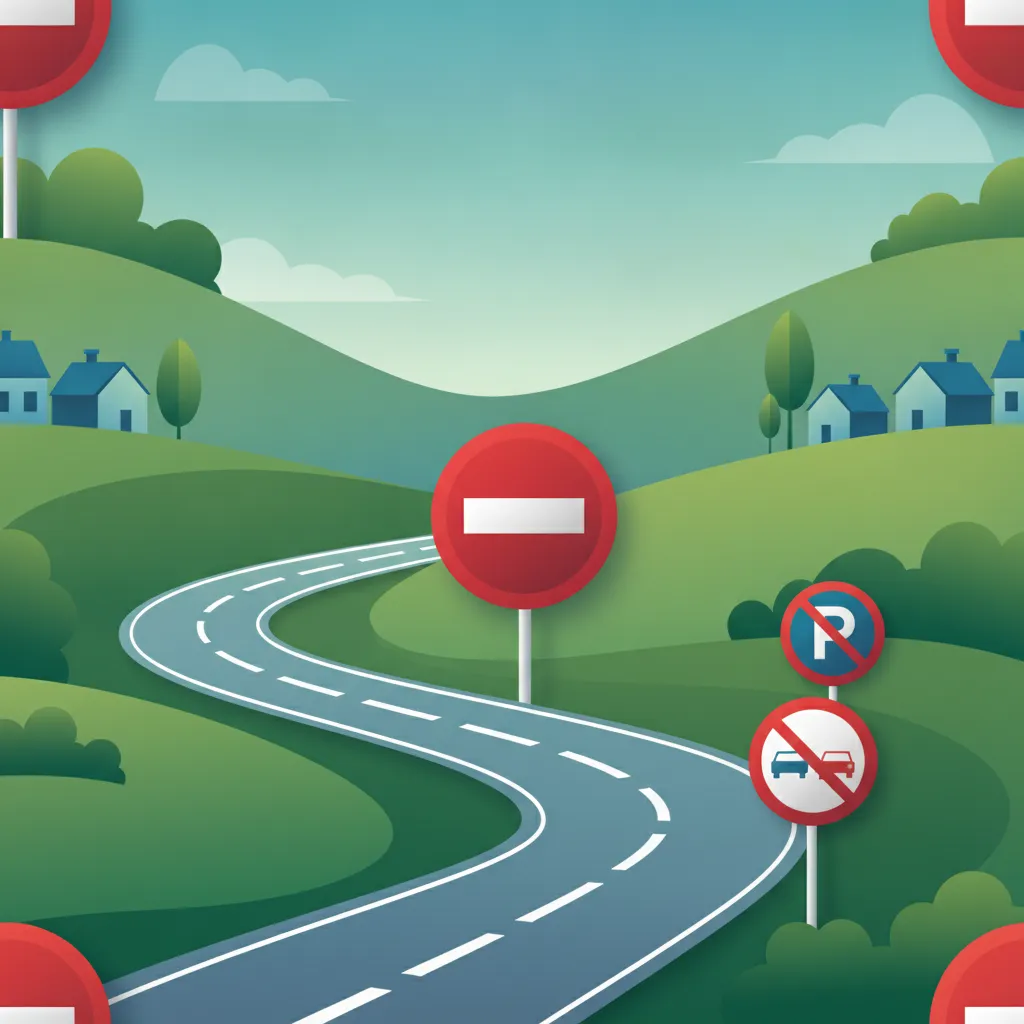
Prohibition signs are a category of regulatory signs in Portugal designed to restrict certain behaviors or vehicle movements on the road. They are easily identified by their circular shape and red border, indicating a mandatory interdiction. Mastering these signs is essential for passing your IMT driving theory exam and for driving safely and legally across Portuguese urban and rural areas.
Theory topic content overview
Read the full theory topic guide for Prohibition Signs Rules with structured, easy-to-scan content built for learners in Portugal. This detailed section explains the exact rule, meaning, traffic context, comparison points, and exam logic behind this Portuguese driving theory topic so you can study faster, understand the concept more clearly, and avoid common interpretation mistakes on the theory test.
Prohibition signs, known in Portugal as sinais de proibição, are a fundamental category of regulatory road signs. Their primary function is to clearly indicate actions that drivers and other road users are strictly forbidden from performing. These signs are essential for maintaining road safety, preventing dangerous maneuvers, and ensuring the smooth flow of traffic according to the Portuguese Código da Estrada (Road Code) and the Regulamento de Sinalização do Trânsito (RST).
You can easily identify most prohibition signs in Portugal by their distinctive visual characteristics:
Understanding and obeying sinais de proibição is not merely good practice; it's a legal obligation and a cornerstone of safe driving in Portugal.
sentido proibido - no entry), dangerous overtaking maneuvers (proibição de ultrapassar), or obstructions (e.g., estacionamento proibido - no parking).Código da Estrada and can lead to fines, penalty points, and even licence suspension.sinais de proibição. Examiners often test your understanding of their precise meaning, their scope, and how they apply to different vehicle types or situations, especially when additional panels are involved. Knowing these signs intimately is crucial for passing.The legal effect of a prohibition sign begins at the point where it is installed. Its duration and specific application depend on the sign itself and any supplementary information.
trânsito proibido a automóveis e motociclos (no entry for cars and motorcycles).proibição de ultrapassar para pesados - no overtaking for heavy goods vehicles, indicated by a lorry pictogram).A sinal de proibição remains in effect until one of the following occurs:
fim de proibição) cancels previous restrictions like speed limits or overtaking bans.proibição de ultrapassar (no overtaking) typically ends where road markings indicate it's safe to overtake again, or after the relevant end sign.Portuguese traffic regulations categorize prohibition signs based on the type of restriction they impose. Here are common examples:
Access and Entry Restrictions:
Maneuver Restrictions:
Speed Restrictions:
Stopping and Parking Restrictions:
One of the biggest areas of confusion for IMT exam candidates is differentiating between regulatory sign types:
Key Distinction: Sentido Proibido (C1) vs. Trânsito Proibido (C2)
Understanding these distinctions is vital for both the theory exam and practical driving in Portugal.
Let's consider how sinais de proibição impact typical driving situations:
Proibição de ultrapassar (C14a) sign on a rural road: You must immediately cancel any ongoing overtaking maneuver and refrain from starting a new one, even if the road ahead seems clear. This sign often appears on sections with poor visibility, sharp bends, or before intersections.Sentido Proibido (C1) sign: This sign means the street is one-way, and you cannot enter it from your current direction. Attempting to do so is extremely dangerous and a serious violation of the Código da Estrada.Estacionamento Proibido (C15) sign: You must find an alternative place to park. Even a quick stop for a passenger is prohibited if the sign is Paragem e Estacionamento Proibidos (C16). Ignoring these signs can lead to fines and your vehicle being towed in areas like Lisbon or Porto.Portuguese learners often make specific errors when interpreting sinais de proibição:
velocidade máxima (speed limit) sign with a chuva (rain) panel means the limit only applies in wet conditions.proibição de exceder a velocidade máxima (C13) sign indicates a legal maximum speed, not a suggestion. Driving above it is a traffic offense, regardless of how safe the road feels.To excel in the IMT driving theory exam and drive safely in Portugal, adopt a systematic approach to sinais de proibição:
sinais de proibição are mandatory legal instructions under the Código da Estrada.Mastering these signs is a critical step towards becoming a responsible and compliant driver on Portuguese roads.
Start with a short, direct summary of Prohibition Signs Rules before reading the full explanation below.
Prohibition signs (sinais de proibição) are circular road signs with a red border that clearly indicate actions drivers are not allowed to perform in Portugal. These signs prevent specific maneuvers, vehicle access, or parking, enforcing traffic regulations under the Código da Estrada. Examples include 'No Entry' (sentido proibido), 'No Overtaking' (proibição de ultrapassar), and 'No Parking' (estacionamento proibido), all vital for maintaining road safety and order.
Review the most important terms, rule signals, and traffic concepts linked to Prohibition Signs Rules.
Explore related theory topic pages connected to Prohibition Signs Rules and continue with the next useful rule explanation.
See the common search queries learners use when trying to understand Prohibition Signs Rules in Portugal.

Continue your preparation for the Portuguese driving test by exploring specific theory topics in detail. Understand the Código da Estrada, review road signs, and clarify complex traffic regulations to ensure you're fully prepared for the IMT examination.
Explore Driving Theory TopicsTheory topic content overview
Start with a short, direct summary of Prohibition Signs Rules before reading the full explanation below.
Prohibition signs (sinais de proibição) are circular road signs with a red border that clearly indicate actions drivers are not allowed to perform in Portugal. These signs prevent specific maneuvers, vehicle access, or parking, enforcing traffic regulations under the Código da Estrada. Examples include 'No Entry' (sentido proibido), 'No Overtaking' (proibição de ultrapassar), and 'No Parking' (estacionamento proibido), all vital for maintaining road safety and order.
Review the most important terms, rule signals, and traffic concepts linked to Prohibition Signs Rules.
Explore related theory topic pages connected to Prohibition Signs Rules and continue with the next useful rule explanation.
See the common search queries learners use when trying to understand Prohibition Signs Rules in Portugal.
Continue your preparation for the Portuguese driving test by exploring specific theory topics in detail. Understand the Código da Estrada, review road signs, and clarify complex traffic regulations to ensure you're fully prepared for the IMT examination.
Explore Driving Theory TopicsUse this exam-focused revision tip to understand how Prohibition Signs Rules is likely to appear in theory questions for learners in Portugal. This section helps you identify the most testable part of the rule, avoid common traps, and remember the concept more effectively during Portuguese driving theory exam preparation.
In the Portuguese driving theory exam, pay close attention to the exact pictogram and any additional panels on prohibition signs. Examiners often test subtle differences, like whether a prohibition applies to all vehicles or specific types, or where a restriction begins and ends. Never confuse prohibition signs with obligation signs; one forbids, the other commands.
Read direct answers to the most common learner questions about Prohibition Signs Rules in Portugal. This FAQ focuses on rule confusion, practical meaning, comparison with similar concepts, and the exact uncertainties that appear most often in Portuguese driving theory revision and exam preparation.
Prohibition signs are circular road signs with a red border and typically a black pictogram on a white background that indicate forbidden actions or restrictions for drivers in Portugal, as defined by the Código da Estrada and the Regulamento de Sinalização do Trânsito (RST).
Most prohibition signs are circular with a distinctive red outer border, a white or blue background, and a black symbol or a red diagonal line indicating the forbidden action. 'End of prohibition' signs usually feature a black diagonal line across the symbol.
Prohibition signs (sinais de proibição) forbid specific actions and are typically circular with a red border. Obligation signs (sinais de obrigação) mandate specific actions and are typically circular with a blue background and white symbols.
A prohibition sign applies from the point where it is placed, for the section of road it refers to, and usually until the next intersection, an 'end of prohibition' sign, or another sign that implicitly cancels the restriction. Additional panels may specify its exact scope.
The 'Sentido Proibido' (C1) sign, a red circle with a horizontal white bar, prohibits entry to all vehicles in the direction the sign faces. It is often found at the exit of one-way streets or on roads with restricted access.
Yes, 'End of Prohibition' signs are crucial as they indicate that a previously imposed restriction, such as a speed limit or a no overtaking rule, no longer applies. Failing to recognize them can lead to unnecessary delays or dangerous actions in traffic.
Common prohibition signs tested in the IMT exam include 'No Entry' (Sentido Proibido), 'No Overtaking' (Proibição de Ultrapassar), 'No Parking' (Estacionamento Proibido), 'No Stopping' (Paragem e Estacionamento Proibidos), 'Maximum Speed Limit', and signs prohibiting access to certain vehicle types. Understanding their specific meanings is vital.
Utilize the powerful search tool to refine your Portuguese driving theory practice. Pinpoint questions related to specific traffic laws, road signs, or complex scenarios from the Código da Estrada. Begin targeted revision now to boost your understanding and confidently approach your IMT driving exam.