
Portuguese roads are dynamic shared spaces where vehicles coexist with many other users. Understanding the characteristics and vulnerabilities of pedestrians, cyclists (velocípedes), and motorcyclists is key to safe driving. This page explains the principles and specific rules for interacting respectfully and safely with everyone on the road, crucial for both your theory test and real-world driving.
Theory topic content overview
Read the full theory topic guide for Sharing Road Users Rules with structured, easy-to-scan content built for learners in Portugal. This detailed section explains the exact rule, meaning, traffic context, comparison points, and exam logic behind this Portuguese driving theory topic so you can study faster, understand the concept more clearly, and avoid common interpretation mistakes on the theory test.
Sharing the road is the fundamental principle of driving safely alongside all other users of public roads, from pedestrians and cyclists to motorcyclists and heavy goods vehicles. In Portugal, this concept is central to the Código da Estrada (Road Code) and emphasizes a driver's responsibility to adapt their behaviour to protect more vulnerable road users and foster mutual respect. It's about more than just following rules; it's about proactive awareness and anticipating the actions of others in a dynamic environment.
Mastering the principles of sharing the road is not just an abstract concept; it directly impacts road safety and your success in the IMT driving theory test.
velocípedes) – have no protective shell around them. Any collision, even at low speeds, can have severe consequences. A driver's caution directly reduces the risk of serious injury or fatality.Código da Estrada, such as Article 18.º concerning distances between vehicles, explicitly address the need for special consideration towards these groups. Failure to comply can result in fines and penalties.Interacting safely with diverse road users requires a consistent application of defensive driving principles.
Your speed must always be appropriate for the conditions, including the presence of other road users. In areas with high pedestrian or cyclist traffic (e.g., urban centres, residential streets, near schools, or in zonas de coexistência), a significantly reduced speed is mandatory. Be prepared to stop or slow down instantly.
The Código da Estrada is clear on maintaining sufficient distances:
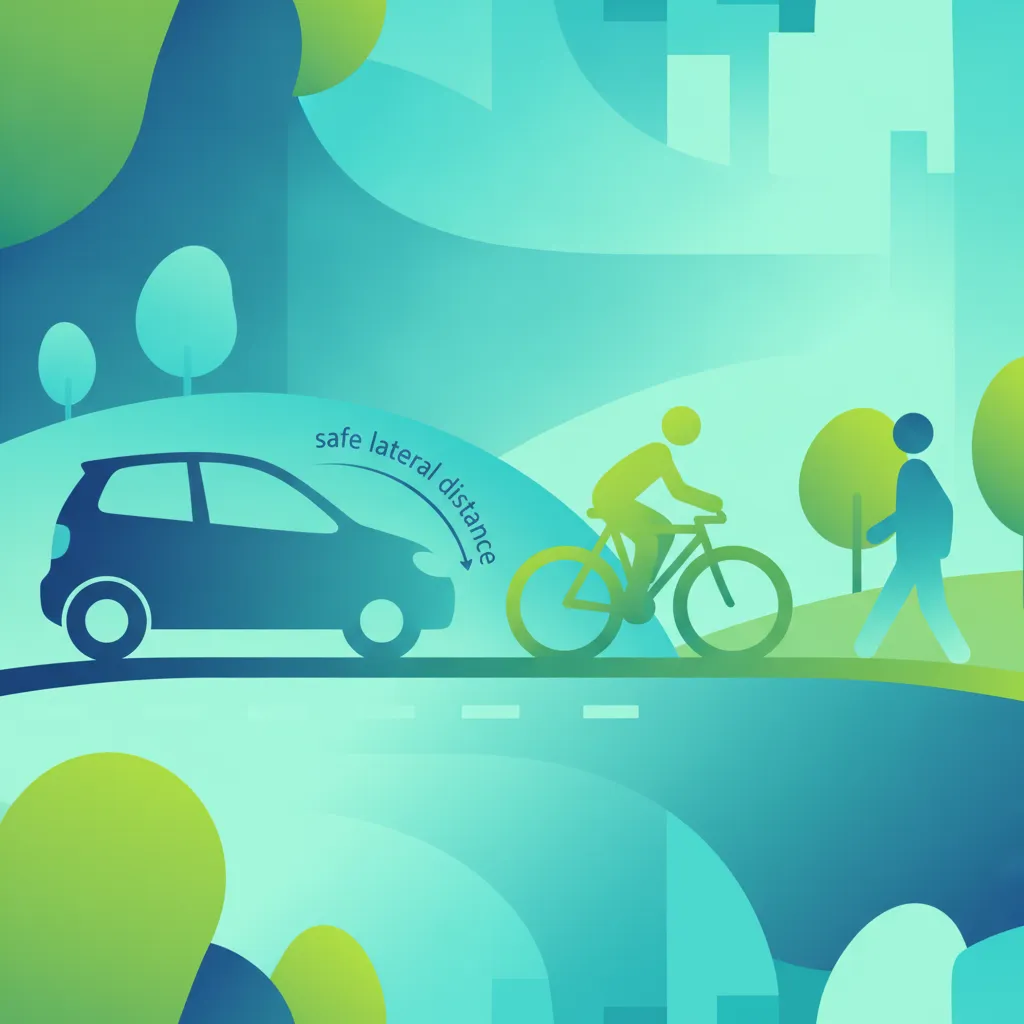
velocípede (bicycle, electric scooter, etc.) on the same lane, a motor vehicle driver must maintain a lateral distance of at least 1.5 metres. This rule (Artigo 18.º, n.º 3) is frequently tested and is vital for safety, accounting for sudden swerving by cyclists to avoid obstacles.ângulos mortos - blind spot checks) before changing lanes, turning, or opening doors.Passagens para Peões): Always give way to pedestrians who are crossing or clearly intending to cross at marked crossings. Slow down well in advance and be prepared to stop.Velocípedes)Ciclovias) and Crossings: Respect ciclovias and give way to cyclists at marked passagens para velocípedes.ângulos mortos) where the driver cannot see you.Portugal has designated zonas de coexistência (coexistence zones), often found in residential or historic areas. These are specifically designed shared spaces where:
These zones are a prime example of the extreme adaptation required for sharing the road safely in specific Portuguese urban settings.
Learners and even experienced drivers often make mistakes when interacting with other road users, particularly vulnerable ones:
ângulos mortos) before changing lanes or turning, leading to collisions with motorcycles or cyclists.To ensure safety and pass your Portuguese driving exam, remember these three crucial principles for sharing the road:
velocípedes.By internalizing these principles and applying them diligently, you contribute to safer roads for everyone in Portugal.
Start with a short, direct summary of Sharing Road Users Rules before reading the full explanation below.
Sharing the road involves adapting your driving behavior to safely coexist with all road users, especially vulnerable ones like pedestrians and cyclists (velocípedes). In Portugal, this means maintaining appropriate lateral and following distances, being highly aware of surroundings, and anticipating potential movements from others to prevent conflicts and ensure everyone's safety, as stipulated by the Código da Estrada.
Review the most important terms, rule signals, and traffic concepts linked to Sharing Road Users Rules.
Explore related theory topic pages connected to Sharing Road Users Rules and continue with the next useful rule explanation.
See the common search queries learners use when trying to understand Sharing Road Users Rules in Portugal.

Continue your preparation for the Portuguese driving test by exploring specific theory topics in detail. Understand the Código da Estrada, review road signs, and clarify complex traffic regulations to ensure you're fully prepared for the IMT examination.
Explore Driving Theory TopicsTheory topic content overview
Start with a short, direct summary of Sharing Road Users Rules before reading the full explanation below.
Sharing the road involves adapting your driving behavior to safely coexist with all road users, especially vulnerable ones like pedestrians and cyclists (velocípedes). In Portugal, this means maintaining appropriate lateral and following distances, being highly aware of surroundings, and anticipating potential movements from others to prevent conflicts and ensure everyone's safety, as stipulated by the Código da Estrada.
Review the most important terms, rule signals, and traffic concepts linked to Sharing Road Users Rules.
Explore related theory topic pages connected to Sharing Road Users Rules and continue with the next useful rule explanation.
See the common search queries learners use when trying to understand Sharing Road Users Rules in Portugal.
Continue your preparation for the Portuguese driving test by exploring specific theory topics in detail. Understand the Código da Estrada, review road signs, and clarify complex traffic regulations to ensure you're fully prepared for the IMT examination.
Explore Driving Theory TopicsUse this exam-focused revision tip to understand how Sharing Road Users Rules is likely to appear in theory questions for learners in Portugal. This section helps you identify the most testable part of the rule, avoid common traps, and remember the concept more effectively during Portuguese driving theory exam preparation.
Many Portuguese theory exam questions test your awareness of vulnerable road users and appropriate distances. Remember the 1.5-meter lateral distance for cyclists and always anticipate unexpected movements from pedestrians, especially children. Prioritise safety over speed in shared spaces.
Read direct answers to the most common learner questions about Sharing Road Users Rules in Portugal. This FAQ focuses on rule confusion, practical meaning, comparison with similar concepts, and the exact uncertainties that appear most often in Portuguese driving theory revision and exam preparation.
Vulnerable road users in Portugal primarily include pedestrians, cyclists (velocípedes), and motorcyclists. These users are at a higher risk of serious injury in the event of an accident compared to occupants of enclosed vehicles.
According to the Portuguese Código da Estrada (Article 18º), when a motorized vehicle overtakes a cyclist on the same lane, the driver must maintain a minimum lateral distance of 1.5 meters to ensure safety and prevent accidents.
Always be prepared to stop for pedestrians at designated crossings, even if there are no traffic lights. You must yield priority to pedestrians who are crossing or intending to cross, ensuring they can do so safely.
Motorcycles are smaller and can be easily hidden in vehicle blind spots, especially when changing lanes or turning. Always perform thorough mirror checks and a head check (shoulder glance) to ensure no motorcyclists are unseen.
'Zonas de Coexistência' (Coexistence Zones) are designated urban areas in Portugal where pedestrians and vehicles share the same space, and vehicles must proceed at a very low speed (typically 20 km/h) and give priority to pedestrians. Drivers must exercise extreme caution.
Be aware that large vehicles require more space for turning and braking, and they have significant blind spots. Avoid driving directly alongside them for extended periods and give them ample room to maneuver.
Yes, cyclists can ride side-by-side in Portugal, but generally not more than two abreast. This is permitted unless visibility is reduced, traffic is heavy, or it causes danger or obstruction to traffic. They must still keep to the right side of the lane.
Utilize the powerful search tool to refine your Portuguese driving theory practice. Pinpoint questions related to specific traffic laws, road signs, or complex scenarios from the Código da Estrada. Begin targeted revision now to boost your understanding and confidently approach your IMT driving exam.