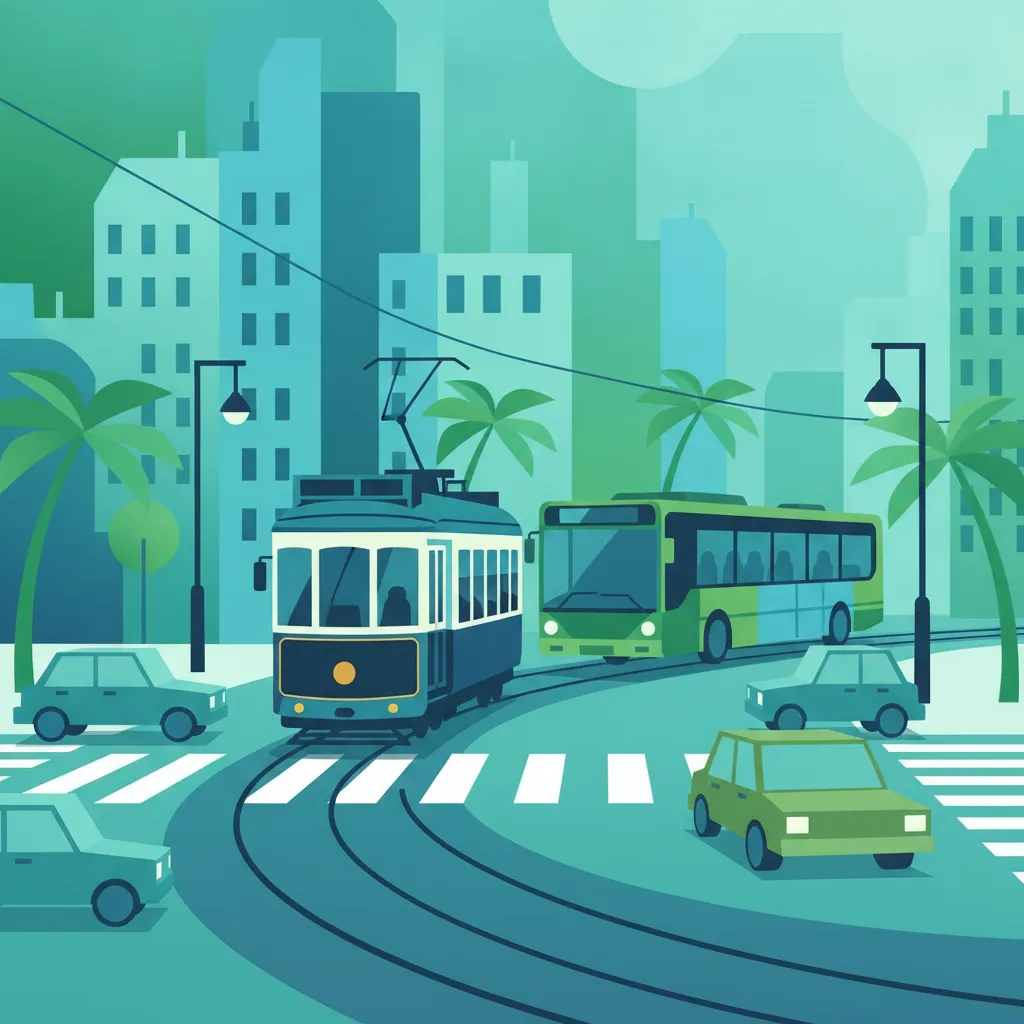
In Portugal, trams and certain public transport vehicles often operate with specific priority rules, especially in urban environments. Due to their fixed routes, size, and limited maneuverability, other drivers must frequently yield to ensure smooth traffic flow and prevent accidents. This section explains the key situations where you must give priority to these vehicles.
Theory topic content overview
Read the full theory topic guide for Tram & Public Transport Priority with structured, easy-to-scan content built for learners in Portugal. This detailed section explains the exact rule, meaning, traffic context, comparison points, and exam logic behind this Portuguese driving theory topic so you can study faster, understand the concept more clearly, and avoid common interpretation mistakes on the theory test.
In Portugal, certain public transport vehicles, particularly trams (elétricos) and buses (autocarros) operating on designated routes, are often granted special priority in traffic. This means that other drivers must yield the right-of-way (ceder passagem) to them in specific situations, even if standard priority rules might suggest otherwise.
This fundamental rule is rooted in the practical limitations of these vehicles:
Understanding this priority is crucial for safe driving in Portuguese urban environments and is a frequent topic in the IMT driving theory exam.
This priority system is not merely a courtesy; it's a critical component of traffic safety and urban mobility in Portugal.
Código da Estrada) explicitly outlines these priority rules, making it a legal requirement for all drivers. Non-compliance can lead to fines and dangerous situations.Trams demand particular attention due to their unique operational constraints. Drivers must constantly anticipate their movements.
Trams generally have priority at intersections where their tracks cross the road, regardless of whether they are approaching from the right or left. This overrides the general regra da direita (right-hand priority rule) that applies to most other vehicles.
While buses have more flexibility than trams, specific rules apply, particularly in urban areas.
In urban areas, a bus signalling its intention to leave a designated bus stop (paragem) and rejoin the traffic flow has priority over other vehicles in the adjacent lane.
Many Portuguese cities have dedicated lanes for public transport.
Vias BUS) are generally reserved for buses, taxis, and sometimes emergency vehicles. Other private vehicles are prohibited from entering or driving in these lanes, except for specific access points or emergencies.Understanding the nuances helps avoid common mistakes.
regra da direita. This is different from how general vehicles interact. Always assume a tram has priority unless specific traffic lights or signage dictate otherwise.Let's look at typical Portuguese traffic situations:
elétrico) approaching from your right, with no specific traffic lights or signs for either of you. Action: You must yield to the tram. Even though it's on your right, its fixed path and operational constraints grant it priority.autocarro) is signalling left, indicating it intends to leave its designated stop. Action: You must slow down or stop to allow the bus to merge into your lane safely.Learners frequently make mistakes regarding public transport priority, especially in the IMT exam.
Regra da Direita to Trams: The most common error is assuming the general right-hand priority rule applies to trams. Remember: trams usually have priority due to their fixed tracks.Vias BUS, which are clearly marked and reserved for public transport.The rules for prioridade dos elétricos e transportes públicos (tram and public transport priority) are enshrined in the Código da Estrada, the core legal document governing traffic in Portugal. The Instituto da Mobilidade e dos Transportes (IMT) emphasizes these rules in its theory exam preparation.
The rationale is always consistent with the physical realities of these vehicles. The Código da Estrada prioritizes safety and the smooth functioning of public transport networks, especially within congested trânsito urbano (urban traffic). Learners should pay close attention to the visual cues in exam questions, such as the presence of tracks, dedicated lanes, or bus stops, as these are the triggers for applying special priority rules.
When driving in Portugal, especially in urban areas, adopt a defensive and anticipatory approach towards trams and public transport.
ceder passagem (yield) at any intersection where tracks cross your path.By internalizing these principles, you will navigate Portuguese roads more safely, efficiently, and in full compliance with the Código da Estrada, preparing you effectively for your IMT driving exam.
Start with a short, direct summary of Tram & Public Transport Priority before reading the full explanation below.
Trams and designated public transport vehicles in Portugal frequently have priority because their fixed routes (trams) or large size and operational constraints limit their ability to maneuver or stop quickly. Drivers must be prepared to yield to them at intersections, when tracks cross roads, or when they are rejoining traffic, particularly in busy city areas. This ensures their safe and efficient movement and reduces collision risks.
Review the most important terms, rule signals, and traffic concepts linked to Tram & Public Transport Priority.
Explore related theory topic pages connected to Tram & Public Transport Priority and continue with the next useful rule explanation.
See the common search queries learners use when trying to understand Tram & Public Transport Priority in Portugal.

Continue your preparation for the Portuguese driving test by exploring specific theory topics in detail. Understand the Código da Estrada, review road signs, and clarify complex traffic regulations to ensure you're fully prepared for the IMT examination.
Explore Driving Theory TopicsTheory topic content overview
Start with a short, direct summary of Tram & Public Transport Priority before reading the full explanation below.
Trams and designated public transport vehicles in Portugal frequently have priority because their fixed routes (trams) or large size and operational constraints limit their ability to maneuver or stop quickly. Drivers must be prepared to yield to them at intersections, when tracks cross roads, or when they are rejoining traffic, particularly in busy city areas. This ensures their safe and efficient movement and reduces collision risks.
Review the most important terms, rule signals, and traffic concepts linked to Tram & Public Transport Priority.
Explore related theory topic pages connected to Tram & Public Transport Priority and continue with the next useful rule explanation.
See the common search queries learners use when trying to understand Tram & Public Transport Priority in Portugal.
Continue your preparation for the Portuguese driving test by exploring specific theory topics in detail. Understand the Código da Estrada, review road signs, and clarify complex traffic regulations to ensure you're fully prepared for the IMT examination.
Explore Driving Theory TopicsUse this exam-focused revision tip to understand how Tram & Public Transport Priority is likely to appear in theory questions for learners in Portugal. This section helps you identify the most testable part of the rule, avoid common traps, and remember the concept more effectively during Portuguese driving theory exam preparation.
In the Portuguese driving exam, questions about tram and public transport priority often test your ability to recognize scenarios where you must yield. Remember that a tram's inability to maneuver like a car is the key factor. Look for fixed tracks, size, and urban context in questions, and prioritize safety and smooth public transport flow.
Read direct answers to the most common learner questions about Tram & Public Transport Priority in Portugal. This FAQ focuses on rule confusion, practical meaning, comparison with similar concepts, and the exact uncertainties that appear most often in Portuguese driving theory revision and exam preparation.
Trams operate on fixed tracks and have limited maneuverability and longer stopping distances due to their size and weight. Granting them priority helps ensure safety and efficient public transport flow, especially in dense urban areas in Portugal.
Yes, certain public transport vehicles, including buses, may have specific priority rules, particularly when rejoining traffic from a designated stop or in areas with dedicated lanes. Drivers must anticipate their movements and yield when required.
Yielding to a tram means allowing it to pass without having to alter its speed or direction. This often involves stopping your vehicle before an intersection or where tracks cross the road, even if you might normally have priority over other road users.
While there may not be dedicated 'tram priority' signs, general priority signs (like 'Give Way' or 'Stop') along with road markings often indicate when you must yield at junctions involving tram lines or public transport routes. Always look for accompanying signage and markings.
When approaching a tram stop, be vigilant for pedestrians, especially those boarding or alighting. Reduce your speed and be prepared to stop. Never block the tram's path or interfere with passengers at the stop.
Generally, trams maintain their priority due to their fixed path. When a tram line crosses a roundabout, drivers entering or circulating the roundabout must be aware of and yield to approaching trams. Always check local signage and signals.
Utilize the powerful search tool to refine your Portuguese driving theory practice. Pinpoint questions related to specific traffic laws, road signs, or complex scenarios from the Código da Estrada. Begin targeted revision now to boost your understanding and confidently approach your IMT driving exam.