
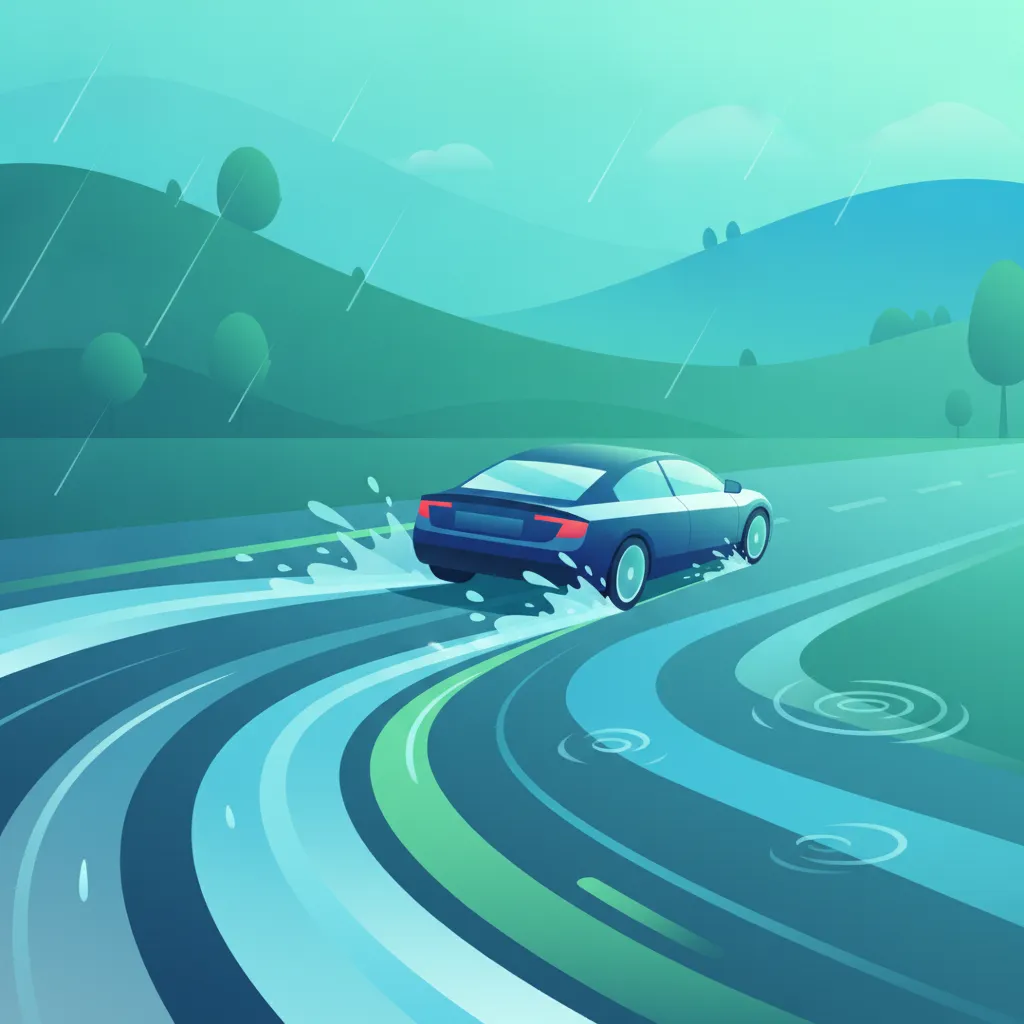
When rain falls, a layer of water forms between your tires and the road surface, significantly reducing friction. This reduction in grip directly affects your vehicle's ability to brake, steer, and accelerate effectively. In Portugal, adapting your driving behavior to these conditions is not just a safety measure but a requirement under the Código da Estrada.
Theory topic content overview
Read the full theory topic guide for Wet Road Braking with structured, easy-to-scan content built for learners in Portugal. This detailed section explains the exact rule, meaning, traffic context, comparison points, and exam logic behind this Portuguese driving theory topic so you can study faster, understand the concept more clearly, and avoid common interpretation mistakes on the theory test.
Driving on wet roads, or piso molhado in Portuguese, introduces significant challenges to vehicle control and safety. The presence of water between your tires and the road surface drastically reduces friction, which is the essential force allowing your vehicle to grip the road, steer, and brake effectively. Understanding these effects is crucial for any driver in Portugal, particularly for mastering the Código da Estrada and excelling in the IMT exam.
This topic explores how wet conditions impact your vehicle's aderência dos pneus (tire grip), lead to longer distância de travagem (braking distance), and increase the dangers of skidding (derrapagem) and aquaplaning (aquaplanagem).
When rain falls, it creates a lubricating layer on the road. This layer prevents your tires from making full, firm contact with the asphalt. The consequence is a substantial reduction in the available grip, which directly affects:
distância de travagem (braking distance) and thus your total distância de paragem (stopping distance).The Código da Estrada in Portugal emphasizes the driver's responsibility to adapt speed and behavior to road and weather conditions (Article 24, Principles of Driving). Wet roads are a prime example where this adaptation is not just recommended, but legally required for safety.
The total stopping distance is composed of two main parts: distância de reação (reaction distance) and distância de travagem (braking distance). While reaction distance is primarily affected by the driver's state (fatigue, alcohol, distraction), wet roads directly impact the braking distance.
Beyond extended braking distances, wet roads present two specific, highly dangerous phenomena:
Derrapagem)Skidding occurs when the force applied to the tires (through braking, acceleration, or steering) exceeds the available grip, causing the tires to slide across the road surface.
Aquaplanagem or Hydroplaning)Aquaplaning is a particularly treacherous phenomenon where a layer of water completely separates the tires from the road surface. The vehicle literally surfs on water.
piso or desenho) or under-inflated tires increase the risk.IMT exam and practical driving in Portugal: if your vehicle is aquaplaning, neither braking nor steering will have any effect.Several factors interact to determine how severely wet roads affect your braking and control:
piso (tread depth) are essential. The grooves in the tread are designed to channel water away from the contact patch. Worn tires (below the legal minimum tread depth in Portugal) significantly increase aquaplaning risk and reduce wet grip. Proper tire pressure (pressão dos pneus) is also vital.The Código da Estrada and safe driving practices in Portugal mandate specific adjustments when encountering piso molhado:
Moderation of Velocidade): This is the single most important action. Drive well below the posted speed limit, especially on autoestradas (motorways) or roads with poor visibility. This reduces your distância de travagem and the likelihood of aquaplaning.Distância de Segurança (Safety Distance): Significantly increase the gap between your vehicle and the one ahead. The recommended 2-second rule for dry conditions should be at least doubled to 4 seconds or more in wet conditions. This provides crucial extra time and space to react and brake. Article 18 of the Código da Estrada directly addresses this.Utilização de Luzes): Turn on your luzes de cruzamento (dipped headlights) even during the day in rain to improve your visibility to other drivers, not just to see better yourself. Fog lights should only be used in very heavy rain or fog when visibility is severely reduced.Portuguese driving theory exams frequently highlight these errors:
For your IMT exam and safe driving across Portugal, always remember: when the piso está molhado (road is wet), your vehicle's aderência is severely reduced. This means longer distância de travagem and higher risks of skidding or aquaplaning. Your primary defense is to reduce your speed (velocidade moderada) and significantly increase your distância de segurança, while always making smooth and gentle control inputs. These proactive measures are fundamental to maintaining control and preventing accidents in rainy conditions.
Start with a short, direct summary of Wet Road Braking before reading the full explanation below.
Wet roads significantly reduce tire grip, leading to much longer braking distances and an increased risk of skidding or aquaplaning. Drivers in Portugal must anticipate these changes by reducing speed, increasing the safety distance to the vehicle ahead (distância de segurança), and making smoother inputs for braking and steering to maintain control. Proper tire condition is also crucial.
Review the most important terms, rule signals, and traffic concepts linked to Wet Road Braking.
Explore related theory topic pages connected to Wet Road Braking and continue with the next useful rule explanation.
See the common search queries learners use when trying to understand Wet Road Braking in Portugal.

Continue your preparation for the Portuguese driving test by exploring specific theory topics in detail. Understand the Código da Estrada, review road signs, and clarify complex traffic regulations to ensure you're fully prepared for the IMT examination.
Explore Driving Theory TopicsTheory topic content overview
Start with a short, direct summary of Wet Road Braking before reading the full explanation below.
Wet roads significantly reduce tire grip, leading to much longer braking distances and an increased risk of skidding or aquaplaning. Drivers in Portugal must anticipate these changes by reducing speed, increasing the safety distance to the vehicle ahead (distância de segurança), and making smoother inputs for braking and steering to maintain control. Proper tire condition is also crucial.
Review the most important terms, rule signals, and traffic concepts linked to Wet Road Braking.
Explore related theory topic pages connected to Wet Road Braking and continue with the next useful rule explanation.
See the common search queries learners use when trying to understand Wet Road Braking in Portugal.
Continue your preparation for the Portuguese driving test by exploring specific theory topics in detail. Understand the Código da Estrada, review road signs, and clarify complex traffic regulations to ensure you're fully prepared for the IMT examination.
Explore Driving Theory TopicsUse this exam-focused revision tip to understand how Wet Road Braking is likely to appear in theory questions for learners in Portugal. This section helps you identify the most testable part of the rule, avoid common traps, and remember the concept more effectively during Portuguese driving theory exam preparation.
When answering IMT exam questions about wet roads, remember that the primary consequence is always reduced grip and increased stopping distance. Therefore, the correct actions almost always involve reducing speed, increasing following distance, and avoiding sudden maneuvers like harsh braking or sharp steering.
Read direct answers to the most common learner questions about Wet Road Braking in Portugal. This FAQ focuses on rule confusion, practical meaning, comparison with similar concepts, and the exact uncertainties that appear most often in Portuguese driving theory revision and exam preparation.
On wet roads, the friction between your tires and the road surface is significantly reduced. This means your vehicle requires a much longer distance to come to a complete stop compared to dry conditions. The Código da Estrada emphasizes the need to adapt your speed and increase safety distance.
Aquaplaning (or hydroplaning) occurs when a layer of water builds up between your tires and the road, causing a complete loss of traction. To avoid it, reduce your speed, ensure your tires have adequate tread depth, and avoid driving through large puddles at high speeds.
Because braking distances are longer on wet surfaces, you need more time and space to react and stop safely if the vehicle ahead slows down or stops suddenly. Increasing your following distance (distância de segurança) gives you this critical margin.
While Anti-lock Braking Systems (ABS) help prevent wheels from locking up during hard braking, maintaining steering control, they do not reduce the overall braking distance on wet roads. You still need to adapt your speed and driving behavior.
If you feel your vehicle aquaplaning, do not brake sharply or turn the steering wheel abruptly. Instead, ease off the accelerator, keep the steering wheel straight, and allow the vehicle to slow down until your tires regain contact with the road surface.
IMT driving theory exams frequently include questions on how adverse weather, specifically rain and wet roads, affects braking distance, vehicle grip, and the need to adjust speed and safety distances. Knowing the correct defensive driving techniques is key to answering these questions correctly.
'Piso molhado' directly translates to 'wet road surface'. In Portuguese driving theory, this term is used to describe road conditions affected by rain, making them slippery and requiring extra caution from drivers.
Utilize the powerful search tool to refine your Portuguese driving theory practice. Pinpoint questions related to specific traffic laws, road signs, or complex scenarios from the Código da Estrada. Begin targeted revision now to boost your understanding and confidently approach your IMT driving exam.