
Giving way means allowing other road users to proceed first to prevent conflict or collision. In Ireland, these rules are vital for maintaining safe traffic flow and are clearly defined in the Road Safety Authority's Rules of the Road. This page will guide you through the essential situations where you must yield, helping you confidently navigate junctions, roundabouts, and pedestrian areas.
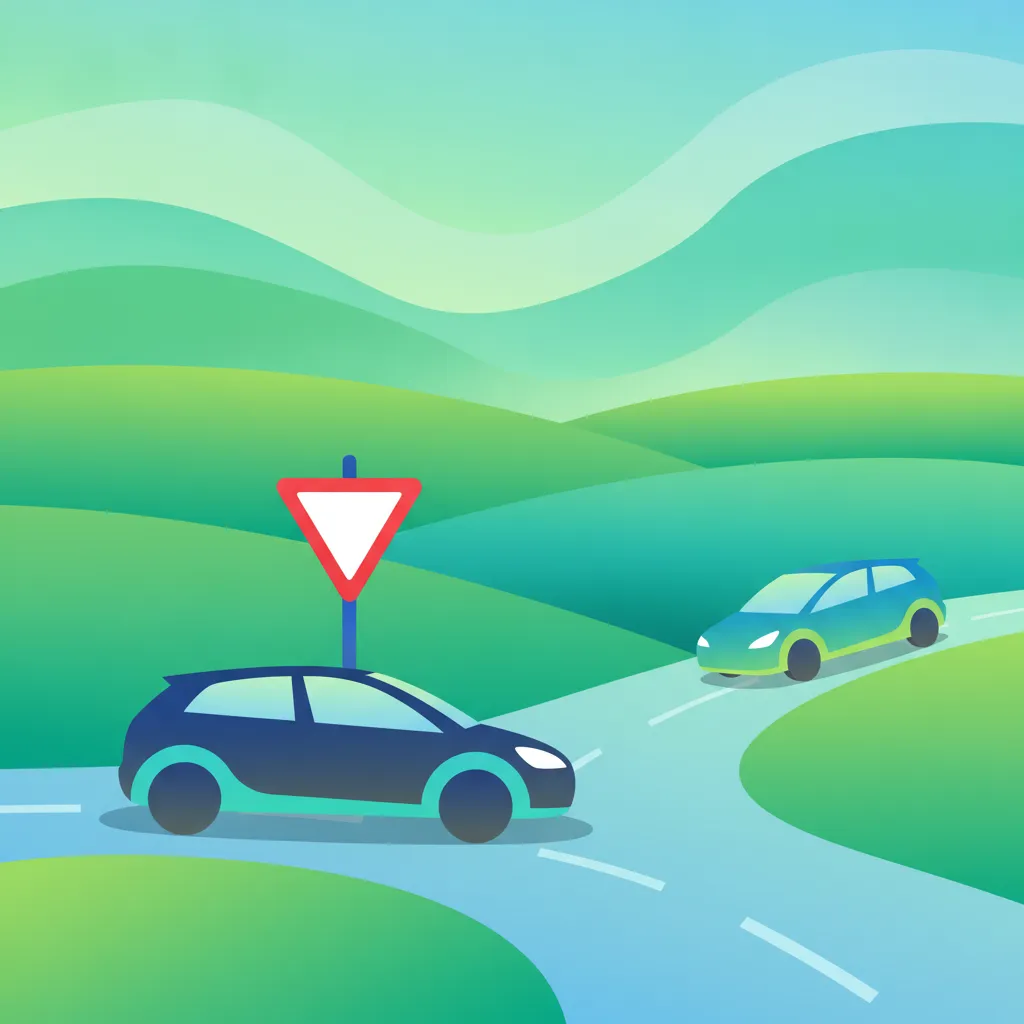
Theory topic content overview
Read the full theory topic guide for Give Way Rules (Ireland) with structured, easy-to-scan content built for learners in Ireland. This detailed section explains the exact rule, meaning, traffic context, comparison points, and exam logic behind this Irish driving theory topic so you can study faster, understand the concept more clearly, and avoid common interpretation mistakes on the theory test.
In Irish driving, "giving way" (or "yielding") is a fundamental principle that requires you, as a driver, to allow another road user to proceed first in a specific situation. This action prevents collisions, ensures safe traffic flow, and establishes a clear order of movement at points where paths might conflict, such as junctions, roundabouts, and pedestrian crossings. The Irish Rules of the Road, published by the Road Safety Authority (RSA), clearly outline when and how drivers must give way.
The core idea is to exercise caution and avoid interfering with the progress of vehicles or pedestrians who have priority. When you are required to give way, you must be prepared to slow down, stop, and wait until it is safe and clear to proceed without causing other road users to change their speed or direction.
Understanding and correctly applying give way rules is paramount for several reasons:
Giving way requires careful observation, anticipation, and decision-making. Here are the key situations and principles you must understand:
The most common indicators that you must give way are:
The RSA's Rules of the Road specify several key scenarios where you must give way:
At Junctions:
At Roundabouts:
To Pedestrians and Vulnerable Road Users:
When Changing Lanes or Merging:
Moving Off from a Stationary Position:
A common point of confusion for learner drivers in Ireland is the difference between a "Give Way" sign and a "Stop" sign. Both require you to yield, but with a crucial distinction:
Let's look at how give way rules apply in typical Irish driving situations:
Mastering give way rules in Ireland boils down to two core principles: anticipation and safety first. Always be prepared to yield, especially at conflict points like junctions, roundabouts, and pedestrian crossings. Read the road ahead, observe signs and markings, and constantly assess the intentions and positions of other road users. Never assume priority; instead, drive defensively, ready to slow down or stop to ensure that all road users can proceed without incident. This proactive approach is key to safe driving on Irish roads and to successfully navigating your Driver Theory Test.
In Irish driving, giving way is a legal obligation requiring drivers to allow other road users to proceed first at conflict points such as junctions, roundabouts, and pedestrian crossings. The Give Way sign (Géill Slí) indicates you must slow down and yield, while a Stop sign mandates a complete halt before proceeding. Key rules include giving way to traffic on your right when entering roundabouts, stopping for pedestrians at zebra crossings, and yielding to pedestrians and vulnerable road users at junctions. Understanding the distinction between these signs and applying them correctly is essential for road safety, avoiding penalty points, and passing the Driver Theory Test.
A short set of high-value points that capture the most important ideas from this theory explanation.
Giving way means allowing other road users to proceed first to prevent conflict, and is a legal requirement under the Irish Rules of the Road
At roundabouts in Ireland, you must give way to all traffic already on the roundabout coming from your immediate right
You must stop and give way to pedestrians at zebra crossings and those still on the road at flashing Pelican crossings
When turning right at a junction, you must give way to oncoming traffic proceeding straight or turning left
Always yield to pedestrians already crossing at a junction and to vulnerable road users emerging from cycle tracks or junctions
The Give Way sign (Géill Slí) requires you to slow down and yield, but you do not always have to stop if the way is clear
A Stop sign legally requires a complete halt behind the white line before assessing traffic, regardless of road conditions
When merging onto a public road from a private entrance, you must stop, look, listen, and look again before giving way
Traffic already on a roundabout or already turning at a junction has priority over vehicles approaching
At Pelican crossings, give way to any pedestrians still on the crossing when the amber light is flashing
Assuming priority at junctions, especially when turning right, or misjudging who should yield at unmarked junctions
Stopping completely at a Give Way sign when the road is clear, which can disrupt traffic and counts as a minor fault in a driving test
Failing to check for pedestrians, cyclists, e-scooters, or motorcyclists when turning or moving off from a stationary position
Treating a Stop sign like a Give Way sign by rolling through without a complete halt, which is a serious traffic offence
Underestimating the speed of oncoming traffic or misjudging gaps when merging or completing turns
Start with a short, direct summary of Give Way Rules (Ireland) before reading the full explanation below.
Giving way, also known as yielding, is a fundamental driving principle in Ireland where you must allow other road users to proceed before you. This obligation applies at specific junctions, roundabouts, and pedestrian crossings, often indicated by traffic signs like the "Give Way" sign (Géill Slí) or road markings. Always be prepared to slow down or stop to ensure the safety of others and maintain smooth traffic flow.
Review the most important terms, rule signals, and traffic concepts linked to Give Way Rules (Ireland).
Explore related theory topic pages connected to Give Way Rules (Ireland) and continue with the next useful rule explanation.
See the common search queries learners use when trying to understand Give Way Rules (Ireland) in Ireland.

After reviewing core Irish driving theory topics, test your understanding with comprehensive practice questions. Apply your knowledge of road rules, signs, and traffic laws to scenarios mirroring the official Driver Theory Test. Solidify your learning and prepare effectively for your exam.
Irish Driving Theory TopicsTheory topic content overview
A short set of high-value points that capture the most important ideas from this theory explanation.
Giving way means allowing other road users to proceed first to prevent conflict, and is a legal requirement under the Irish Rules of the Road
At roundabouts in Ireland, you must give way to all traffic already on the roundabout coming from your immediate right
You must stop and give way to pedestrians at zebra crossings and those still on the road at flashing Pelican crossings
When turning right at a junction, you must give way to oncoming traffic proceeding straight or turning left
Always yield to pedestrians already crossing at a junction and to vulnerable road users emerging from cycle tracks or junctions
The Give Way sign (Géill Slí) requires you to slow down and yield, but you do not always have to stop if the way is clear
A Stop sign legally requires a complete halt behind the white line before assessing traffic, regardless of road conditions
When merging onto a public road from a private entrance, you must stop, look, listen, and look again before giving way
Traffic already on a roundabout or already turning at a junction has priority over vehicles approaching
At Pelican crossings, give way to any pedestrians still on the crossing when the amber light is flashing
Assuming priority at junctions, especially when turning right, or misjudging who should yield at unmarked junctions
Stopping completely at a Give Way sign when the road is clear, which can disrupt traffic and counts as a minor fault in a driving test
Failing to check for pedestrians, cyclists, e-scooters, or motorcyclists when turning or moving off from a stationary position
Treating a Stop sign like a Give Way sign by rolling through without a complete halt, which is a serious traffic offence
Underestimating the speed of oncoming traffic or misjudging gaps when merging or completing turns
Start with a short, direct summary of Give Way Rules (Ireland) before reading the full explanation below.
Giving way, also known as yielding, is a fundamental driving principle in Ireland where you must allow other road users to proceed before you. This obligation applies at specific junctions, roundabouts, and pedestrian crossings, often indicated by traffic signs like the "Give Way" sign (Géill Slí) or road markings. Always be prepared to slow down or stop to ensure the safety of others and maintain smooth traffic flow.
Review the most important terms, rule signals, and traffic concepts linked to Give Way Rules (Ireland).
Explore related theory topic pages connected to Give Way Rules (Ireland) and continue with the next useful rule explanation.
See the common search queries learners use when trying to understand Give Way Rules (Ireland) in Ireland.
After reviewing core Irish driving theory topics, test your understanding with comprehensive practice questions. Apply your knowledge of road rules, signs, and traffic laws to scenarios mirroring the official Driver Theory Test. Solidify your learning and prepare effectively for your exam.
Irish Driving Theory TopicsUse this exam-focused revision tip to understand how Give Way Rules (Ireland) is likely to appear in theory questions for learners in Ireland. This section helps you identify the most testable part of the rule, avoid common traps, and remember the concept more effectively during Irish driving theory exam preparation.
The Driver Theory Test frequently uses scenarios involving junctions or pedestrian crossings to assess your understanding of give way rules. Pay close attention to traffic signs (like the Give Way sign or 'Géill Slí' and Stop sign) and road markings, and remember that pedestrians and turning traffic often have priority. Never assume you have priority; always proceed with caution.
Read direct answers to the most common learner questions about Give Way Rules (Ireland) in Ireland. This FAQ focuses on rule confusion, practical meaning, comparison with similar concepts, and the exact uncertainties that appear most often in Irish driving theory revision and exam preparation.
In Irish driving, "give way" means you must allow other traffic or pedestrians to proceed before you. This typically involves slowing down, stopping, and waiting until it is safe and clear for you to continue without impeding others.
You must give way at junctions in Ireland when indicated by a "Give Way" sign (Géill Slí), road markings (such as a broken white line), or when exiting a minor road onto a major one. You also yield to traffic already turning at a junction and traffic approaching from your right at unmarked junctions.
While caution is paramount, pedestrians generally have priority at marked crossings (zebra, pelican crossings when amber light is flashing or green man showing) and when already crossing at a junction. Drivers must always yield to pedestrians when moving off from a stationary position or turning into a road where pedestrians are crossing.
A "Stop" sign (red octagon) requires you to come to a complete halt before the stop line, even if no other traffic is visible. A "Give Way" sign (inverted triangle, 'Géill Slí') requires you to slow down and be prepared to stop, yielding to all traffic on the major road before proceeding safely, but a full stop is not always necessary if the way is clear.
At most roundabouts in Ireland, you must give way to traffic already on the roundabout approaching from your immediate right. Look to your right as you approach and enter only when there is a safe gap.
Failing to give way can lead to dangerous collisions and is a serious offence in Ireland. It can result in penalty points on your licence and a fine, in addition to being a major cause for failing your driving test.
The official "Rules of the Road" published by the Road Safety Authority (RSA) is the primary source for all Irish traffic laws, including comprehensive details on give way rules and priority.
Use the practice question search tool to pinpoint specific topics, road signs, or rules you need to master for your official Driver Theory Test. Refine your study strategy and ensure comprehensive preparation for all aspects of the Irish driving exam. Start your focused revision now and build confidence for your learner permit test.