
Roundabouts are designed to improve traffic flow and reduce the severity of collisions, but they rely on drivers understanding and respecting priority rules. In Ireland, the core principle is usually to yield to traffic already in the roundabout. This page details how to safely approach, enter, circulate, and exit roundabouts, considering local markings and signals.
Theory topic content overview
Read the full theory topic guide for Roundabout Priority with structured, easy-to-scan content built for learners in Ireland. This detailed section explains the exact rule, meaning, traffic context, comparison points, and exam logic behind this Irish driving theory topic so you can study faster, understand the concept more clearly, and avoid common interpretation mistakes on the theory test.
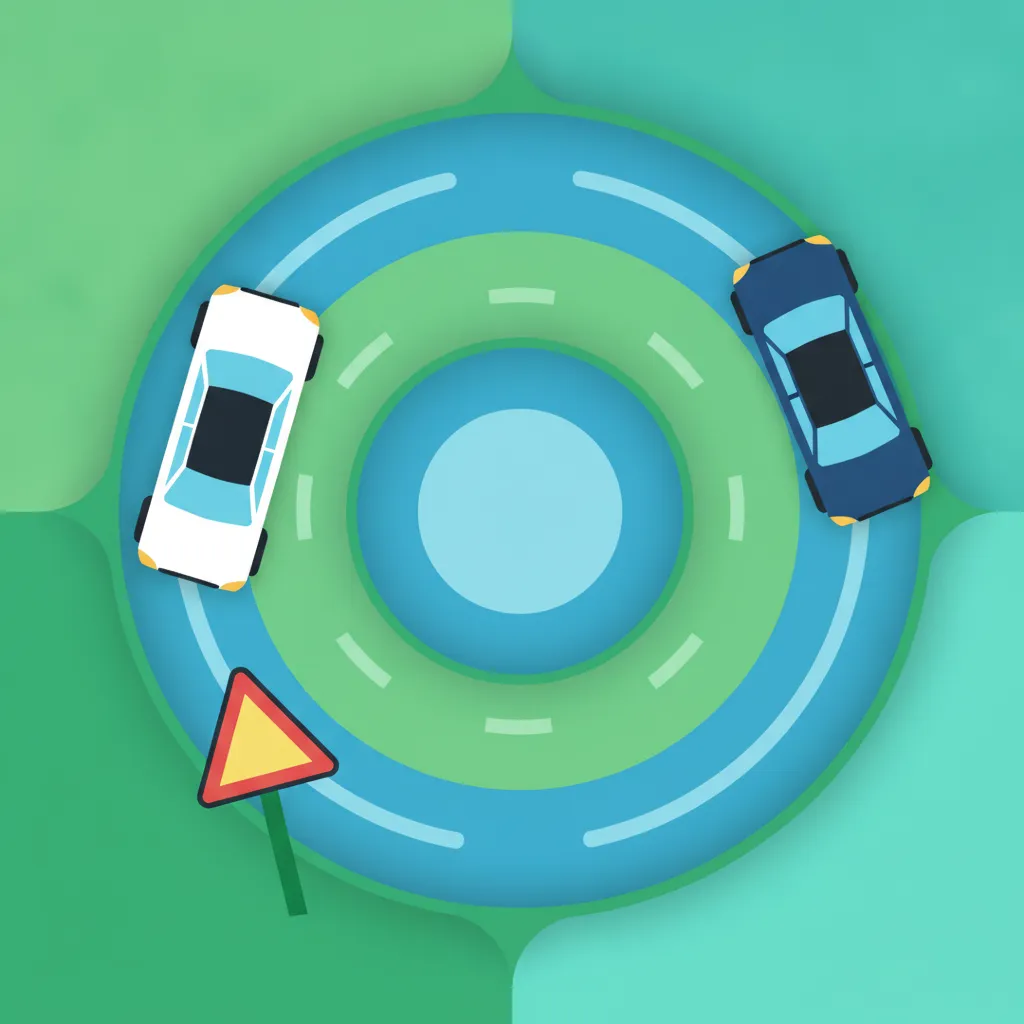
Roundabout priority rules define the order in which vehicles can safely enter, circulate within, and exit a roundabout without causing a collision. In Ireland, the fundamental principle, as outlined in the official Rules of the Road by the Road Safety Authority (RSA), is that traffic already on the roundabout has priority over traffic wishing to enter it.
This means that drivers approaching a roundabout must be prepared to give way to any vehicles coming from their immediate right that are already circulating within the roundabout. Roundabouts are designed to keep traffic flowing smoothly and significantly reduce the risk of severe collisions compared to traditional intersections with traffic lights, but only when drivers understand and respect these priority guidelines.
Mastering roundabout priority is critically important for several reasons, both for the Irish Driver Theory Test and for safe, confident driving across Ireland:
Navigating a roundabout safely and according to Irish priority rules involves a clear sequence of observation, decision, and action:
As you approach a roundabout in Ireland, always slow down well in advance. Look for the "Give Way" sign (an inverted red triangle) and potentially road markings (like shark's teeth) at the entry point. These reinforce the requirement to give way.
The crucial step is to observe traffic already circulating within the roundabout, particularly those approaching from your immediate right. You must yield priority to these vehicles. This means:
Once you have identified a safe gap in the traffic from your right, you may enter the roundabout. Ensure your entry does not impede any other road users.
Once inside the roundabout, maintain a safe speed and stay in your chosen lane. You now have priority over vehicles trying to enter the roundabout from other approaches. Do not signal until you are ready to exit.
As you approach your intended exit, signal left to inform other drivers of your intentions. This is crucial for guiding traffic flow and helping other drivers entering the roundabout to make safe decisions. Always check your mirrors and blind spots before exiting to ensure no cyclists or motorcyclists are alongside you.
While the core priority rule remains constant, several factors influence how you navigate and apply it in Ireland:
Understanding roundabout priority is distinct from other junction rules:
Consider these practical situations to apply the rules:
Many learners lose marks in the Driver Theory Test or make mistakes on the road due to common misunderstandings:
To navigate Irish roundabouts safely and confidently, adopt this proactive mindset:
By internalising these principles, you'll not only pass your Irish Driver Theory Test but also become a safer, more efficient driver on Ireland's roads.
In Ireland, the fundamental rule is that traffic already on the roundabout has priority over traffic entering, so drivers must yield to vehicles from their immediate right before proceeding. Safe navigation requires slowing down on approach, selecting the correct lane based on your intended exit and any road markings, entering only when a safe gap exists, circulating while maintaining lane discipline, and signaling left before exiting. This topic distinguishes roundabouts from other junctions like traffic lights and T-junctions, and emphasises that road markings always override general guidelines. Understanding these rules is essential for passing the Irish Driver Theory Test and for safe, confident driving on Irish roads.
A short set of high-value points that capture the most important ideas from this theory explanation.
Vehicles already circulating within a roundabout have priority over those wishing to enter
Always yield to traffic approaching from your immediate right before entering
Signal left when exiting to inform other drivers of your intentions and help them make safe decisions
Choose the correct lane before entering based on your intended exit and follow road markings
Treat roundabout entry as a live hazard decision requiring active observation, not just memorized rules
Priority belongs to circulating traffic, not just any vehicle from the right—understand this distinction from other junctions
On multi-lane roundabouts, select your lane before entering and maintain it throughout
Road markings and signs take precedence over the general lane-choice 'clock face' analogy
Signal left after passing the exit before yours, not immediately upon entering
Check blind spots before exiting to detect cyclists or motorcyclists alongside you
Assuming the roundabout is safe to enter because no cars are immediately visible, without checking for faster-moving motorcycles or cyclists inside
Failing to signal left when exiting, depriving other drivers of vital information about your intentions
Cutting across lanes inside the roundabout instead of selecting the correct lane before entry
Hesitating too long at the entrance, which disrupts traffic flow and confuses other drivers
Treating roundabout priority as rote memorisation rather than assessing the live hazard situation
Start with a short, direct summary of Roundabout Priority before reading the full explanation below.
In Ireland, vehicles already circulating within a roundabout generally have priority over those entering. Drivers approaching a roundabout must slow down, observe traffic from their right (already in the circle), and yield if necessary before proceeding. Always follow road markings and signals, and signal clearly when exiting to ensure safe traffic flow and prevent accidents.
Review the most important terms, rule signals, and traffic concepts linked to Roundabout Priority.
Explore related theory topic pages connected to Roundabout Priority and continue with the next useful rule explanation.
See the common search queries learners use when trying to understand Roundabout Priority in Ireland.

After reviewing core Irish driving theory topics, test your understanding with comprehensive practice questions. Apply your knowledge of road rules, signs, and traffic laws to scenarios mirroring the official Driver Theory Test. Solidify your learning and prepare effectively for your exam.
Irish Driving Theory TopicsTheory topic content overview
A short set of high-value points that capture the most important ideas from this theory explanation.
Vehicles already circulating within a roundabout have priority over those wishing to enter
Always yield to traffic approaching from your immediate right before entering
Signal left when exiting to inform other drivers of your intentions and help them make safe decisions
Choose the correct lane before entering based on your intended exit and follow road markings
Treat roundabout entry as a live hazard decision requiring active observation, not just memorized rules
Priority belongs to circulating traffic, not just any vehicle from the right—understand this distinction from other junctions
On multi-lane roundabouts, select your lane before entering and maintain it throughout
Road markings and signs take precedence over the general lane-choice 'clock face' analogy
Signal left after passing the exit before yours, not immediately upon entering
Check blind spots before exiting to detect cyclists or motorcyclists alongside you
Assuming the roundabout is safe to enter because no cars are immediately visible, without checking for faster-moving motorcycles or cyclists inside
Failing to signal left when exiting, depriving other drivers of vital information about your intentions
Cutting across lanes inside the roundabout instead of selecting the correct lane before entry
Hesitating too long at the entrance, which disrupts traffic flow and confuses other drivers
Treating roundabout priority as rote memorisation rather than assessing the live hazard situation
Start with a short, direct summary of Roundabout Priority before reading the full explanation below.
In Ireland, vehicles already circulating within a roundabout generally have priority over those entering. Drivers approaching a roundabout must slow down, observe traffic from their right (already in the circle), and yield if necessary before proceeding. Always follow road markings and signals, and signal clearly when exiting to ensure safe traffic flow and prevent accidents.
Review the most important terms, rule signals, and traffic concepts linked to Roundabout Priority.
Explore related theory topic pages connected to Roundabout Priority and continue with the next useful rule explanation.
See the common search queries learners use when trying to understand Roundabout Priority in Ireland.
After reviewing core Irish driving theory topics, test your understanding with comprehensive practice questions. Apply your knowledge of road rules, signs, and traffic laws to scenarios mirroring the official Driver Theory Test. Solidify your learning and prepare effectively for your exam.
Irish Driving Theory TopicsUse this exam-focused revision tip to understand how Roundabout Priority is likely to appear in theory questions for learners in Ireland. This section helps you identify the most testable part of the rule, avoid common traps, and remember the concept more effectively during Irish driving theory exam preparation.
A common trap in the Irish Driver Theory Test is misjudging when to enter a roundabout. Always apply the RSA rule: slow down, observe traffic from your right already on the roundabout, and only proceed when it is lawful and safe. Do not treat it as a memory fact; always react to the live hazard situation.
Read direct answers to the most common learner questions about Roundabout Priority in Ireland. This FAQ focuses on rule confusion, practical meaning, comparison with similar concepts, and the exact uncertainties that appear most often in Irish driving theory revision and exam preparation.
In Ireland, vehicles already on the roundabout typically have priority over those approaching and wishing to enter. You must yield to traffic coming from your right that is already circulating.
You should use your left indicator if you intend to take the first exit (up to 12 o'clock). For exits after 12 o'clock, you don't use an indicator on approach, but you must indicate left just after passing the exit before yours.
The RSA's 'golden rule' suggests thinking of the roundabout as a clock. For exits between 6 o'clock and 12 o'clock, generally use the left lane. For exits between 12 o'clock and 6 o'clock, generally use the right lane. Always follow specific road markings if present.
Generally, use the left lane for taking the first exit or any exit between the 6 o'clock and 12 o'clock positions, unless road markings indicate otherwise.
Generally, use the right lane for exits between the 12 o'clock and 6 o'clock positions (e.g., turning right or going full circle), unless road markings direct you differently.
You should avoid stopping inside a roundabout unless absolutely necessary to prevent an accident. Maintain a steady, safe speed and be prepared to stop if the exit is blocked, but prioritize keeping traffic flowing.
Mini-roundabouts follow similar priority rules, but their small size requires extra caution. All vehicles must still give way to traffic from their right already on the roundabout, and you must not drive over the central island unless your vehicle is too large to avoid it.
Look for road markings (like 'shark's teeth' or yield lines) and 'Give Way' signs as you approach. These signs and markings indicate you must yield to traffic already on the roundabout.
The RSA states that roundabouts reduce delays, significantly reduce the risk of collisions (especially severe ones), and can reduce pollution compared to stop-and-go traffic light junctions.
Common mistakes include failing to yield to circulating traffic, incorrect lane choice on approach, not signalling correctly (especially when exiting), and entering too quickly without proper observation.
The Road Safety Authority (RSA) publishes the 'Rules of the Road' which clearly outlines the regulations and best practices for navigating roundabouts, including priority rules, signalling, and lane usage, for all drivers in Ireland.
Pedestrians generally have priority at marked pedestrian crossings (zebra or pelican) before or after a roundabout. On the roundabout itself, vehicle drivers have priority over pedestrians unless there's a specific crossing point.
Use the practice question search tool to pinpoint specific topics, road signs, or rules you need to master for your official Driver Theory Test. Refine your study strategy and ensure comprehensive preparation for all aspects of the Irish driving exam. Start your focused revision now and build confidence for your learner permit test.