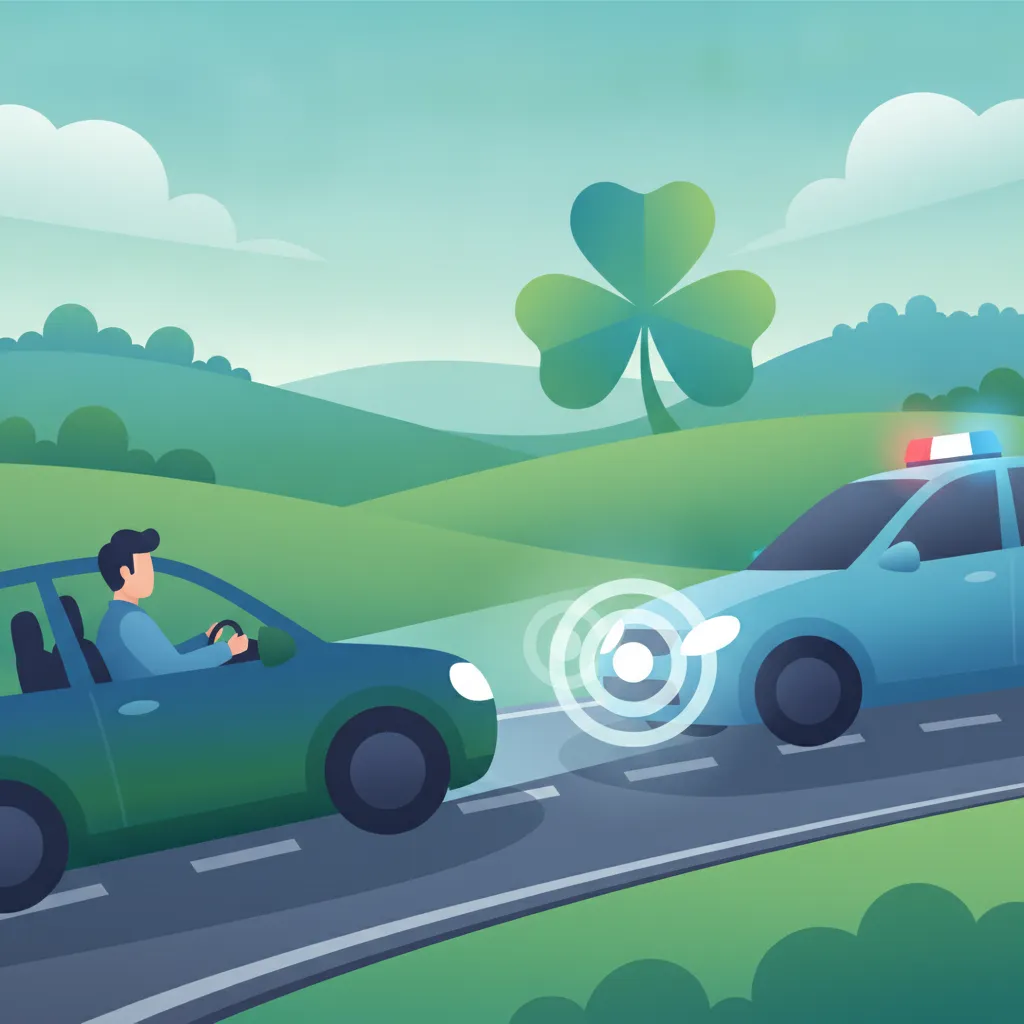
When Gardaí, ambulances, or fire services are responding to an emergency in Ireland, they need immediate and clear passage. As a driver, you have a legal and moral responsibility to react safely and promptly to their flashing blue lights and sirens. This section details how to properly give way, ensuring you do not obstruct these vital services and maintain road safety for everyone, in line with the RSA Rules of the Road.
Theory topic content overview
Read the full theory topic guide for Emergency Vehicle Priority with structured, easy-to-scan content built for learners in Ireland. This detailed section explains the exact rule, meaning, traffic context, comparison points, and exam logic behind this Irish driving theory topic so you can study faster, understand the concept more clearly, and avoid common interpretation mistakes on the theory test.
Giving way to emergency vehicles is a fundamental aspect of road safety and a legal requirement for all drivers in Ireland. When Gardaí, ambulances, or fire services are responding to an emergency, every second counts. Your quick and safe actions can directly contribute to saving lives and property. Understanding these rules is crucial not only for navigating Irish roads responsibly but also for successfully passing your Driver Theory Test.
Emergency Vehicle Priority refers to the legal and moral obligation of all other road users to provide a clear, unobstructed path for designated emergency vehicles that are actively responding to an incident. In Ireland, these vehicles typically include:
These vehicles signal their urgent presence by using flashing blue lights and/or audible sirens. Upon seeing or hearing these signals, drivers in Ireland must take immediate, safe action to allow them to pass.
The core reason for emergency vehicle priority is the time-sensitive nature of emergencies. Responding swiftly can dramatically improve outcomes for those in distress. A delay of even a few seconds can have serious consequences.
From the perspective of your Irish Driver Theory Test, understanding emergency vehicle priority is paramount. Questions often focus on:
The RSA advises: “Apply the RSA rule first, slow down early, observe all relevant road users, and only proceed when the manoeuvre involving emergency vehicles is lawful and safe.” This guidance underscores the importance of thoughtful, safe action over panic.
When you encounter an emergency vehicle using flashing blue lights or sirens in Ireland, follow these steps to ensure you provide a safe and clear path:
Stay Calm and Observe:
Signal Your Intention:
Move Safely to the Side or Stop:
Create Space Proactively:
Remain Stopped Until Clear:
Rejoin Traffic Safely:
While giving way is vital, making unsafe decisions can be just as dangerous. The RSA clearly outlines actions to avoid:
Learners often make specific errors when encountering emergency vehicles during their driving lessons or theory test:
In Ireland, the requirement to give way to emergency vehicles is enshrined in the RSA Rules of the Road. This document serves as the official guide for all drivers and is the primary reference for the Driver Theory Test. The Rules emphasise the collective responsibility of all road users to facilitate the critical work of Gardaí, fire fighters, and ambulances. Adherence to these rules is a legal obligation; failure to do so could result in penalty points or prosecution, beyond the immediate safety risks.
The most critical takeaway for emergency vehicle priority in Ireland is to act safely and decisively. When you see flashing blue lights or hear sirens from a Garda car, ambulance, or fire truck, your immediate responsibility is to create a clear, safe path for them. This means:
Always prioritise the safety of yourself, your passengers, other road users, and the emergency responders. Your actions contribute directly to the efficiency and effectiveness of Ireland's emergency services.
Giving way to emergency vehicles is a legal requirement under the RSA Rules of the Road for all drivers in Ireland. When you encounter flashing blue lights or sirens from Gardaí, ambulances, or fire services, stay calm, check your mirrors, signal early, and move safely to the left or stop. Always check for pedestrians, cyclists, and other road users before maneuvering, and never break traffic rules unless directed by emergency personnel. Remain stopped until all emergency vehicles have passed, then rejoin traffic safely once it is clear.
A short set of high-value points that capture the most important ideas from this theory explanation.
When you see flashing blue lights or hear sirens from Gardaí, ambulances, or fire services, you must safely clear a path by moving to the left or stopping where safe.
Always observe mirrors and check for pedestrians, cyclists, and motorcyclists before making any maneuver to avoid creating new hazards.
Signal your intention early using your indicators and never make sudden, erratic movements when reacting to emergency vehicles.
Remain stopped until all emergency vehicles have passed, as multiple vehicles may be responding to the same incident.
Never break traffic rules (red lights, speed limits, illegal U-turns) to help an emergency vehicle unless directly instructed to do so by emergency personnel.
In Ireland, flashing blue lights signal designated emergency services only (Gardaí, HSE ambulances, fire services); private vehicles cannot use them.
Always leave space between your vehicle and the one ahead in traffic so you can maneuver if an emergency vehicle needs to pass.
On motorways or multi-lane roads, clear a path by moving to an adjacent lane rather than stopping in a lane.
Keep your audio volume low enough to hear audible sirens from emergency vehicles approaching from any direction.
Never mount the kerb unless absolutely necessary and you have confirmed no pedestrians or cyclists are present.
Freezing or panicking when encountering an emergency vehicle, which can impede their passage just as much as poor reactions.
Mounting the kerb unsafely without checking for pedestrians or cyclists, creating a new hazard for vulnerable road users.
Ignoring other road users while focusing solely on the emergency vehicle, leading to collisions during the maneuver.
Pulling out of position too soon after one emergency vehicle passes, not expecting follow-up vehicles from the same incident.
Following or tailgating an emergency vehicle closely to get through traffic, which is dangerous and illegal.
Start with a short, direct summary of Emergency Vehicle Priority before reading the full explanation below.
In Ireland, when you see flashing blue lights or hear sirens from an emergency vehicle (Gardaí, ambulance, fire service), you must safely clear a path for them to pass. This involves slowing down, checking your mirrors and surroundings, and moving to the side of the road or stopping where it is safe to do so, without endangering yourself or other road users. Always observe carefully and avoid sudden movements.
Review the most important terms, rule signals, and traffic concepts linked to Emergency Vehicle Priority.
Explore related theory topic pages connected to Emergency Vehicle Priority and continue with the next useful rule explanation.
See the common search queries learners use when trying to understand Emergency Vehicle Priority in Ireland.

After reviewing core Irish driving theory topics, test your understanding with comprehensive practice questions. Apply your knowledge of road rules, signs, and traffic laws to scenarios mirroring the official Driver Theory Test. Solidify your learning and prepare effectively for your exam.
Irish Driving Theory TopicsTheory topic content overview
A short set of high-value points that capture the most important ideas from this theory explanation.
When you see flashing blue lights or hear sirens from Gardaí, ambulances, or fire services, you must safely clear a path by moving to the left or stopping where safe.
Always observe mirrors and check for pedestrians, cyclists, and motorcyclists before making any maneuver to avoid creating new hazards.
Signal your intention early using your indicators and never make sudden, erratic movements when reacting to emergency vehicles.
Remain stopped until all emergency vehicles have passed, as multiple vehicles may be responding to the same incident.
Never break traffic rules (red lights, speed limits, illegal U-turns) to help an emergency vehicle unless directly instructed to do so by emergency personnel.
In Ireland, flashing blue lights signal designated emergency services only (Gardaí, HSE ambulances, fire services); private vehicles cannot use them.
Always leave space between your vehicle and the one ahead in traffic so you can maneuver if an emergency vehicle needs to pass.
On motorways or multi-lane roads, clear a path by moving to an adjacent lane rather than stopping in a lane.
Keep your audio volume low enough to hear audible sirens from emergency vehicles approaching from any direction.
Never mount the kerb unless absolutely necessary and you have confirmed no pedestrians or cyclists are present.
Freezing or panicking when encountering an emergency vehicle, which can impede their passage just as much as poor reactions.
Mounting the kerb unsafely without checking for pedestrians or cyclists, creating a new hazard for vulnerable road users.
Ignoring other road users while focusing solely on the emergency vehicle, leading to collisions during the maneuver.
Pulling out of position too soon after one emergency vehicle passes, not expecting follow-up vehicles from the same incident.
Following or tailgating an emergency vehicle closely to get through traffic, which is dangerous and illegal.
Start with a short, direct summary of Emergency Vehicle Priority before reading the full explanation below.
In Ireland, when you see flashing blue lights or hear sirens from an emergency vehicle (Gardaí, ambulance, fire service), you must safely clear a path for them to pass. This involves slowing down, checking your mirrors and surroundings, and moving to the side of the road or stopping where it is safe to do so, without endangering yourself or other road users. Always observe carefully and avoid sudden movements.
Review the most important terms, rule signals, and traffic concepts linked to Emergency Vehicle Priority.
Explore related theory topic pages connected to Emergency Vehicle Priority and continue with the next useful rule explanation.
See the common search queries learners use when trying to understand Emergency Vehicle Priority in Ireland.
After reviewing core Irish driving theory topics, test your understanding with comprehensive practice questions. Apply your knowledge of road rules, signs, and traffic laws to scenarios mirroring the official Driver Theory Test. Solidify your learning and prepare effectively for your exam.
Irish Driving Theory TopicsUse this exam-focused revision tip to understand how Emergency Vehicle Priority is likely to appear in theory questions for learners in Ireland. This section helps you identify the most testable part of the rule, avoid common traps, and remember the concept more effectively during Irish driving theory exam preparation.
In the Irish Driver Theory Test, emergency vehicle questions often test your decision-making under pressure. Remember the RSA's core advice: 'Apply the RSA rule first, slow down early, observe all relevant road users, and only proceed when the manoeuvre involving emergency vehicles is lawful and safe.' Never guess; always choose the safest, most compliant option that clears a path without creating new dangers.
Read direct answers to the most common learner questions about Emergency Vehicle Priority in Ireland. This FAQ focuses on rule confusion, practical meaning, comparison with similar concepts, and the exact uncertainties that appear most often in Irish driving theory revision and exam preparation.
In Ireland, emergency vehicles typically include Gardaí (police) cars, ambulances, and fire service vehicles. These vehicles are authorised to use blue flashing lights and sirens when responding to an emergency.
You must give way as soon as it is safe to do so. Check your mirrors, indicate, and pull over to the left if possible, stopping your vehicle to allow the emergency vehicle to pass. Be aware there may be more than one emergency vehicle.
You should only mount the kerb if it is absolutely necessary and you are certain there are no pedestrians or other hazards. You must not use bus lanes or any other restricted areas unless specifically directed by Gardaí or emergency service personnel, and only when safe.
Yes, if an emergency vehicle is approaching an intersection with lights and/or sirens, you should remain stopped even if you have a green light, to ensure they can pass safely. Do not proceed until they have cleared the junction.
No, you must never tailgate or race after an emergency vehicle, or use their passage to break traffic rules like going through a red light. This is illegal, dangerous, and can hinder their operation.
The RSA advises drivers to apply the 'RSA rule first': slow down early, observe all relevant road users, and only proceed when any manoeuvre involving emergency vehicles is lawful and safe. Always prioritize safety and legal compliance.
Focus on understanding your legal and safe responsibilities: giving way promptly, observing your surroundings, and making safe, lawful maneuvers without causing further obstruction or danger. Questions often test safe decision-making in these scenarios.
If you are in dense traffic and cannot safely pull over, leave enough space between your vehicle and the one in front so you can manoeuvre if needed. Signal your intentions clearly and ensure the emergency vehicle can still pass.
No, the use of flashing lights, with the exception of direction indicators, is reserved solely for Gardaí, ambulance, and other designated emergency service vehicles in Ireland. It is illegal to fit blue or red flashing lights to your private vehicle.
Be particularly alert at intersections. Emergency vehicles may come from behind or from secondary roads. Always check your rear and side mirrors to gauge their speed and trajectory, and watch out for other road users, especially vulnerable ones like cyclists and pedestrians, before moving aside.
Driving with excessively loud music can prevent you from hearing the sirens of approaching emergency vehicles, delaying your reaction. It's crucial to keep your vehicle's audio levels at a point where you can always hear external traffic sounds and emergency signals.
Failing to give way to an emergency vehicle can result in penalty points and fines, as it is a breach of the Rules of the Road. More importantly, it can endanger lives by delaying emergency responders from reaching an incident.
Use the practice question search tool to pinpoint specific topics, road signs, or rules you need to master for your official Driver Theory Test. Refine your study strategy and ensure comprehensive preparation for all aspects of the Irish driving exam. Start your focused revision now and build confidence for your learner permit test.