
As the Netherlands updates its approach to traffic safety, understanding the underlying vision is essential for every aspiring driver. This guide breaks down how shifting standards, including the push for widespread 30 km/h zones and enhanced e-bike safety, influence the way you must assess road risks and make decisions. Master these concepts to ensure your driving behavior aligns with current safety policy and exam requirements.
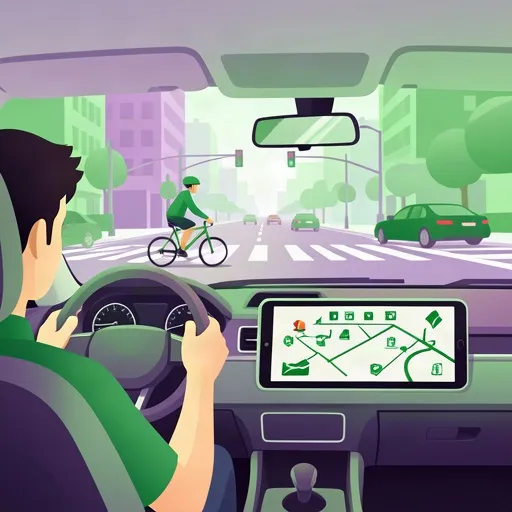
Article content overview
As a learner driver in the Netherlands, you are entering the traffic system during a transformative period for national road safety. The 'Voorrang aan verkeersveiligheid' (Prioritizing Road Safety) strategic policy vision for 2026-2030 represents a significant shift in how Dutch authorities, including Veilig Verkeer Nederland (VVN), expect road users to behave. For your CBR theory exam, it is no longer enough to memorize static rules; you must demonstrate a proactive mindset that recognizes modern risk factors and prioritizes the safety of vulnerable road users.
The core of the new policy is a departure from reactive safety—where rules are adjusted only after accidents occur—toward a pro-active, anticipatory model. In your theory exam, this is frequently tested through 'risk perception' questions. You are expected to identify potential hazards before they escalate into dangerous situations.
The ability to foresee potential traffic conflicts by analyzing road conditions, the behavior of other road users, and environmental factors, allowing for early and safe adjustments to speed and position.
This approach is particularly critical when dealing with smartphone use or inattentiveness behind the wheel. The policy emphasizes that distractions are not just personal choices but systemic risks that you, as a driver, must actively mitigate by maintaining high levels of vigilance and situational awareness.
A central pillar of the 2026-2030 vision is the advocacy for 30 km/h as the legal default speed limit within built-up areas where motorized vehicles and cyclists share the same road space. While many roads are currently marked as 50 km/h zones, the policy argues for a reclassification of these spaces to prioritize safety.
Even if a specific road does not have physical traffic-calming measures, you must be prepared to adjust your speed if the environment warrants it. The CBR exam tests your understanding that "legal speed" is a maximum, not a target. In modern driving, if your surroundings—such as high volumes of cyclists or poor sightlines—make 50 km/h unsafe, you are required to reduce your speed, even if the signs permit higher.
The rise of electric bicycles (e-bikes) and speed-pedelecs has introduced new dynamics to Dutch traffic. The 2026-2030 policy highlights that e-bike users are significantly more vulnerable due to higher speeds and the increased risk of severe head injuries during collisions.
While current legislation focuses on specific groups, the broader policy vision strongly encourages a culture of helmet use for all e-bike riders. For your exam, you should recognize that e-bikes have a higher kinetic energy than traditional bicycles, which impacts the severity of accidents and the necessary stopping distance for surrounding traffic.
Always anticipate that e-bike riders may be traveling faster than they appear. When calculating your stopping distance, assume that an e-bike requires as much caution as a light motorized vehicle.
The partnership between VVN, educators, and the CBR aims to ensure that every driver understands the "social" aspect of driving. Safe driving is increasingly framed as a shared responsibility rather than an individual right.
When you encounter questions about safety policy on the theory exam, remember that the CBR looks for your ability to apply these safety principles to specific scenarios. If you are asked to choose between "maintaining the legal speed limit" and "reducing speed for local conditions," the correct answer will almost always be the one that prioritizes safety and risk prevention.
By internalizing the 2026-2030 road safety goals, you are not just studying to pass a test; you are adopting the defensive, anticipatory mindset that is essential for a lifetime of safe driving on Dutch roads. Focus on these behavioral shifts, and you will be well-prepared for both the exam and the reality of modern traffic.
The 2026-2030 Dutch road safety policy 'Voorrang aan verkeersveiligheid' introduces a proactive, anticipatory approach to driving that moves beyond reactive rule-following. Learners must master predictive driving—recognizing hazards before they escalate—and understand that 30 km/h zones are expanding as the urban standard where cyclists and vehicles share space. E-bike safety receives special attention, with emphasis on their higher speeds requiring increased caution and proper stopping distance calculations. The CBR exam tests your ability to apply these principles, rewarding answers that prioritize safety over maintaining legal speed limits when conditions warrant slower driving.
A short set of high-value points that capture the most important ideas from this article.
The 2026-2030 policy shifts from reactive to proactive safety, requiring drivers to anticipate hazards before they escalate
30 km/h is becoming the default urban speed limit where vehicles and cyclists share road space, regardless of current signage
E-bikes travel faster than they appear and require stopping distance calculations similar to light motorized vehicles
Predictive driving means continuously analyzing road conditions, other users' behavior, and environmental factors to make early safe adjustments
When local conditions make the legal speed unsafe, you must reduce speed even if signs permit higher limits
'Voorrang aan verkeersveiligheid' is the official policy prioritizing road safety over convenience
A speed limit is a maximum, not a target—adjust speed based on actual conditions and vulnerable road users
E-bike riders and speed-pedelec users are considered vulnerable due to higher collision impact speeds
'Bebouwde kom' (built-up area) zones carry distinct speed rules and safety expectations
Risk perception questions test your ability to identify potential dangers early, not just your knowledge of static rules
Assuming the posted speed limit is always the appropriate speed regardless of surrounding conditions
Underestimating e-bike speeds and failing to account for their presence in stopping distance calculations
Believing reactive rule-following is sufficient—exam questions expect proactive hazard anticipation
Treating smartphone use as a personal choice rather than a systemic safety risk requiring active mitigation
Focusing solely on memorized rules rather than demonstrating the situational awareness mindset the CBR expects
Article content overview
A short set of high-value points that capture the most important ideas from this article.
The 2026-2030 policy shifts from reactive to proactive safety, requiring drivers to anticipate hazards before they escalate
30 km/h is becoming the default urban speed limit where vehicles and cyclists share road space, regardless of current signage
E-bikes travel faster than they appear and require stopping distance calculations similar to light motorized vehicles
Predictive driving means continuously analyzing road conditions, other users' behavior, and environmental factors to make early safe adjustments
When local conditions make the legal speed unsafe, you must reduce speed even if signs permit higher limits
'Voorrang aan verkeersveiligheid' is the official policy prioritizing road safety over convenience
A speed limit is a maximum, not a target—adjust speed based on actual conditions and vulnerable road users
E-bike riders and speed-pedelec users are considered vulnerable due to higher collision impact speeds
'Bebouwde kom' (built-up area) zones carry distinct speed rules and safety expectations
Risk perception questions test your ability to identify potential dangers early, not just your knowledge of static rules
Assuming the posted speed limit is always the appropriate speed regardless of surrounding conditions
Underestimating e-bike speeds and failing to account for their presence in stopping distance calculations
Believing reactive rule-following is sufficient—exam questions expect proactive hazard anticipation
Treating smartphone use as a personal choice rather than a systemic safety risk requiring active mitigation
Focusing solely on memorized rules rather than demonstrating the situational awareness mindset the CBR expects
Explore related topics, search based questions, and concepts that learners often look up when studying Dutch Road Safety 2026-2030. These themes reflect real search intent and help you understand how this topic connects to wider driving theory knowledge in the Netherlands.
Find clear and practical answers to common questions learners often have about Dutch Road Safety 2026-2030. This section helps explain difficult points, remove confusion, and reinforce the key driving theory concepts that matter for learners in the Netherlands.
The 30 km/h limit is being promoted to improve safety where motor vehicles and vulnerable road users like cyclists share space, as lower speeds significantly reduce the impact severity of accidents.
With the rise of e-bikes, there is an increasing advocacy for mandatory helmet use and heightened awareness of the speed differentials between electric bicycles and other traffic participants.
It means the exam expects you to demonstrate a forward-looking mindset—recognizing potential hazards before they escalate, such as being aware of distracted driving or the speed of e-cyclists, rather than just reacting to immediate events.
This vision emphasizes a safety-first mindset that prioritizes vulnerable users and sustainable traffic participation, which is reflected in how the CBR tests hazard perception and rule compliance.
Start your targeted search now to explore a vast library of official Dutch driving theory articles and guides. Reinforce your understanding of specific traffic rules or road signs to ensure you are fully prepared for your upcoming CBR theory exam. Discover comprehensive explanations tailored for success.