
Understanding the precise legal status of your vehicle is a fundamental requirement for the Dutch theory test. This guide breaks down the definitions of voluntary versus involuntary stops and outlines the specific restricted zones where stopping or parking is forbidden. Mastering these regulations will help you answer complex multiple-choice questions correctly and understand your responsibilities as a road user in the Netherlands.
Article content overview
Understanding the legal distinction between stopping and parking is a critical component of your Dutch theory test. Many learners fail to realize that the CBR exam focuses heavily on your ability to categorize these two actions correctly, as they carry different legal implications regarding where and when you are permitted to keep your vehicle stationary on public roads.
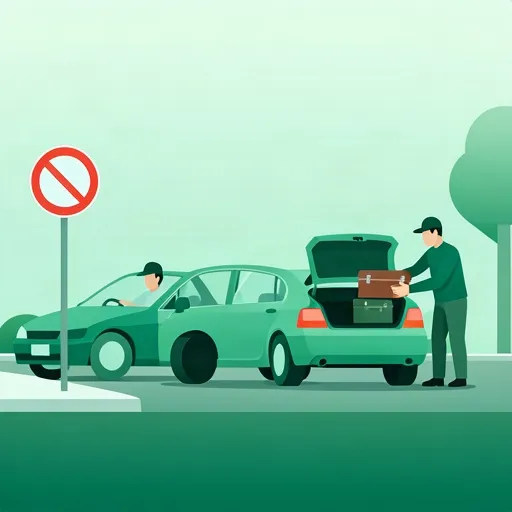
A deliberate stop made at the driver's discretion, such as picking up or dropping off passengers, or loading and unloading goods of a significant size or weight.
A stop forced upon you by the current traffic situation, such as waiting at a red traffic light, yielding at a pedestrian crossing, or stopping in a traffic jam. These stops are generally permitted where voluntary stops would be prohibited.
In the Netherlands, you are considered to be "parking" rather than "stopping" if your vehicle is stationary for any reason unrelated to the immediate flow of traffic, and you are not in the process of loading/unloading or picking up/dropping off passengers. A common exam trap involves scenarios where a driver stops at the side of the road to check a map, send a text message, check a bus schedule, or visit an ATM. Under Dutch traffic legislation, these actions all qualify as parking. If you are in a zone where parking is restricted but stopping is allowed, performing these actions can lead to a fine.
Always remember that waiting for a passenger who is not yet at the vehicle constitutes parking. You are only "stopping" to pick up a passenger when that passenger is physically entering or exiting the vehicle immediately.
The Dutch highway code is very strict regarding the visibility and safety of other road users. There are specific locations where both stopping and parking are prohibited to ensure traffic flow and pedestrian safety. You must memorize these distances and zones to pass your theory exam:
When you encounter the E-2 sign, the rules are absolute. Unlike areas where parking is restricted, the E-2 sign means you cannot even briefly stationary your vehicle unless forced by the immediate traffic situation. This is a common point of confusion for students. Even if you only intended to stop for a few seconds to let a friend out, doing so in an E-2 zone is a violation of traffic law.
A solid yellow line painted on the kerb acts as a physical indicator that stopping is prohibited. Always respect these markings as they signify high-risk areas where traffic flow must be kept clear at all costs.
To help you categorize these rules for your examination, refer to the following concepts which frequently appear in multiple-choice questions.
The CBR often tests your situational judgment. For example, you might see a question asking if you can stop to post a letter. Because posting a letter is not considered an immediate action for goods of significant size or passenger transit, it is classified as parking. If you are near a pedestrian crossing or in an E-2 zone, this would be an illegal action. Always evaluate the purpose of the stop first; if it isn't for traffic flow or immediate transit, categorize it as parking and apply the stricter set of rules.
Dutch traffic law makes a strict legal distinction between stopping (voluntary halt for immediate passenger transit or significant goods) and parking (any other stationary purpose). Involuntary stops caused by traffic conditions are permitted where voluntary stops are prohibited. Key prohibited zones include pedestrian crossings and intersections (5 metres), and bus stops (12 metres or checkered markings). The E-2 sign prohibits all stopping until the next intersection, and solid yellow kerb markings carry the same effect. When answering exam questions, first identify the purpose of the stop; if it is not for immediate traffic flow or transit, treat it as parking and apply the stricter rules.
A short set of high-value points that capture the most important ideas from this article.
Voluntary stopping covers only immediate passenger transit or loading/unloading of significant goods; all other stationary periods are classified as parking under Dutch law
Involuntary stops (traffic lights, yielding, jams) are permitted where voluntary stopping would be forbidden
The E-2 sign creates an absolute stopping prohibition that lasts until the next intersection
Bus stops have two rules: stay clear of checkered markings, or stay 12 metres from the sign if markings are absent
Brief actions like checking a map, texting, or visiting an ATM are legally parking, not stopping
Pedestrian crossings: keep at least 5 metres clear of stopping and parking
Bus stops: obey checkered markings or stay 12 metres from the sign; brief passenger drop-off is allowed if it doesn't hinder the bus
Intersections: no stopping or parking within 5 metres
Solid yellow kerb line means stopping is prohibited at all times
E-2 sign prohibition continues through the entire stretch until you reach the next intersection
Assuming a very brief stop (a few seconds) to let someone out in an E-2 zone is acceptable
Confusing voluntary with involuntary stopping; waiting for a passenger who is not at the vehicle counts as parking
Posting a letter or checking a bus schedule while parked near a pedestrian crossing is illegal parking
Thinking that loading or unloading automatically permits stopping in a prohibited zone
Believing that cycle lanes and bus lanes are acceptable stopping locations if no vehicles are visible
Article content overview
A short set of high-value points that capture the most important ideas from this article.
Voluntary stopping covers only immediate passenger transit or loading/unloading of significant goods; all other stationary periods are classified as parking under Dutch law
Involuntary stops (traffic lights, yielding, jams) are permitted where voluntary stopping would be forbidden
The E-2 sign creates an absolute stopping prohibition that lasts until the next intersection
Bus stops have two rules: stay clear of checkered markings, or stay 12 metres from the sign if markings are absent
Brief actions like checking a map, texting, or visiting an ATM are legally parking, not stopping
Pedestrian crossings: keep at least 5 metres clear of stopping and parking
Bus stops: obey checkered markings or stay 12 metres from the sign; brief passenger drop-off is allowed if it doesn't hinder the bus
Intersections: no stopping or parking within 5 metres
Solid yellow kerb line means stopping is prohibited at all times
E-2 sign prohibition continues through the entire stretch until you reach the next intersection
Assuming a very brief stop (a few seconds) to let someone out in an E-2 zone is acceptable
Confusing voluntary with involuntary stopping; waiting for a passenger who is not at the vehicle counts as parking
Posting a letter or checking a bus schedule while parked near a pedestrian crossing is illegal parking
Thinking that loading or unloading automatically permits stopping in a prohibited zone
Believing that cycle lanes and bus lanes are acceptable stopping locations if no vehicles are visible
Explore related topics, search based questions, and concepts that learners often look up when studying Stopping and Parking Rules. These themes reflect real search intent and help you understand how this topic connects to wider driving theory knowledge in the Netherlands.
Find clear and practical answers to common questions learners often have about Stopping and Parking Rules. This section helps explain difficult points, remove confusion, and reinforce the key driving theory concepts that matter for learners in the Netherlands.
Under Dutch law, stopping is the brief action of picking up or dropping off passengers, or loading and unloading goods. Parking occurs when the vehicle is stationary for any other reason, such as checking a phone, looking at a map, or waiting for a passenger who is not yet ready.
You are generally prohibited from stopping at a bus stop, defined by the checkered marking or within 12 meters of the sign. However, an exception is made specifically for the immediate picking up or dropping off of passengers, provided it does not obstruct the bus.
A solid yellow line on the curb indicates that stopping is completely prohibited at that location, even if it is only for a momentary action like loading or unloading.
You are not permitted to park within five meters of an intersection. This rule exists to ensure visibility and maintain traffic flow at junctions.
Start your targeted search now to explore a vast library of official Dutch driving theory articles and guides. Reinforce your understanding of specific traffic rules or road signs to ensure you are fully prepared for your upcoming CBR theory exam. Discover comprehensive explanations tailored for success.