
Understanding the correct sequence of actions after an accident is a core requirement for passing your AM licence theory exam. This guide explains how to secure an accident scene, when to call emergency services, and how to properly exchange information to remain compliant with the Dutch Road Traffic Act. You will learn the difference between managing your own safety and your legal responsibilities toward other road users.
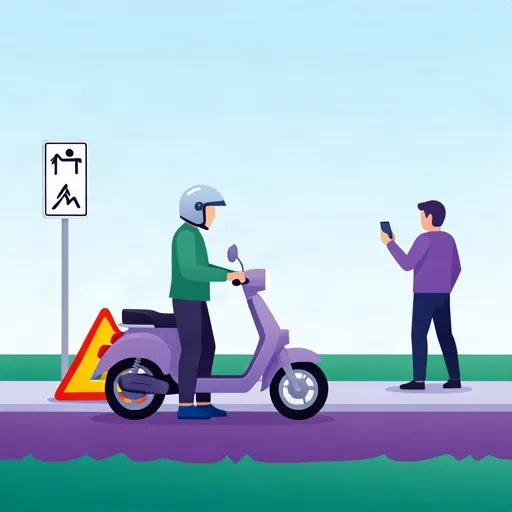
Article content overview
Navigating the roads on a moped in the Netherlands brings a significant responsibility. Whether you are riding a snorfiets or a bromfiets, being involved in a traffic accident is a high-stress situation that requires a clear head and a strict adherence to the law. The CBR theory exam frequently tests your understanding of these procedures because your actions in the first few minutes after a collision can be the difference between life and death for yourself and others.
Your own safety is always the absolute priority. Never attempt to assist a victim if doing so puts you directly in the path of oncoming traffic or creates a secondary collision risk. Always assess the surroundings before stepping off your moped to help.
When an accident occurs, you must remain calm and follow a specific hierarchy of actions. The CBR exam often presents scenarios where you must choose the correct sequence. The standard procedure is to secure the scene, ensure your own safety, alert emergency services, and only then provide first aid if you are competent to do so.
Under Dutch traffic law, there are specific legal requirements for reporting accidents. If you are involved in an accident that causes damage to property—whether it is another vehicle, a street lamp, or municipal fencing—you are legally obligated to establish your identity and the identity of the motor vehicle involved. Leaving the scene of an accident without providing your details is a serious criminal offense, even in cases where no personal injuries have occurred.
For collisions involving animals, such as dogs, cats, or wild animals like deer, you have a distinct responsibility. If you strike an animal, you must attempt to locate the owner or, if it is a wild animal, report the collision to the specialized police division by calling 144. This ensures the animal receives necessary medical attention or that the scene is cleared safely.
Wettelijke Aansprakelijkheid (WA) is the mandatory third-party liability insurance required for every motorized vehicle on Dutch public roads. It covers the damage you cause to others, which is why it is essential to exchange insurance details after any collision.
A common trap in the theory exam involves "staged" accident scenes. You may be asked whether you should remove a motorcycle helmet from a victim who is stable on the ground. The correct answer is almost always to leave the helmet on and wait for paramedics to avoid causing spinal damage, unless the victim is having severe difficulty breathing.
Another frequent question concerns where moped accidents most commonly occur. Statistical data consistently highlights junctions as the primary danger zone. Always remain extra vigilant when approaching intersections, as the combination of vehicle speeds and the unpredictability of other road users often leads to collisions at these specific points.
If you are able to do so safely, you must prevent the scene from becoming more dangerous. This may involve wearing a safety vest or positioning your moped to shield the victim. However, never become a hazard yourself. If you are in a high-speed environment, such as a provincial road, move behind the crash barrier while waiting for emergency services to arrive. Do not sit in your vehicle or on your moped while waiting for help if you are on or near a busy carriageway.
This article teaches the essential accident response procedure for moped riders in the Netherlands, following a strict priority sequence: secure the scene, ensure your own safety, call emergency services (112 for injuries, 144 for animals), and provide first aid only if competent. Under Dutch traffic law, you must always exchange identity and insurance details after any collision involving property damage, and leaving without doing so is a criminal offense. Key exam points include the helmet removal rule and the heightened danger at junctions. The mandatory WA third-party liability insurance covers damage you cause to others, making insurance exchange a legal requirement after every collision.
A short set of high-value points that capture the most important ideas from this article.
Stop safely, activate hazard lights, and assess for hazards before taking any further action.
Call 112 for any accident involving injuries, dangerous obstructions, or uncontrolled situations.
Always report animal collisions (dogs, cats, or wild animals) to the animal police by calling 144.
WA (Wettelijke Aansprakelijkheid) insurance is mandatory for all motorized vehicles and must be exchanged after any collision.
Your own safety takes absolute priority; never enter a hazardous situation to help others if it creates additional danger.
The emergency number 112 connects you to police, fire, and ambulance services for general accident emergencies.
144 is the specific line for reporting animal collisions and ensuring proper care or scene clearance.
Never remove a motorcycle helmet from a stable victim unless they are experiencing severe breathing difficulty, to avoid spinal injury.
Leaving the scene of any accident without providing your identity details is a criminal offense under Dutch traffic law, even with no injuries.
Junctions are statistically the most common locations for moped accidents; extra vigilance is required when approaching intersections.
Removing the helmet from a conscious, stable accident victim, which can cause serious spinal damage.
Forgetting to call 144 when striking an animal, instead of only exchanging details with the owner or leaving without reporting.
Leaving the accident scene without exchanging insurance and identity details with other parties involved.
Failing to activate hazard lights or place a warning triangle when the situation allows, increasing secondary collision risk.
Moving a victim unnecessarily or providing first aid beyond your competence when professional help should be awaited.
Article content overview
A short set of high-value points that capture the most important ideas from this article.
Stop safely, activate hazard lights, and assess for hazards before taking any further action.
Call 112 for any accident involving injuries, dangerous obstructions, or uncontrolled situations.
Always report animal collisions (dogs, cats, or wild animals) to the animal police by calling 144.
WA (Wettelijke Aansprakelijkheid) insurance is mandatory for all motorized vehicles and must be exchanged after any collision.
Your own safety takes absolute priority; never enter a hazardous situation to help others if it creates additional danger.
The emergency number 112 connects you to police, fire, and ambulance services for general accident emergencies.
144 is the specific line for reporting animal collisions and ensuring proper care or scene clearance.
Never remove a motorcycle helmet from a stable victim unless they are experiencing severe breathing difficulty, to avoid spinal injury.
Leaving the scene of any accident without providing your identity details is a criminal offense under Dutch traffic law, even with no injuries.
Junctions are statistically the most common locations for moped accidents; extra vigilance is required when approaching intersections.
Removing the helmet from a conscious, stable accident victim, which can cause serious spinal damage.
Forgetting to call 144 when striking an animal, instead of only exchanging details with the owner or leaving without reporting.
Leaving the accident scene without exchanging insurance and identity details with other parties involved.
Failing to activate hazard lights or place a warning triangle when the situation allows, increasing secondary collision risk.
Moving a victim unnecessarily or providing first aid beyond your competence when professional help should be awaited.
Explore related topics, search based questions, and concepts that learners often look up when studying Moped Accident Procedures. These themes reflect real search intent and help you understand how this topic connects to wider driving theory knowledge in the Netherlands.
Find clear and practical answers to common questions learners often have about Moped Accident Procedures. This section helps explain difficult points, remove confusion, and reinforce the key driving theory concepts that matter for learners in the Netherlands.
Your own safety is always the first priority. Only after ensuring you are safe and preventing further danger to others should you attend to victims and contact emergency services.
You are legally required to report a single-vehicle accident if there is damage to another person's property, such as a fence, another vehicle, or municipal infrastructure.
Collisions involving animals, such as dogs, cats, or wildlife, must be reported to the special animal police division by calling 144.
Yes, it is a legal obligation to establish your identity and provide insurance details to all parties involved in the accident to ensure proper handling of potential damages.
Start your targeted search now to explore a vast library of official Dutch driving theory articles and guides. Reinforce your understanding of specific traffic rules or road signs to ensure you are fully prepared for your upcoming CBR theory exam. Discover comprehensive explanations tailored for success.