
To succeed in the Dutch driving test, you must go beyond memorizing traffic rules and demonstrate an active, disciplined approach to your environment. This guide explains how to cultivate 'omgevingsbewustzijn,' or situational awareness, to anticipate risks and manage mental distractions. By focusing on your personal responsibility as a driver, you will develop the mindset needed to navigate complex traffic situations safely and satisfy CBR assessment criteria.
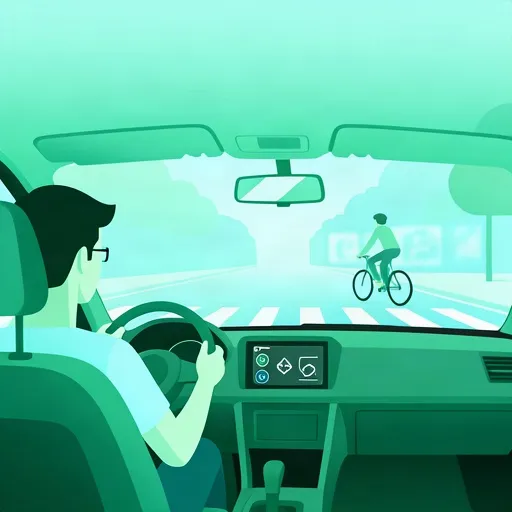
Article content overview
Mastering situational awareness—known in the Netherlands as omgevingsbewustzijn—is the single most effective tool you can use to pass the CBR theory and practical examinations. It goes far beyond simply memorizing the rules of the road; it requires an active, disciplined mindset that allows you to predict risks and navigate complex traffic scenarios with confidence. Whether you are preparing for your theory exam or your actual driving test, the examiners are looking for evidence that you are constantly processing your surroundings rather than reacting impulsively to them.
Mental focus is the core requirement for responsible road participation. When you are behind the wheel, your brain must function as a real-time information processor, constantly scanning for cyclists, pedestrians, other vehicles, and emerging hazards. Many candidates fall into the trap of thinking that road safety is merely about adhering to signs and road markings. While following these rules is the baseline, true "traffic insight" involves the ability to perceive and interpret the intentions of other road users, especially in situations where the rules are not explicitly defined.
The cognitive ability of a driver to constantly observe, process, and anticipate the movements of other road users and environmental factors, allowing for proactive rather than reactive driving decisions.
Being a "social driver" in the Dutch system means that you prioritize safety over your own convenience. This often involves adjusting your speed in advance, making eye contact with vulnerable road users, and anticipating potential mistakes made by others. By maintaining this high level of mental discipline, you not only improve your chances of passing the CBR exam but also ensure you are contributing to a safer environment for everyone on the road.
One of the most frequent reasons for failing the CBR practical exam is a lack of focus, often triggered by internal or external distractions. While most learners are aware that holding a mobile phone while driving is strictly prohibited and carries heavy penalties, many do not realize that other, legal behaviors can be equally detrimental to your exam performance.
Even if your phone is in a holder, using it to change music or check navigation can cause "cognitive tunneling." In the context of the CBR exam, this is viewed as a serious lapse in traffic awareness. If you lose focus on the road for even a few seconds, you may fail to notice a cyclist or a changing traffic light, resulting in an immediate failure of the practical test.
Distractions are not limited to electronics. Conversations with passengers, adjusting your radio, or even deep thought about your exam performance can pull your attention away from the environment. To pass your test, you must cultivate the habit of "non-stop scanning"—a technique where your eyes and mind are constantly moving between the mirrors, the road ahead, and the periphery of your vehicle.
Anticipation is the process of looking far enough ahead to identify hazards before they become critical. In a busy city environment, you should be looking at least 10 to 15 seconds into the future. By observing the flow of traffic at intersections and traffic lights, you can often predict the behavior of others long before you reach them. For example, if you see a cyclist approaching a priority-controlled intersection, you should already be scanning for signs that they might not stop or might drift into your path.
The concept of being a "social driver" is fundamental to the Dutch driving standards. This involves predicting that others may make mistakes and being prepared to help them out of a tight spot. For example, if you see a delivery driver struggling to merge into traffic, slowing down slightly to create a gap is considered an act of excellent traffic insight. This is exactly the kind of behavior that examiners reward during the practical test.
| Behavior Type | Defensive/Social Action | Exam Benefit |
|---|---|---|
| Distraction Management | Keep phone out of sight/use "Do Not Disturb" | Shows maturity and focus |
| Hazard Perception | Scanning 10-15 seconds ahead | Prevents sudden, jerky braking |
| Merging Traffic | Creating space for others | Demonstrates high traffic insight |
| Vulnerable Users | Giving wide berth to cyclists | Shows respect for road hierarchy |
To succeed, you must transform your driving habits into a consistent, automatic routine of safety and awareness. Practice sessions should focus on the mental aspect of driving just as much as the mechanical control of the vehicle. When you start your driving lessons, ask your instructor to evaluate your scanning frequency. If you are told that you are not looking around enough, prioritize this in every subsequent session until it becomes second nature.
Omgevingsbewustzijn (situational awareness) is the cornerstone of passing the CBR theory and practical exams, requiring constant 360-degree environmental scanning rather than reactive driving. The concept of 'social driving' means anticipating that others may make mistakes and adjusting your behavior to help them while prioritizing overall road safety. Effective hazard perception involves looking 10-15 seconds ahead at all times, monitoring vulnerable road users, and maintaining smooth speed adjustments based on traffic flow predictions. Cognitive tunneling—losing focus due to concentration on a single task like phone use or navigation—will cause immediate exam failure even if the behavior is legal. Developing automatic scanning habits and demonstrating proactive awareness of other road users are the specific behaviors CBR examiners assess.
A short set of high-value points that capture the most important ideas from this article.
Omgevingsbewustzijn is the ability to constantly observe, process, and anticipate traffic situations proactively rather than reacting impulsively
CBR examiners test whether you function as a 'social driver' who prioritizes safety over personal convenience
Non-stop 360-degree scanning is mandatory—your eyes and mind must constantly move between mirrors, road ahead, and vehicle periphery
Effective anticipation means looking at least 10-15 seconds ahead to identify hazards before they become critical
Even legal distractions like adjusting music or deep thought about exam performance can cause cognitive tunneling and exam failure
Cognitive tunneling occurs when intense focus on one task (like a phone) causes you to lose awareness of your surroundings
The 5-step scanning procedure: far distance → mirrors → vulnerable users → intersections/blind spots → speed adjustment
Vulnerable road users (cyclists, pedestrians) must be given extra attention and wide berth
CBR rewards proactive behaviors like creating space for merging drivers and anticipating others' mistakes
Distracted driving is one of the most frequent reasons for failing the CBR practical exam, not just illegal phone use
Assuming road safety is only about following signs and markings, ignoring the need for traffic insight
Using a phone in a holder for navigation or music, which still counts as cognitive tunneling during the exam
Failing to scan far enough ahead, resulting in sudden jerky reactions instead of smooth preventive adjustments
Ignoring cyclists and pedestrians at intersections or failing to predict their trajectories early
Getting absorbed in conversations or thoughts about exam performance instead of maintaining constant environmental awareness
Article content overview
A short set of high-value points that capture the most important ideas from this article.
Omgevingsbewustzijn is the ability to constantly observe, process, and anticipate traffic situations proactively rather than reacting impulsively
CBR examiners test whether you function as a 'social driver' who prioritizes safety over personal convenience
Non-stop 360-degree scanning is mandatory—your eyes and mind must constantly move between mirrors, road ahead, and vehicle periphery
Effective anticipation means looking at least 10-15 seconds ahead to identify hazards before they become critical
Even legal distractions like adjusting music or deep thought about exam performance can cause cognitive tunneling and exam failure
Cognitive tunneling occurs when intense focus on one task (like a phone) causes you to lose awareness of your surroundings
The 5-step scanning procedure: far distance → mirrors → vulnerable users → intersections/blind spots → speed adjustment
Vulnerable road users (cyclists, pedestrians) must be given extra attention and wide berth
CBR rewards proactive behaviors like creating space for merging drivers and anticipating others' mistakes
Distracted driving is one of the most frequent reasons for failing the CBR practical exam, not just illegal phone use
Assuming road safety is only about following signs and markings, ignoring the need for traffic insight
Using a phone in a holder for navigation or music, which still counts as cognitive tunneling during the exam
Failing to scan far enough ahead, resulting in sudden jerky reactions instead of smooth preventive adjustments
Ignoring cyclists and pedestrians at intersections or failing to predict their trajectories early
Getting absorbed in conversations or thoughts about exam performance instead of maintaining constant environmental awareness
Explore related topics, search based questions, and concepts that learners often look up when studying Mastering Situational Awareness for CBR. These themes reflect real search intent and help you understand how this topic connects to wider driving theory knowledge in the Netherlands.
Find clear and practical answers to common questions learners often have about Mastering Situational Awareness for CBR. This section helps explain difficult points, remove confusion, and reinforce the key driving theory concepts that matter for learners in the Netherlands.
It refers to your situational awareness—the ability to actively scan your surroundings, interpret the behavior of other road users, and anticipate potential risks before they become emergencies.
The CBR examiners look for your ability to remain attentive even in mundane situations, like waiting at traffic lights, to ensure you can detect hazards early and react appropriately.
While legal, hands-free devices still cause significant mental distraction, reducing your responsiveness and perception. Consistent focus requires removing all potential sources of distraction.
Yes. While rules are essential, situational awareness allows you to handle complex, unpredictable scenarios where rules alone cannot prevent an accident, such as helping correct the mistakes of others.
Start your targeted search now to explore a vast library of official Dutch driving theory articles and guides. Reinforce your understanding of specific traffic rules or road signs to ensure you are fully prepared for your upcoming CBR theory exam. Discover comprehensive explanations tailored for success.