
This lesson explores the physical principles of weight distribution and its impact on the stability of large goods vehicles. You will learn how proper load placement is essential for maintaining control, ensuring effective braking, and passing your Category C theory exam.
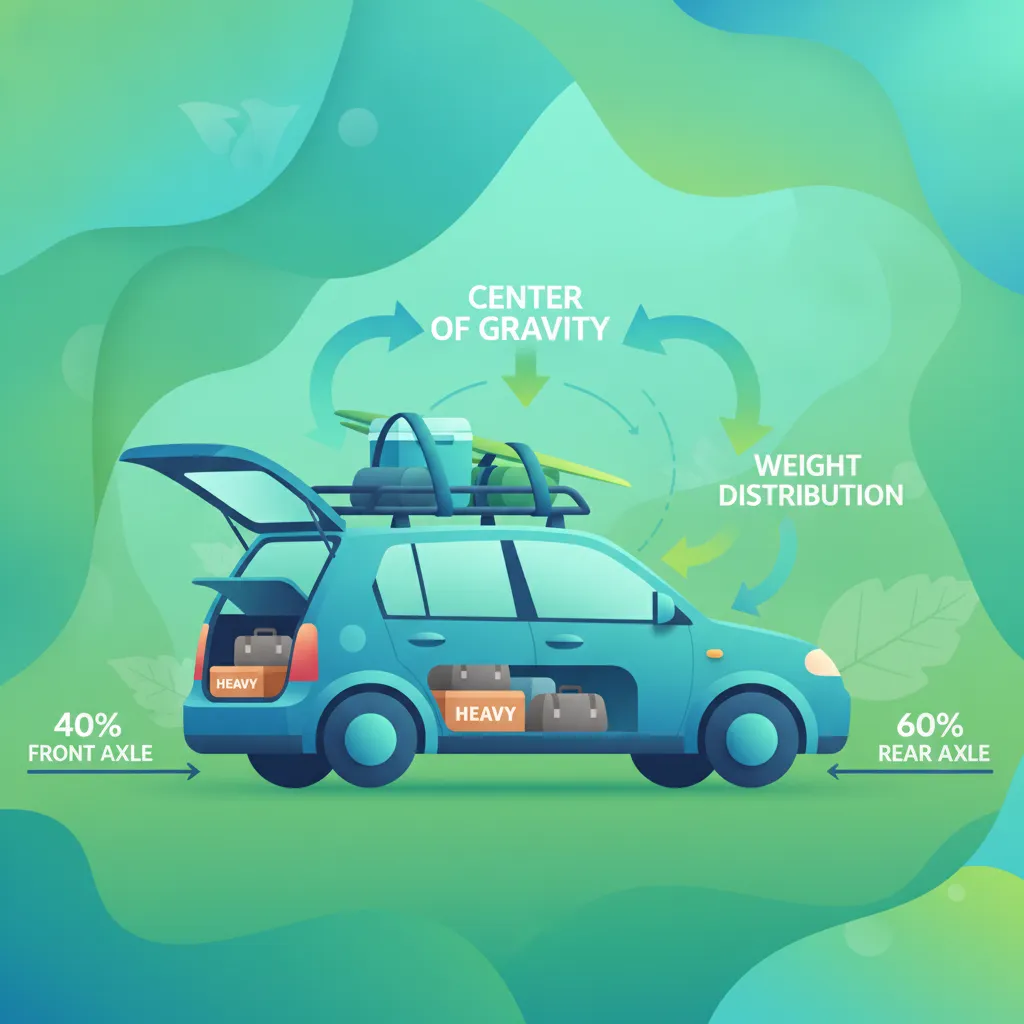
Lesson content overview
Operating a heavy goods vehicle (HGV) under a Category C licence requires more than excellent steering and road awareness. As a professional driver, you must understand the complex physics that govern how a heavy vehicle moves, turns, and stops. The way a vehicle’s cargo is loaded, balanced, and secured directly dictates its handling characteristics, stopping distance, and susceptibility to roll over.
This lesson covers the principles of weight distribution, axle overloading, and centre of gravity on heavy commercial vehicles. Mastering these concepts is essential to passing your Irish Goods Vehicle Driver Theory Test and operating safely and legally on public roads.
To operate an HGV safely, you must understand how physical forces act upon a large vehicle. Unlike a standard passenger car, the sheer mass and size of a Category C vehicle magnify every input—steering, braking, and accelerating. When a vehicle is loaded, its dynamic behaviour changes completely.
The Centre of Gravity (CoG) is the single, theoretical point where the combined weight of the vehicle and its cargo is concentrated. The height and lateral position of this point are critical to vehicle stability.
A common driver error is assuming that if the overall vehicle weight is within legal limits, the load is safe. In reality, a light but high-stacked load can be far more dangerous than a heavy, low-lying load due to its elevated CoG.
To visualize rollover limits, suspension designers and safety specialists refer to the Stability Triangle (sometimes conceptualized as a tipping pyramid). This is the geometric area formed by drawing imaginary lines connecting the contact patches of the vehicle's tyres.
For a rigid Category C vehicle, this boundary represents the physical limit of lateral stability. As long as the vehicle's CoG remains vertically projected within this stability base, the vehicle will remain upright.
However, during cornering, braking, or driving on a steep camber, the CoG shifts laterally or longitudinally. If the lateral force pushes the dynamic CoG outside the boundary of this stability triangle, the vehicle will inevitably tip over. This risk is amplified at higher speeds, on roundabouts, or during sudden swerving.
The geometric area formed by connecting the contact patches of the tyres on the road surface. For a vehicle to remain stable, its dynamic Centre of Gravity must project vertically within this boundary.
In physics, a Moment (or torque) is the rotational force created when a weight is applied at a distance from a pivot point. In the context of a goods vehicle, the pivot points are the axles and the longitudinal centerline of the chassis.
Every heavy commercial vehicle is designed to carry weight distributed across specific load-bearing structures. Controlling the individual weight on each axle is just as important as monitoring the overall weight of the vehicle.
The maximum permissible weight for each individual axle is specified by the manufacturer and is displayed on the vehicle's official plate (often located in the cabin or on the chassis). These limits are legally enforced in Ireland by the Road Safety Authority (RSA) and An Garda Síochána.
Exceeding the legal axle limit—even if the total weight of the vehicle is well below its Gross Vehicle Mass (GVM)—is a serious legal violation. For example, if you place a heavy, compact piece of industrial machinery entirely over the rear axle of a rigid truck, you may easily exceed the rear axle limit while remaining within the legal GVM of the vehicle.
Overloading a single axle causes immediate mechanical stress and severely degrades the vehicle's handling characteristics:
Maintaining the correct weight distribution ratio between the front (steering) axle and the rear (drive) axles is fundamental to stable vehicle dynamics.
Check the Vehicle Plate: Identify the maximum permitted weights for the front axle, rear axle(s), and overall GVM.
Position Heavy Items Centrally: Place the heaviest items of cargo low down, as close to the lateral centre line as possible, and ahead of the rear axle.
Secure the Load Against Shifting: Use lashings, blocking, or bracing to ensure the cargo cannot move during transport.
Verify Front Axle Weight: Ensure enough weight remains on the front axle to provide positive steering traction without exceeding its maximum rating.
When a load is placed too far forward, it creates a forward-biased weight distribution.
Conversely, placing too much cargo at the rear of the vehicle creates a rearward-biased weight distribution.
Danger of Rearward Weight Bias: A light steering axle is one of the most dangerous driving conditions in a heavy vehicle. If you experience steering that feels unusually light or unresponsive, stop immediately in a safe location and inspect your load distribution.
Under the Irish Road Traffic Acts and European Union regulations, the driver of a goods vehicle is legally responsible for ensuring that the vehicle is loaded safely and does not exceed its design or regulatory limits.
Understanding what not to do is vital to preventing accidents and avoiding costly fines or penalty points. Below are the ten most common weight-distribution and loading violations committed by HGV operators:
The dynamic stability of a Category C vehicle is heavily influenced by external variables. A load configuration that feels stable on a dry, straight road can become uncontrollable when environmental or situational factors change.
Rain, snow, ice, and grease drastically reduce the coefficient of friction between your tyres and the road.
A vehicle's mechanical condition interacts dynamically with its load.
When navigating steep slopes, gravity shifts the weight distribution of your vehicle.
Understanding these direct physical relationships will help you make safe decisions when supervising the loading of your vehicle:
As a professional Category C driver, memorize and apply these core principles of load distribution on every journey:
Explore all units and lessons included in this driving theory course.
Lesson content overview
Explore all units and lessons included in this driving theory course.
Explore search topics learners often look for when studying Load Distribution and Vehicle Stability. These topics reflect common questions about road rules, driving situations, safety guidance, and lesson level theory preparation for learners in Ireland.
Browse additional driving theory lessons that cover connected traffic rules, road signs, and common driving situations related to this topic. Improve your understanding of how different rules interact across everyday traffic scenarios.
Learn the official Irish regulations and mechanical principles for safely lashing, blocking, and bracing cargo. This guide explains how to prevent internal load shifting to maintain vehicle stability and comply with RSA commercial transport safety standards for all Category C license holders.

This lesson focuses on the practical mechanics of securing goods to prevent kinetic shift during sudden braking or evasive steering manoeuvres. It teaches the correct use of tensioning straps, chains, blocking bars, and friction-increasing mats according to Irish safety guidelines. Drivers will learn to perform rigorous pre-trip and en-route checks to guarantee that cargo remain secure throughout the transit.
Understand the specific handling risks when navigating narrow streets, tight turns, and urban environments with an HGV. This lesson explores how to manage blind spots, interact safely with vulnerable road users, and navigate infrastructure constraints while maintaining consistent vehicle stability in busy traffic settings.

This lesson addresses the unique environmental and logistical challenges faced during delivery stops in commercial town and city centers. It covers the legal frameworks governing municipal loading zones, double-parking hazards, and temporary pedestrian-only street restrictions. Drivers will acquire practical skills for managing traffic build-up, utilizing visual spotters, and securing the vehicle while unloading cargo.

Driving a coach through narrow urban streets or historic Irish town centers demands precise spatial judgment and low speed control. This lesson covers turning radii, rear tail-swing physics, and managing overhangs when navigating around tight, permanent obstacles. Drivers will learn to assess clearance gaps accurately, reducing damage risks to the vehicle exterior and public infrastructure.

Driving large vehicles through dense city traffic requires outstanding lane discipline, spatial awareness, and consistent patience. This lesson teaches drivers how to utilize public bus corridors, manage tight yellow box intersections, and handle narrow city streets. It focuses on predicting traffic pattern shifts to maintain service timetables while minimizing fuel waste and driver stress.

This lesson addresses the mechanical dynamics of turning long-wheelbase and articulated commercial vehicles at intersections, junctions, and roundabouts. It covers the necessity of deep cornering lines, early mirror checks, and correct signaling to warn vulnerable road users of wide turn maneuvers. Drivers will learn how to minimize rear cut-in and ensure the entire vehicle clears urban obstacles safely.

This lesson explains the extensive blind spots of heavy goods vehicles, buses, and other large trucks on Irish roads. It teaches Category AM riders how to maintain safe following distances and position themselves where truck drivers can see them. Proper space cushion management is emphasized to protect riders from the wind turbulence of passing trucks.

This lesson teaches professional drivers how to systematically map out travel routes that are compatible with heavy vehicle dimensions. It covers the limitations of consumer-grade GPS systems and emphasizes the use of specialized truck navigation systems that account for low bridges and load restrictions. Drivers will also learn to plan for congestion, access timing regulations, and proper entrance paths into commercial zones.
Find clear answers to common questions learners have about Load Distribution and Vehicle Stability. Learn how the lesson is structured, which driving theory objectives it supports, and how it fits into the overall learning path of units and curriculum progression in Ireland. These explanations help you understand key concepts, lesson flow, and exam focused study goals.
A high centre of gravity significantly increases the risk of the vehicle tipping over, especially when taking corners at speed. It also makes the vehicle less stable during sudden steering maneuvers or emergency braking.
Uneven load distribution puts excessive pressure on certain axles while leaving others underutilized, which can cause wheels to lock up prematurely or prevent the braking system from providing optimal stopping force. This leads to longer stopping distances and potential loss of control.
While the focus is often on principles, the test may include scenarios regarding the legal requirement to prevent load shift. You should be familiar with the risks that unsecured cargo poses to the vehicle's stability during transit.
Always distribute weight as evenly as possible across the axles, keeping the heaviest items low and centred within the cargo area. Following manufacturer guidelines and ensuring cargo is secured against movement are essential for maintaining vehicle balance.
Use the practice question search tool to pinpoint specific topics, road signs, or rules you need to master for your official Driver Theory Test. Refine your study strategy and ensure comprehensive preparation for all aspects of the Irish driving exam. Start your focused revision now and build confidence for your learner permit test.