
This lesson focuses on the complex demands of operating a goods vehicle within busy urban environments. You will learn how to interpret local delivery restrictions and apply professional scanning techniques to ensure safety in congested zones.
Lesson content overview
Operating a heavy goods vehicle (HGV) in busy urban environments is one of the most demanding tasks a professional driver will face. Navigating narrow medieval streets, managing tight delivery windows, and sharing limited space with vulnerable road users (VRUs) requires exceptional hazard perception, strict legal compliance, and spatial awareness.
This lesson provides comprehensive, textbook-quality coverage of the safe practices, legal frameworks, and practical strategies required for urban deliveries under the Irish Goods Vehicle Driver Theory Test Course (Category C).
Commercial town and city centres are dynamic hubs where logistical demands frequently clash with infrastructure limitations. As a Category C driver, your vehicle possesses significant weight, height, and length. These physical dimensions amplify the risks associated with urban driving, particularly during stops and low-speed manoeuvres.
The Danger of Low-Speed Manoeuvres: A large percentage of urban HGV incidents occur at speeds under 15 km/h during reversing, turning, or positioning for a delivery. The tight turning radiuses of city streets mean your vehicle’s rear overhang and blind spots require constant monitoring.
To operate safely, you must understand the interaction between your vehicle's physical footprint and the surrounding environment. Urban delivery routes often involve navigating around street furniture, low-hanging trees, historic archways, and overhead utility cables. Planning your approach and knowing your vehicle’s precise dimensions are essential prerequisites to entering any urban core.
Municipal loading zones are designated areas of the public road network set aside exclusively for the loading and unloading of goods. In Ireland, these zones are governed by local authority bylaws and national road traffic regulations. Understanding and respecting these zones is crucial to avoiding severe financial penalties, vehicle impoundment, and traffic disruption.
Loading bays are easily identifiable by both road markings and upright regulatory signage.
Double-parking—the practice of stopping a vehicle on the roadway alongside a line of parked vehicles—is one of the most common causes of artificial traffic congestion in urban centres. For Category C vehicles, double-parking poses severe safety and operational hazards.
Under Irish road traffic regulations, double-parking is generally illegal and constitutes an obstruction of the highway. There is a common misconception among commercial drivers that turning on hazard warning lights makes double-parking legal for "quick deliveries." This is incorrect.
Hazard Warning Lights Exception: Hazard warning lights must only be used to warn other road users of a temporary danger or obstruction (such as a breakdown). They do not exempt a driver from parking regulations, nor do they authorize double-parking on a public street.
If you must deliver to a premises where no loading bay is available, you must find a legal parking space nearby or return at a less congested time. Sacrificing safety for the sake of convenience is a direct violation of professional driving standards.
To improve the public realm and enhance pedestrian safety, many Irish cities and towns have designated historic or commercial shopping streets as pedestrian-only zones. Examples include Grafton Street and Henry Street in Dublin, Shop Street in Galway, and St. Patrick's Street in Cork.
Vehicles are strictly prohibited from entering pedestrianized zones during designated hours. However, local authorities recognize that businesses on these streets require deliveries. This has led to the implementation of delivery windows.
Pre-Trip Verification: Check the specific local authority bylaws for the destination town. Confirm the exact morning or evening delivery hours.
Plan Arrival Times: Structure your route so that you arrive with ample time to complete the delivery and exit the zone before the access window closes.
Drive at Walking Speed: When driving inside a pedestrian zone during permitted hours, maintain an extremely low speed (typically under 10 km/h). Keep hazard lights active and yield unconditional right-of-way to any pedestrians.
Avoid Reversing: Reversing in pedestrian-heavy areas is exceptionally hazardous. If reversing is unavoidable, you must use a competent visual spotter.
An HGV stopping to make a delivery can rapidly cause traffic build-up, especially on single-carriageway urban streets. As a Category C driver, you have a legal and professional obligation to minimize your impact on traffic flow while ensuring safety.
Urban deliveries often force drivers into situations with extremely limited visibility—such as reversing out of narrow alleyways, maneuvering around blind corners, or positioning close to light rail/tram lines. In these scenarios, a visual spotter (or banksman) is an indispensable safety asset.
A spotter’s primary role is to guide the driver safely through tight spaces and warn of approaching traffic, cyclists, or pedestrians.
Tramline Deliveries (e.g., Luas): Operating near tramlines requires extreme caution. Tram tracks cannot be blocked, and overhead live cables pose electrocution hazards for high-sided vehicles. Always utilize a spotter when maneuvering anywhere near light-rail infrastructure.
A stationary HGV undergoing loading or unloading presents unique safety hazards. Unsecured vehicles can roll away, and shifting cargo can cause severe injuries or road spills.
Even on seemingly flat urban streets, a heavy goods vehicle can roll if not properly anchored. This risk increases significantly on the steep gradients found in many Irish coastal and hilly towns.
Unloading cargo changes the weight distribution of your vehicle.
Safe delivery practices must adapt to changing weather, lighting, and environmental conditions.
| Environmental Factor | Hazard | Driver Adaptation / Safety Measure |
|---|---|---|
| Heavy Rain / Surface Water | Reduced tyre grip; obscured road markings; pedestrians rushing with umbrellas (blocking their vision). | Reduce speed; double-check all mirrors; exercise extreme caution near pedestrian crossings; verify loading bay markings carefully. |
| Night-Time / Low Light | Low visibility of pedestrians; difficulty seeing low-hanging branches or building projections. | Ensure all vehicle lights are clean and operational; use a high-visibility vest; use hazard lights only if positioned in a hazardous location. |
| School Zones (Drop-off/Pick-up) | High density of unpredictable children; double-parked parent cars; intense pedestrian activity. | Avoid deliveries during school start/end times; maintain absolute vigilance; keep speeds below 20 km/h; utilize all fresnel lenses and blind-spot mirrors. |
| Narrow Historic Streets | Risk of striking structural projections (archways, balconies, shop signs). | Know your exact vehicle height and width; proceed at walking pace; utilize a spotter to monitor overhead clearances. |
Understanding the direct consequences of your actions as a professional driver is key to developing safe habits.
As a professional Category C driver, your conduct in urban areas reflects on the entire transport industry. Managing delivery time pressures must never come at the expense of public safety or legal compliance.
Always plan your routes, respect municipal bylaws, secure your vehicle and cargo at every stop, and remain highly vigilant of the vulnerable road users sharing the urban space with you.
This lesson covers the safety and legal complexities of operating heavy goods vehicles in Irish urban delivery environments, including proper use of municipal loading zones governed by local authority bylaws with specific time restrictions, the illegality of double-parking even with hazard lights activated, and the strict delivery window requirements for pedestrianized streets such as Grafton Street or Henry Street. It emphasizes practical hazard awareness for low-speed manoeuvres where most urban HGV incidents occur, the critical role of visual spotters in eliminating blind spots during reversing and tight positioning, and mandatory vehicle security procedures including parking brake engagement, gear selection, and wheel chocking on gradients. The content also addresses adapting practices to environmental conditions such as heavy rain, night driving, school zones, and narrow historic streets with structural hazards.
A short set of high-value points that capture the most important learning from this lesson.
Municipal loading zones in Ireland are marked with white broken lines and the words 'LOADING' or 'LÁTHAIR LUCHTATE', with most imposing a strict 30-minute time limit for active loading or unloading only.
Double-parking is illegal under Irish road traffic regulations, and hazard warning lights do not exempt drivers from parking rules or authorize obstruction of the highway.
Pedestrianized streets like Grafton Street or Henry Street in Dublin permit HGV access only during designated delivery windows, typically early morning hours (e.g., 06:00–11:00), with CCTV and rising bollard enforcement.
Visual spotters must maintain constant visual contact with the driver; if the spotter cannot be seen in mirrors, the vehicle must stop immediately.
Wheel chocks must be used when loading or unloading an HGV on any gradient under RSA guidelines to prevent dangerous roll-away incidents.
Explore all units and lessons included in this driving theory course.
Loading bay permission ends immediately once loading or unloading ceases—using a bay for paperwork, breaks, or personal errands is illegal.
Outside specified operating hours, loading zones may revert to disc-parking or clearway restrictions; signage must always be checked.
Reversing in pedestrian-heavy areas is exceptionally hazardous; if unavoidable, a competent visual spotter is mandatory.
Hazard lights are only for warning of genuine temporary danger such as breakdowns—they have no legal effect on parking prohibitions.
Tail-lifts must never be left unattended in the lowered position as they create tripping and collision hazards for pedestrians and cyclists.
Treating a loading bay as a general parking space to complete administrative tasks, take CPC breaks, or run errands.
Assuming hazard lights authorize double-parking for quick deliveries—lights only warn of genuine hazards and do not override parking regulations.
Parking an HGV so that it overlaps into adjacent cycle lanes or bus lanes, creating immediate hazards for vulnerable road users.
Blocking yellow box junctions, pedestrian crossings, or emergency service access points while stationary for a delivery.
Leaving cargo unsecured after unloading stops—shifting load during subsequent cornering or braking can cause vehicle instability or crushing hazards when rear doors open.
Lesson content overview
A short set of high-value points that capture the most important learning from this lesson.
Municipal loading zones in Ireland are marked with white broken lines and the words 'LOADING' or 'LÁTHAIR LUCHTATE', with most imposing a strict 30-minute time limit for active loading or unloading only.
Double-parking is illegal under Irish road traffic regulations, and hazard warning lights do not exempt drivers from parking rules or authorize obstruction of the highway.
Pedestrianized streets like Grafton Street or Henry Street in Dublin permit HGV access only during designated delivery windows, typically early morning hours (e.g., 06:00–11:00), with CCTV and rising bollard enforcement.
Visual spotters must maintain constant visual contact with the driver; if the spotter cannot be seen in mirrors, the vehicle must stop immediately.
Wheel chocks must be used when loading or unloading an HGV on any gradient under RSA guidelines to prevent dangerous roll-away incidents.
Explore all units and lessons included in this driving theory course.
Loading bay permission ends immediately once loading or unloading ceases—using a bay for paperwork, breaks, or personal errands is illegal.
Outside specified operating hours, loading zones may revert to disc-parking or clearway restrictions; signage must always be checked.
Reversing in pedestrian-heavy areas is exceptionally hazardous; if unavoidable, a competent visual spotter is mandatory.
Hazard lights are only for warning of genuine temporary danger such as breakdowns—they have no legal effect on parking prohibitions.
Tail-lifts must never be left unattended in the lowered position as they create tripping and collision hazards for pedestrians and cyclists.
Treating a loading bay as a general parking space to complete administrative tasks, take CPC breaks, or run errands.
Assuming hazard lights authorize double-parking for quick deliveries—lights only warn of genuine hazards and do not override parking regulations.
Parking an HGV so that it overlaps into adjacent cycle lanes or bus lanes, creating immediate hazards for vulnerable road users.
Blocking yellow box junctions, pedestrian crossings, or emergency service access points while stationary for a delivery.
Leaving cargo unsecured after unloading stops—shifting load during subsequent cornering or braking can cause vehicle instability or crushing hazards when rear doors open.
Explore search topics learners often look for when studying Safe Practices for Urban Deliveries. These topics reflect common questions about road rules, driving situations, safety guidance, and lesson level theory preparation for learners in Ireland.
Browse additional driving theory lessons that cover connected traffic rules, road signs, and common driving situations related to this topic. Improve your understanding of how different rules interact across everyday traffic scenarios.
Learn the essential techniques for maintaining correct lane positioning and executing safe turns with articulated vehicles in narrow urban environments. This guide explains how to manage vehicle sweep paths and trailer tracking to avoid road furniture collisions and ensure safety when navigating tight city streets.
Large passenger vehicles must maintain consistent lane positioning to prevent side-swipe incidents and sustain smooth urban traffic patterns. This lesson covers standard lane selection rules, safe overtaking procedures, and how to use designated public transit corridors correctly. Drivers will learn the importance of checking mirrors continuously and planning lane changes well in advance.

This lesson outlines the legal and safety requirements for maintaining proper lane discipline on multi-lane roads, roundabouts, and motorways in Ireland. It teaches drivers how to account for lane width, manage trailer off-tracking, and position the cab to prevent encroachment on neighboring lanes. Drivers will master safe lane-changing strategies, signaling protocols, and traffic merging techniques.

This lesson addresses the mechanical dynamics of turning long-wheelbase and articulated commercial vehicles at intersections, junctions, and roundabouts. It covers the necessity of deep cornering lines, early mirror checks, and correct signaling to warn vulnerable road users of wide turn maneuvers. Drivers will learn how to minimize rear cut-in and ensure the entire vehicle clears urban obstacles safely.

Irish driving theory demands that drivers keep to the left-hand side of the road unless overtaking or turning right. This lesson explains how to maintain consistent lane discipline on multi-lane roads, how to perform safe lane changes, and the dangers of drifting. You will learn the safety sequence of checking mirrors, checking blind spots, signalling, and smoothly executing a lane change without disrupting trailing traffic.
Driving large vehicles through dense city traffic requires outstanding lane discipline, spatial awareness, and consistent patience. This lesson teaches drivers how to utilize public bus corridors, manage tight yellow box intersections, and handle narrow city streets. It focuses on predicting traffic pattern shifts to maintain service timetables while minimizing fuel waste and driver stress.
Bus lanes and cycle tracks are designed to encourage public transport and safe active travel in congested urban areas. This lesson explores the differences between with-flow and contra-flow bus lanes, detailing the restricted operating hours during which other vehicles are banned. You will understand when taxi drivers or emergency vehicles can use these lanes, and how to avoid costly traffic violations and safety risks.
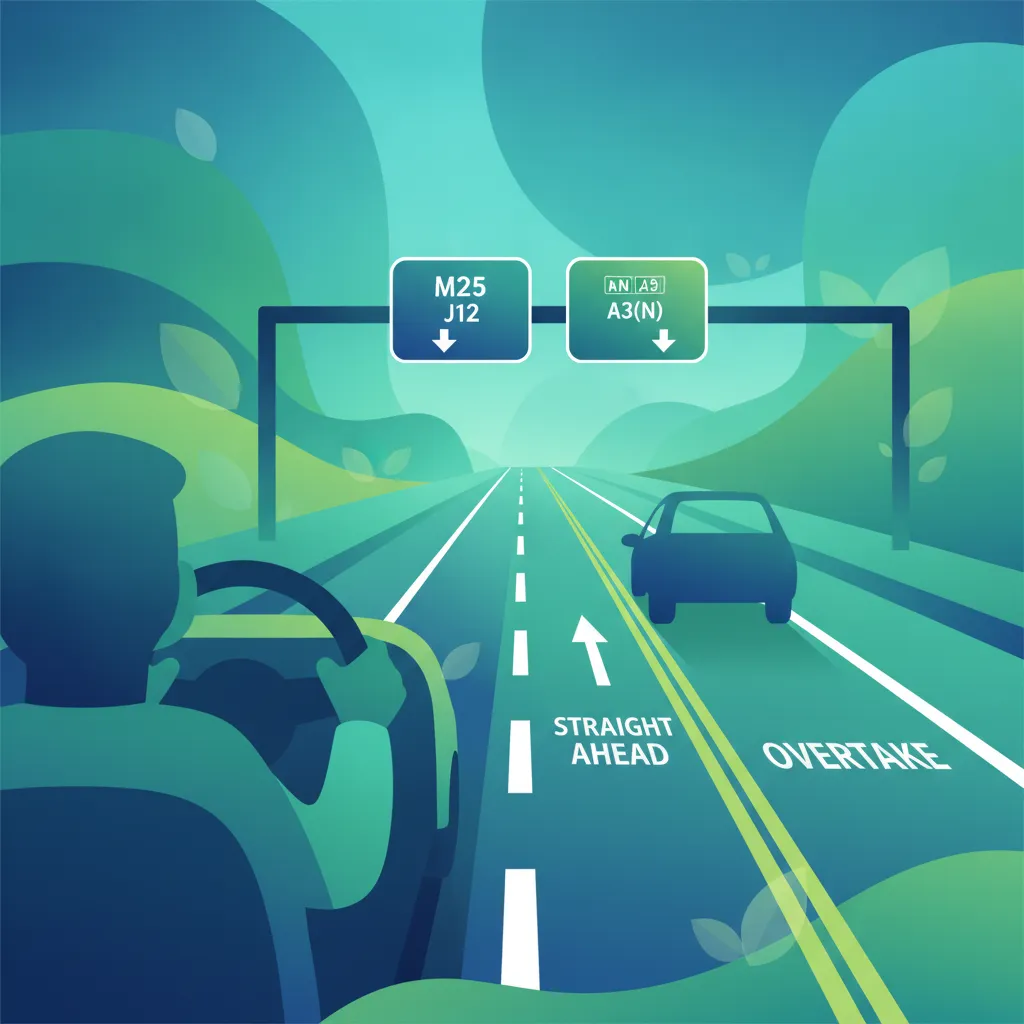
This lesson describes the legal regulations and driving conventions for operating heavy commercial vehicles on motorways and high-speed dual carriageways. It explains specific Irish motorway rules, including bans on heavy goods vehicles occupying the outer overtaking lanes. Drivers will learn to manage high-speed slip-road merging, maintain safe spacing buffers, and anticipate long-range changes in overall traffic flow.
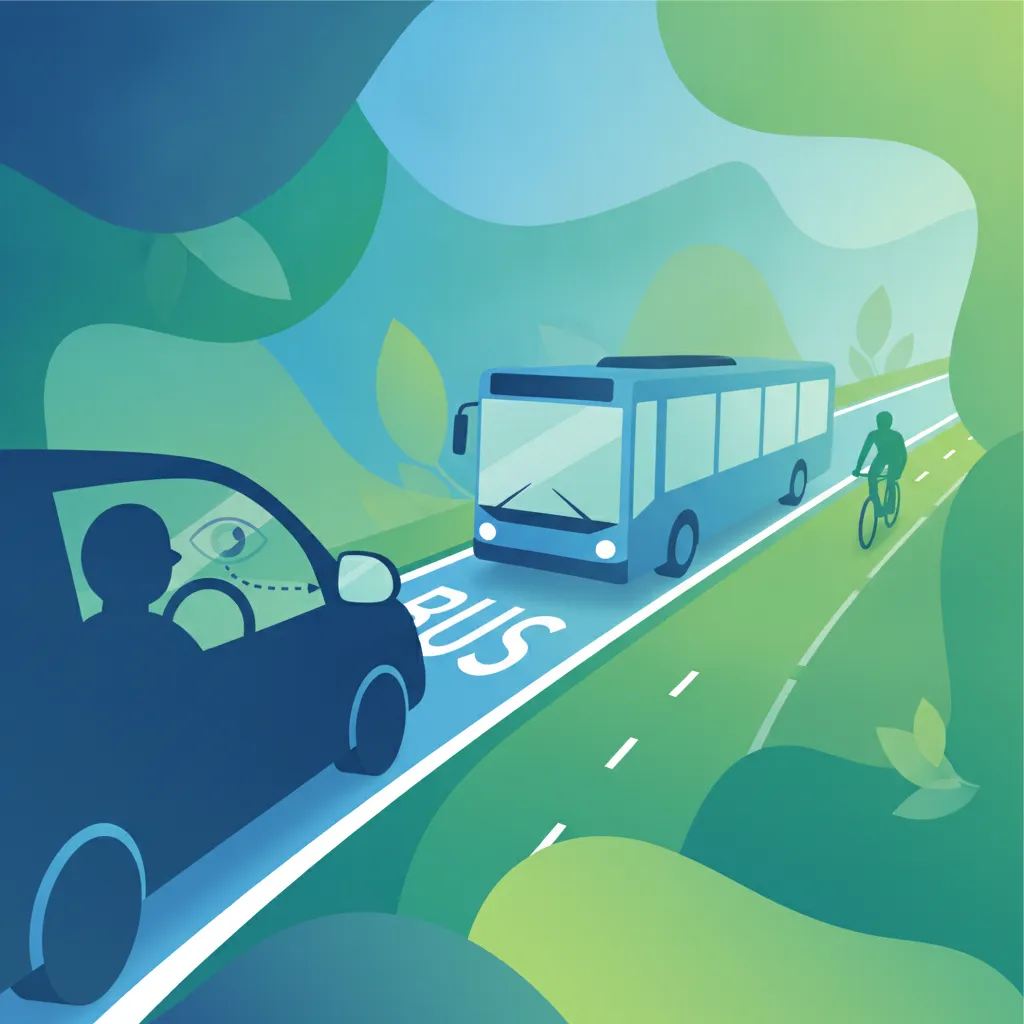
This lesson clarifies the legal regulations surrounding bus lanes and cycle lanes in Ireland, highlighting when motorcycles are permitted to enter them. It outlines how to cross these lanes safely when turning left, and how to scan for cyclists approaching from behind. Riders will learn to respect lane markings, observe signposted operational hours, and avoid blocking designated public transit lanes.

This lesson focuses on the physical mechanics of long-wheelbase and articulated vehicles when executing turns in restricted spaces. It explains concepts like swept path, rear overhang, and turning circles, which must be accounted for to prevent side-swiping collisions. Drivers will discover strategic route-planning techniques to avoid congested urban layouts and unsuitable rural corridors.

Navigating multi-lane roundabouts requires precise lane selection, continuous scanning, and timely signaling. This lesson teaches you the 'clock rule' for determining which lane to enter, how to yield to traffic already on the roundabout from your right, and when to activate your left indicator to exit. Mastering these procedures minimizes lane-drift accidents and ensures a seamless flow of traffic on busy roundabouts.
Explore the critical safety rules for sharing urban road space with pedestrians, cyclists, and motorcyclists. This lesson details the risks associated with large vehicle blind spots and provides theory-based guidance on hazard perception and defensive driving strategies to prevent accidents with vulnerable road users in Irish city centres.

This lesson focuses on managing the interactions between commercial goods vehicles and non-motorized or lightweight commuters. It outlines defensive driving techniques to utilize when overtaking cyclists, navigating pedestrian crossings, or negotiating shared junctions in Irish cities. Drivers will examine common cyclist behaviors at roundabouts and understand how to maintain massive safety margins to protect lives.

This lesson covers the rules governing zebra, pelican, and toucan pedestrian crossings, focusing on driver obligations and rider safety. It details how to interact safely with cyclists, personal mobility devices, and pedestrians in busy urban sectors. Motorcyclists will learn to scan pavement edges, yield right-of-way, and maintain safe overtaking distances when passing slower road users.

Motorcycles and bicycles are often hidden from view in the large blind spots of passenger buses and coaches during turns. This lesson covers safe lateral clearances when overtaking cyclists, recognizing advanced stop lines, and sharing narrow lanes. Drivers will understand how to signal clearly, giving riders enough room to navigate safely near busy public transit corridors.

This lesson explains the extensive blind spots of heavy goods vehicles, buses, and other large trucks on Irish roads. It teaches Category AM riders how to maintain safe following distances and position themselves where truck drivers can see them. Proper space cushion management is emphasized to protect riders from the wind turbulence of passing trucks.
Find clear answers to common questions learners have about Safe Practices for Urban Deliveries. Learn how the lesson is structured, which driving theory objectives it supports, and how it fits into the overall learning path of units and curriculum progression in Ireland. These explanations help you understand key concepts, lesson flow, and exam focused study goals.
You must prioritize legal parking regulations. Never obstruct traffic or pedestrian pathways unnecessarily. Always check for local loading restrictions or time-limited parking signs before attempting to stop.
Yes, many pedestrian-only zones have strict time-access windows for goods vehicles. You must consult local signage, as ignoring these can lead to fines, penalty points, or dangerous interactions with pedestrians.
Cargo must remain stable during short, frequent urban stops. Poorly secured loads can shift during sudden braking in traffic, which is a common cause of accidents and legal liability for professional drivers.
Use your mirrors effectively and, where possible, employ a spotter. Always perform a 360-degree scan before reversing or repositioning to ensure the area is clear of vulnerable road users like cyclists.
Use the practice question search tool to pinpoint specific topics, road signs, or rules you need to master for your official Driver Theory Test. Refine your study strategy and ensure comprehensive preparation for all aspects of the Irish driving exam. Start your focused revision now and build confidence for your learner permit test.