
This lesson guides Category AM riders on maintaining safe positioning when sharing the road with heavy goods vehicles and buses. By understanding large vehicle blind spots and the dangers of wind turbulence, you will learn to protect yourself and enhance your visibility on the road. Mastering these defensive techniques is a vital step in your preparation for the Irish Driver Theory Test.
Lesson content overview
As a Category AM license holder riding a moped or light quadricycle, you are one of the most vulnerable road users on Irish roads. A typical moped weighs between 80 kg and 100 kg, whereas an articulated Heavy Goods Vehicle (HGV) can weigh up to 44 tonnes. Because of this extreme difference in mass and size, interactions between mopeds and larger vehicles—such as trucks, concrete mixers, buses, and coaches—carry significant risk.
To ride defensively, you must understand how drivers of larger vehicles perceive the road. This lesson focuses on the physical limitations of large vehicles, including their extensive blind spots and the aerodynamics they generate. By mastering safe road positioning, maintaining an effective space cushion, and understanding your legal visibility obligations under the Road Safety Authority (RSA) guidelines, you can drastically reduce your risk of collision.
A blind spot is any area around a vehicle where the driver’s view is obstructed, either by the vehicle's bodywork, cargo, or mirror configuration. While passenger cars have small blind spots, large commercial vehicles have massive blind spots on all four sides. These areas are commonly referred to as "No-Zones."
If you ride in a No-Zone, you are functionally invisible to the driver. Relying on the driver to spot you is a dangerous assumption; you must take proactive responsibility for placing yourself where you can be seen.
In Ireland, we drive on the left side of the road. Consequently, the left-side blind spot of a truck or bus is the most hazardous area for a moped rider. This blind spot runs the entire length of the trailer and extends outward across multiple traffic lanes.
If an HGV needs to make a left turn at a junction, the driver must often swing wide to the right first to clear the corner. If you position your moped on the left side of the truck, thinking they are turning right or leaving space, you risk being crushed along the kerb when the truck cuts back to the left.
Although the driver sits on the right side of the cab in an Irish-registered vehicle, there is still a significant blind spot extending diagonally backward from the right-side door. When you begin an overtaking maneuver, you remain in this blind spot until your moped is well past the truck's cab.
Unlike passenger cars, trucks and buses do not have a center rear-view mirror because their trailer or passenger compartment completely blocks the rear window. The driver must rely solely on side mirrors. The rear blind spot is immense, extending up to 60 metres behind the vehicle. If you tailgate a truck, the driver has no physical way of knowing you are there. Additionally, your forward view is entirely blocked, preventing you from seeing road hazards, potholes, or sudden traffic stops ahead.
Because HGV drivers sit high above the road, the design of the cab creates a blind spot directly in front of the vehicle, extending approximately 3 to 5 metres. If you cut in too closely immediately after overtaking a truck, or if you squeeze directly in front of a truck at a red light, the driver may accelerate without ever realizing you are positioned right beneath their windscreen.
An area around a vehicle that cannot be directly or indirectly observed by the driver using their fitted mirrors or physical line of sight.
A space cushion is a safety buffer of empty space that you maintain around your moped at all times. It provides you with the crucial reaction time needed to evade hazards, and it ensures that you remain visible to surrounding traffic. When interacting with large vehicles, your space cushion must be significantly larger than when riding near standard passenger cars.
Under standard conditions, Irish road safety guidelines recommend a minimum following distance of two seconds behind the vehicle ahead. However, when following an HGV, bus, or coach, you must increase this to a minimum of four seconds.
Select a stationary landmark: Choose an upcoming road sign, lamp post, or gantry on the side of the road.
Start counting: As soon as the rear of the large vehicle passes that landmark, begin counting: "One thousand and one, one thousand and two, one thousand and three, one thousand and four."
Assess your position: If your moped passes the same landmark before you finish counting to four, you are riding too close. Gently roll off the throttle to increase your gap.
Maintaining this four-second gap serves two vital safety purposes:
Avoid riding parallel to large vehicles. If traffic slows down and forces you to ride alongside a truck or bus, adjust your speed to position yourself either well ahead of the cab or well behind the rear of the trailer. Never linger next to their tyres.
As a large vehicle moves down the road, it displaces a massive volume of air. This displacement creates powerful aerodynamic currents, commonly known as wind turbulence or aerodynamic wash.
Because a Category AM moped is lightweight, these air currents can easily destabilize your vehicle, pull you off course, or cause you to lose traction.
To protect yourself from aerodynamic wash, you must maximize your lateral (side) space cushion. When passing a large vehicle going in the opposite direction on a national road, or when overtaking one, position yourself as far to the left of your lane as is safely possible (without riding in the gutter or on loose debris).
Keep a firm but relaxed grip on the handlebars. A rigid, tense grip transfers every wobble of your body directly into the steering column, making the moped more unstable. Maintain steady throttle input to keep your gyroscopic stability high, and prepare to make minor, smooth steering corrections.
Under Irish traffic law and Road Safety Authority (RSA) regulations, moped and light quadricycle riders are subject to strict visibility standards. Because your vehicle has a narrow silhouette, it is easily lost in the background clutter of urban environments or hidden by the bulk of larger vehicles.
In Ireland, Category AM riders must ride with their dipped beam headlights on at all times—both day and night. This is a legal requirement designed to make your approach visible in the mirrors of larger vehicles.
Overtaking an HGV or a bus on a moped requires careful planning, patience, and precise execution. Due to the limited engine power of Category AM vehicles (restricted to a design speed of 45 km/h), overtaking maneuvers will take significantly longer than they would in a car.
Assess the road ahead: Ensure you have a clear, unobstructed view of the road ahead. Do not attempt to overtake near junctions, pedestrian crossings, bends, or brow of hills.
Establish your mirror link: Drop back to a 4-second following distance to verify that the truck driver can see you. Check your own mirrors and perform a blind-spot shoulder check (the 'lifesaver' look).
Signal your intent: Turn on your right indicator early to give ample warning to vehicles behind you and to the truck driver.
Move out smoothly: Move out into the overtaking lane well before you reach the rear of the truck. This prevents you from entering the rear blind spot and minimizes the impact of the rear wake turbulence.
Pass with a wide berth: Maintain as much physical lateral distance from the side of the truck as the lane allows (at least 1.5 metres). Brace yourself for the initial push of the bow wave as you clear the front of the cab.
Check and return: Do not pull back in front of the truck until you can see the entire front cab of the truck in your rear-view mirrors. This ensures you are clear of the front blind spot. Signal left, perform a left shoulder check, and return smoothly to your normal road position.
In city environments like Dublin, Cork, or Galway, transit buses make frequent stops. A common, dangerous error is attempting to squeeze between a stopping or stationary bus and the left-side kerb. Passengers may be stepping off the bus directly into your path, or the bus may suddenly pull away, trapping you in its blind spot against the concrete footpath.
Many riders fail to distinguish between a rigid truck and an articulated truck (a cab towing a separate, pivoting trailer). Articulated trucks are much longer and require a significantly longer overtaking window. Attempting to overtake an articulated truck on a 45 km/h moped without sufficient clear road ahead is a critical error that can result in a head-on collision with oncoming traffic.
When a school bus stops and activates its amber hazard warning lights or flashing red lights, children are boarding or disembarking. Squeezing past the bus in its blind spots can be fatal. You must stop at a safe distance behind the bus, ensuring you are visible in the driver’s mirrors, and wait until all passengers have cleared the road and the bus has moved off.
Irish weather is notoriously unpredictable, requiring riders to constantly adapt their safety margins.
Rain dramatically increases the hazards associated with large vehicles.
At night, the contrast between the powerful headlights of an HGV and your moped's single headlight can make you difficult to spot.
Understanding the why behind road safety guidelines makes it easier to apply them consistently in real-world scenarios.
+---------------------------------------------------------+
|                  CAUSAL RELATIONSHIP                     |
+---------------------------------------------------------+
| Rider maintains a 4-second gap behind an HGV             |
|                          │                              |
|                          ▼                              |
| Headlight is visible in the driver's side mirrors       |
|                          │                              |
|                          ▼                              |
| Driver is aware of the moped's presence                 |
|                          │                              |
|                          ▼                              |
| Driver checks mirrors and avoids turning into the moped   |
+---------------------------------------------------------+
Category AM riders must understand that large vehicles create massive blind spots where they are completely invisible to drivers; the left-side blind spot is particularly dangerous because HGVs swing wide right before turning left, crushing riders who thought they had room. Maintaining a four-second following distance ensures your headlight remains visible in the truck driver's mirrors, and never lingering alongside a truck's tyres prevents being caught in their side vacuum. Wind turbulence from large vehicles can push, pull, or buffet a lightweight moped, requiring a firm but relaxed grip and maximum lateral space. Always ride with dipped headlights on to meet RSA visibility requirements and make yourself identifiable in mirrors, especially given that an HGV weighing up to 44 tonnes cannot stop quickly if you enter their front blind spot.
A short set of high-value points that capture the most important learning from this lesson.
Large vehicles have massive blind spots on all four sides; never assume the driver can see you
The rear blind spot of an HGV extends up to 60 metres, making tailgating especially dangerous
The left-side blind spot is the most hazardous zone for Irish riders because trucks swing wide right before turning left
Wind turbulence from large vehicles can physically destabilize a lightweight moped through bow wave, side vacuum, and rear wake effects
The four-second following distance behind large vehicles ensures you remain visible in the driver's side mirrors
Explore all units and lessons included in this driving theory course.
If you cannot see the driver's face in their side mirror, they cannot see you
Articulated trucks are significantly longer than rigid trucks and require a much longer overtaking window
Dipped headlights must be on at all times—day and night—for legal visibility
When overtaking, do not return to your lane until you can see the entire front cab of the truck in your mirrors
In wet conditions, increase following distance from four seconds to at least eight seconds
Assuming drivers can see you in their mirrors without first verifying mirror visibility yourself
Attempting to squeeze past buses at stops, risking collision with disembarking passengers or the bus pulling away
Underestimating the length of articulated trucks and attempting overtakes without enough clear road ahead
Riding with a rigid, tense grip on the handlebars, which transfers every wobble from wind turbulence directly into the steering
Using high beams when following large vehicles, which can blind truck drivers through their large side mirrors
Lesson content overview
A short set of high-value points that capture the most important learning from this lesson.
Large vehicles have massive blind spots on all four sides; never assume the driver can see you
The rear blind spot of an HGV extends up to 60 metres, making tailgating especially dangerous
The left-side blind spot is the most hazardous zone for Irish riders because trucks swing wide right before turning left
Wind turbulence from large vehicles can physically destabilize a lightweight moped through bow wave, side vacuum, and rear wake effects
The four-second following distance behind large vehicles ensures you remain visible in the driver's side mirrors
Explore all units and lessons included in this driving theory course.
If you cannot see the driver's face in their side mirror, they cannot see you
Articulated trucks are significantly longer than rigid trucks and require a much longer overtaking window
Dipped headlights must be on at all times—day and night—for legal visibility
When overtaking, do not return to your lane until you can see the entire front cab of the truck in your mirrors
In wet conditions, increase following distance from four seconds to at least eight seconds
Assuming drivers can see you in their mirrors without first verifying mirror visibility yourself
Attempting to squeeze past buses at stops, risking collision with disembarking passengers or the bus pulling away
Underestimating the length of articulated trucks and attempting overtakes without enough clear road ahead
Riding with a rigid, tense grip on the handlebars, which transfers every wobble from wind turbulence directly into the steering
Using high beams when following large vehicles, which can blind truck drivers through their large side mirrors
Explore search topics learners often look for when studying Optimal Road Position Relative to Larger Vehicles. These topics reflect common questions about road rules, driving situations, safety guidance, and lesson level theory preparation for learners in Ireland.
Browse additional driving theory lessons that cover connected traffic rules, road signs, and common driving situations related to this topic. Improve your understanding of how different rules interact across everyday traffic scenarios.
Understand the essential rules for safe approach and navigation at junctions, roundabouts, and pedestrian crossings. This guide focuses on proper road positioning and understanding priority markers to ensure you navigate complex Irish intersections safely and according to official Rules of the Road standards.

Uncontrolled junctions represent a high-risk scenario because they lack physical signs, lines, or lights to dictate priority. This lesson covers the crucial 'priority to the right' principle, where you must yield to any traffic approaching from your right-hand side. You will learn the importance of reducing your speed, preparing to stop, and verifying the intentions of other drivers at these equal-status crossings.
This lesson covers the absolute rules of priority that regulate junctions, roundabouts, and pedestrian crossings in Ireland. It teaches riders when they must yield, who has right-of-way, and how to read Stop and Yield signs correctly. Understanding these priority hierarchies prevents collisions and maintains orderly, predictable movement at busy junctions.
This lesson details the sequential steps required to approach and exit junctions safely under the Irish driving rules. It teaches riders how to select the correct lane, utilize mirrors, apply early signals, and reduce speed appropriately. Effective observation strategies are highlighted to help riders identify crossing pedestrians or approaching side traffic.
This lesson focuses on the safe approach and execution of turns at T-junctions, staggered intersections, and blind crossroads. It explains the critical mirror-signal-manoeuvre routine and how to select the best position for maximum visibility to cross-traffic. Motorcyclists will learn to identify potential hazards like vehicles pulling out suddenly or turning across their direct path.
This lesson teaches the fundamental principles of priority and right-of-way at controlled and uncontrolled intersections across Ireland. It explains the legal obligations at yield signs, stop lines, and when meeting oncoming traffic turning across your lane. Motorcyclists will learn to carefully verify other drivers' intentions rather than assuming they will yield the correct right-of-way.
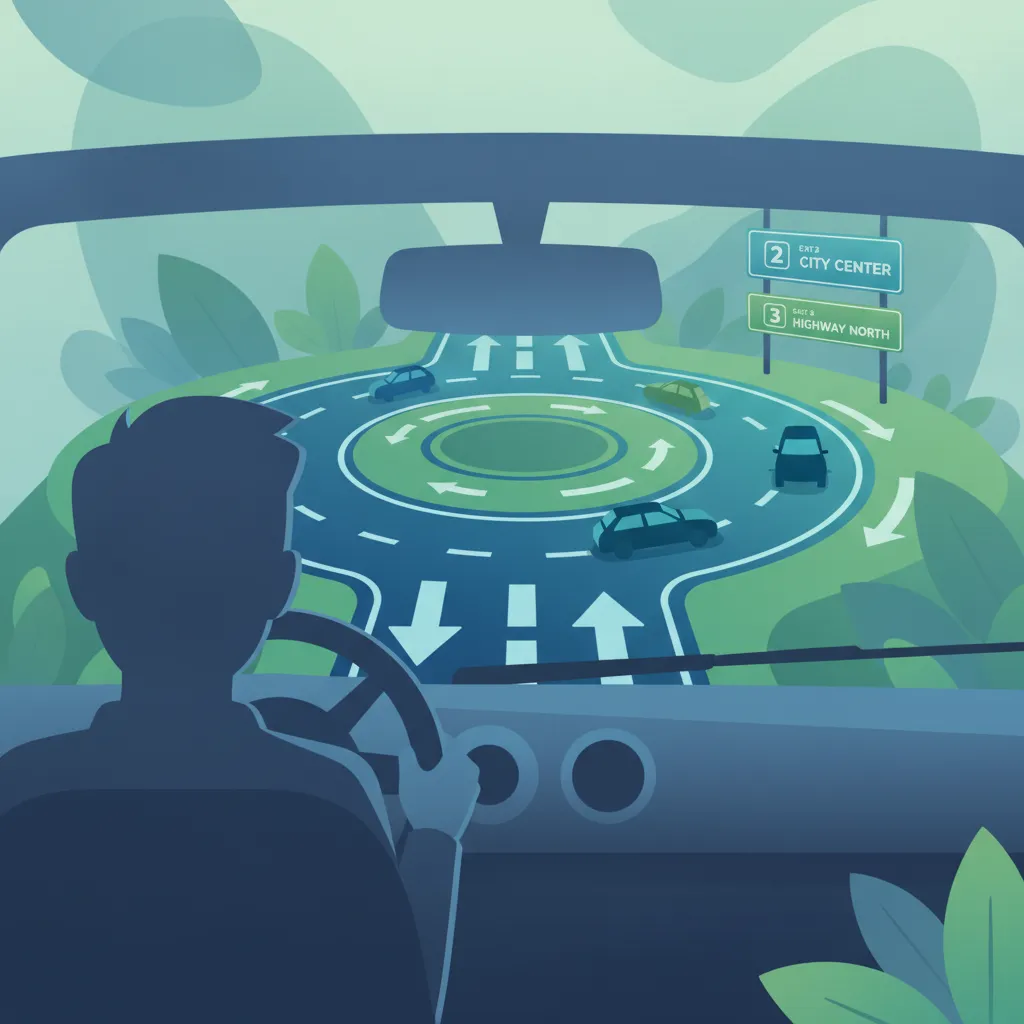
Navigating multi-lane roundabouts requires precise lane selection, continuous scanning, and timely signaling. This lesson teaches you the 'clock rule' for determining which lane to enter, how to yield to traffic already on the roundabout from your right, and when to activate your left indicator to exit. Mastering these procedures minimizes lane-drift accidents and ensures a seamless flow of traffic on busy roundabouts.
This lesson covers correct procedures for navigating roundabouts, which present significant risks for Category AM riders. It details lane selection rules, timely indicator signals for exiting, and the importance of checking blind spots before shifting lanes. Riders will learn to safely share the roundabout with large vehicles and vulnerable road users.

Irish driving theory demands that drivers keep to the left-hand side of the road unless overtaking or turning right. This lesson explains how to maintain consistent lane discipline on multi-lane roads, how to perform safe lane changes, and the dangers of drifting. You will learn the safety sequence of checking mirrors, checking blind spots, signalling, and smoothly executing a lane change without disrupting trailing traffic.
Right-of-way rules establish a clear order of precedence when the paths of two or more vehicles cross. This lesson explains how traffic on a major road has priority over traffic emerging from a minor road, and the general rule of yielding to oncoming vehicles when turning right. You will develop a solid understanding of how to approach intersections defensively, assessing speed and distance to make safe decisions.
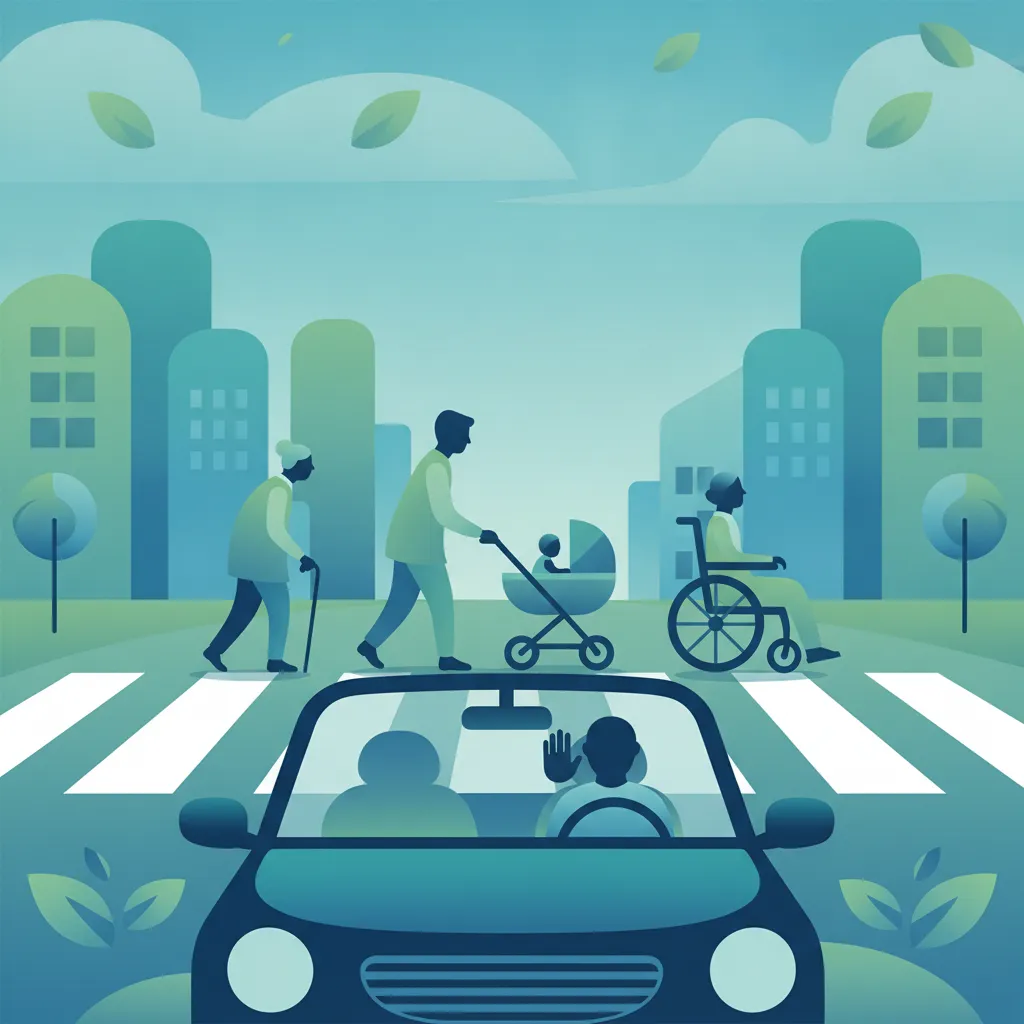
Children, the elderly, and disabled individuals often require extra time and understanding when navigating road networks. This lesson outlines special safety hazards, such as children unexpectedly running into school zones, or senior citizens needing longer times to cross wide junctions. You will learn how to recognise visually impaired pedestrians by their white canes or guide dogs, and the absolute requirement to drive slowly and patiently.
Learn how to identify common road hazards such as surface risks, poor weather conditions, and peer pressure. This lesson explains how to maintain an effective space cushion and anticipate dangerous traffic situations to improve your defensive riding skills in various Irish road environments.

This lesson teaches riders how to actively identify and eliminate blind spots through proper mirror adjustment and physical shoulder checks. It explains the concept of a safety cushion, which represents the defensive space maintained around the moped at all times. Managing these zones ensures adequate reaction time and mitigates the impact of sudden braking.

This lesson explores common surface hazards encountered on municipal and rural Irish roads, including loose gravel and wet leaves. It explains how these surface conditions rapidly reduce tyre traction and affect overall handling and braking control. Riders will learn visual scanning techniques to identify these hazards early and execute safe evasion maneuvers.
This lesson highlights the importance of smooth throttle adjustments for maintaining traction and stability on a moped. It teaches riders how to anticipate potential road hazards early, reducing the need for sudden emergency braking. Developing strong observation habits allows riders to adjust their speed smoothly and respond safely to traffic changes.
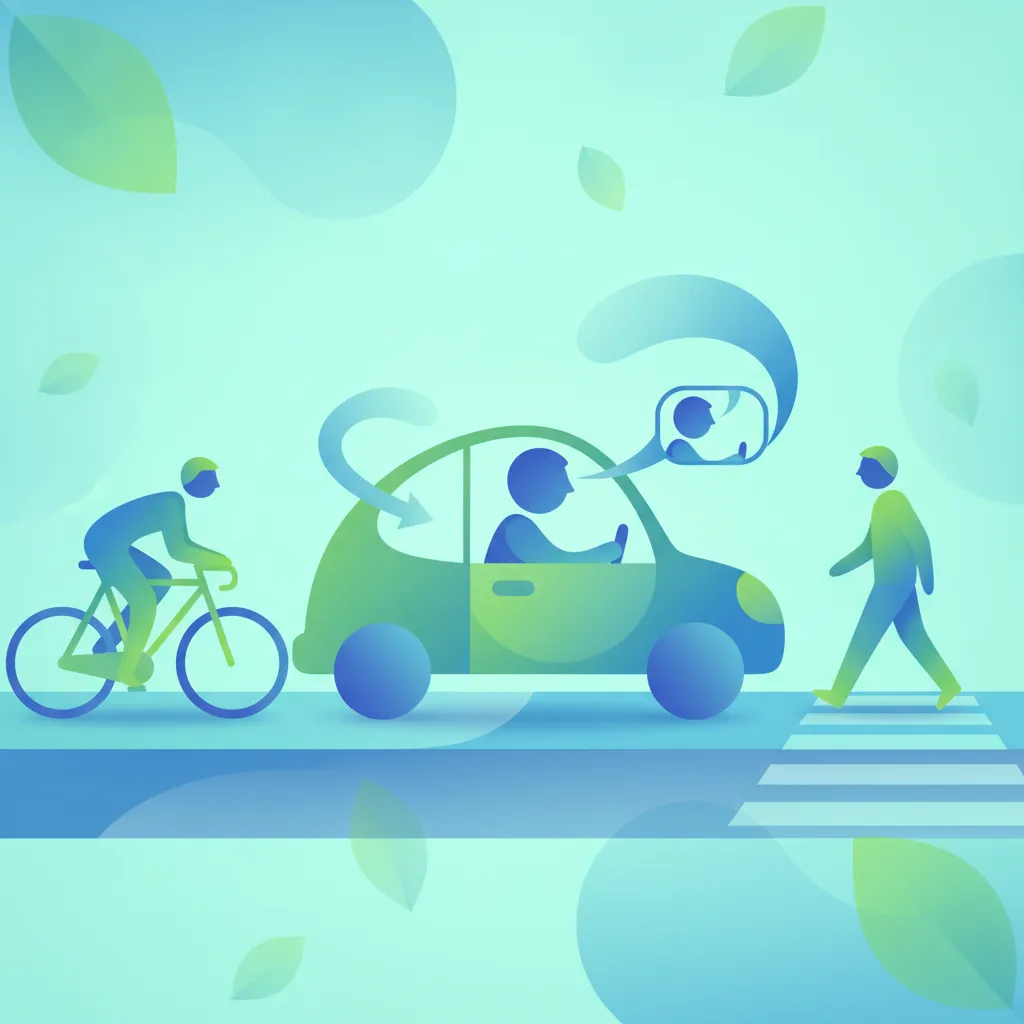
This lesson provides actionable strategies for Category AM riders to remain visible, focusing on lane positioning and eye contact. It teaches how to avoid riding in the blind spots of larger vehicles and how to signal early and clearly. Cultivating a proactive attitude toward road visibility helps prevent collisions and builds mutual respect on Irish roads.
This lesson covers correct procedures for navigating roundabouts, which present significant risks for Category AM riders. It details lane selection rules, timely indicator signals for exiting, and the importance of checking blind spots before shifting lanes. Riders will learn to safely share the roundabout with large vehicles and vulnerable road users.

This lesson outlines how motorcyclists should respond when permanent road signs are dirty, damaged, or hidden by overgrown trees and hedges. It introduces the temporary signage, warning cones, and detour markers commonly deployed at active roadwork zones in Ireland. Riders will learn to read the road ahead defensively, reducing speed when visual information is incomplete or compromised.
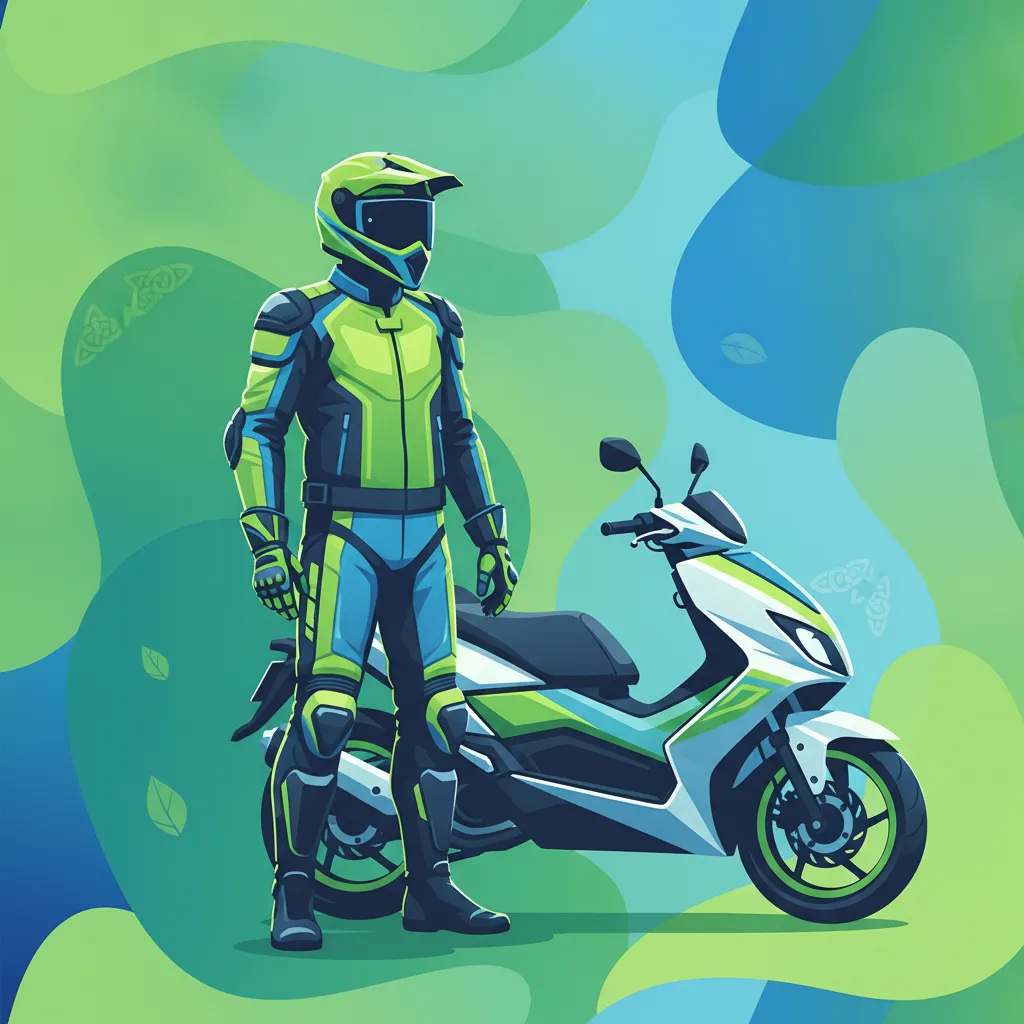
This lesson explores the safety benefits of abrasion-resistant jackets, gloves, trousers, and boots designed for moped riders. It explains how integrated body armour shields critical impact zones, such as shoulders, elbows, and knees, from severe injury. Additionally, it provides guidance on selecting clothing appropriate for the damp and cold Irish weather.
This lesson emphasizes the critical importance of being highly visible to other road users under various lighting conditions. It reviews the legal requirements for front and rear lights on Category AM vehicles and the active use of reflective materials. Proper maintenance of lighting systems is discussed to ensure continuous operation during adverse weather.

This lesson explains the physics of cornering, focusing on lean angles, speed selection, and body positioning on a moped. It teaches riders how to assess road curves, adjust their speed prior to entering a turn, and handle slippery cambers. Mastering these cornering principles is essential for avoiding lose-of-control accidents on winding rural Irish roads.
This lesson details the use of daytime running lights to raise a rider's profile during daylight hours on Irish roads. It discusses the installation guidelines, legal restrictions, and safety benefits of auxiliary lighting systems on mopeds. Special care must be taken to prevent dazzling oncoming traffic while ensuring the vehicle remains highly recognizable.
Find clear answers to common questions learners have about Optimal Road Position Relative to Larger Vehicles. Learn how the lesson is structured, which driving theory objectives it supports, and how it fits into the overall learning path of units and curriculum progression in Ireland. These explanations help you understand key concepts, lesson flow, and exam focused study goals.
Large vehicles have significant blind spots along their sides. If you are riding in these areas, the driver cannot see you, making it extremely dangerous when they change lanes or turn, as they may unintentionally move into your path.
When a large vehicle passes you at speed, it creates a powerful wave of air or 'buffeting'. On a light moped, this turbulence can destabilize you or push you toward the kerb, so maintaining a safe gap is crucial.
No. Following too closely reduces your view of the road ahead and prevents the driver from seeing you in their mirrors. Always keep a safe following distance where you can clearly see the truck's wing mirrors.
Avoid pulling up alongside a large vehicle that is waiting at a junction, especially if it is indicating to turn. It is safer to hold back until you are certain of the vehicle's intended path to avoid being caught in a 'left hook' collision.
Use the practice question search tool to pinpoint specific topics, road signs, or rules you need to master for your official Driver Theory Test. Refine your study strategy and ensure comprehensive preparation for all aspects of the Irish driving exam. Start your focused revision now and build confidence for your learner permit test.