
This lesson guides you through the critical safety requirements for securing cargo in Category C goods vehicles. You will learn the technical methods to prevent load shifting, which is vital for both passing your Irish Driver Theory Test and ensuring road safety.

Lesson content overview
Ensuring that cargo remains completely stationary during transit is one of the most critical responsibilities of a professional heavy goods vehicle (HGV) driver. In the Irish Road Safety Authority (RSA) Category C theory framework, mastering the mechanics of load securement is not just a matter of passing an examination; it is a vital safeguard against catastrophic road accidents.
When a large vehicle undergoes sudden braking, rapid acceleration, or sharp evasive steering maneuvers, the forces acting upon its cargo are immense. If the load is inadequately secured, these kinetic forces will cause the cargo to shift, instantly altering the vehicle's centre of gravity, handling characteristics, and braking efficiency. This lesson provides a comprehensive guide to the physics, equipment, legal regulations, and practical procedures required to guarantee that cargo remains safe and secure throughout every journey.
To understand why securement is so strictly regulated, drivers must first understand the physical forces at play when a truck is in motion. When a vehicle travels at a constant speed, the cargo possesses momentum. If the vehicle suddenly changes speed or direction, the cargo, according to the laws of inertia, attempts to continue moving in its original path.
Two primary types of kinetic forces act on vehicle cargo:
The Low-Speed Fallacy: A common and dangerous misunderstanding among novice drivers is that cargo does not need heavy securement for short, low-speed trips. In reality, a sudden stop at just 20 km/h can generate more than enough forward inertia to send an unsecured pallet crashing through the driver's cab headboard.
In Ireland, load security is governed by strict statutory instruments designed to protect all road users, particularly vulnerable road users like cyclists and pedestrians who are highly exposed if cargo falls into the roadway.
Specifically, Part III, Sections 27 and 28 of the Regulations of Road Vehicles (RVV) 1990 mandate that all loads carried by a goods vehicle must be securely tied down or otherwise contained.
Under Irish law, cargo must be secured in such a manner that it cannot shift or move more than 300 mm (30 centimetres) in any direction under any driving conditions, including emergency braking and sharp steering maneuvers.
Any movement greater than this threshold is legally considered an insecure load. Furthermore, the securing systems used must be designed specifically for cargo retention, kept in excellent working order, and capable of resisting the maximum permissible deceleration forces of the vehicle.
No single securement method is suitable for every type of cargo. Professional drivers must select and combine different techniques to create a redundant, highly secure restraint system.
High-tensile synthetic webbing straps are the most common securing devices used in modern transport. They are highly flexible, lightweight, and capable of securing a wide variety of boxed, palletised, or crated goods.
For heavy, rigid, or sharp-edged cargo—such as structural steel, heavy machinery, or raw timber—synthetic straps are highly susceptible to cutting and stretching. In these cases, heavy-duty alloy steel chains must be used.
Blocking involves placing physical barriers tightly against the cargo to prevent horizontal movement.
Friction is the driver's greatest ally in load securement. A high coefficient of friction between the cargo and the vehicle floor significantly reduces the amount of tensioning force required from straps or chains.
A securement system is only as good as the driver's diligence in maintaining it. Drivers must establish a systematic, repeatable routine for inspecting and adjusting their securing equipment.
Inspect Equipment Condition: Before loading, check all tensioning straps for cuts, tears, chemical damage, or frayed edges. Ensure ratchet buckles operate smoothly and lock securely.
Verify Anchorage Points: Inspect the vehicle's built-in lashing rings and anchor plates. Ensure they are free of deep rust, cracks, or welds that could compromise their load-bearing capacity. Never anchor straps to unrated side rails or structural uprights.
Verify Load Distribution: Ensure the cargo is positioned to distribute weight evenly across the axles, keeping the center of gravity as low as possible.
Apply Mechanical Tension: Tighten all straps or chains systematically. Ensure that tension is applied evenly across the cargo to avoid pulling the load to one side.
Check Driver Visibility: Ensure that the secured cargo, tarpaulins, or securing devices do not obstruct your view through any window or mirror, and do not cover any vehicle lights, reflectors, or registration plates.
Once the journey has commenced, the driver's responsibility does not end. Vibration, road bumps, and changes in atmospheric conditions (such as moisture swelling wooden pallets) can cause straps to stretch or cargo to settle, reducing tension.
Initial Check: Stop and inspect the load security after driving a short distance (typically within the first 10 to 20 kilometres), as this is when initial load settling is most likely to occur.
Post-Event Inspection: Immediately pull over in a safe location to inspect the cargo if you have had to perform an emergency braking maneuver, make a sharp evasive turn, or felt a significant jolt or bump in the road.
Periodic Checks: On long-haul journeys, perform visual and physical tension checks during every mandatory rest break or change of driver.
Understanding common failure points helps professional drivers proactively avoid dangerous scenarios on Irish roads.
Using everyday items such as thin ropes, cords, or bungee straps to secure heavy commercial loads is a severe violation. These materials do not have certified load ratings, degrade rapidly in UV light, and stretch significantly under tension, allowing cargo to exceed the legal 300 mm movement limit almost instantly.
Securing high-tension straps to non-structural or unrated parts of the lorry, such as the aluminium side boards, mudguard brackets, or thin external rails, is highly dangerous. Under load, these components will bend or shear off entirely, releasing the cargo.
When cargo shifts forward under heavy braking, it can easily break through the front headboard, directly threatening the driver's cab. Conversely, lateral shifting can slam heavy cargo against the side doors of a box van or curtainsider, breaking the door hinges or tearing the side curtains. This can cause the cargo to spill directly onto the roadway, endangering passing traffic.
Heavy vehicle dynamics change constantly based on external driving conditions. Professional drivers must dynamically adjust their securement strategies based on the following variables:
Rain, snow, and ice drastically reduce the coefficient of friction on the trailer bed. A load that remains stationary on a dry timber deck may easily slide when wet. In wet weather, drivers must use more securing straps than minimum calculations require and heavily rely on rubber friction mats.
Driving on winding rural Irish roads or negotiating frequent roundabouts exposes the vehicle to repetitive, alternating lateral forces. Motorway driving, on the other hand, involves high sustained speeds where wind turbulence can lift loose tarpaulins or light loads. Securement must be adapted to resist the specific challenges of the planned route.
Articulated vehicles (Category CE) experience complex lateral pivoting forces. A shift in cargo on an articulated trailer can trigger "jackknifing," where the trailer pushes the tractor unit sideways. Extra care must be taken to secure cargo tightly to prevent any lateral movement that could initiate this loss of control.
Explore all units and lessons included in this driving theory course.
Lesson content overview
Explore all units and lessons included in this driving theory course.
Explore search topics learners often look for when studying Securing Cargo and Preventing Shift. These topics reflect common questions about road rules, driving situations, safety guidance, and lesson level theory preparation for learners in Ireland.
Browse additional driving theory lessons that cover connected traffic rules, road signs, and common driving situations related to this topic. Improve your understanding of how different rules interact across everyday traffic scenarios.
Understand how physical forces like inertia, centrifugal force, and gravity affect cargo stability during sharp cornering and emergency braking. This guide explains how center of gravity changes and vehicle handling characteristics are influenced by load distribution and weight management in heavy goods vehicles operating on Irish roads.
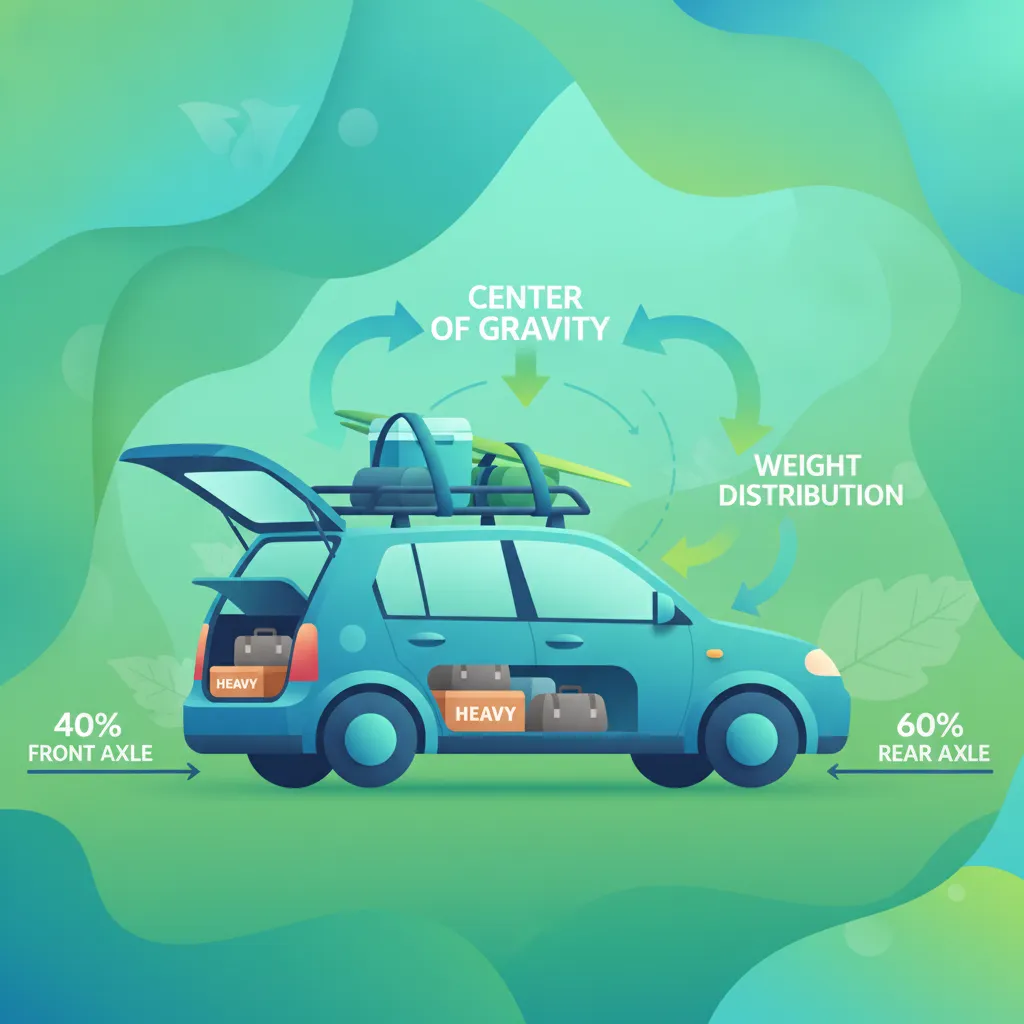
This lesson explains the physical principles of weight distribution and axle overloading on heavy commercial vehicles. It examines how a high centre of gravity increases tipping risks during cornering and alters overall braking effectiveness. Drivers will discover methods for positioning cargo to distribute weight evenly, ensuring optimal steering control and stable vehicle dynamics.

As passenger numbers change throughout a service shift, a heavy vehicle suspension, center of gravity, and steering responsiveness adapt dynamically. This lesson covers load balancing, the physical risks of overloading, and how uneven weight distribution compromises stability during turns. Drivers will learn to perform regular axle weight assessments to comply with Irish transport safety rules.

Carrying heavy loads or towing trailers significantly alters a car's handling, acceleration, and braking characteristics. This lesson outlines the physics of load distribution, explaining why you must secure cargo to prevent shifting and keep the vehicle's centre of gravity low. You will learn about legal roof rack weight limits, safe trailer coupling practices, and how to adjust your driving style when towing.
Explore the specific challenges of operating heavy goods vehicles in urban environments, including interactions with vulnerable road users and navigating tight delivery zones. Learn how to maintain load security while managing the unique pressures of stop-start driving, tight maneuvering, and high-frequency delivery cycles in busy city traffic.

This lesson addresses the unique environmental and logistical challenges faced during delivery stops in commercial town and city centers. It covers the legal frameworks governing municipal loading zones, double-parking hazards, and temporary pedestrian-only street restrictions. Drivers will acquire practical skills for managing traffic build-up, utilizing visual spotters, and securing the vehicle while unloading cargo.

This lesson teaches professional drivers how to systematically map out travel routes that are compatible with heavy vehicle dimensions. It covers the limitations of consumer-grade GPS systems and emphasizes the use of specialized truck navigation systems that account for low bridges and load restrictions. Drivers will also learn to plan for congestion, access timing regulations, and proper entrance paths into commercial zones.
Find clear answers to common questions learners have about Securing Cargo and Preventing Shift. Learn how the lesson is structured, which driving theory objectives it supports, and how it fits into the overall learning path of units and curriculum progression in Ireland. These explanations help you understand key concepts, lesson flow, and exam focused study goals.
Load shift changes the vehicle's centre of gravity suddenly. This can cause the vehicle to become unstable during cornering, braking, or lane changes, potentially leading to a rollover or loss of steering control.
Yes, straps must be in good condition, free from fraying, and have a clear label indicating their lashing capacity. They must be tensioned correctly to provide the required restraint force without damaging the cargo.
Always check that load restraint devices remain tight and that the cargo has not moved from its original position. Use designated stopping points to perform these visual inspections safely.
No, friction mats are a supplementary safety measure designed to increase the grip between the cargo and the vehicle bed. They must be used in conjunction with appropriate restraint systems like straps or chains.
Use the practice question search tool to pinpoint specific topics, road signs, or rules you need to master for your official Driver Theory Test. Refine your study strategy and ensure comprehensive preparation for all aspects of the Irish driving exam. Start your focused revision now and build confidence for your learner permit test.