
This lesson explores the essential physics and legal requirements for transporting cargo and towing trailers in Ireland. You will learn how to maintain vehicle stability, secure loads properly to avoid shifting, and adjust your driving techniques for the added weight and length of a trailer.
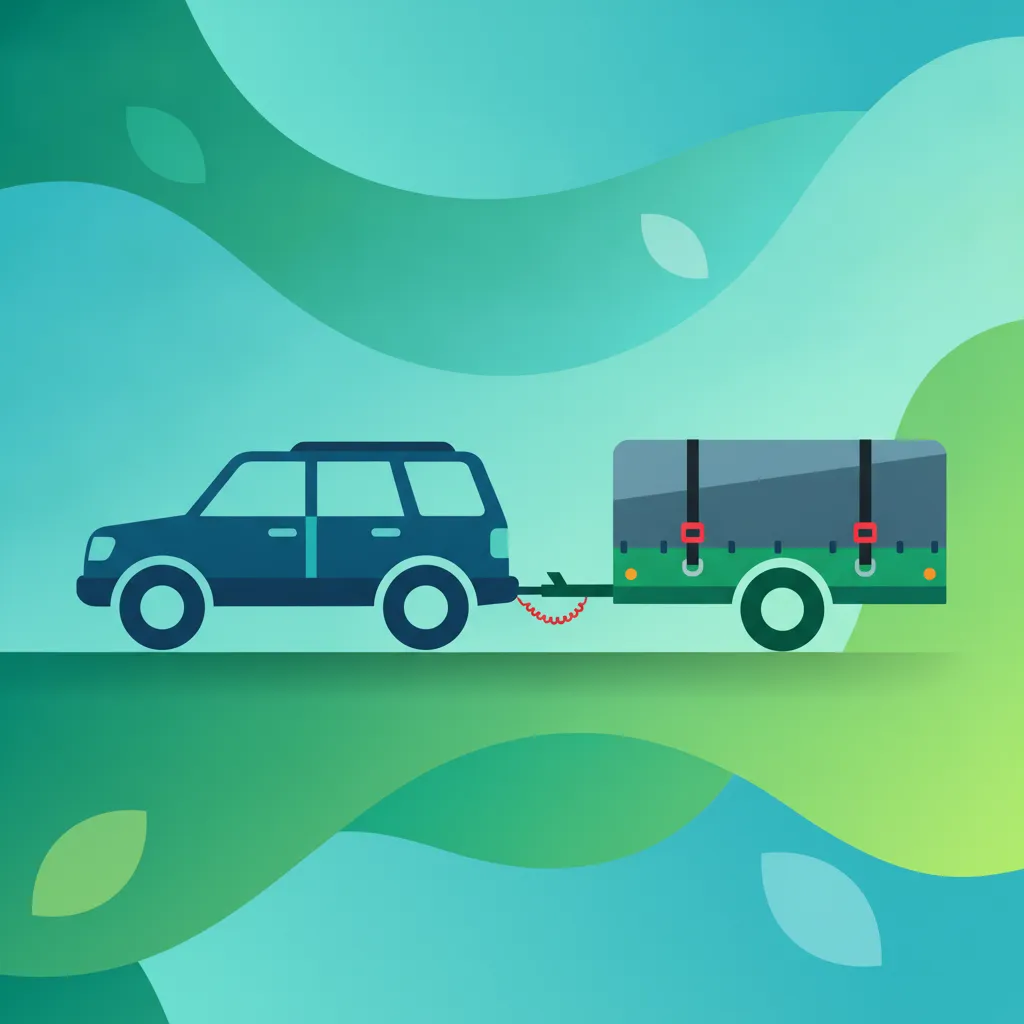
Lesson content overview
Carrying heavy loads or towing a trailer changes how a passenger car handles, accelerates, and stops. For anyone preparing for the Irish Driver Theory Test (Category B), understanding the physical forces at play and the strict legal frameworks governing vehicle loads is essential. Improperly secured cargo or poorly balanced trailers can lead to catastrophic losses of control, vehicle rollovers, and structural damage.
This lesson covers the principles of vehicle dynamics, legal requirements for roof racks and towing capacities, safe trailer coupling practices, and tactical driving adjustments needed when operating a loaded or towing vehicle on Irish roads.
To operate a loaded vehicle safely, a driver must understand basic vehicle dynamics. When you place cargo inside a car, on its roof, or in a trailer, you introduce new forces that directly alter how the car interacts with the road.
The theoretical point where the entire mass of a vehicle and its load is concentrated. A lower and more central Centre of Gravity provides maximum vehicle stability, whereas a high or offset Centre of Gravity significantly reduces handling efficiency and increases rollover risks.
When a vehicle is empty or carries passengers low in the cabin, its Centre of Gravity remains low. If you place heavy items on a roof rack or pile them high inside the vehicle, the CoG rises.
When cornering, centrifugal force pushes the vehicle outward. If the CoG is high:
Therefore, you must always pack the heaviest items as low as possible, placing them on the floor of the cabin or boot, directly between the vehicle's axles.
Proper load distribution means balancing the weight evenly over the front and rear axles, as well as side-to-side.
The Road Safety Authority (RSA) and Irish road traffic regulations state that all loads carried on or in a vehicle must be secured so that they cannot shift, fall, or cause danger to other road users.
A shifting load is a highly dangerous driving hazard. Under braking or cornering, unsecured cargo will slide, instantly shifting the vehicle’s weight and altering its handling characteristics. In a collision, unsecured cabin items become high-velocity projectiles.
Place Heavy Items Low: Always put heavy luggage or equipment flat on the boot floor, pushed up against the rear passenger seatbacks to limit forward movement.
Use Dedicated Anchors and Straps: Utilize the built-in metal cargo tie-down points in your vehicle’s boot with high-tensile tensioning straps (ratchet straps).
Avoid Inadequate Restraints: Never rely on elasticated bungee cords or lightweight ropes to secure heavy, rigid items. Bungee cords stretch under force, allowing cargo to shift or break free entirely.
Deploy Cargo Nets: For loose or light items, use a cargo net stretched over the boot space to prevent objects from bouncing or flying forward.
Carrying loads on the roof is a practical way to transport bulky items, but it demands strict adherence to safety limits.
Roof Loading Rule: Always place your roof cargo centrally and as low as possible. If you are carrying a light but bulky item (like a kayak or bicycle), ensure it is secured at both the front and rear of the vehicle to prevent aerodynamic lift from pulling the rack off the roof at high speeds.
To tow a trailer legally and safely in Ireland, you must understand your licence privileges and the towing limits of your specific vehicle.
A standard Category B passenger car licence allows you to drive a car or light commercial vehicle up to 3,500 kg Maximum Authorised Mass (MAM).
The maximum weight of a vehicle or trailer including its maximum permitted load, fuel, and passengers, as specified by the manufacturer. It is also known as Gross Vehicle Weight (GVW).
Under a Category B licence, you are permitted to tow a trailer under either of the following two conditions:
If you wish to tow a trailer that exceeds these combined weight limits, you must obtain a Category BE licence.
Never assume your vehicle is legally allowed to tow a trailer just because a tow bar is fitted. You must inspect your vehicle's manufacturer plate (often found on the door pillar or under the bonnet) or check the owner's manual for two vital figures:
Exceeding these limits voids your insurance, overstrains the vehicle’s transmission and brakes, and constitutes a serious road traffic offence.
Before setting off, the connection between the towing vehicle and the trailer must be thoroughly checked. Improperly coupled trailers can detach at high speeds, causing severe accidents.
A towed load drastically alters your vehicle's stopping capabilities. Physics dictates that adding mass increases momentum, requiring much greater force—and distance—to bring the vehicle to a stop.
In Ireland, the law mandates trailer braking systems based on the trailer's weight:
Even with functional trailer brakes, the stopping distance of a vehicle towing a trailer is significantly longer than that of a solo car.
Driving with a trailer or a heavy load requires a completely different tactical approach. Abrupt maneuvers or driving at excessive speeds can destabilize the vehicle-trailer combination instantly.
Trailer sway, often called "snaking," occurs when the trailer oscillates side-to-side behind the towing vehicle. This is an incredibly dangerous phenomenon that can escalate into a complete loss of control.
How to Recover from Trailer Sway: If your trailer begins to snake, do not apply the brakes hard and do not try to steer out of the sway. Sudden braking or steering adjustments will worsen the oscillation. Instead, ease off the accelerator pedal gradually, keep the steering wheel pointed straight, and let the vehicle naturally decelerate until the trailer stabilizes.
Because of their length, slower acceleration, and increased stopping distances, towing vehicles face unique overtaking restrictions.
Drivers frequently make critical loading and towing errors. Being aware of these common pitfalls can help you avoid fines, points on your licence, or serious accidents.
Before starting any journey with a heavily loaded vehicle or a trailer, always run through this essential checklist:
| Category | Key Checkpoint | Safety Goal |
|---|---|---|
| Loads | Placed low, centered, and secured with high-tensile ratchet straps. | Lowers the Centre of Gravity and prevents weight shifts. |
| Roof Racks | Within manufacturer limits; does not block the driver's windshield view. | Prevents structural damage and preserves visibility. |
| Coupling | Hitch locked; breakaway cable or safety chain attached; jockey wheel raised and clamped. | Prevents trailer detachment and runaway hazards. |
| Lights | Brake lights, indicators, and tail lights working in sync. | Ensures visibility and legal compliance. |
| Brakes | Proper function of inertia brakes (for trailers >750 kg MAM). | Facilitates safe stopping on all road surfaces. |
| Tyres | Pressures adjusted to the manufacturer's "fully laden" specification. | Prevents tyre blowouts and maintains grip. |
| Driving | Speed reduced; following distance increased to at least 4 seconds. | Compensates for increased momentum and stopping distances. |
This lesson covers the essential physics and legal rules for safely carrying loads and towing trailers in Ireland. You must understand how weight distribution affects vehicle stability and braking, including the risks of a raised centre of gravity and improper axle loading. The legal framework covers Category B towing limits (750 kg or combined 3,500 kg MAM), mandatory trailer braking for trailers over 750 kg MAM, and specific motorway lane restrictions for towing vehicles. Safe towing also requires proper coupling procedures, working lights, correct tongue weight to prevent sway, and significantly increased following distances. These principles are directly relevant to the RSA Driver Theory Test and to safe, legal driving once licensed.
A short set of high-value points that capture the most important learning from this lesson.
Load the heaviest cargo as low and centrally as possible to keep the vehicle's centre of gravity low and prevent rollover during cornering.
Category B licence permits towing a trailer up to 750 kg MAM, or a heavier trailer provided the combined MAM does not exceed 3,500 kg.
Roof loads significantly increase wind sensitivity and must never exceed the vehicle manufacturer's specified limit (typically 50–100 kg including the rack).
Trailer braking is mandatory for any trailer exceeding 750 kg MAM, using an inertia braking system that activates when the tow vehicle slows.
If trailer sway begins, ease off the accelerator gradually and keep the steering straight; sudden braking or steering corrections will worsen the oscillation.
Explore all units and lessons included in this driving theory course.
A rear-heavy load reduces front tyre grip causing understeer, while a front-heavy load can cause oversteer and instability.
Breakaway cables on braked trailers and safety chains on unbraked trailers provide secondary attachment if the hitch fails.
Increase your following distance to at least 4 seconds when towing, and further on wet or slippery roads.
When towing on a three-lane motorway, you must stay in the left or middle lane and cannot use the outer overtaking lane.
Check tyre pressures against the vehicle's 'fully laden' specification when carrying maximum load or towing.
Relying on bungee cords or household ropes to secure heavy loads instead of using proper ratchet straps with adequate tensile strength.
Forgetting that the roof rack and roof box weight both count toward the manufacturer's maximum roof load limit.
Loading a trailer rear-heavy, which reduces tongue weight and causes dangerous trailer sway at speed.
Assuming any tow bar means the vehicle can legally tow any trailer without checking the specific braked and unbraked towing capacities.
Not adjusting tyre pressures for a laden vehicle, leading to under-inflation, overheating, and risk of blowout.
Lesson content overview
A short set of high-value points that capture the most important learning from this lesson.
Load the heaviest cargo as low and centrally as possible to keep the vehicle's centre of gravity low and prevent rollover during cornering.
Category B licence permits towing a trailer up to 750 kg MAM, or a heavier trailer provided the combined MAM does not exceed 3,500 kg.
Roof loads significantly increase wind sensitivity and must never exceed the vehicle manufacturer's specified limit (typically 50–100 kg including the rack).
Trailer braking is mandatory for any trailer exceeding 750 kg MAM, using an inertia braking system that activates when the tow vehicle slows.
If trailer sway begins, ease off the accelerator gradually and keep the steering straight; sudden braking or steering corrections will worsen the oscillation.
Explore all units and lessons included in this driving theory course.
A rear-heavy load reduces front tyre grip causing understeer, while a front-heavy load can cause oversteer and instability.
Breakaway cables on braked trailers and safety chains on unbraked trailers provide secondary attachment if the hitch fails.
Increase your following distance to at least 4 seconds when towing, and further on wet or slippery roads.
When towing on a three-lane motorway, you must stay in the left or middle lane and cannot use the outer overtaking lane.
Check tyre pressures against the vehicle's 'fully laden' specification when carrying maximum load or towing.
Relying on bungee cords or household ropes to secure heavy loads instead of using proper ratchet straps with adequate tensile strength.
Forgetting that the roof rack and roof box weight both count toward the manufacturer's maximum roof load limit.
Loading a trailer rear-heavy, which reduces tongue weight and causes dangerous trailer sway at speed.
Assuming any tow bar means the vehicle can legally tow any trailer without checking the specific braked and unbraked towing capacities.
Not adjusting tyre pressures for a laden vehicle, leading to under-inflation, overheating, and risk of blowout.
Explore search topics learners often look for when studying Securing Loads, Towing, and Vehicle Stability. These topics reflect common questions about road rules, driving situations, safety guidance, and lesson level theory preparation for learners in Ireland.
Browse additional driving theory lessons that cover connected traffic rules, road signs, and common driving situations related to this topic. Improve your understanding of how different rules interact across everyday traffic scenarios.
Learn how towing a trailer affects your vehicle's braking distances, cornering stability, and lane positioning. This guide explains essential Irish road safety rules for maintaining control of heavy combinations, managing trailer sway, and adjusting your speed for different road conditions to ensure a safe journey for all road users.

This lesson provides a comprehensive guide to reversing large vehicles and backing trailer setups safely into loading docks and industrial bays. It analyzes the mechanical physics of trailer articulation, steering inputs, and how to utilize modern backup cameras, mirrors, and assistants. Drivers will examine critical safety protocols, including visual checks and slow-speed controls, to avoid collisions with fixed objects.
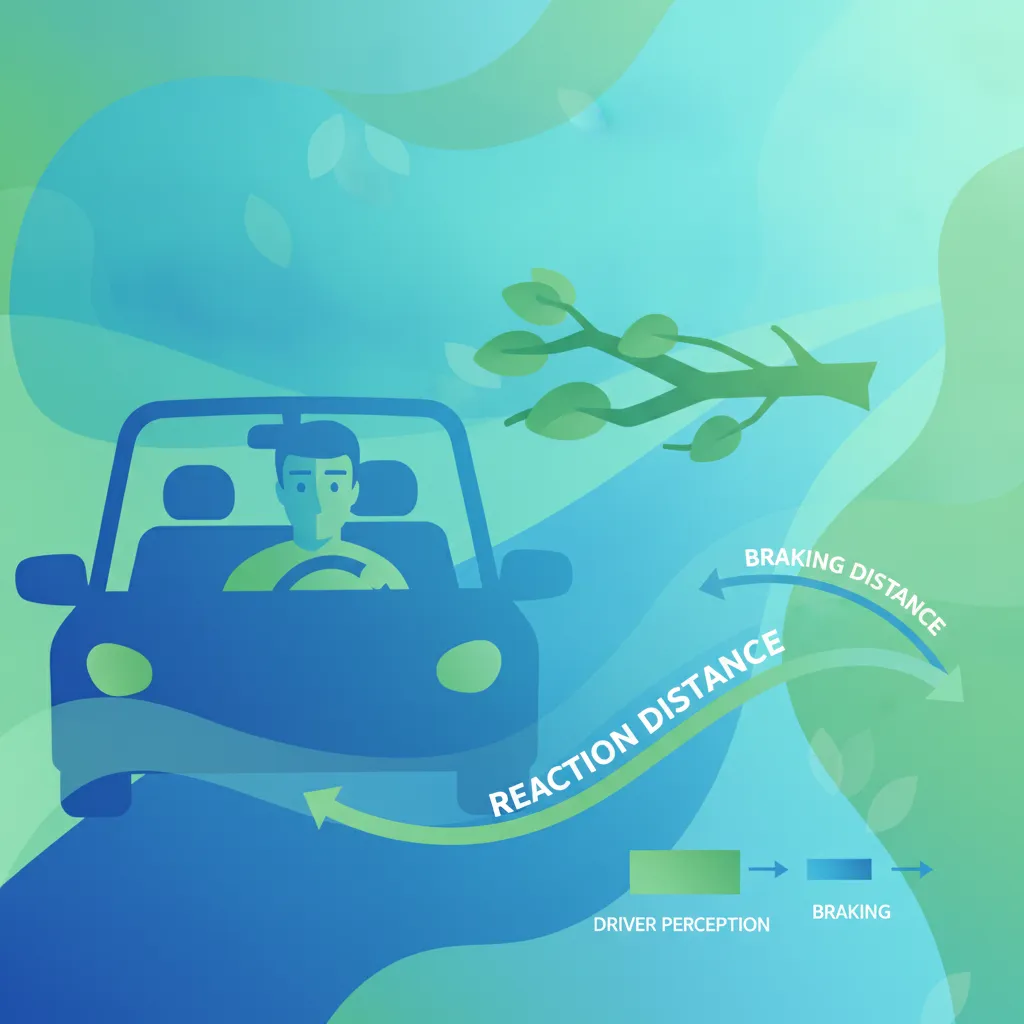
This lesson details how total stopping distance scales with vehicle mass, explaining the critical combination of perception-reaction delay and mechanical braking time. It covers the operation of main air-brake systems, auxiliary engine retarders, and trailer-coupling brake setups. Drivers will learn to maintain safe following distances and apply progressive braking patterns to avoid dangerous brake fade.

This lesson explores the safe operation of heavy transport vehicles during severe meteorological hazards typical of the Irish climate. It teaches techniques for adjusting speed and doubling following distances to prevent loss of steering traction and control on waterlogged or icy roadways. Drivers will understand how to manage lateral aerodynamic forces from crosswinds on high-sided goods vehicles.
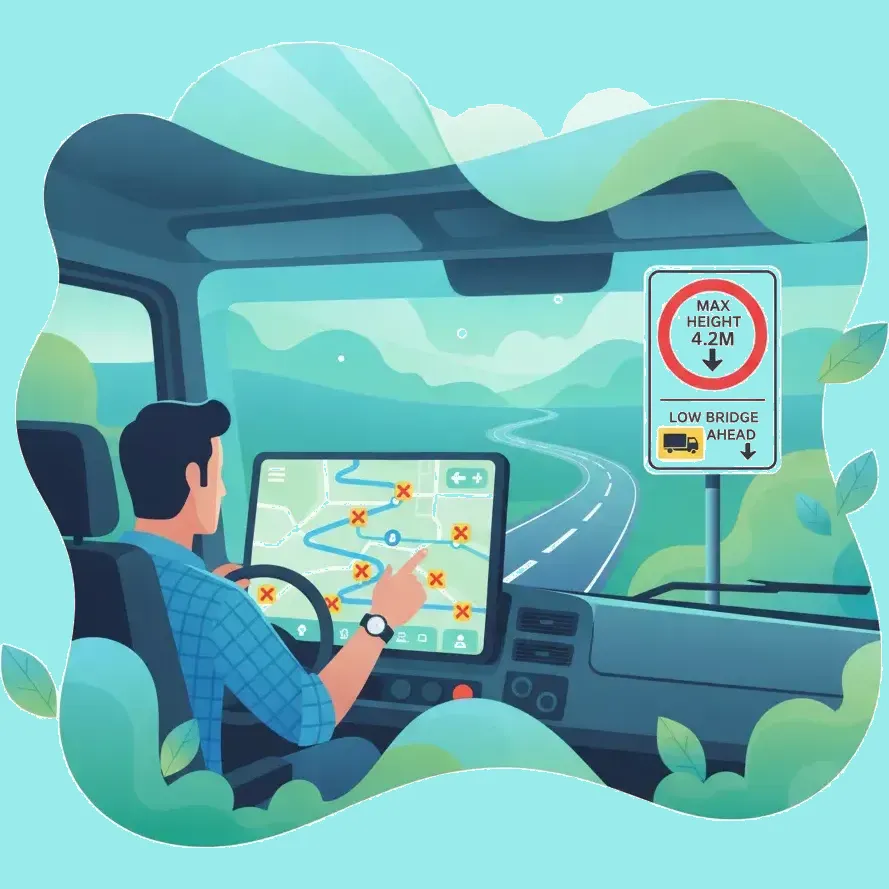
This lesson teaches professional drivers how to systematically map out travel routes that are compatible with heavy vehicle dimensions. It covers the limitations of consumer-grade GPS systems and emphasizes the use of specialized truck navigation systems that account for low bridges and load restrictions. Drivers will also learn to plan for congestion, access timing regulations, and proper entrance paths into commercial zones.

This lesson explains the extensive blind spots of heavy goods vehicles, buses, and other large trucks on Irish roads. It teaches Category AM riders how to maintain safe following distances and position themselves where truck drivers can see them. Proper space cushion management is emphasized to protect riders from the wind turbulence of passing trucks.

This lesson focuses on the physical mechanics of long-wheelbase and articulated vehicles when executing turns in restricted spaces. It explains concepts like swept path, rear overhang, and turning circles, which must be accounted for to prevent side-swiping collisions. Drivers will discover strategic route-planning techniques to avoid congested urban layouts and unsuitable rural corridors.

This lesson outlines the legal and safety requirements for maintaining proper lane discipline on multi-lane roads, roundabouts, and motorways in Ireland. It teaches drivers how to account for lane width, manage trailer off-tracking, and position the cab to prevent encroachment on neighboring lanes. Drivers will master safe lane-changing strategies, signaling protocols, and traffic merging techniques.
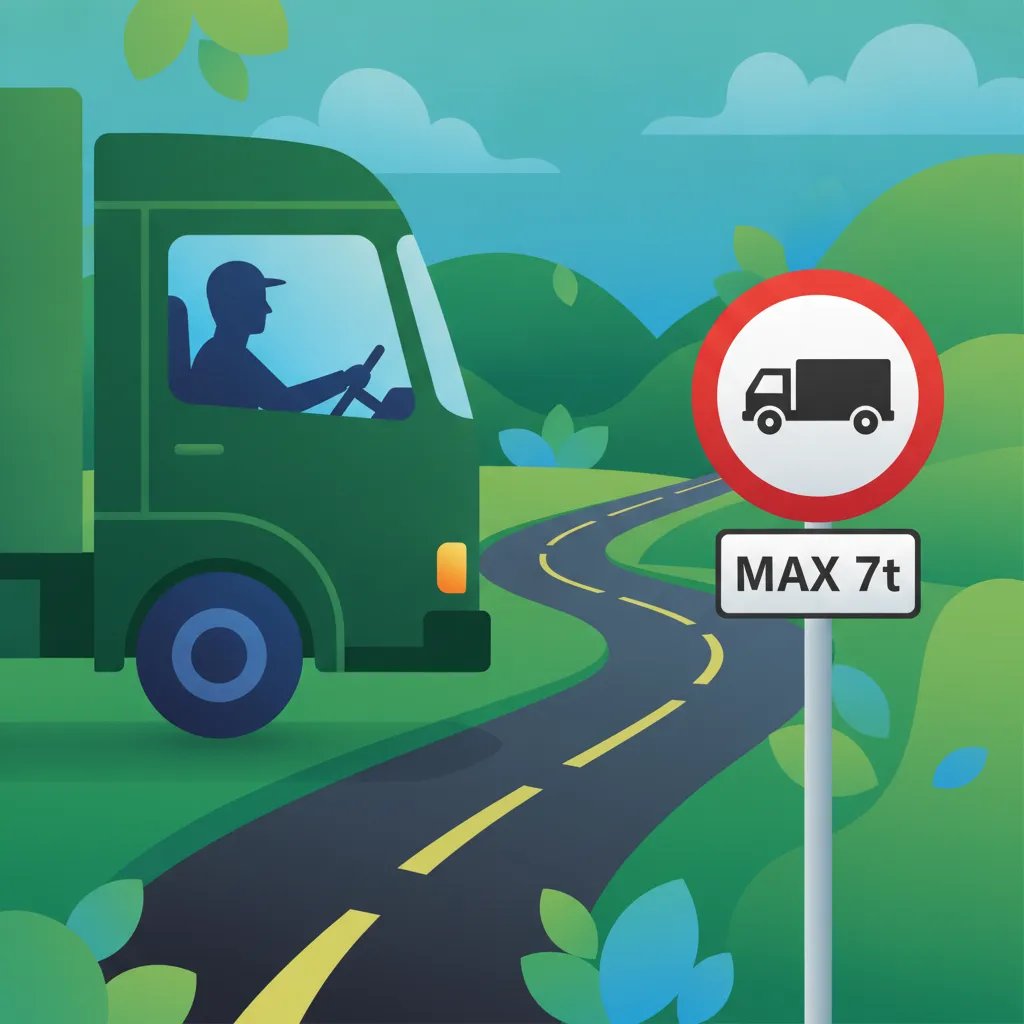
This lesson details the exact visual indicators, symbols, and text used on Irish traffic signs to communicate regulatory restrictions for heavy vehicles. It covers signs denoting height clearances, narrow bridges, and width-limited streets that require immediate driver diversion. By recognizing these specialized warnings early, professional drivers prevent costly structural collisions and traffic offences.
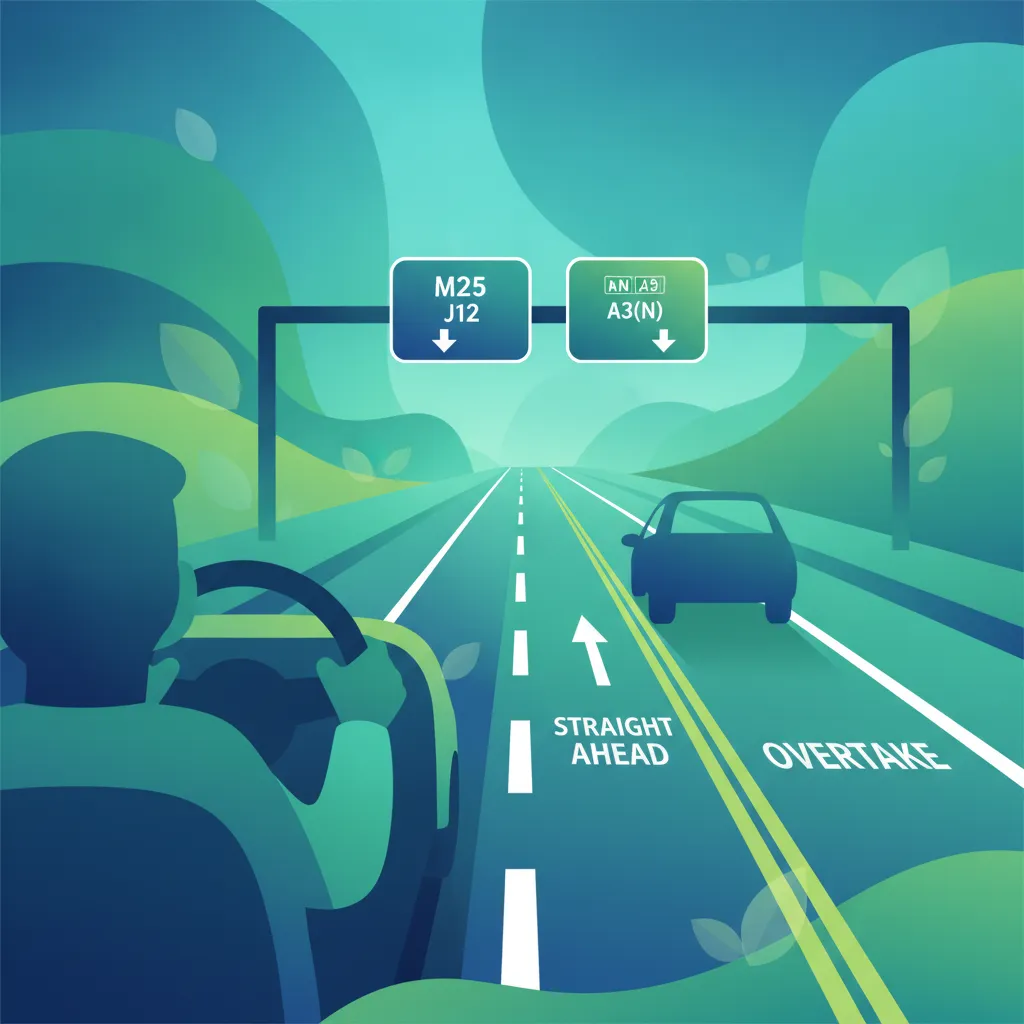
This lesson describes the legal regulations and driving conventions for operating heavy commercial vehicles on motorways and high-speed dual carriageways. It explains specific Irish motorway rules, including bans on heavy goods vehicles occupying the outer overtaking lanes. Drivers will learn to manage high-speed slip-road merging, maintain safe spacing buffers, and anticipate long-range changes in overall traffic flow.
Explore the physics of how cargo placement influences a vehicle's centre of gravity and handling characteristics. This lesson breaks down the impact of weight distribution on steering, acceleration, and braking, helping drivers understand why correct packing is fundamental to road safety and preventing dangerous vehicle instability during daily driving.
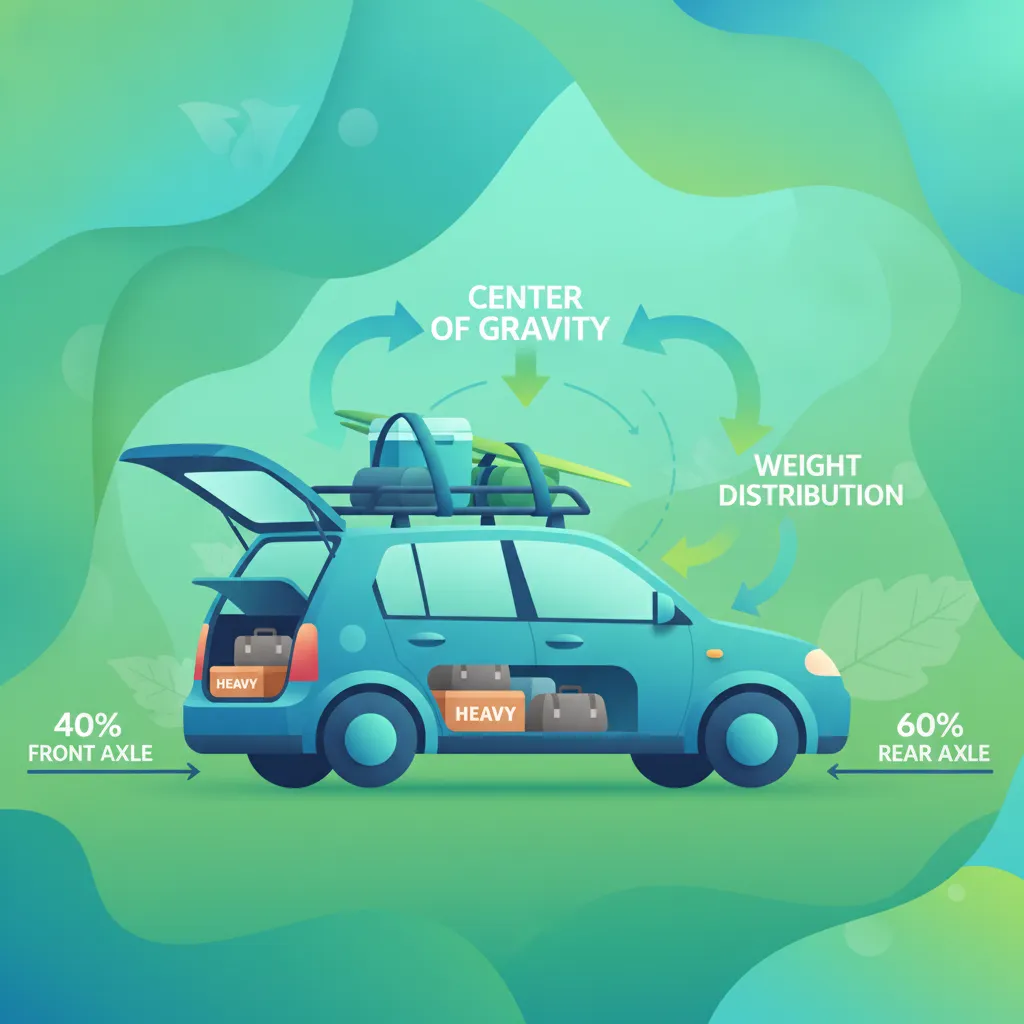
This lesson explains the physical principles of weight distribution and axle overloading on heavy commercial vehicles. It examines how a high centre of gravity increases tipping risks during cornering and alters overall braking effectiveness. Drivers will discover methods for positioning cargo to distribute weight evenly, ensuring optimal steering control and stable vehicle dynamics.

As passenger numbers change throughout a service shift, a heavy vehicle suspension, center of gravity, and steering responsiveness adapt dynamically. This lesson covers load balancing, the physical risks of overloading, and how uneven weight distribution compromises stability during turns. Drivers will learn to perform regular axle weight assessments to comply with Irish transport safety rules.
The physical scale of a coach or bus generates significant momentum that demands extensive space to bring the vehicle to a safe stop. This lesson explains vehicle weight mechanics, the physics of kinetic energy, and how center of gravity affects chassis stability during stops. Drivers will learn to assess braking capacity, accounting for wet road conditions and high passenger counts.
Find clear answers to common questions learners have about Securing Loads, Towing, and Vehicle Stability. Learn how the lesson is structured, which driving theory objectives it supports, and how it fits into the overall learning path of units and curriculum progression in Ireland. These explanations help you understand key concepts, lesson flow, and exam focused study goals.
Towing a trailer significantly increases your total stopping distance because the added weight creates more momentum that your car's brakes must overcome. You must increase your following distance well beyond the standard two-second rule to allow for this increased braking load.
Yes, all loads must be secured so they do not shift during cornering, braking, or acceleration. Objects must not obstruct your view, must not exceed the vehicle's weight capacity, and must not hang out in a way that creates a danger to other road users.
Before towing, you must check the trailer's tyre pressure, coupling security, safety chains, and that all lights (indicators, brake lights, and tail lights) are functioning correctly and are clearly visible to others.
Heavy loads raise the vehicle's centre of gravity, making it more prone to rolling or tipping during sharp turns. Always place heavy items as low as possible and as close to the centre of the vehicle to maintain balance.
Use the practice question search tool to pinpoint specific topics, road signs, or rules you need to master for your official Driver Theory Test. Refine your study strategy and ensure comprehensive preparation for all aspects of the Irish driving exam. Start your focused revision now and build confidence for your learner permit test.