
This lesson guides you through the specialized traffic signs essential for heavy goods vehicle operators in Ireland. You will learn to identify critical regulatory restrictions to ensure you remain compliant with RSA standards and avoid hazardous structural collisions on your routes.
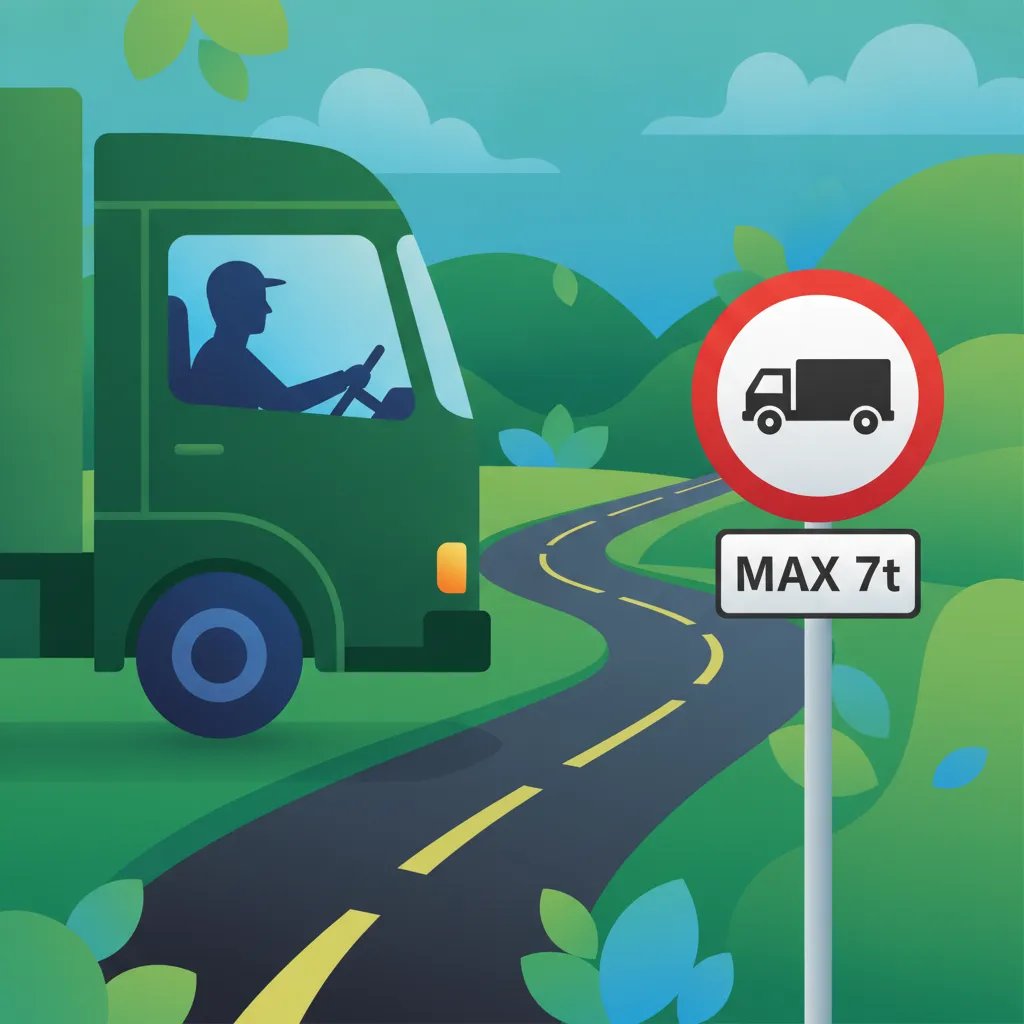
Lesson content overview
Operating a heavy goods vehicle (HGV) in Ireland requires more than basic driving skills; it demands an absolute mastery of the specialized road signs that govern large vehicles. Because of their sheer size, weight, and limited maneuverability, goods vehicles in Category C face unique physical and legal constraints on Irish roads. Failing to recognize and comply with specific signs can result in catastrophic structural collisions, severe traffic congestion, heavy financial penalties, and the immediate suspension of your professional Driver Certificate of Professional Competence (CPC) status.
This lesson covers the exact visual indicators, symbols, and supplementary plates used on Irish roads to communicate regulatory restrictions for heavy vehicles. By learning to identify these signs early, you will be able to plan safer routes, protect public infrastructure, and confidently pass your Irish Goods Vehicle Driver Theory Test.
In Ireland, urban centers with historic, narrow streets exist alongside modern motorway networks. This mix of infrastructure poses significant challenges for HGV drivers. General traffic signs apply to all road users, but goods vehicle specific signs target the physical limitations of your vehicle: its height, width, length, overall weight, and axle load.
The Road Safety Authority (RSA) and local authorities install these regulatory and warning signs to protect older stone bridges, canal crossings, overhead utility lines, and vulnerable urban environments. For a professional driver, recognizing these signs is the first line of defense against infrastructure damage and severe legal liability.
Overhead clearances are among the most critical safety margins an HGV driver must manage. Bridge strikes—where a heavy vehicle collides with an overhead bridge or gantry—are entirely preventable accidents that cause massive structural damage, disrupt rail and road networks, and carry severe legal consequences under Irish traffic law.
Regulatory signs in Ireland are generally circular with a red border. The height restriction sign indicates the absolute maximum height allowed to pass under an obstruction.
The dimension shown on the sign (for example, 4.5m) is the maximum height of any vehicle that may attempt to pass. In Ireland, these measurements are displayed in metres. If your vehicle’s total height—including its load, roof-mounted refrigeration units, or crane attachments—equals or exceeds the displayed figure, you must not proceed.
In addition to regulatory circles, you will frequently encounter warning signs. In Ireland, warning signs are diamond-shaped with a yellow/amber background and a black border.
These warning signs are positioned well in advance of the obstacle, often accompanied by supplementary plates indicating the distance to the bridge (e.g., "100m") or directing goods vehicles to an alternative detour. This early warning gives you the opportunity to safely divert before reaching a physical bottleneck where reversing or turning around might be impossible.
The clear vertical distance between the road surface and the lowest point of an overhead structure, such as a bridge, tunnel, gantry, or utility cable.
A common mistake made by inexperienced drivers is assuming their vehicle's static height remains constant. Several factors can dynamically increase your vehicle's operating height or decrease the available clearance:
Important Safety Margin: Professional guidelines recommend maintaining a safety clearance margin of at least 75mm (approximately 3 inches) below any posted height limit. If you are towing a high-sided trailer close to the limit, divert to a guaranteed high-clearance route instead of risking a strike.
Narrow stone bridges, historical town gates, and tightly parked urban streets often have physical width limitations. Operating a Category C vehicle in these areas without verifying clearance can cause your vehicle to become wedged, damaging both public property and your vehicle's bodywork.
Like other regulatory signs, the width limit sign is circular with a red border. It features horizontal arrows pointing inward toward a dimension, indicating the maximum physical width allowed to enter the zone.
When calculating your vehicle's width, you must account for all projections. This includes:
If your vehicle's maximum width exceeds the limit on the sign, you are legally prohibited from passing.
Assess Immediately: Check your vehicle's cab card containing its exact loaded dimensions against the sign's stated limit.
Signal and Slow Down: Turn on your hazard warning lights to alert following drivers that you are slowing to perform a safety check or prepare to divert.
Search for Alternates: Look for advance diversion signs or designated HGV bypass lanes before entering the narrow zone.
Stop Safely: If there is no clear path forward and you exceed the limit, pull over in a safe, legal position to plan an alternate route or seek assistance. Never attempt to "squeeze through."
Long rigid trucks or articulated combinations face severe difficulties when navigating tight turns, roundabouts, and narrow urban junctions. To prevent long vehicles from blocking intersections or running over curbs, planners use length restriction signs.
A sign displaying 10m means that any vehicle, or vehicle-trailer combination, with an overall length greater than 10 metres is banned from that route.
Weight restrictions are critical for protecting weak bridges, ancient culverts, and suburban residential roads that were not engineered to support the heavy axle loads of modern commercial vehicles.
The Maximum Gross Weight (MGW) sign, or Gross Vehicle Weight (GVW) sign, indicates the absolute maximum weight allowed on the road or structure.
For example, a sign showing 7.5t means that any vehicle with a gross weight (its actual current weight including its chassis, fuel, driver, and load) exceeding 7.5 tonnes is prohibited from entering.
While gross weight refers to the entire vehicle, some structures are sensitive to concentrated loads on a single point. This is managed by axle weight limits.
An axle load is the portion of the vehicle's total weight that is transferred to the road surface by a single axle. Even if your vehicle is below the gross weight limit for a bridge, an improperly distributed load can cause a single rear axle to exceed the axle weight limit, making your journey illegal and dangerous.
The total weight of the vehicle, including the chassis, cab, body, fuel, driver, passengers, and the entire payload being carried.
In dense urban areas, local authorities design traffic flow patterns to keep heavy transit traffic on major arterial roads and out of shopping or residential districts.
Standard turn prohibition signs (such as "No Right Turn" or "No Left Turn") can be modified with supplementary plates. These white rectangular plates placed below the main sign specify the vehicle classes to which the ban applies.
These turn restrictions are often installed because the geometric design of the junction does not allow a large vehicle to turn without encroaching into oncoming lanes or turning over pedestrian footpaths.
To combat the persistent risk of bridge strikes, Ireland employs active, high-tech detection systems on critical approach routes (such as those leading to the Dublin Port Tunnel or specific low railway bridges).
These setups use infrared or laser beams positioned at the maximum safe clearance height prior to the obstacle. If your vehicle breaks the beam:
Understanding the consequences of respecting versus ignoring these signs highlights why they are so heavily emphasized in the RSA Category C Driver Theory Test:
| Driver Action | Physical / Traffic Consequence | Legal & Professional Impact |
|---|---|---|
| Early recognition and diversion | Clear route flow; zero structural risk; safe, on-time delivery. | Full compliance; safe driving record; maintains professional CPC status. |
| Ignoring Height Limits (Bridge Strike) | Severe structural collapse; rail/road closure; potential vehicle rollover or crushing. | Criminal prosecution; heavy fines; penalty points; immediate loss of HGV license. |
| Ignoring Width Limits | Vehicle wedged between structures; damage to side mirrors, steering, and cargo. | Traffic obstruction charges; liability for public property repair costs; employer disciplinary action. |
| Exceeding Axle Weight Limits | Collapse of historic stone arches; accelerated road surface deterioration. | Severe fines at RSA mobile weighbridges; mandatory unloading of vehicle before proceeding. |
To ensure you never find yourself trapped in a restricted zone or facing a bridge strike, integrate this quick check into your daily pre-drive routine:
This lesson covers the essential road signs that regulate heavy goods vehicle operations in Ireland, including height, width, length, and weight restrictions identified by their specific RSA sign codes. Understanding the difference between regulatory signs (mandatory compliance) and warning signs (advance notice) is critical, as is recognizing that your vehicle's actual dimensions can exceed its static measurements due to road camber, suspension settings, and load conditions. The consequences of ignoring these signs range from costly structural damage and vehicle wedging to criminal prosecution and loss of professional CPC status. Professional drivers should maintain a 75mm safety margin below any posted height limit and use HGV-specific GPS planning to avoid restricted routes before departing.
A short set of high-value points that capture the most important learning from this lesson.
Regulatory goods vehicle restriction signs are red-bordered circles, while warning signs are yellow diamond shapes giving advance notice of upcoming obstacles
Vehicle height is not static; road camber, air suspension settings, resurfaced roads, and load movement can all increase your effective height profile
Bridge strikes are entirely preventable with early sign recognition and a mandatory 75mm safety margin below posted height limits
Width measurements must include mirrors, mudflaps, side-mounted equipment, and the outer edges of tires
Advanced overheight detection systems use infrared beams and Variable Message Signs (VMS) to trigger mandatory diversion at critical locations
Explore all units and lessons included in this driving theory course.
RUS 012 = Height limit, RUS 013 = Width limit, RUS 014 = Length limit, RUS 015 = Maximum gross weight, RUS 016 = Axle weight limit
Dynamic height factors: camber tilt raises the top corner of tall vehicles, air suspension at maximum height increases overall profile
Always use HGV-specific GPS that allows input of your vehicle's actual dimensions rather than standard car navigation
When exceeding a restriction with no diversion available, stop safely and seek assistance; never attempt to squeeze through
Gross Vehicle Weight includes everything: chassis, fuel, driver, passengers, and full payload
Assuming the vehicle's stated factory height is the actual operating height without accounting for dynamic factors
Forgetting that wing mirrors add to overall width and may not fold completely flat in tight spaces
Trusting a posted height sign without maintaining a safety margin if the road beneath has been recently resurfaced
Using standard car sat-nav instead of HGV-specific route planning software that filters restricted roads
Attempting to reverse or squeeze through a width restriction when the vehicle exceeds the limit instead of finding an alternate route
Lesson content overview
A short set of high-value points that capture the most important learning from this lesson.
Regulatory goods vehicle restriction signs are red-bordered circles, while warning signs are yellow diamond shapes giving advance notice of upcoming obstacles
Vehicle height is not static; road camber, air suspension settings, resurfaced roads, and load movement can all increase your effective height profile
Bridge strikes are entirely preventable with early sign recognition and a mandatory 75mm safety margin below posted height limits
Width measurements must include mirrors, mudflaps, side-mounted equipment, and the outer edges of tires
Advanced overheight detection systems use infrared beams and Variable Message Signs (VMS) to trigger mandatory diversion at critical locations
Explore all units and lessons included in this driving theory course.
RUS 012 = Height limit, RUS 013 = Width limit, RUS 014 = Length limit, RUS 015 = Maximum gross weight, RUS 016 = Axle weight limit
Dynamic height factors: camber tilt raises the top corner of tall vehicles, air suspension at maximum height increases overall profile
Always use HGV-specific GPS that allows input of your vehicle's actual dimensions rather than standard car navigation
When exceeding a restriction with no diversion available, stop safely and seek assistance; never attempt to squeeze through
Gross Vehicle Weight includes everything: chassis, fuel, driver, passengers, and full payload
Assuming the vehicle's stated factory height is the actual operating height without accounting for dynamic factors
Forgetting that wing mirrors add to overall width and may not fold completely flat in tight spaces
Trusting a posted height sign without maintaining a safety margin if the road beneath has been recently resurfaced
Using standard car sat-nav instead of HGV-specific route planning software that filters restricted roads
Attempting to reverse or squeeze through a width restriction when the vehicle exceeds the limit instead of finding an alternate route
Explore search topics learners often look for when studying Goods Vehicle Specific Road Signs. These topics reflect common questions about road rules, driving situations, safety guidance, and lesson level theory preparation for learners in Ireland.
Browse additional driving theory lessons that cover connected traffic rules, road signs, and common driving situations related to this topic. Improve your understanding of how different rules interact across everyday traffic scenarios.
Learn how to effectively plan routes for heavy goods vehicles in Ireland while accounting for road restrictions and infrastructure constraints. This guide details the essential steps for avoiding hazards, such as low clearance bridges or narrow urban streets, to ensure safe and compliant transit during your commercial driving duties.
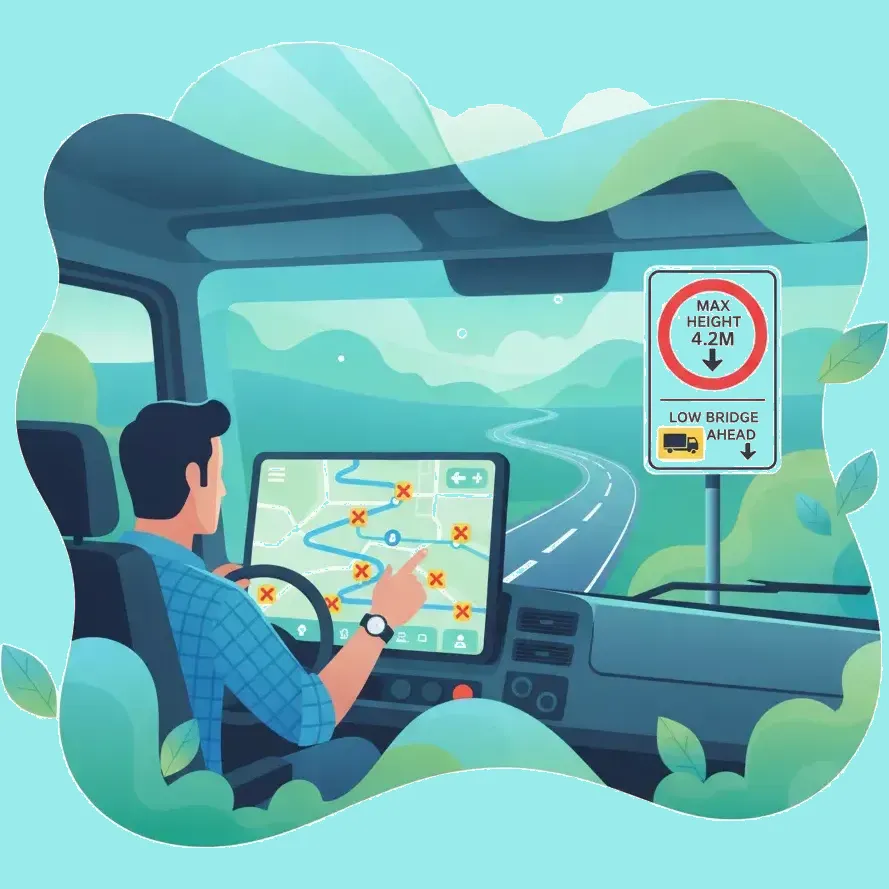
This lesson teaches professional drivers how to systematically map out travel routes that are compatible with heavy vehicle dimensions. It covers the limitations of consumer-grade GPS systems and emphasizes the use of specialized truck navigation systems that account for low bridges and load restrictions. Drivers will also learn to plan for congestion, access timing regulations, and proper entrance paths into commercial zones.

This lesson focuses on the physical mechanics of long-wheelbase and articulated vehicles when executing turns in restricted spaces. It explains concepts like swept path, rear overhang, and turning circles, which must be accounted for to prevent side-swiping collisions. Drivers will discover strategic route-planning techniques to avoid congested urban layouts and unsuitable rural corridors.

This lesson explains the extensive blind spots of heavy goods vehicles, buses, and other large trucks on Irish roads. It teaches Category AM riders how to maintain safe following distances and position themselves where truck drivers can see them. Proper space cushion management is emphasized to protect riders from the wind turbulence of passing trucks.
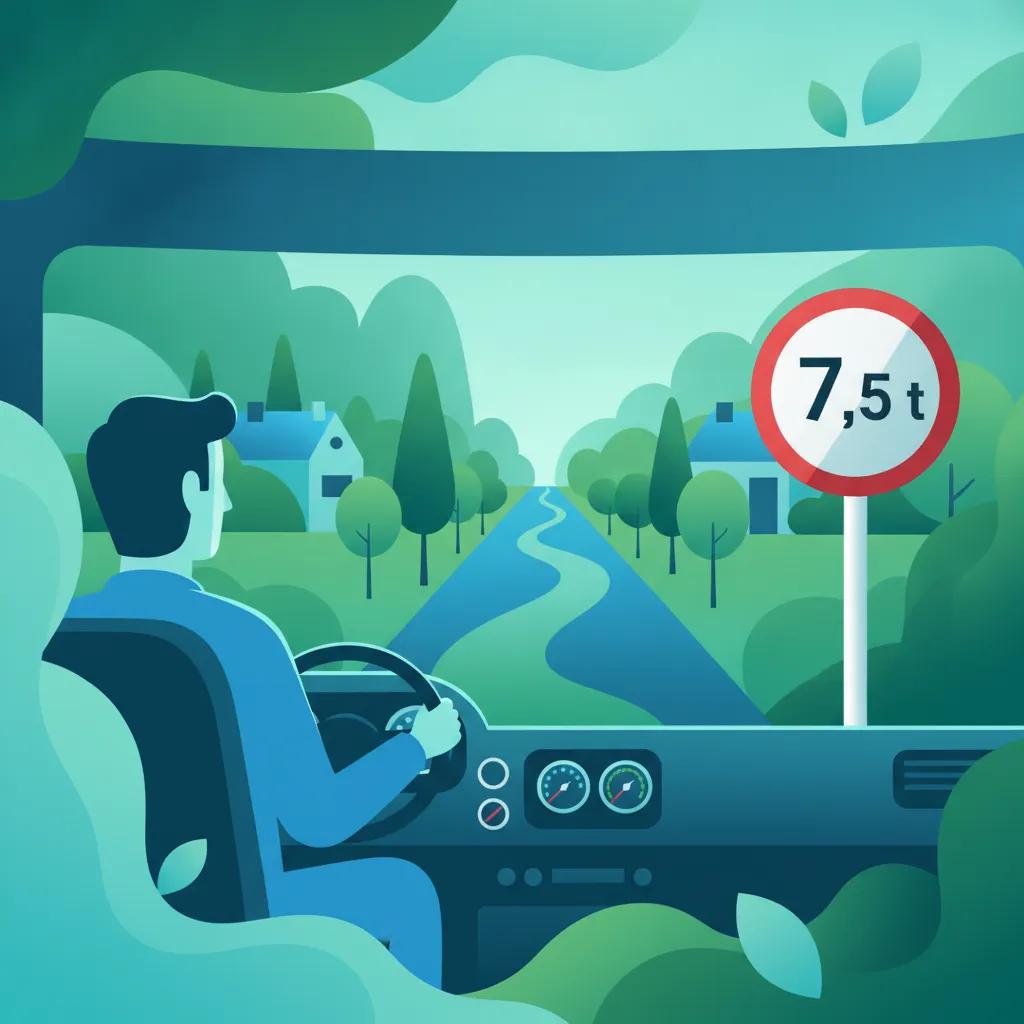
This lesson explores the legal frameworks and structural limitations that govern maximum vehicle weights on specific bridges and underground routes. It explains local authority by-laws, city-centre heavy vehicle exclusion zones, and environmental restrictions across major urban centres in Ireland. Drivers will learn to identify safe alternative bypass routes when encountering weight-restrictive public structures.
Explore the specific risks associated with operating large goods vehicles in dense urban environments. This lesson explains how to navigate tight spaces, manage blind spots, and interact safely with pedestrians and cyclists to prevent collisions while adhering to Irish traffic regulations and local road constraints.
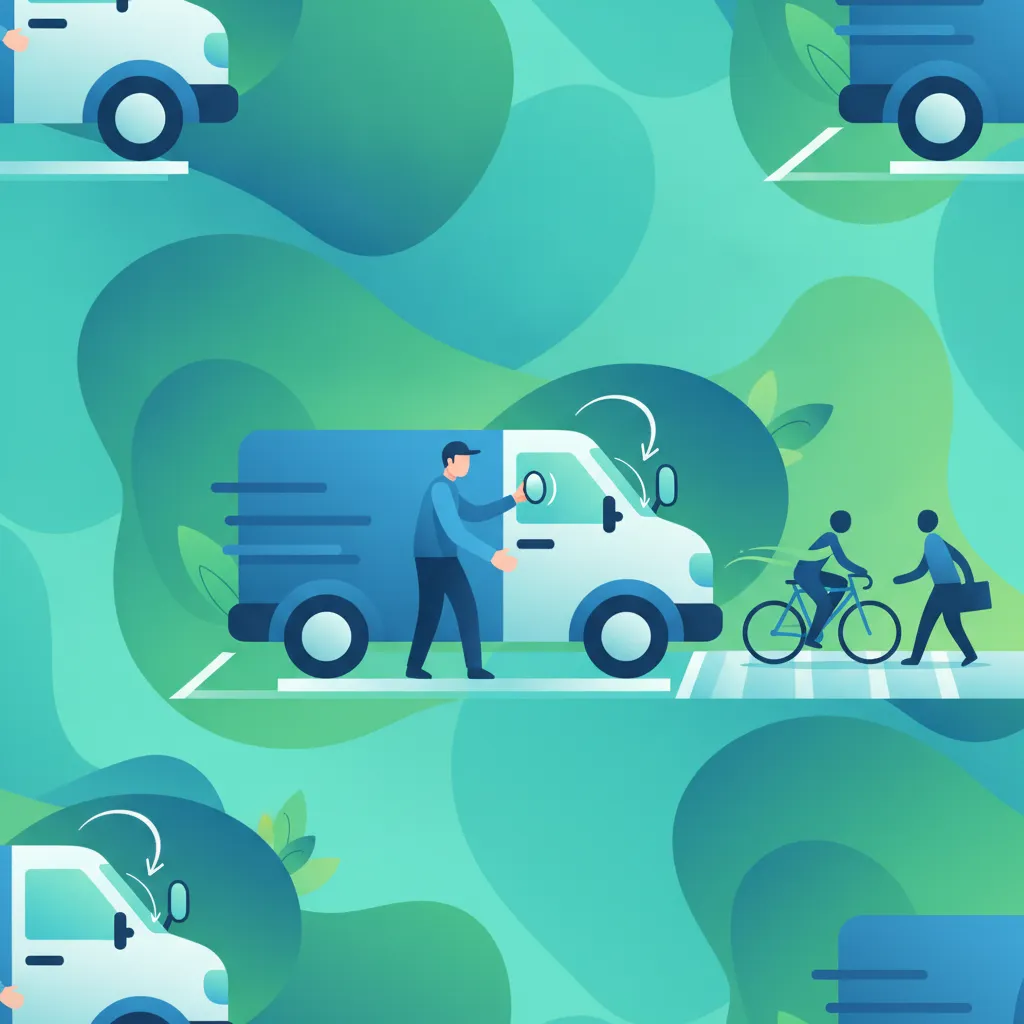
This lesson addresses the unique environmental and logistical challenges faced during delivery stops in commercial town and city centers. It covers the legal frameworks governing municipal loading zones, double-parking hazards, and temporary pedestrian-only street restrictions. Drivers will acquire practical skills for managing traffic build-up, utilizing visual spotters, and securing the vehicle while unloading cargo.
Safeguarding vulnerable road users requires more than simple obedience to traffic signs; it demands a defensive driving mindset. This lesson summarizes safe practices, including scanning far ahead in urban areas, keeping massive safety margins in wet weather, and executing thorough blind spot checks before reversing. By anticipating the unpredictable movements of others, you can prevent accidents and support a safe road culture.

This lesson focuses on managing the interactions between commercial goods vehicles and non-motorized or lightweight commuters. It outlines defensive driving techniques to utilize when overtaking cyclists, navigating pedestrian crossings, or negotiating shared junctions in Irish cities. Drivers will examine common cyclist behaviors at roundabouts and understand how to maintain massive safety margins to protect lives.

Children often struggle to judge heavy vehicle speeds accurately, while elderly pedestrians may possess limited mobility or hearing impairments. This lesson addresses these unique risks, explaining how to adjust driving patterns in residential neighborhoods and near shopping districts. Drivers will learn to maintain a high safety margin, ensuring they can yield quickly to vulnerable road users.

Heavy vehicles require continuous visual scanning to identify small or slow-moving road users who may enter the path of travel. This lesson explores the typical behaviors of young children, elderly pedestrians, and visually impaired road users. Drivers will build strong hazard perception skills to anticipate sudden movements, ensuring they can brake safely and avoid serious accidents.

Motorcycles and bicycles are often hidden from view in the large blind spots of passenger buses and coaches during turns. This lesson covers safe lateral clearances when overtaking cyclists, recognizing advanced stop lines, and sharing narrow lanes. Drivers will understand how to signal clearly, giving riders enough room to navigate safely near busy public transit corridors.

Bus stops often intersect with designated bicycle lanes and busy walking pathways, creating high-risk conflict areas for drivers. This lesson trains drivers to check blind spots for oncoming cyclists before pulling into or exiting public stop bays. It emphasizes yielding right-of-way to passengers crossing the road, preventing collision risks in active urban transport hubs.

This lesson addresses the mechanical dynamics of turning long-wheelbase and articulated commercial vehicles at intersections, junctions, and roundabouts. It covers the necessity of deep cornering lines, early mirror checks, and correct signaling to warn vulnerable road users of wide turn maneuvers. Drivers will learn how to minimize rear cut-in and ensure the entire vehicle clears urban obstacles safely.

Children, the elderly, and disabled individuals often require extra time and understanding when navigating road networks. This lesson outlines special safety hazards, such as children unexpectedly running into school zones, or senior citizens needing longer times to cross wide junctions. You will learn how to recognise visually impaired pedestrians by their white canes or guide dogs, and the absolute requirement to drive slowly and patiently.
This lesson explains the extensive blind spots of heavy goods vehicles, buses, and other large trucks on Irish roads. It teaches Category AM riders how to maintain safe following distances and position themselves where truck drivers can see them. Proper space cushion management is emphasized to protect riders from the wind turbulence of passing trucks.
Find clear answers to common questions learners have about Goods Vehicle Specific Road Signs. Learn how the lesson is structured, which driving theory objectives it supports, and how it fits into the overall learning path of units and curriculum progression in Ireland. These explanations help you understand key concepts, lesson flow, and exam focused study goals.
Not necessarily. Some weight limit signs apply to the actual weight of the vehicle at that moment, while others refer to the Maximum Authorised Mass. Always check the specific plate or symbol on the sign to see if it applies to your vehicle's classification.
Low bridge signs are mandatory regulatory signs. If the sign shows a height limit that is lower than the height of your vehicle including its load, you must find an alternative route immediately to avoid a serious collision.
Goods vehicles have different physical impacts on infrastructure, such as structural weight limits on bridges or noise/emission restrictions in urban zones. These signs are placed specifically to manage the risks associated with larger, heavier transport vehicles.
The theory test focuses on signs that are critical for safety and compliance. You should expect questions on the most common height, width, and weight limit signs found on national and local road networks.
Use the practice question search tool to pinpoint specific topics, road signs, or rules you need to master for your official Driver Theory Test. Refine your study strategy and ensure comprehensive preparation for all aspects of the Irish driving exam. Start your focused revision now and build confidence for your learner permit test.