Navigate Portugal's roads with confidence by understanding its road sign colour system. This guide details how green signs signify motorways (autoestradas), blue signs indicate express roads (vias rápidas), and white signs direct you on local routes. Learn to interpret destination, distance, and service information effectively, a vital skill for both passing your IMT theory test and ensuring safe travel across Portugal.
Article content overview
Navigating any country's road network can be daunting, but understanding the specific signage is paramount for safety and compliance, especially when preparing for your Portuguese driving licence theory exam administered by the Instituto da Mobilidade e dos Transportes (IMT). In Portugal, a clear colour-coding system for directional and informational signs provides crucial cues about the type of road you are on and your intended destination. This guide will demystify these colours, explaining how green, blue, and white signs guide you through Portugal's motorways (autoestradas), express roads (vias rápidas), and local routes, respectively. Mastering this system is not just about passing your theory test; it's about confident and safe driving across the diverse Portuguese landscape.
The colours of directional signs in Portugal are not merely aesthetic choices; they are fundamental to the road user's understanding of the road hierarchy and the type of route they are travelling on. This colour-coding system is designed to provide immediate visual information, allowing drivers to anticipate road characteristics, speed limits, and potential hazards associated with different types of roads. Adhering to the information conveyed by these coloured signs is a critical aspect of Portuguese traffic law, as outlined in the Código da Estrada, and is frequently tested in the IMT driving theory exam. Paying close attention to these distinctions will significantly enhance your ability to navigate efficiently and safely.
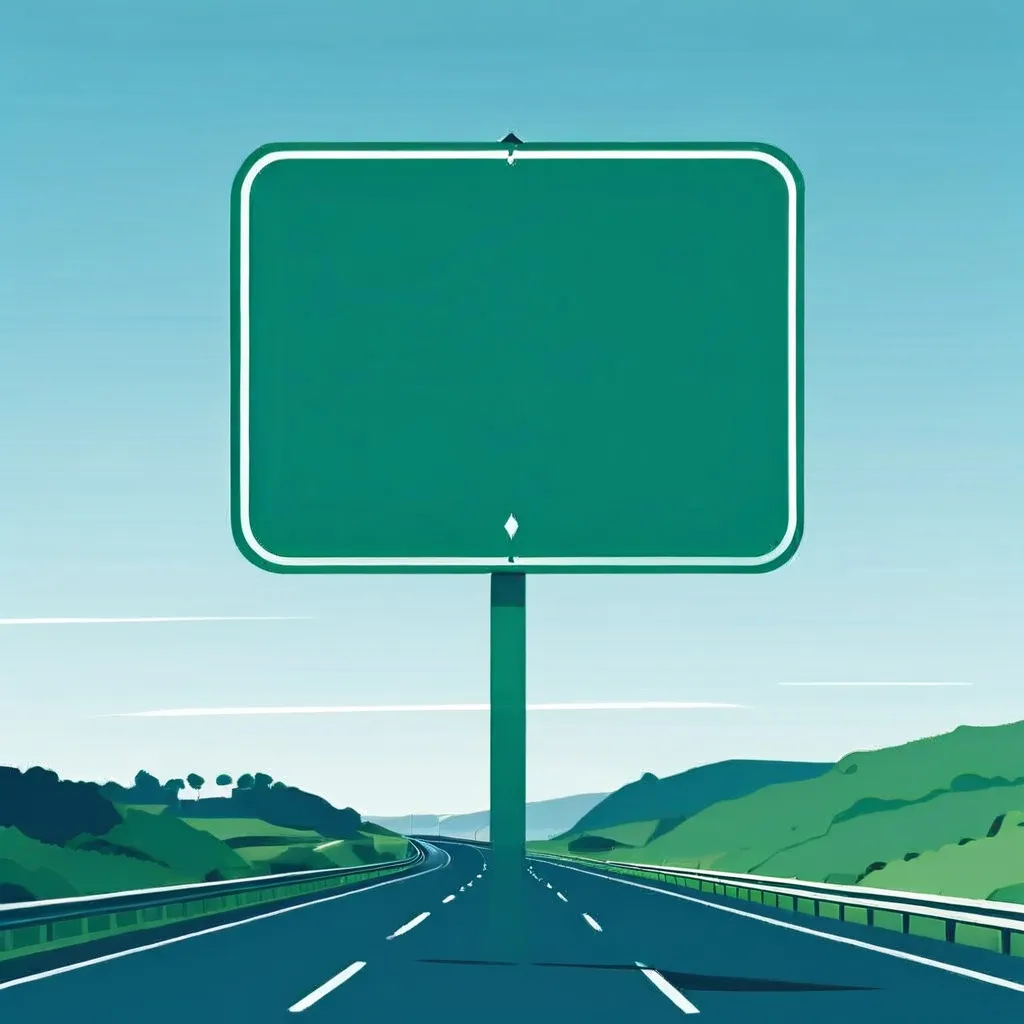
Green-signed routes in Portugal invariably indicate that you are on or approaching a motorway, known locally as an 'autoestrada'. These are high-speed, limited-access roads designed for long-distance travel, offering the fastest way to cover significant distances. Signs featuring a green background with white lettering and symbols are your primary indicators for motorway destinations, upcoming exits, and service areas exclusively serving motorways. When you see these green signs, you should expect dual carriageways, higher speed limits (typically 120 km/h, unless otherwise indicated), and specific rules regarding lane usage and vehicle types permitted.
The presence of green directional signs signifies that you are on a route with controlled access, meaning you can only enter and exit at designated points. These signs provide essential information such as the name of the destination, the distance in kilometres to that destination, and importantly, the upcoming 'saída' (exit) numbers. Understanding these distances is crucial for planning your manoeuvres, especially when multiple exits are approaching. You will also find signs for 'área de serviço' (service area) on green backgrounds, indicating facilities like petrol stations, restaurants, and rest stops that are directly accessible from the motorway.
It is imperative to remember that certain vehicles, such as agricultural machinery and slower-moving vehicles, are generally prohibited from autoestradas to maintain traffic flow and safety. The IMT theory exam often includes questions about the characteristics of motorways and the correct interpretation of green-signed directions. Failing to understand or adhere to the rules of the road on autoestradas can lead to significant penalties and hazardous situations.
Blue-signed routes in Portugal denote express roads, or 'vias rápidas'. These roads are designed to facilitate quicker travel than standard local roads but are typically not as high-speed or as strictly controlled as motorways. Express roads can be found within urban areas or connecting towns and cities, often featuring multiple lanes in each direction and sometimes having grade-separated intersections. The blue colour on directional signs signifies that you are on a route where traffic is generally faster than on ordinary roads, but not to the same extent as on an autoestrada.
The blue directional signs will guide you towards specific destinations, indicate distances, and point towards upcoming junctions or exits from the express road network. While they offer a more efficient journey than local roads, they may have more points of access and egress, including traffic lights or intersections with local roads, requiring more vigilance from the driver. Always be prepared for varying speed limits, which are often lower than on motorways and may be subject to dynamic speed controls.
When you encounter blue signs, especially those indicating a 'via rápida', remember that they often serve as important arteries through and between populated areas. Signs for 'área de serviço' on a blue background typically indicate services accessible from the express road, which might differ in scope from those found on motorways. The distinction between green (motorway) and blue (express road) signs is a common area of focus in the Portuguese driving theory test, as it dictates appropriate speed and driving behaviour.
White signs with black lettering, or sometimes a coloured border or symbol on a white background, are used to indicate local roads, tourist attractions, and specific local services. These signs are the most common and direct you to destinations within towns and cities, to specific streets, or to points of local interest. When you are driving on local roads, the white signs are your primary navigators, directing you to local amenities, residential areas, and commercial centres.
The information conveyed by white signs is highly specific to the immediate locality. This includes street names, local landmarks, parking areas, and sometimes specific services such as hospitals or police stations. Tourist signs, which are typically brown but often supplemented by white direction indicators, will guide you towards cultural sites, historical monuments, natural parks, and other attractions. Understanding these signs is crucial for urban driving, where you must be more aware of pedestrians, cyclists, lower speed limits, and complex intersections.
Interpreting white signs requires close attention to the text and any accompanying symbols. They are fundamental for day-to-day driving and for reaching your specific destination within a town or city. The IMT theory exam will assess your ability to differentiate between these signs and their corresponding meanings, particularly in scenarios that involve complex urban environments or navigating to specific points of interest.
Regardless of the background colour – green, blue, or white – directional signs in Portugal often include vital information about distance, upcoming exits, and available services. Distance is typically indicated in kilometres to the named destination. For example, a green sign might show 'Lisboa 150 km', informing you of the remaining distance to the capital via the motorway. This is critical for planning fuel stops, rest breaks, and lane changes for upcoming exits.
Exit signs, often labelled 'Saída' followed by a number, usually appear at intervals, commonly at 1000 metres, 500 metres, and then at the actual exit point itself. This progressive signalling allows drivers on motorways and express roads ample time to adjust their speed, check their mirrors, and move into the appropriate lane for the desired exit. Similarly, 'Área de Serviço' signs, which might be green, blue, or white depending on the road type, indicate upcoming facilities. These signs often depict pictograms for fuel, food, rest facilities, and even medical assistance, providing essential information for travellers.
The IMT theory exam frequently tests your understanding of these progressive signs and your ability to plan your actions accordingly. Misinterpreting exit distances or failing to prepare for lane changes can lead to dangerous situations, such as sudden braking or unsafe manoeuvres.
When preparing for your IMT theory exam, always consider the practical implications of each sign. For directional signs, think about what action you would need to take as a driver: Do you need to change lanes? Slow down? Prepare for a potential intersection? This active thinking will help you understand the real-world relevance of the signs.
A frequent point of confusion for learners, and consequently a popular topic in the IMT driving theory exam, is the distinction between green and blue signs, and how they relate to different road types and speed regulations. While both indicate faster routes than local roads, the specific rules, speed limits, and access controls differ significantly. Another area often tested is the interpretation of combined signs, such as a directional sign with an additional panel indicating a specific distance or a time restriction.
The official regulation in Portugal that governs all road signs, traffic signals, and road markings. It is the primary legal source for understanding road signage.
Remember that the Código da Estrada and the Regulamento de Sinalização do Trânsito (RST) are the definitive authorities. While this guide provides a comprehensive overview, always refer to official materials for detailed rules and regulations. Understanding the colour-coding system for directional signs in Portugal is a fundamental skill for safe navigation and a key component of achieving success in your Portuguese driving theory test.
Portugal's directional road signs use a systematic color code: green for motorways (autoestradas) indicating high-speed controlled-access routes, blue for express roads (vias rápidas) offering faster-than-local travel with more access points, and white for local roads serving towns and urban areas. These colors provide immediate information about road type, expected speed limits, and the characteristics of your journey. Understanding this system is fundamental for safe navigation and a common topic in the IMT driving theory exam, where learners must differentiate between sign types and respond appropriately to directional information. The official sources for this signage system are the Código da Estrada and the Regulamento de Sinalização do Trânsito (RST).
A short set of high-value points that capture the most important ideas from this article.
Green directional signs always indicate a motorway (autoestrada), a high-speed controlled-access road typically with 120 km/h limits
Blue signs denote express roads (vias rápidas), which facilitate faster travel than local roads but with more access points than motorways
White signs guide drivers on local roads, showing streets, local destinations, and urban navigation information
The color of a sign communicates not just navigation but also the road type, expected speed, and access restrictions
Understanding this color hierarchy is essential for both safe driving in Portugal and passing the IMT theory exam
Autoestradas (green) prohibit slow vehicles like agricultural machinery and have strictly controlled entry/exit points
Exit signs on motorways and express roads appear at 1000m, 500m, and at the actual exit point for progressive preparation
Speed limits decrease progressively: motorways typically 120 km/h, express roads vary with conditions, local roads are lower and change frequently
Service areas (área de serviço) are indicated on the same color background as the road type you are traveling on
The Regulamento de Sinalização do Trânsito (RST) is the official regulation governing all Portuguese road signs
Confusing green motorway signs with blue express road signs and not adjusting speed or awareness accordingly
Waiting too long to prepare for exits, missing the early 1000m warning sign and having to brake suddenly
Assuming express roads have the same rules as motorways; vias rápidas often have traffic lights and intersections
Misreading distance numbers on signs, particularly confusing kilometres remaining to a destination with exit numbers
Failing to change driving behavior when sign colors change, indicating you have left one road type for another
Article content overview
A short set of high-value points that capture the most important ideas from this article.
Green directional signs always indicate a motorway (autoestrada), a high-speed controlled-access road typically with 120 km/h limits
Blue signs denote express roads (vias rápidas), which facilitate faster travel than local roads but with more access points than motorways
White signs guide drivers on local roads, showing streets, local destinations, and urban navigation information
The color of a sign communicates not just navigation but also the road type, expected speed, and access restrictions
Understanding this color hierarchy is essential for both safe driving in Portugal and passing the IMT theory exam
Autoestradas (green) prohibit slow vehicles like agricultural machinery and have strictly controlled entry/exit points
Exit signs on motorways and express roads appear at 1000m, 500m, and at the actual exit point for progressive preparation
Speed limits decrease progressively: motorways typically 120 km/h, express roads vary with conditions, local roads are lower and change frequently
Service areas (área de serviço) are indicated on the same color background as the road type you are traveling on
The Regulamento de Sinalização do Trânsito (RST) is the official regulation governing all Portuguese road signs
Confusing green motorway signs with blue express road signs and not adjusting speed or awareness accordingly
Waiting too long to prepare for exits, missing the early 1000m warning sign and having to brake suddenly
Assuming express roads have the same rules as motorways; vias rápidas often have traffic lights and intersections
Misreading distance numbers on signs, particularly confusing kilometres remaining to a destination with exit numbers
Failing to change driving behavior when sign colors change, indicating you have left one road type for another
Explore related topics, search based questions, and concepts that learners often look up when studying Portugal Road Sign Colours. These themes reflect real search intent and help you understand how this topic connects to wider driving theory knowledge in Portugal.
Find clear and practical answers to common questions learners often have about Portugal Road Sign Colours. This section helps explain difficult points, remove confusion, and reinforce the key driving theory concepts that matter for learners in Portugal.
Green road signs in Portugal typically indicate motorways, known locally as 'autoestradas'. They provide information related to directions, exits, and services specific to these high-speed roads.
Blue road signs in Portugal, often with white lettering, are generally used for express roads, referred to as 'vias rápidas', and can also indicate specific services or directions on other primary routes.
White road signs in Portugal are used for local destinations, tourist information, and general guidance on standard roads. They are distinct from the specific colour coding used for motorways (green) and express roads (blue).
Distance numbers on Portuguese road signs indicate the remaining kilometers to the named destination. This information is crucial for planning your route and exit strategy, especially on motorways and express roads.
Exit signs on Portuguese motorways typically appear at intervals of 1000m, 500m, and at the actual exit point. This provides ample warning to safely plan lane changes and prepare for your exit.
If you haven't found what you're looking for, use our powerful article search to explore related topics, refine your understanding of Portuguese road rules, or discover new insights for your IMT driving exam preparation. Continue building your knowledge effectively.