
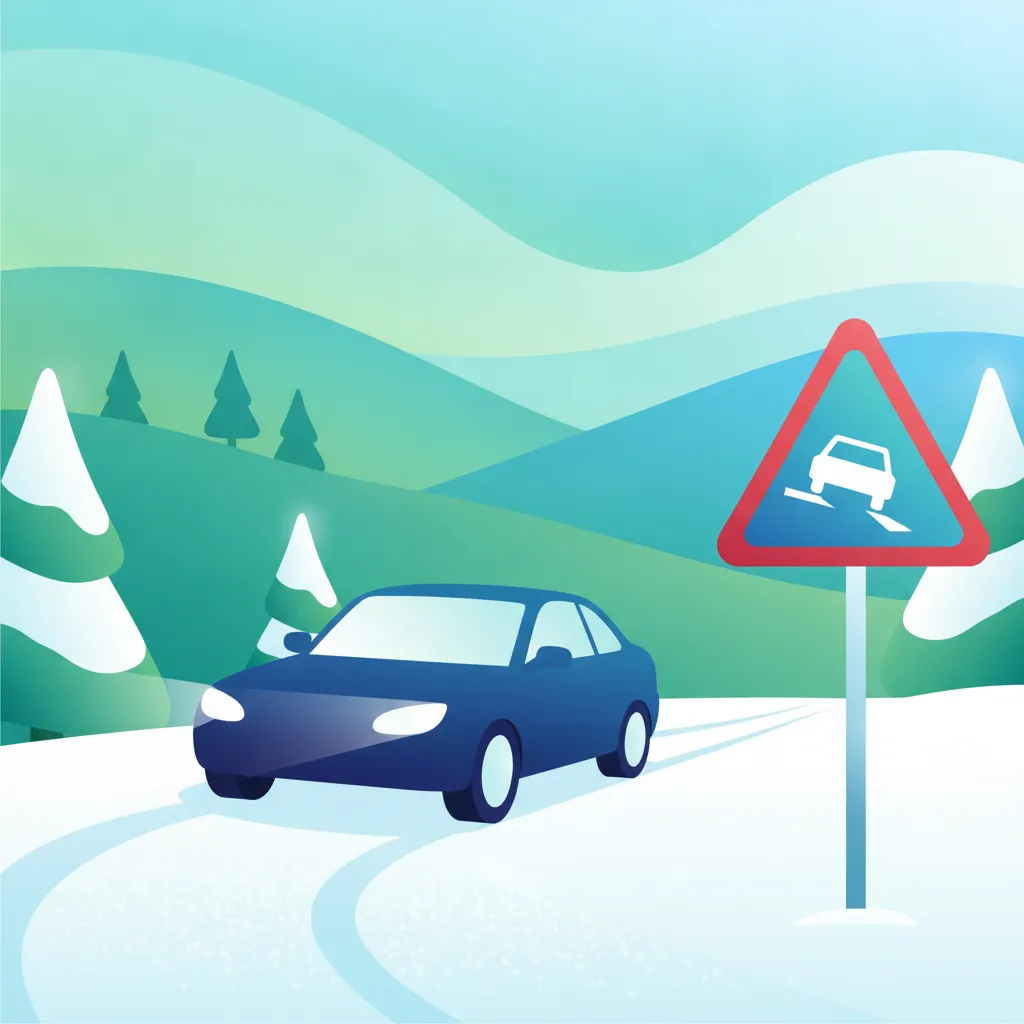
Driving in snow and ice presents unique challenges due to significantly reduced tire traction. In Portugal, while less common in many regions, understanding these conditions is vital for safety and passing your driving theory exam. This page explains how cold weather, snow, and ice affect vehicle behavior and outlines the crucial adaptations drivers must make to maintain control, especially regarding braking, acceleration, and steering.
Theory topic content overview
Read the full theory topic guide for Driving in Snow & Ice with structured, easy-to-scan content built for learners in Portugal. This detailed section explains the exact rule, meaning, traffic context, comparison points, and exam logic behind this Portuguese driving theory topic so you can study faster, understand the concept more clearly, and avoid common interpretation mistakes on the theory test.
Driving in snow and ice introduces one of the most significant challenges for vehicle control: drastically reduced traction (or aderência dos pneus ao piso in Portuguese). Traction is the grip your tires have on the road surface, allowing your vehicle to accelerate, brake, and steer effectively. When roads are covered in snow, slush, or ice, this vital grip diminishes severely, often leading to a loss of control if drivers do not adapt.
When the tire's grip on the road surface becomes insufficient, the vehicle can:
While snow and ice are not daily occurrences across most of Portugal, they are significant hazards in mountainous regions like Serra da Estrela, Montesinho, or Gerês, and can appear unexpectedly in other areas during colder months. For any driver taking the Portuguese driving theory exam (IMT theory exam), understanding how to react to these conditions is crucial. The Código da Estrada (Portuguese Highway Code) places strong emphasis on adapting your driving to adverse environmental conditions for safety. Misunderstanding these principles can lead to serious accidents and is a common area of questions in the theory test.
Snow and ice impact the three fundamental aspects of vehicle control: acceleration, braking, and steering. All driver actions must be gentle and measured.
This is arguably the most dangerous condition. Black ice is a thin, transparent layer of ice that forms on the road surface, making it look merely wet or even dry. It's incredibly difficult to see, especially at night or in low light, but offers almost zero traction. It often forms in shaded areas, on bridges (pontes), and overpasses (viadutos) because these areas cool faster and don't benefit from ground heat.
Fresh, powdery snow offers some grip, but as it gets packed down by traffic, it becomes much more slippery. Slush (a mix of snow and water) can create an effect similar to aquaplaning and also drastically reduce grip.
A slight increase in temperature can cause snow to melt, only for it to refreeze as ice when temperatures drop again, often creating black ice conditions. Always be vigilant for freezing and thawing cycles.
To stay safe and successfully navigate questions on the IMT theory exam regarding adverse winter conditions, remember these core principles for driving in snow and ice:
By understanding and applying these adaptations, you can significantly reduce the risk of accidents and maintain control even when the aderência dos pneus ao piso is severely compromised.
Driving in snow and ice severely reduces tyre traction, making vehicle control fundamentally more difficult and dramatically increasing stopping distances. The core adaptation strategy focuses on the Control Triangle: using gentle, gradual inputs for acceleration, braking, and steering to prevent skids. Black ice is particularly dangerous as it is nearly invisible, commonly forming on bridges and shaded areas. In Portugal, snow chains are mandatory where sign C47 indicates, and all drivers must adjust speed and technique to conditions regardless of posted limits. All vehicles, including those with AWD or 4x4, are equally vulnerable to losing control when braking or steering on ice.
A short set of high-value points that capture the most important ideas from this theory explanation.
Reduced traction is the fundamental problem in snow and ice, affecting all vehicle control inputs
The Control Triangle (acceleration, braking, steering) requires smooth and gradual inputs to prevent skids
Stopping distances on ice can be up to 10 times longer than on dry roads
Black ice is nearly invisible and commonly forms on bridges and shaded areas
Snow chains are mandatory on roads marked with sign C47 and must not exceed 50 km/h
AWD and 4x4 improve acceleration on slippery surfaces but do NOT improve braking or steering on ice
Driving at the posted speed limit in winter conditions is reckless and potentially illegal under the Código da Estrada
Fresh powdery snow offers more grip than packed snow or slush
Winter tyres (pneus de inverno) provide superior grip in cold temperatures even without snow
If a skid occurs while braking, ease off the brake slightly to regain traction
Assuming the speed limit is safe for current conditions and failing to reduce speed significantly
Following too closely behind other vehicles, not accounting for dramatically increased stopping distances
Relying too heavily on ABS or traction control systems to compensate for poor driving technique
Using high beam headlights in snow, which causes glare and reduces visibility
Not removing snow chains immediately when roads clear, damaging both tyres and road surface
Start with a short, direct summary of Driving in Snow & Ice before reading the full explanation below.
Driving in snow and ice drastically reduces tire grip, making vehicle control more difficult and increasing stopping distances. To drive safely, reduce your speed significantly, increase following distances, and use gentle inputs for steering, braking, and acceleration to prevent skidding. Be especially wary of black ice, which is difficult to see but extremely dangerous.
Review the most important terms, rule signals, and traffic concepts linked to Driving in Snow & Ice.
Explore related theory topic pages connected to Driving in Snow & Ice and continue with the next useful rule explanation.
See the common search queries learners use when trying to understand Driving in Snow & Ice in Portugal.

Continue your preparation for the Portuguese driving test by exploring specific theory topics in detail. Understand the Código da Estrada, review road signs, and clarify complex traffic regulations to ensure you're fully prepared for the IMT examination.
Explore Driving Theory TopicsTheory topic content overview
A short set of high-value points that capture the most important ideas from this theory explanation.
Reduced traction is the fundamental problem in snow and ice, affecting all vehicle control inputs
The Control Triangle (acceleration, braking, steering) requires smooth and gradual inputs to prevent skids
Stopping distances on ice can be up to 10 times longer than on dry roads
Black ice is nearly invisible and commonly forms on bridges and shaded areas
Snow chains are mandatory on roads marked with sign C47 and must not exceed 50 km/h
AWD and 4x4 improve acceleration on slippery surfaces but do NOT improve braking or steering on ice
Driving at the posted speed limit in winter conditions is reckless and potentially illegal under the Código da Estrada
Fresh powdery snow offers more grip than packed snow or slush
Winter tyres (pneus de inverno) provide superior grip in cold temperatures even without snow
If a skid occurs while braking, ease off the brake slightly to regain traction
Assuming the speed limit is safe for current conditions and failing to reduce speed significantly
Following too closely behind other vehicles, not accounting for dramatically increased stopping distances
Relying too heavily on ABS or traction control systems to compensate for poor driving technique
Using high beam headlights in snow, which causes glare and reduces visibility
Not removing snow chains immediately when roads clear, damaging both tyres and road surface
Start with a short, direct summary of Driving in Snow & Ice before reading the full explanation below.
Driving in snow and ice drastically reduces tire grip, making vehicle control more difficult and increasing stopping distances. To drive safely, reduce your speed significantly, increase following distances, and use gentle inputs for steering, braking, and acceleration to prevent skidding. Be especially wary of black ice, which is difficult to see but extremely dangerous.
Review the most important terms, rule signals, and traffic concepts linked to Driving in Snow & Ice.
Explore related theory topic pages connected to Driving in Snow & Ice and continue with the next useful rule explanation.
See the common search queries learners use when trying to understand Driving in Snow & Ice in Portugal.
Continue your preparation for the Portuguese driving test by exploring specific theory topics in detail. Understand the Código da Estrada, review road signs, and clarify complex traffic regulations to ensure you're fully prepared for the IMT examination.
Explore Driving Theory TopicsUse this exam-focused revision tip to understand how Driving in Snow & Ice is likely to appear in theory questions for learners in Portugal. This section helps you identify the most testable part of the rule, avoid common traps, and remember the concept more effectively during Portuguese driving theory exam preparation.
The Portuguese driving theory exam (IMT) frequently tests your understanding of how to adapt to adverse weather. Remember that reduced traction is the core issue with snow and ice, leading to longer stopping distances and a greater risk of skidding. Always think about slowing down, increasing distances, and using gentle controls.
Read direct answers to the most common learner questions about Driving in Snow & Ice in Portugal. This FAQ focuses on rule confusion, practical meaning, comparison with similar concepts, and the exact uncertainties that appear most often in Portuguese driving theory revision and exam preparation.
The primary dangers are significantly reduced tire grip (aderência), increased braking distances, and the risk of skidding, making vehicle control challenging. Visibility can also be impaired.
Snow and ice drastically increase braking distance because there is less friction between the tires and the road surface, requiring drivers to apply brakes much earlier and more gently.
Black ice is a thin, transparent layer of ice on the road that is extremely difficult to see. It is dangerous because it provides almost no traction, often catching drivers by surprise.
Snow chains (correntes de neve) are legal in Portugal and recommended or even mandatory in certain mountain areas during severe winter conditions. They significantly improve traction on snow and ice.
Accelerate very gently and smoothly. Applying too much power can cause the wheels to spin, leading to a loss of control. Start in a higher gear if your vehicle allows.
Steer smoothly and gradually. Avoid sudden or sharp turns, as these can easily cause your tires to lose grip and lead to a skid.
Yes, ice often forms more quickly and persists longer in shaded areas, on bridges, overpasses, and in tunnels, as these spots receive less direct sunlight.
Ensure your tires are in good condition with adequate tread depth, check tire pressure, ensure all lights are working, keep your windshield wipers and fluid functional, and consider carrying snow chains if driving in mountainous regions.
Utilize the powerful search tool to refine your Portuguese driving theory practice. Pinpoint questions related to specific traffic laws, road signs, or complex scenarios from the Código da Estrada. Begin targeted revision now to boost your understanding and confidently approach your IMT driving exam.