
This lesson provides an essential guide to tyre maintenance and legal requirements for Category B drivers in Portugal. You will learn how to monitor tyre health, understand legal tread depth, and recognize signs of wear to ensure your vehicle remains roadworthy and safe. Understanding these rules is a vital component of your vehicle safety knowledge for the IMT theory exam.
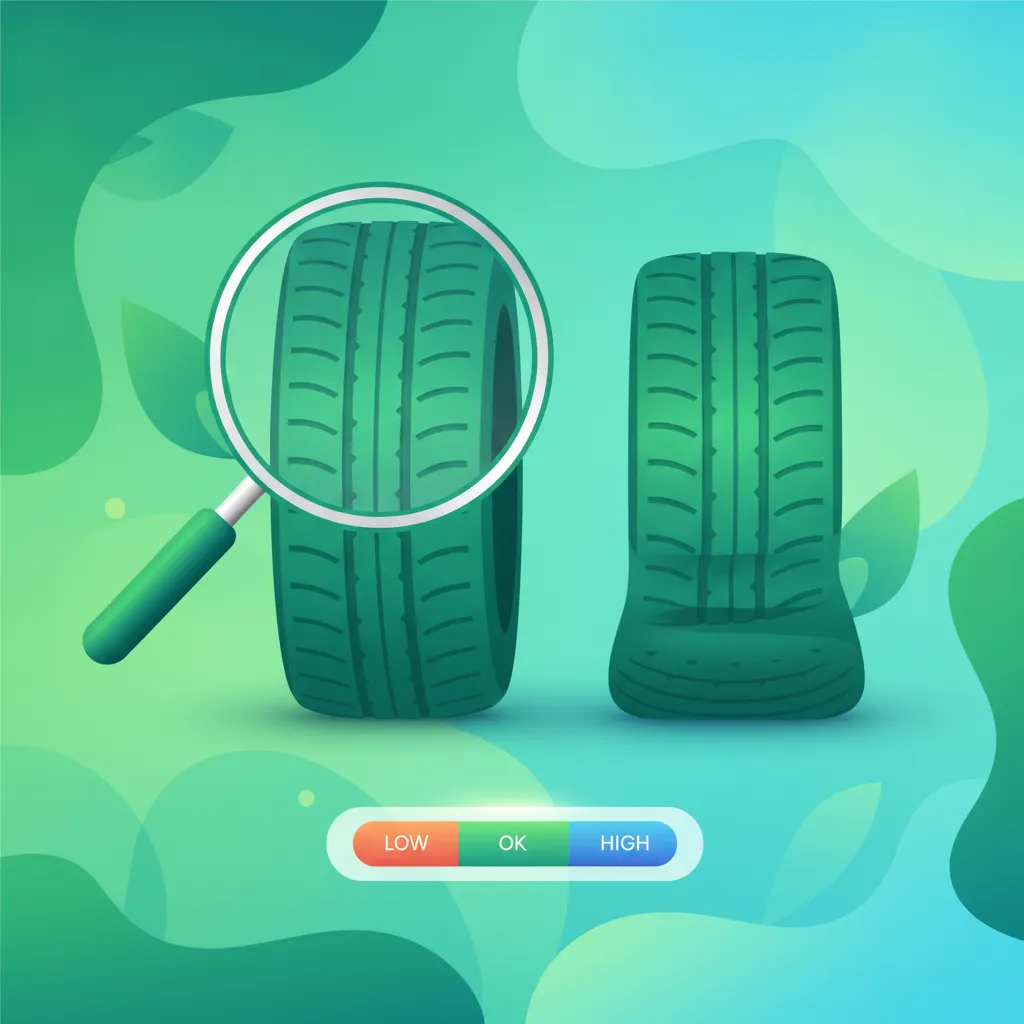
Lesson content overview
Tyres are the singular point of contact between your vehicle and the road. Their condition directly dictates your safety, control, braking effectiveness, and even fuel efficiency. For any driver in Portugal, particularly those preparing for their Category B driving theory exam, a thorough understanding of tyre requirements and maintenance is not just recommended—it's absolutely critical for safe and legal operation. This lesson will equip you with the knowledge to maintain your tyres correctly, recognize potential issues, and ensure your vehicle is roadworthy at all times.
The performance of your vehicle hinges on its tyres. They are engineered to provide grip for acceleration, braking, and cornering, absorb road shocks, and support the vehicle's weight. When tyres are not properly maintained, these vital functions are compromised, leading to increased risks on the road. From extended stopping distances to a complete loss of control, the implications of poor tyre condition can be severe. Understanding how to inspect, maintain, and interpret the various aspects of your tyres is therefore a fundamental skill for every responsible driver.
Proper tyre inflation is paramount for safety, handling, and tyre longevity. The internal air pressure within a tyre ensures it maintains its shape, distributes the vehicle's weight evenly, and provides an optimal contact patch with the road.
Tyre pressure refers to the force exerted by the air inside the tyre, typically measured in units like bar or PSI (pounds per square inch). This pressure is crucial because it directly influences how the tyre interacts with the road surface. An accurately inflated tyre flexes correctly, providing the designed level of grip and stability.
It is essential to check tyre pressure when the tyres are "cold." This means the vehicle has been stationary for at least three hours, or has driven for no more than 2-3 kilometres at a low speed. As a tyre heats up from friction during driving, the air inside expands, causing the pressure to rise. Checking pressure when hot will give an artificially high reading, leading you to potentially deflate the tyre, resulting in underinflation once it cools down.
Locate the Manufacturer's Recommended Pressure: This information is usually found on a sticker inside the driver's door jamb, on the fuel filler flap, or in your vehicle's owner's manual. It often specifies different pressures for front and rear tyres, and for various load conditions (e.g., light load vs. full load).
Use a Reliable Pressure Gauge: Digital gauges are generally more accurate than analogue ones.
Remove Valve Caps: Unscrew the caps from each tyre valve.
Press Gauge Firmly onto Valve: Push the gauge onto the valve stem until the hissing sound stops and the reading stabilizes.
Read and Adjust Pressure: Compare the reading to the manufacturer's recommendation. If too low, add air; if too high, release air by pressing the small pin in the centre of the valve.
Recheck and Replace Caps: Once the correct pressure is achieved, recheck to confirm and then screw the valve caps back on tightly to prevent dirt and moisture from entering.
Both underinflation and overinflation pose significant risks and negatively impact your driving experience:
Make a habit of checking your tyre pressure at least once a month and always before a long journey. Remember to adjust pressure based on vehicle load; if carrying heavy loads or many passengers, refer to your vehicle manual for recommended higher pressures.
The tread on your tyres is specifically designed to provide grip on various road surfaces and, crucially, to displace water in wet conditions.
Tread depth is the vertical distance from the deepest part of the tyre's groove to the top of the tread rubber. This depth is vital for safety, particularly when driving in rain or on damp roads. Adequate tread allows water to be channeled away from the contact patch, maintaining direct tyre-to-road contact.
In Portugal, as in many European countries, the legal minimum tread depth for passenger vehicle tyres is 1.6 millimetres (mm) across the entire circumference of the tyre. Driving with tyres below this legal limit is an offence and significantly increases the risk of an accident, especially in wet weather. While 1.6 mm is the legal minimum, many experts recommend replacing tyres when their tread depth falls below 2 mm or 3 mm for optimal safety, particularly if you frequently drive in wet conditions.
Tyre manufacturers incorporate small raised bars within the main tread grooves, known as tyre wear indicators. These indicators are typically 1.6 mm high. When the tyre tread wears down to the point where these bars are flush with the surrounding tread surface, it means your tyre has reached the legal minimum tread depth and must be replaced immediately.
Insufficient tread depth significantly increases the risk of aquaplaning (or aquaplanagem in Portuguese). Aquaplaning occurs when a layer of water builds up between the tyres and the road surface, causing the tyres to lose contact with the road. This results in a complete loss of steering control and braking ability, turning the vehicle into an uncontrollable sled. Deeper tread grooves are far more effective at evacuating water, thus minimizing the risk of aquaplaning.
Regular visual inspections are crucial for identifying issues that go beyond simple tread wear. Damage to the tyre structure, uneven wear, or old tyres can compromise safety even if the tread depth seems adequate.
Uneven wear patterns can be tell-tale signs of underlying mechanical problems with your vehicle or incorrect tyre maintenance. Addressing these patterns promptly can prevent premature tyre failure and improve vehicle handling.
Tyres are not just about tread depth; their material properties also degrade over time, even if they are not frequently used. Rubber compounds harden, become brittle, and lose their elasticity, leading to reduced grip and an increased risk of cracking or sudden failure. This degradation happens due to exposure to UV light, heat, and oxygen.
While there is no universally mandated legal maximum age for tyres in Portugal, it is widely recommended that tyres older than 6 to 10 years (depending on the manufacturer and specific tyre technology) should be replaced, regardless of their visible tread depth. The manufacturing date is indicated by a DOT code on the sidewall, typically a four-digit number representing the week and year of manufacture (e.g., "3523" means the 35th week of 2023).
Every tyre has specific markings on its sidewall that provide crucial information about its capabilities. Two key indicators are the Load Index and Speed Rating.
Always ensure that any replacement tyres match or exceed the original equipment specifications for load index and speed rating, as listed in your vehicle's manual or on the tyre placard.
Regular and diligent tyre maintenance is a simple yet effective way to ensure your safety, prolong the life of your tyres, and avoid unnecessary costs.
Beyond checking pressure and tread depth, incorporate a routine visual inspection of your tyres:
The importance of good tyre condition becomes even more pronounced under specific driving conditions:
As a driver in Portugal, you are legally responsible for ensuring your vehicle's tyres meet specific standards. Non-compliance can lead to fines, points on your licence, and, most importantly, significantly increased accident risk.
Failure to comply with Portuguese tyre regulations can result in significant fines and may invalidate your vehicle insurance in the event of an accident.
Ignoring tyre maintenance is a common oversight among drivers, leading to dangerous situations and legal penalties.
Your tyres are your first line of defense on the road. Prioritizing their maintenance is a direct investment in your safety and the safety of others.
By diligently following these guidelines, you will ensure your vehicle remains safe, compliant with Portuguese law, and performs optimally on the road.
Explore all units and lessons included in this driving theory course.
Lesson content overview
Explore all units and lessons included in this driving theory course.
Explore search topics learners often look for when studying Tyres and Maintenance Requirements. These topics reflect common questions about road rules, driving situations, safety guidance, and lesson level theory preparation for learners in Portugal.
Browse additional driving theory lessons that cover connected traffic rules, road signs, and common driving situations related to this topic. Improve your understanding of how different rules interact across everyday traffic scenarios.
Learn essential tyre maintenance for Portuguese roads. Covers checking tyre pressure, understanding tread depth legal limits, identifying wear patterns, and recognizing tyre age, crucial for safe Category B driving.

This lesson focuses on the driver's role in monitoring the condition of key safety components. It explains how to check for proper tyre inflation and wear, identify signs of brake problems, and ensure all lights and mirrors are functional and correctly adjusted. This continuous monitoring is a vital part of a professional driver's safety responsibilities.

This lesson defines the scope and limitations of the Category B driving licence in Portugal. It specifies the types of vehicles drivers are permitted to operate, including weight and passenger restrictions, and outlines the minimum age requirements. Furthermore, it explains the two-part examination process, covering both the theoretical and practical tests necessary for obtaining the licence.

This lesson outlines the mandatory documentation that a driver must possess and be able to present upon request. It covers the driver's licence, vehicle registration document (Matrícula), proof of insurance, and the valid inspection sticker. The lesson also explains the validity periods for these documents and the procedures for renewal to ensure continuous legal compliance.

This lesson details the mandatory pre-travel inspection that every professional driver must perform. It provides a step-by-step checklist covering tyres, brakes, lights, mirrors, fluids, and coupling systems. Conducting this daily check is a legal duty and is crucial for identifying potential mechanical issues before they become dangerous.

This lesson outlines the safety equipment legally required to be carried in a vehicle in Portugal. It covers the correct use of the warning triangle and reflective vest in the event of a breakdown or accident. Understanding the function and location of this equipment is vital for ensuring safety during a roadside emergency.
This lesson focuses on the legal requirement for third-party liability insurance in Portugal. It explains the scope of coverage for damages to property and personal injury in the event of an accident. Drivers will learn about their legal responsibilities, the process for filing an insurance claim, and the severe legal and financial risks of operating a vehicle without valid insurance.

This lesson explains the principles of safely loading a vehicle to avoid negatively impacting its stability and handling. It covers the importance of even weight distribution, respecting the vehicle's maximum load capacity, and properly securing all items. The dangers of unsecured loads, both inside the cabin and on external racks, are highlighted as significant safety hazards.

This lesson focuses on adapting driving techniques for wet and foggy conditions, which significantly reduce visibility and tyre grip. It explains the phenomenon of aquaplaning and how to avoid it by reducing speed and ensuring proper tyre condition. The correct use of headlights, fog lights, and increasing following distances are presented as essential safety measures.
This lesson details the fundamental legal obligations every driver must follow under the Código da Estrada. It covers adherence to speed limits, traffic signals, and road signs, as well as the mandatory use of safety equipment like seatbelts and child restraints. The content also emphasizes the importance of maintaining driver attentiveness and the strict prohibition of using mobile phones while driving.

This lesson covers the legal and safety requirements for restraining occupants in a vehicle. It details the mandatory use of seatbelts for all passengers and explains the specific laws regarding child restraint systems. The content provides guidance on choosing and correctly installing the appropriate type of child seat—from rear-facing carriers to booster seats—based on a child's age, weight, and height.
Understand how to spot uneven tyre wear, the risks of underinflation and overinflation, and recognize damage like cuts or bulges. Essential knowledge for maintaining vehicle safety and legal compliance in Portugal.

This lesson focuses on managing grip across different road surfaces and conditions. It discusses how dry and wet asphalt, oil slicks, and gravel affect tire traction, and how tire condition influences grip. Techniques for adapting rider input to maintain control under varying friction conditions are presented.
This lesson focuses on the driver's role in monitoring the condition of key safety components. It explains how to check for proper tyre inflation and wear, identify signs of brake problems, and ensure all lights and mirrors are functional and correctly adjusted. This continuous monitoring is a vital part of a professional driver's safety responsibilities.
Find clear answers to common questions learners have about Tyres and Maintenance Requirements. Learn how the lesson is structured, which driving theory objectives it supports, and how it fits into the overall learning path of units and curriculum progression in Portugal. These explanations help you understand key concepts, lesson flow, and exam focused study goals.
For light vehicles, the legal minimum tread depth is 1.6mm across the entire tread width. Driving with tyres below this limit is illegal and poses a significant safety risk, especially in wet conditions.
You should check your tyre pressure at least once a month and before any long journey. Correct pressure is vital for grip, braking performance, and even tyre wear, and should be adjusted according to the manufacturer's recommendations.
It is strongly recommended to use the same type and size of tyres on each axle. Mixing tyres with different tread patterns or construction types can significantly affect your vehicle's handling and stability in emergencies.
Yes, vehicle maintenance and safety are key topics in the Portuguese theory exam. Questions often test your understanding of how tyre health relates to braking distance and overall vehicle safety.
Utilize the powerful search tool to refine your Portuguese driving theory practice. Pinpoint questions related to specific traffic laws, road signs, or complex scenarios from the Código da Estrada. Begin targeted revision now to boost your understanding and confidently approach your IMT driving exam.