
Logo
Portuguese Driving Theory Courses

Lesson 5 of the Vehicle Safety, Lights, Tyres, Loads and Passenger Safety unit

Portuguese Driving Theory B: Seatbelts, Child Restraints, and Passenger Safety

This lesson details the legal and safety requirements for restraining all occupants in your vehicle. Understanding these rules is essential for both your Category B theory exam and your responsibility as a driver on Portuguese roads.
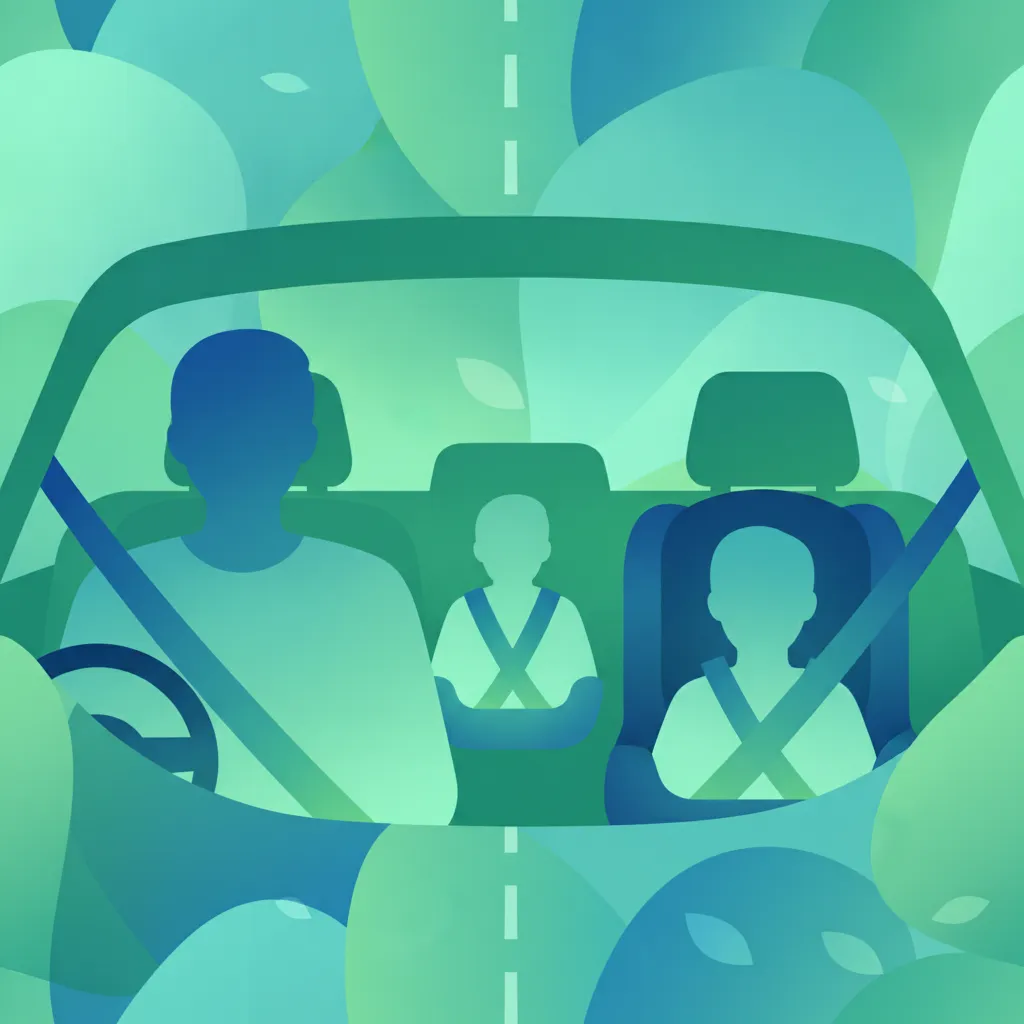
seatbeltschild safetypassenger rulesCategory Btheory exam
Portuguese Driving Theory B: Seatbelts, Child Restraints, and Passenger Safety

Lesson content overview

Portuguese Driving Theory B

Driving Safety for Occupants: Seatbelts, Child Restraints, and Passenger Protection

Ensuring the safety of all occupants within a vehicle is a primary responsibility for every driver. This lesson delves into the critical legal requirements and safety practices surrounding seatbelts and child restraint systems in Portugal, which are fundamental to protecting passengers, particularly children, from injury or fatality in the event of a collision. Understanding and adhering to these regulations is not just a matter of legal compliance but a commitment to road safety and the well-being of everyone in your vehicle.

Modern vehicles are equipped with a range of safety features, but their effectiveness largely depends on correct usage. Seatbelts and child restraints work in conjunction with other systems, like airbags, to manage the forces exerted on the human body during sudden deceleration. Misuse or non-use of these restraints dramatically reduces their protective capacity, turning potentially minor incidents into serious or even fatal ones.

The Indispensable Role of Seatbelts in Vehicle Safety

Seatbelts are a cornerstone of passive safety in vehicles, designed to keep occupants securely in their seats during rapid changes in speed or direction, such as sudden braking or a collision. Their primary function is to prevent occupants from being ejected from the vehicle or from colliding with the vehicle's interior components or other passengers.

What is a Seatbelt and How Does it Work?

A seatbelt is a safety harness composed of straps that secure a person to their seat. The most common type in modern vehicles is the three-point seatbelt, which includes both a lap belt and a diagonal (or shoulder) strap. The lap belt runs across the pelvis, distributing impact forces across the strong bones of the hips. The diagonal strap crosses the chest and collarbone, restraining the upper body.

When a vehicle suddenly decelerates, due to inertia, occupants continue to move forward at the vehicle's original speed. A properly worn seatbelt engages, locking into place to absorb and distribute this kinetic energy over a wide, strong area of the body. This significantly reduces the peak forces on any single body part, mitigating the risk of severe injury.

Types of Seatbelts

While the three-point seatbelt is standard, it's worth noting other types:

  • Two-point (Lap) Belts: These belts only cross the lap and are sometimes found in the middle rear seats of older vehicles or on buses. They offer less protection than three-point belts as they do not restrain the upper body, which can still be thrown forward.
  • Three-point (Lap and Diagonal) Belts: These are the most common and provide superior protection by restraining both the upper and lower body, minimizing forward movement and preventing ejection.

Mandatory Seatbelt Usage for All Occupants

In Portugal, the use of seatbelts is mandatory for all occupants whenever the vehicle is in motion. This rule applies to every seat equipped with a seatbelt, whether in the front or rear of the vehicle. Failure to comply is a legal offense and carries penalties, but more importantly, it drastically increases the risk of severe injury or death in a crash.

The driver is responsible for ensuring that all passengers are properly restrained before setting off. This includes checking that children are in appropriate child restraint systems. Even short journeys carry risks, and the forces involved in a low-speed collision can still be considerable.

Common Mistakes with Seatbelt Usage

Even when worn, seatbelts can be ineffective or even harmful if not used correctly. Common mistakes include:

  • Not buckling the diagonal strap: Some individuals only use the lap portion, leaving the upper body unrestrained.
  • Placing the lap belt over the abdomen: The lap belt must sit low across the pelvis, not across the stomach, to avoid internal organ damage in a crash.
  • Diagonal strap too close to the neck or under the arm: The diagonal strap should cross the middle of the shoulder and chest. If it's too high, it can injure the neck; if it's under the arm, it loses its effectiveness in restraining the upper body.
  • Twisted or slack belts: Belts should lie flat against the body, with no twists or excessive slack, as this compromises their ability to distribute forces effectively.

Warning

An incorrectly worn seatbelt can be as dangerous as no seatbelt at all. Always ensure the lap belt is low on the hips and the diagonal belt crosses the shoulder and chest, snug against the body.

Protecting Our Youngest Passengers: Child Restraint Systems (CRS)

Children, due to their smaller size, developing skeletal structure, and different body proportions, require specialized restraint systems beyond standard adult seatbelts. Child Restraint Systems (CRS) are specifically designed to protect child passengers, ensuring they are properly secured and that safety devices like airbags work as intended without causing harm.

Why Children Need Special Restraints

Children's heads are proportionally larger and heavier than adults' relative to their body size, and their neck muscles and bones are not fully developed. In a collision, these factors make them highly vulnerable to head and spinal injuries. Standard adult seatbelts are designed for adult physiques and would not fit a child correctly, potentially causing more harm than good by placing pressure across vulnerable areas like the neck or abdomen.

General Requirements for Child Restraint Systems in Portugal

The law in Portugal is clear:

  • Children under 12 years of age or shorter than 135 cm must be secured using an appropriate Child Restraint System (CRS) suitable for their weight and height. This applies to all journeys, regardless of distance or speed.
  • The CRS must be approved according to European safety standards (e.g., ECE R44 or R129, also known as i-Size).
  • The CRS must be installed correctly in the vehicle and fit the child securely.

Types of Child Restraint Systems

Child restraints evolve as children grow, moving from rear-facing carriers for infants to booster seats for older children. Each type is designed for a specific developmental stage and size:

1. Rear-Facing Child Carriers (Infant Car Seats)

Definition

Rear-facing Carrier

A Child Restraint System (CRS) oriented so the child faces the rear of the vehicle, offering optimal protection for infants and very young children.

  • Purpose: These seats provide superior protection for an infant's fragile head, neck, and spine during a frontal impact, which is the most common and often most severe type of collision. By facing the rear, the child's entire back and head are supported, distributing impact forces across a larger, stronger area of the body.
  • Usage: Rear-facing carriers are mandatory for infants up to a specific weight/height limit, typically around 9–13 kg or until they outgrow the seat's height limits (e.g., their head is above the top of the seat shell). It is always recommended to keep children rear-facing for as long as possible, within the limits of the seat and the child's size, as it offers the highest level of safety.
  • Installation: These seats are secured using the vehicle's seatbelt or by an ISOFIX system. Always follow the manufacturer's instructions for correct installation.

2. Forward-Facing Seats with Harness

Definition

Forward-facing Seat with Harness

A Child Restraint System (CRS) oriented to face the front of the vehicle, equipped with an integrated harness system (usually 5-point) to secure the child.

  • Purpose: Once a child has outgrown the weight or height limits of a rear-facing carrier, they transition to a forward-facing seat with a built-in harness. This harness system provides restraint for the child's torso and shoulders, distributing forces across their chest and pelvis.
  • Usage: These seats are suitable for toddlers and younger children who meet the weight and height criteria (typically from 9 kg to 18-25 kg, or up to specific height limits for i-Size seats). The harness should be snug and positioned at or just above the child's shoulders.

3. Booster Seats

Definition

Booster Seat

A Child Restraint System (CRS) that elevates a child, allowing the vehicle's adult three-point seatbelt to fit correctly across their body.

  • Purpose: Booster seats are for older children who have outgrown forward-facing seats with harnesses but are still too small for an adult seatbelt to fit safely. The booster raises the child so that the lap belt rests correctly across their hips (not their abdomen) and the diagonal strap crosses their shoulder and chest (not their neck or under their arm).
  • Types: Booster seats can be high-backed (offering head and side impact protection) or backless cushions. High-backed boosters are generally recommended for better protection and belt positioning.
  • Usage: Children typically use booster seats until they reach a height of 135 cm or are at least 12 years old. The adult seatbelt should always be used with a booster seat; the booster itself does not provide restraint.

4. Adult Seatbelt for Children

  • Criteria: A child is deemed ready to use an adult seatbelt without a booster seat when they are at least 12 years old or taller than 135 cm.
  • Correct Fit: Even if a child meets these criteria, it's crucial to check that the adult seatbelt fits correctly:
    • The lap belt lies low across the top of their thighs/pelvis.
    • The diagonal belt rests across the shoulder and chest, not on the neck or slipping off the shoulder.
    • The child can sit with their back against the vehicle's seat and their knees bent comfortably at the edge of the seat, with their feet flat on the floor.
  • Implication: If the adult seatbelt does not fit properly, the child still needs a booster seat, regardless of their age or a height just over 135 cm.

ISOFIX vs. Vehicle Seatbelt Installation

Child restraints can be installed using two main methods:

  • ISOFIX: An international standard for attachment points that allows child seats to be securely fixed directly to the vehicle's chassis using built-in anchor points. This system reduces the risk of incorrect installation and offers a very secure connection.
  • Vehicle Seatbelt: Many child seats are designed to be installed using the vehicle's own three-point seatbelt. This requires careful attention to the seat manufacturer's instructions to ensure the belt is routed correctly and pulled tight.

Tip

Always consult the child restraint system's user manual and your vehicle's manual for specific installation instructions and compatibility. Incorrect installation dramatically reduces a CRS's effectiveness.

Front Seat Restrictions for Children

In Portugal, specific rules govern where children can sit:

  • Children under 12 years old must not be seated in the front passenger seat unless the vehicle has no rear seats (e.g., a commercial van or certain sports cars).
  • If a child under 12 must be seated in the front seat (due to lack of rear seats), and a rear-facing CRS is used, the front passenger airbag MUST be deactivated. Front airbags deploy with considerable force and can cause severe or fatal injuries to a child, especially an infant in a rear-facing seat. For forward-facing children, it's still safer to deactivate the airbag if possible, or at least move the seat as far back as possible.

Portuguese Regulations for Passenger Safety: A Summary

The legal framework in Portugal, primarily through the Código da Estrada (Road Code), mandates the use of these safety devices to protect all road users.

Seatbelt Usage

  • Legal Obligation: All occupants of a vehicle equipped with seatbelts must wear them whenever the vehicle is in motion. This applies to both front and rear seats.
  • Driver's Responsibility: The driver is legally responsible for ensuring that all adult passengers are buckled up and that children are correctly secured in appropriate CRS.
  • Exceptions: There are very limited exceptions, such as for certain emergency service personnel during specific duties or individuals with valid medical exemptions. However, these are rare and require official documentation.

Child Restraint Requirements

  • Mandatory CRS: Children under 12 years of age or shorter than 135 cm must use an approved CRS appropriate for their weight and height.
  • Rear Seat Preference: Children should always travel in the rear seats of the vehicle.
  • Front Seat Conditions: If a child under 12 or 135 cm must sit in the front seat (only if the vehicle has no rear seats):
    • If using a rear-facing CRS, the passenger airbag must be deactivated.
    • If using a forward-facing CRS or booster, the passenger airbag should preferably be deactivated, or the seat moved as far back as possible.

Common Violations and Critical Safety Insights

Understanding the rules is one thing; applying them correctly and consistently is another. Many serious injuries or fatalities in traffic accidents could be prevented with proper restraint usage.

Practical Violations and Their Consequences

  1. Unbelted Passengers: Often, passengers in the rear seats are tempted to not buckle up, especially for short trips.
    • Consequence: In a collision, an unbelted rear passenger can be thrown forward with tremendous force, not only injuring themselves but also potentially causing severe injury or death to front-seat occupants. This is often referred to as "the third collision" (the car hits something, the occupant hits the interior, the occupant hits another occupant).
  2. Child in Front Seat with Active Airbag: Placing a child in the front passenger seat without deactivating the airbag.
    • Consequence: The force of an airbag deploying is designed for an adult body. For a child, especially an infant, it can cause catastrophic head and neck injuries, or even death.
  3. Incorrect CRS Installation: A common mistake is not tightening the seatbelt securing the CRS enough, or misrouting the belt, causing the seat to be loose.
    • Consequence: A loosely installed CRS will not provide the intended protection in a crash. The child's head or body may hit the interior, or the seat itself could become a projectile.
  4. Premature Use of Adult Seatbelt: Using an adult seatbelt for a child who is still too small (under 135 cm or 12 years old).
    • Consequence: The lap belt may ride up over the abdomen, causing severe internal injuries, and the diagonal strap may sit across the neck, posing a strangulation risk or being ineffective.
  5. Child Outgrowing CRS: Continuing to use a CRS that the child has exceeded the weight or height limit for.
    • Consequence: The CRS can no longer provide optimal protection. For example, a child too tall for a rear-facing seat will have their head exposed, or a child too heavy for a forward-facing harness will exceed its designed load limits.

The Physics and Biomechanics of Safety

The principles behind seatbelt and CRS effectiveness are rooted in physics and biomechanics:

  • Inertia and Kinetic Energy: During a collision, the vehicle stops abruptly, but its occupants continue moving forward due to inertia, possessing the same kinetic energy the vehicle had. Restraint systems manage this energy, decelerating the occupant more gradually and over a larger surface area.
  • Force Distribution: Seatbelts distribute the impact forces across the strongest parts of the body (pelvis, rib cage, collarbone), minimizing concentrated pressure on vulnerable organs or joints. Child restraints are specifically designed to protect their unique anatomy.
  • Ejection Prevention: Being ejected from a vehicle during a crash dramatically increases the risk of severe injury and fatality. Seatbelts are highly effective at preventing ejection, keeping occupants within the protective shell of the vehicle.

Contextual Variations and Driving Conditions

The importance of proper restraint systems remains constant regardless of external factors, but certain conditions heighten the need for vigilance.

  • Weather Conditions: Adverse weather like heavy rain, ice, or snow increases the risk of sudden braking or skidding, making proper restraint even more critical to prevent occupants from being thrown around inside the vehicle.
  • Road Type: On motorways or expressways where speeds are higher, the kinetic energy involved in a collision is exponentially greater. This magnifies the importance of every occupant being correctly restrained to dissipate these massive forces. In urban traffic, frequent stops and starts, combined with the presence of pedestrians and cyclists, necessitate constant readiness for sudden deceleration.
  • Vehicle Load: While not directly affecting restraint use, an overloaded vehicle can alter handling and stopping distances, potentially increasing crash risk. Ensuring all passengers are restrained becomes even more vital in such scenarios.
  • Vulnerable Road Users: Driving in areas with many vulnerable road users (e.g., near schools, pedestrian crossings, parks) requires heightened driver awareness. Should an emergency stop be required, proper passenger restraint ensures internal safety.

Essential Vocabulary for Passenger Safety

Final Concept Summary: Protecting Every Journey

Passenger safety, particularly concerning seatbelts and child restraint systems, is a non-negotiable aspect of responsible driving in Portugal.

  • Universal Seatbelt Requirement: Every occupant, in every seat equipped with a seatbelt, must wear it whenever the vehicle is in motion. This is a fundamental legal and safety mandate.
  • Mandatory Child Restraints: Children under 12 years old or shorter than 135 cm must be secured in an appropriate Child Restraint System (CRS) that matches their weight and height.
  • CRS Progression: Children transition from rear-facing carriers (for infants) to forward-facing seats with harnesses (for toddlers), then to booster seats (until the adult seatbelt fits correctly), and finally, to using the adult seatbelt directly.
  • Crucial Installation: All CRS must be installed correctly, either via ISOFIX or the vehicle's seatbelt, following manufacturer guidelines. Incorrect installation severely compromises safety.
  • Front Seat Airbag Awareness: Children under 12 should avoid the front passenger seat. If unavoidable, especially with rear-facing CRS, the front passenger airbag must be deactivated to prevent severe injury.
  • Driver's Responsibility: The driver bears the primary responsibility for ensuring all passengers, especially children, are correctly restrained before embarking on any journey.
  • Safety Rationale: These rules are based on the physics of collisions and the biomechanical vulnerabilities of the human body, particularly children. Proper restraint significantly reduces injury severity and prevents fatal outcomes by managing kinetic energy and preventing ejection.

Adhering to these principles is crucial for passing your Portuguese Category B driving theory exam and, more importantly, for cultivating safe driving habits that protect everyone on the road.

Learn more with these articles

Check out these practice sets


Search topics related to Seatbelts, Child Restraints, and Passenger Safety

Explore search topics learners often look for when studying Seatbelts, Child Restraints, and Passenger Safety. These topics reflect common questions about road rules, driving situations, safety guidance, and lesson level theory preparation for learners in Portugal.

seatbelt laws Portugal driving theorychild restraint requirements Category B Portugalusing child seats in cars Portugal lawpassenger safety rules Portuguese theory examhow to pass Category B exam questions on seatbeltswhen can a child use a regular seatbelt in Portugal

Related driving theory lessons for Seatbelts, Child Restraints, and Passenger Safety

Browse additional driving theory lessons that cover connected traffic rules, road signs, and common driving situations related to this topic. Improve your understanding of how different rules interact across everyday traffic scenarios.

Portuguese Laws on Child Restraint Systems in Vehicles

Understand the legal requirements for child restraint systems (CRS) in Portugal, including age and height limits for booster seats and rear-facing carriers. Learn driver responsibilities for passenger safety.

child safetychild restraintsbooster seatstraffic lawspassenger safetyportugal
Passenger Seating, Restraints and Luggage Management lesson image

Passenger Seating, Restraints and Luggage Management

This lesson details the regulations and proper application of passenger restraints, including seat belts and child safety seats. It explains the principles of safe luggage storage and how correct load distribution is critical for maintaining vehicle stability. The content also provides guidance on managing standing passengers to ensure their safety during transit.
Portuguese Driving Theory DPassenger Safety, Comfort, Accessibility and Driver Conduct
View lesson
Accessibility for Reduced Mobility and Children lesson image

Accessibility for Reduced Mobility and Children

This lesson focuses on the legal and practical requirements for transporting passengers with reduced mobility and children. It explains the operation of accessibility features like wheelchair ramps and the importance of priority seating. The content also addresses the safe transport of children, including the use of appropriate restraints and collaboration with caregivers.
Portuguese Driving Theory DPassenger Safety, Comfort, Accessibility and Driver Conduct
View lesson
School Zones and Children Safety lesson image

School Zones and Children Safety

This lesson details the special precautions drivers must take when navigating school zones. It highlights the reduced speed limits that are often in effect during specific hours and the importance of being vigilant for children crossing the road. The content also covers the rules for stopping for school buses when their lights are flashing, to ensure the safety of boarding and alighting students.

Portuguese Driving Theory BPedestrians, Crossings, Cyclists and Vulnerable Road Users
View lesson
Pedestrian Crossings and School Zones lesson image

Pedestrian Crossings and School Zones

This lesson provides a detailed overview of the legal requirements and safe driving practices for school zones and pedestrian crossings. It covers mandatory speed limits, the meaning of various signs and signals, and the importance of yielding to pedestrians. The content stresses heightened awareness due to the unpredictable nature of children's behavior near roads.
Portuguese Driving Theory DVulnerable Road Users, Pedestrians, Cyclists and School Areas
View lesson
Legal Obligations of Drivers lesson image

Legal Obligations of Drivers

This lesson details the fundamental legal obligations every driver must follow under the Código da Estrada. It covers adherence to speed limits, traffic signals, and road signs, as well as the mandatory use of safety equipment like seatbelts and child restraints. The content also emphasizes the importance of maintaining driver attentiveness and the strict prohibition of using mobile phones while driving.
Portuguese Driving Theory BCategory B Licence Basics and Driver Responsibility
View lesson
Special Considerations for Children and Elderly lesson image

Special Considerations for Children and Elderly

This lesson details the special care required when transporting children and elderly passengers. It covers procedures for assisting with boarding and alighting, ensuring they are seated securely, and communicating clearly. The content also addresses allocating sufficient time for these passengers to move safely within and around the vehicle.
Portuguese Driving Theory DVulnerable Road Users, Pedestrians, Cyclists and School Areas
View lesson
Legal Responsibilities and Duty of Care lesson image

Legal Responsibilities and Duty of Care

This lesson focuses on the legal concept of duty of care, detailing a professional driver's obligations to passengers and other road users. It examines how negligence and failure to comply with traffic laws can result in liability and legal penalties. The content also emphasizes adherence to safety regulations and proper incident reporting procedures.

Portuguese Driving Theory DPassenger Vehicle Licence Scope and Professional Responsibility
View lesson
Load Securing and Vehicle Stability lesson image

Load Securing and Vehicle Stability

This lesson explains the principles of safely loading a vehicle to avoid negatively impacting its stability and handling. It covers the importance of even weight distribution, respecting the vehicle's maximum load capacity, and properly securing all items. The dangers of unsecured loads, both inside the cabin and on external racks, are highlighted as significant safety hazards.
Portuguese Driving Theory BVehicle Safety, Lights, Tyres, Loads and Passenger Safety
View lesson
Legal Penalties and Enforcement for Passenger Vehicles lesson image

Legal Penalties and Enforcement for Passenger Vehicles

This lesson outlines the legal framework and penalties associated with traffic violations in Portugal for professional drivers. It covers the system of fines and penalty points that can lead to license suspension. The content reviews common infractions specific to passenger vehicles and emphasizes the importance of full compliance with the law.

Portuguese Driving Theory DEmergencies, Evacuation, Fatigue, Penalties and Safe Passenger Service
View lesson
Emergency Procedures and Responsible Driving lesson image

Emergency Procedures and Responsible Driving

This lesson equips drivers with the essential knowledge for managing a roadside emergency. It outlines the correct steps to take following a vehicle breakdown or an accident, including securing the scene with a warning triangle, wearing a reflective vest, and contacting emergency services. The lesson concludes by reinforcing the principles of responsible and courteous driving as part of a positive road safety culture.

Portuguese Driving Theory BAlcohol, Drugs, Fatigue, Penalties, Emergencies and Responsible Driving
View lesson

Common Seatbelt and Child Restraint Violations Explained

Learn about frequent errors in seatbelt and child restraint system use, and their consequences. This lesson focuses on critical safety insights and how to avoid dangerous practices for all passengers.

seatbeltschild restraintsdriving safetycommon mistakestraffic violationsrisk awareness
Passenger Seating, Restraints and Luggage Management lesson image

Passenger Seating, Restraints and Luggage Management

This lesson details the regulations and proper application of passenger restraints, including seat belts and child safety seats. It explains the principles of safe luggage storage and how correct load distribution is critical for maintaining vehicle stability. The content also provides guidance on managing standing passengers to ensure their safety during transit.

Portuguese Driving Theory DPassenger Safety, Comfort, Accessibility and Driver Conduct
View lesson
Legal Obligations of Drivers lesson image

Legal Obligations of Drivers

This lesson details the fundamental legal obligations every driver must follow under the Código da Estrada. It covers adherence to speed limits, traffic signals, and road signs, as well as the mandatory use of safety equipment like seatbelts and child restraints. The content also emphasizes the importance of maintaining driver attentiveness and the strict prohibition of using mobile phones while driving.
Portuguese Driving Theory BCategory B Licence Basics and Driver Responsibility
View lesson
Penalties for Traffic Violations lesson image

Penalties for Traffic Violations

This lesson provides a detailed overview of the Portuguese system for penalizing traffic infractions. It explains how different violations are categorized and the corresponding fines and penalty points. The lesson clarifies the process of accumulating points and the thresholds at which a driver faces licence suspension or is required to undertake remedial training.

Portuguese Driving Theory BAlcohol, Drugs, Fatigue, Penalties, Emergencies and Responsible Driving
View lesson
Load Securing and Vehicle Stability lesson image

Load Securing and Vehicle Stability

This lesson explains the principles of safely loading a vehicle to avoid negatively impacting its stability and handling. It covers the importance of even weight distribution, respecting the vehicle's maximum load capacity, and properly securing all items. The dangers of unsecured loads, both inside the cabin and on external racks, are highlighted as significant safety hazards.
Portuguese Driving Theory BVehicle Safety, Lights, Tyres, Loads and Passenger Safety
View lesson
Penalties for Non-Compliance lesson image

Penalties for Non-Compliance

This lesson provides a comprehensive overview of the penalties for failing to comply with Portuguese traffic laws. It explains the structure of monetary fines, the demerit point system that affects a driver's licence, and the conditions that can lead to licence suspension or revocation. Understanding these consequences is crucial for appreciating the importance of lawful and responsible driving.

Portuguese Driving Theory BCategory B Licence Basics and Driver Responsibility
View lesson
Pedestrian Crossings and School Zones lesson image

Pedestrian Crossings and School Zones

This lesson provides a detailed overview of the legal requirements and safe driving practices for school zones and pedestrian crossings. It covers mandatory speed limits, the meaning of various signs and signals, and the importance of yielding to pedestrians. The content stresses heightened awareness due to the unpredictable nature of children's behavior near roads.

Portuguese Driving Theory DVulnerable Road Users, Pedestrians, Cyclists and School Areas
View lesson
Legal Penalties and Enforcement for Passenger Vehicles lesson image

Legal Penalties and Enforcement for Passenger Vehicles

This lesson outlines the legal framework and penalties associated with traffic violations in Portugal for professional drivers. It covers the system of fines and penalty points that can lead to license suspension. The content reviews common infractions specific to passenger vehicles and emphasizes the importance of full compliance with the law.
Portuguese Driving Theory DEmergencies, Evacuation, Fatigue, Penalties and Safe Passenger Service
View lesson
Bus Lanes, Priority Rules and Restrictions lesson image

Bus Lanes, Priority Rules and Restrictions

This lesson explains the regulations governing the use of dedicated bus lanes, including operational hours and priority rules at junctions. It clarifies which other vehicles may use these lanes and under what circumstances. The content also discusses traffic signal priority systems and the legal implications of improper bus lane usage.
Portuguese Driving Theory DSigns, Bus Rules, Restrictions, Stops and Route Awareness
View lesson
Vehicle Safety Equipment lesson image

Vehicle Safety Equipment

This lesson outlines the safety equipment legally required to be carried in a vehicle in Portugal. It covers the correct use of the warning triangle and reflective vest in the event of a breakdown or accident. Understanding the function and location of this equipment is vital for ensuring safety during a roadside emergency.

Portuguese Driving Theory BVehicle Safety, Lights, Tyres, Loads and Passenger Safety
View lesson
School Zones and Children Safety lesson image

School Zones and Children Safety

This lesson details the special precautions drivers must take when navigating school zones. It highlights the reduced speed limits that are often in effect during specific hours and the importance of being vigilant for children crossing the road. The content also covers the rules for stopping for school buses when their lights are flashing, to ensure the safety of boarding and alighting students.

Portuguese Driving Theory BPedestrians, Crossings, Cyclists and Vulnerable Road Users
View lesson

Frequently asked questions about Seatbelts, Child Restraints, and Passenger Safety

Find clear answers to common questions learners have about Seatbelts, Child Restraints, and Passenger Safety. Learn how the lesson is structured, which driving theory objectives it supports, and how it fits into the overall learning path of units and curriculum progression in Portugal. These explanations help you understand key concepts, lesson flow, and exam focused study goals.

Are all passengers in a vehicle required to wear seatbelts in Portugal?

Yes, under the Código da Estrada, all occupants in a moving vehicle must wear a properly fastened seatbelt, provided the vehicle is equipped with them.

What is the primary factor for choosing a child restraint system in Portugal?

The choice is primarily based on the child's height and weight, ensuring the restraint is homologated for their specific physical characteristics to provide maximum protection.

At what height can a child stop using a specific restraint system?

In Portugal, children under 135cm in height who are less than 12 years old must use a homologated restraint system adapted to their size and weight.

Can children travel in the front seat of a car?

Generally, children under 12 years old who are under 135cm must travel in the back seat, unless they are in a specific rear-facing system or if the vehicle lacks rear seatbelts.

Ready to Find Your Next Targeted Practice Session?

Utilize the powerful search tool to refine your Portuguese driving theory practice. Pinpoint questions related to specific traffic laws, road signs, or complex scenarios from the Código da Estrada. Begin targeted revision now to boost your understanding and confidently approach your IMT driving exam.

Search Practice Questions by Topic

Continue your Portuguese driving theory learning journey

Portuguese road signsPortuguese article topicsSearch Portuguese road signsPortuguese driving theory homePortuguese road sign categoriesPortuguese driving theory topicsSearch Portuguese theory articlesPortuguese driving theory coursesPortuguese Driving Theory B coursePortuguese Driving Theory C coursePortuguese Driving Theory D coursePortuguese driving theory articlesPortuguese driving theory practicePortuguese practice set categoriesPortuguese Driving Theory AM coursePortuguese Motorcycle Theory A coursePortuguese driving licence proceduresSearch Portuguese driving theory practicePortuguese driving theory terminology A–ZPortuguese driving theory terms and glossaryBraking, Cornering, Grip and Motorcycle Control unit in Portuguese Motorcycle Theory AMotorcycle Licence Basics and Rider Responsibility unit in Portuguese Motorcycle Theory ASigns, Restrictions, Route Planning and Access Limits unit in Portuguese Driving Theory CVehicle Safety Equipment lesson in Vehicle Safety, Lights, Tyres, Loads and Passenger SafetyIntersections, Roundabouts, Crossings and Urban Riding unit in Portuguese Motorcycle Theory AWeather, Road Surfaces, Night Riding and Motorway Riding unit in Portuguese Motorcycle Theory AGoods Vehicle Licence Scope and Professional Responsibility unit in Portuguese Driving Theory CLights and Signalling Usage lesson in Vehicle Safety, Lights, Tyres, Loads and Passenger SafetyRisk Behaviour, Emergencies, Penalties and Defensive Riding unit in Portuguese Motorcycle Theory APassenger Vehicle Licence Scope and Professional Responsibility unit in Portuguese Driving Theory DLane Positioning, Blind Spots, Overtaking and Space Management unit in Portuguese Motorcycle Theory ATyres and Maintenance Requirements lesson in Vehicle Safety, Lights, Tyres, Loads and Passenger SafetyLoad Securing and Vehicle Stability lesson in Vehicle Safety, Lights, Tyres, Loads and Passenger SafetyAlcohol, Drugs, Fatigue, Penalties, Emergencies and Responsible Driving unit in Portuguese Driving Theory BSeatbelts, Child Restraints, and Passenger Safety lesson in Vehicle Safety, Lights, Tyres, Loads and Passenger Safety