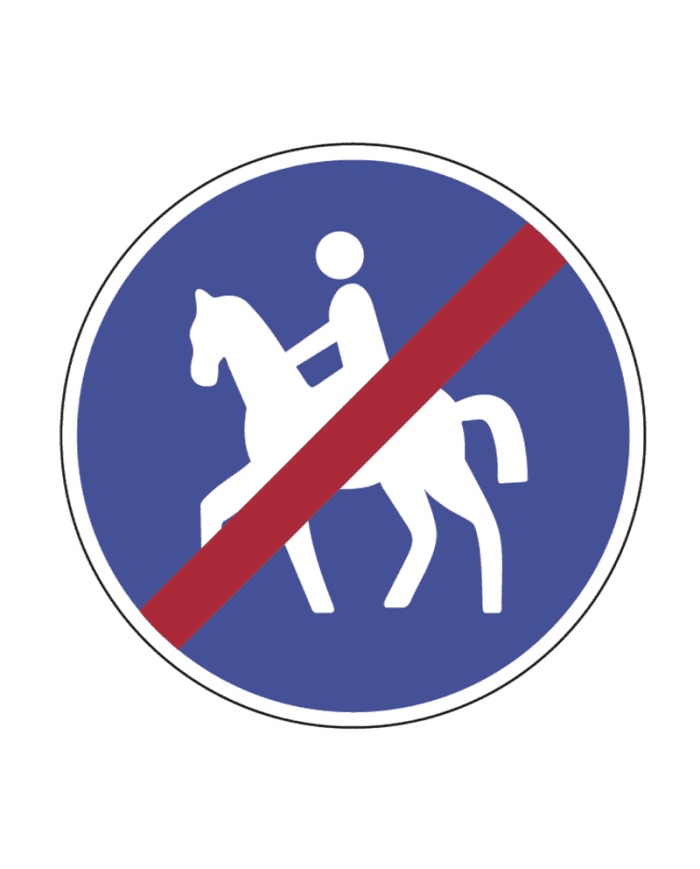
This D13e traffic sign, designated 'Fim da pista obrigatória para peões e velocípedes' in Portuguese, signals the end of a designated lane that was compulsory for pedestrians and cyclists. As part of Portugal's mandatory signs, it means the specific obligation for these road users to use that particular lane has concluded. Drivers should be aware that pedestrians and cyclists may now merge back into general traffic or change direction, so anticipate their movements and adjust your driving accordingly.
This sign signals the conclusion of a dedicated lane for pedestrians and cyclists. Proper interpretation is crucial for safe navigation and passing your theory exam on Portuguese traffic rules.
D13e - Fim da pista obrigatória para peões e velocípedes (Fim da pista obrigatória para peões e velocípedes) belongs to the Portuguese mandatory signs category in the Regulamento de Sinalização do Trânsito. It normally uses the blue mandatory style, meaning the driver must perform the indicated positive action rather than merely avoid something. The official wording is: fim da pista obrigatória para peões e velocípedes: indicação de que terminou a pista obrigatória para peões e velocípedes. It creates a positive duty to follow the indicated route, direction, lane, track, equipment requirement, or road-user rule. For theory preparation, connect the sign to a concrete driving decision: where to look, when to slow, whether to stop or yield, which route or lane to choose, and whether any panel changes the scope of the rule. On the road, interpret it together with markings, traffic lights, police directions, temporary works signs, and any additional panel placed with it. A strong exam answer explains both recognition and behaviour: not only what the sign is called, but what a safe and lawful driver must do next.
D13e - Fim da pista obrigatória para peões e velocípedes (Fim da pista obrigatória para peões e velocípedes) means that the driver must understand and apply this official Portuguese instruction: fim da pista obrigatória para peões e velocípedes: indicação de que terminou a pista obrigatória para peões e velocípedes. In practical terms, you should position early and follow the indicated direction, route, lane, track, or road-user obligation without improvising a different movement.
Get clear, practical answers to the most common questions about the D13e - D13e - Fim da pista obrigatória para peões e velocípedes (Fim da pista obrigatória para peões e velocípedes) road sign. Learn how the sign works, what rules it represents, and how it affects real driving situations. This FAQ strengthens your understanding and supports accurate decision making for the Portuguese driving theory exam in Portugal.
The D13e sign, officially 'Fim da pista obrigatória para peões e velocípedes', indicates that the mandatory lane previously reserved for pedestrians and cyclists has now ended. It's a signal that these road users are no longer required to stay in that specific lane and may rejoin general traffic.
Drivers seeing the D13e sign should anticipate that pedestrians and cyclists might leave their dedicated lane. Be prepared to adjust your position or speed to allow them to merge safely back into the general road space or change their route.
No, the D13e is a mandatory sign, meaning it signals the *end* of a specific obligation. It does not prohibit drivers from doing something, but rather informs them that a previous rule for pedestrians and cyclists is no longer in effect at that point.
A common trap is confusing the D13e with signs that prohibit certain actions for drivers. Learners might mistakenly think it imposes a new restriction on them. It's crucial to remember this sign relates to the ending of a *previous obligation* for pedestrians and cyclists, and drivers should be alert to their potential re-entry into general traffic.
Yes, after passing the D13e sign, pedestrians and cyclists are no longer bound to their dedicated lane. They may move into the carriageway or change direction. Drivers must remain vigilant and prepared for these movements to ensure safety.
A clear reference image of the D13e - D13e - Fim da pista obrigatória para peões e velocípedes (Fim da pista obrigatória para peões e velocípedes) road sign used in Portugal.
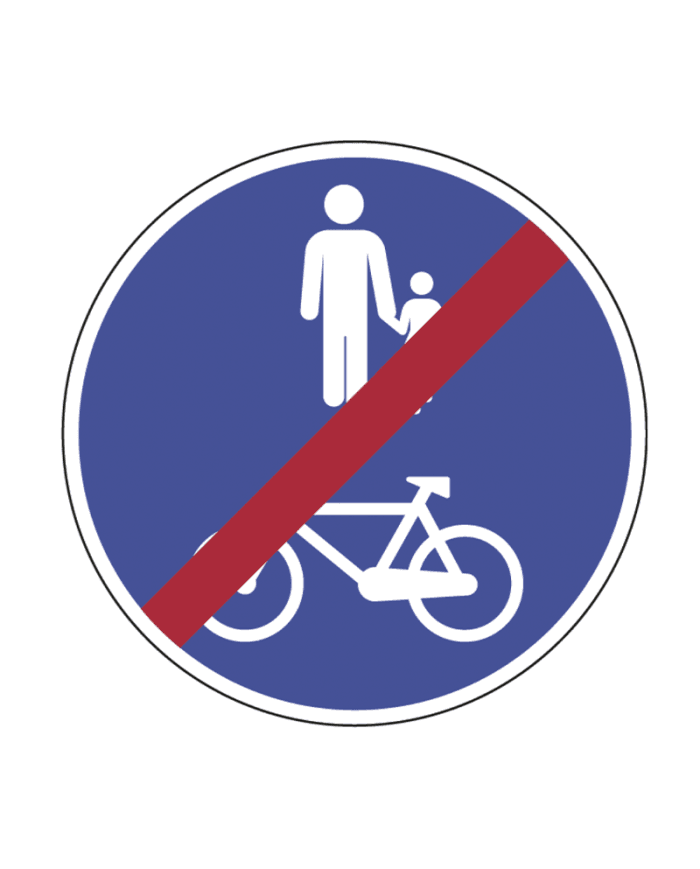
The D13e - D13e - Fim da pista obrigatória para peões e velocípedes (Fim da pista obrigatória para peões e velocípedes) road sign may also be known by these alternative names or terms.
The D13e - D13e - Fim da pista obrigatória para peões e velocípedes (Fim da pista obrigatória para peões e velocípedes) road sign is part of the Mandatory Signs category, which groups together signs with similar rules and functions.
Comparing related road signs helps solidify your understanding and recognition for the Portuguese theory test. Effective sign recognition and traffic sign comparison are key to mastering revision and avoiding mistakes.

D10: You Must Use Your Dipped Headlights (Médios)
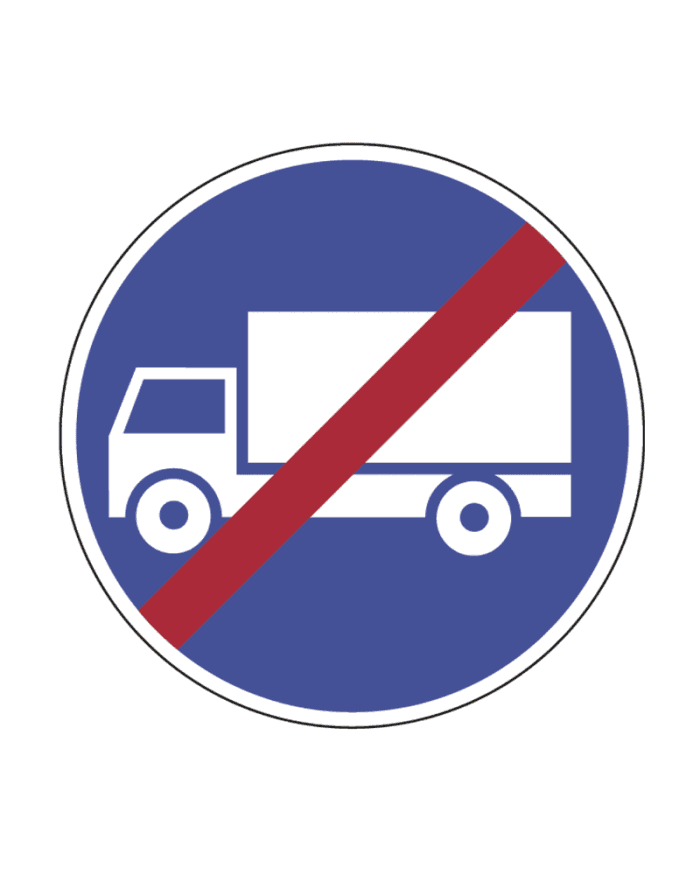
D11a: Mandatory Lane for Goods Vehicles Ends Here
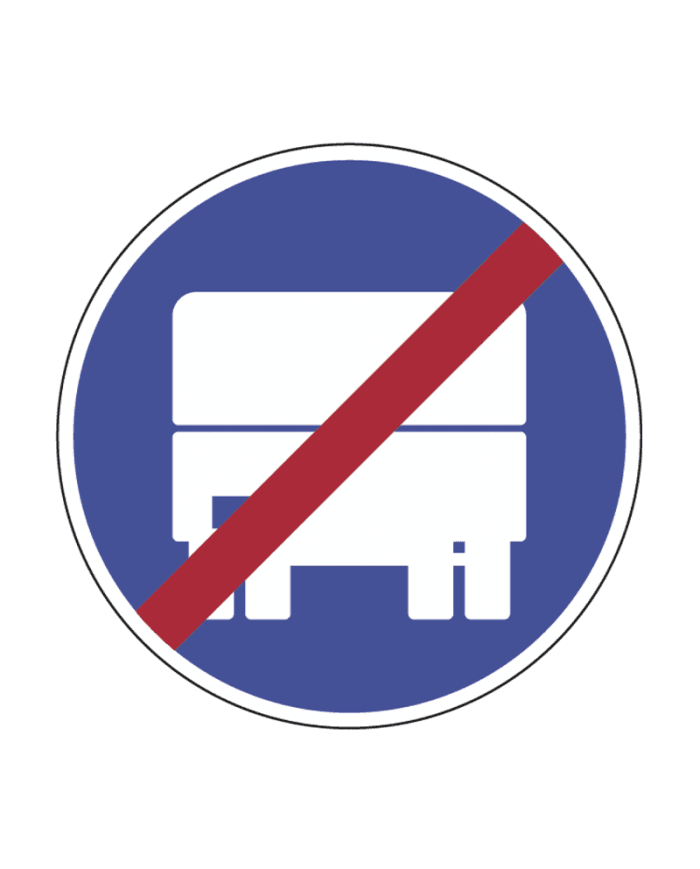
D11b: Mandatory Lane for Heavy Vehicles Ends Here
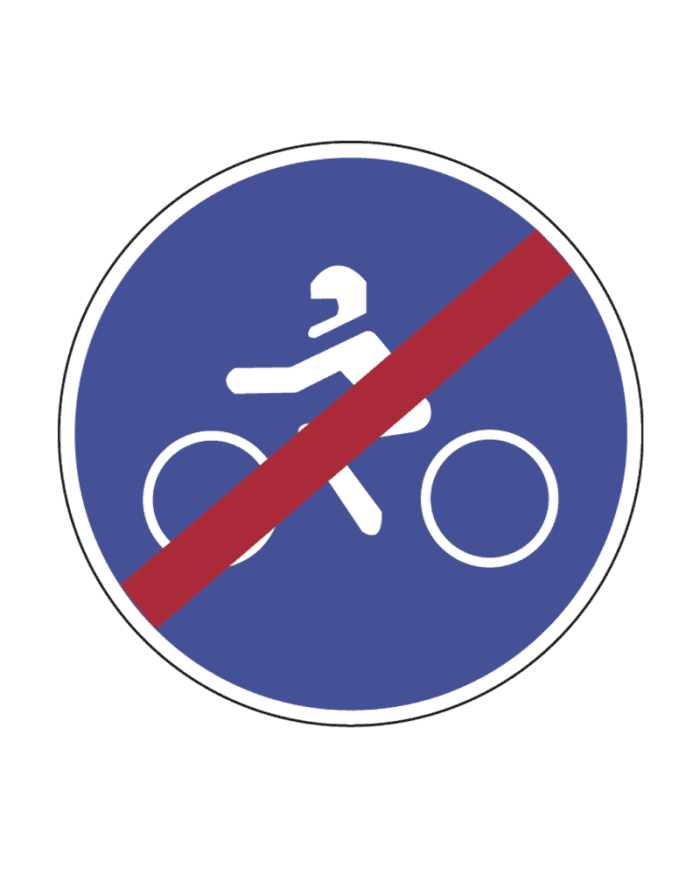
D11c: Mandatory Lane for Motorcycles Has Ended
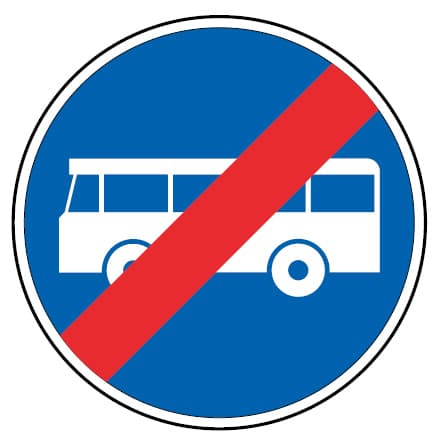
D12: Fim da via reservada a veículos de transporte público - End of the bus lane ahead!
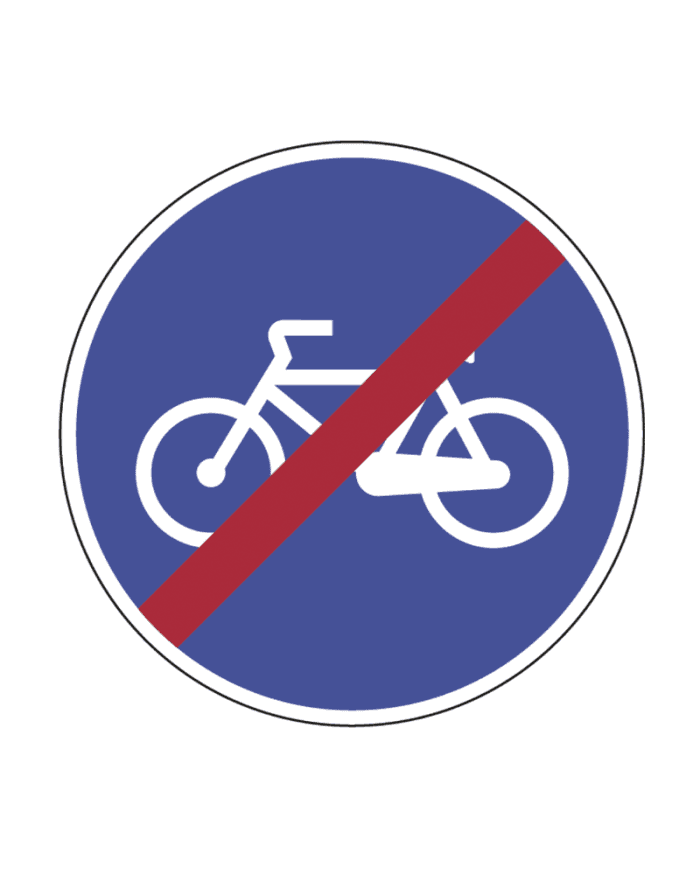
You've Reached the End of the Mandatory Cycle Path: D13a Sign
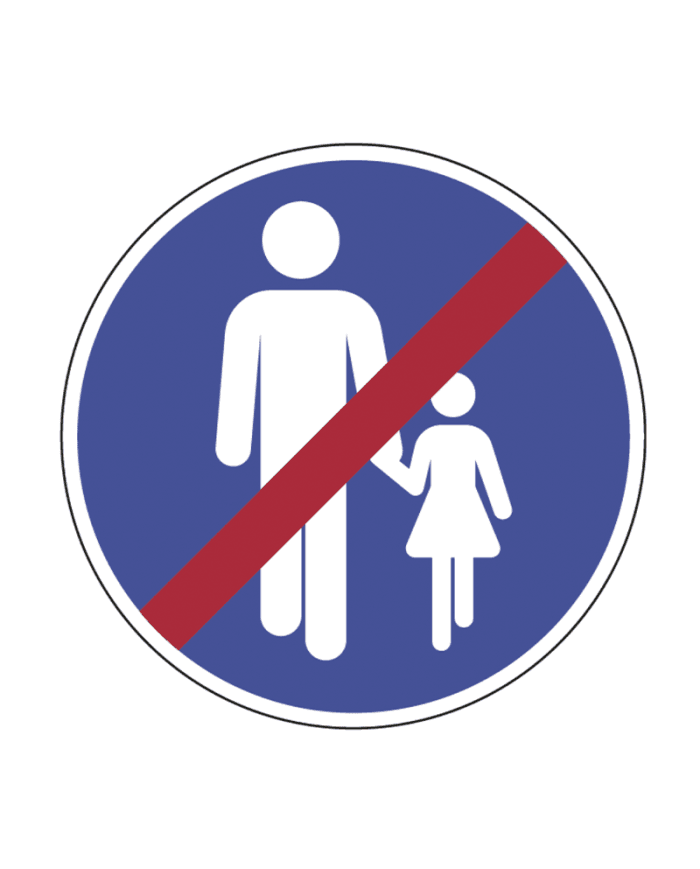
D13b: Mandatory Footpath for Pedestrians Ends Here
D13c: The Mandatory Lane for Horse Riders Has Ended
After reviewing the full list, explore signs by specific categories such as warning, regulatory, or informational to deepen your understanding. Practise recognizing signs in context and prepare effectively for your Portuguese driving licence theory test.
All Portuguese Road Signs List