
This unit explores the critical human factors that influence road safety and your responsibilities as a Category B driver. You will examine the legal implications of impairment, understand the penalty points system, and learn how to respond effectively to emergency situations. Mastering these concepts is essential for both your theory exam and becoming a safe, compliant driver on Irish roads.
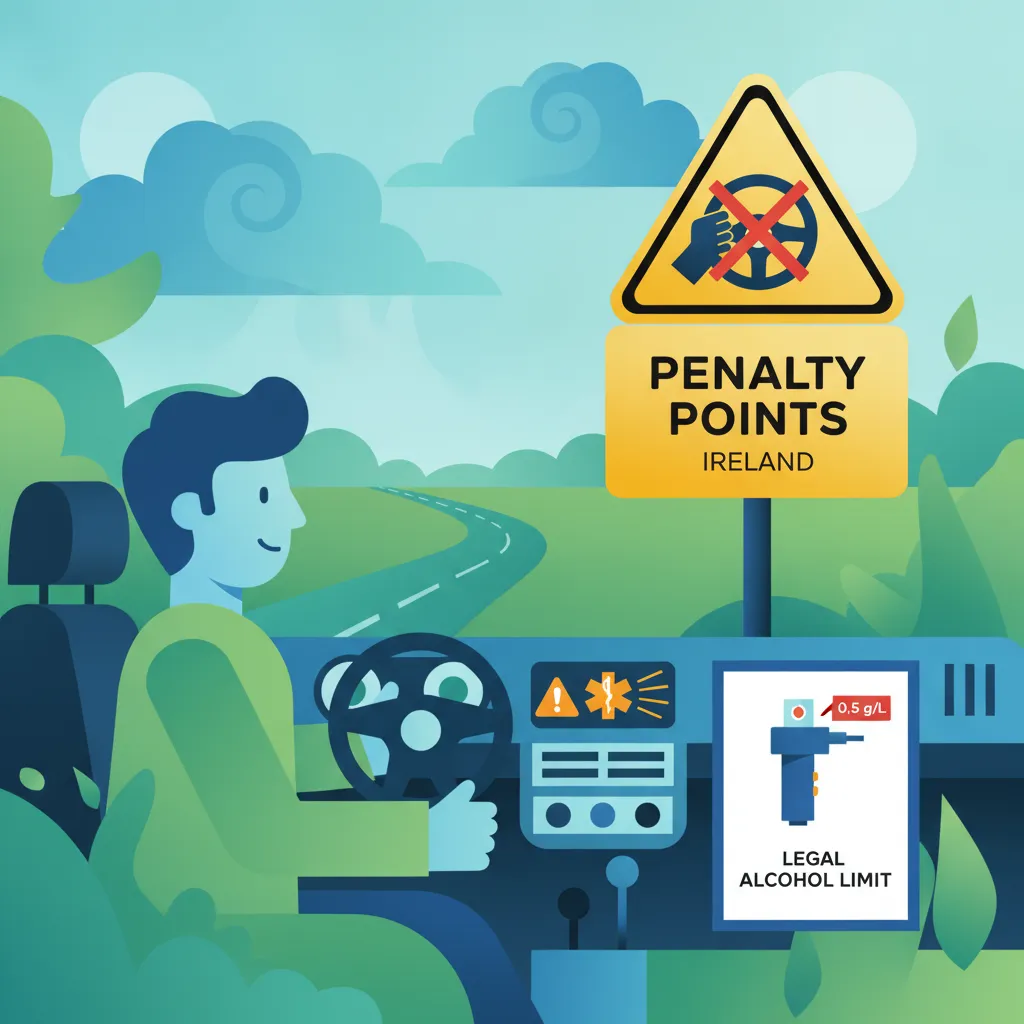
Browse all lessons that make up Alcohol, Drugs, Fatigue, Penalties, Emergencies and Responsible Driving. Each lesson focuses on specific topics, learning objectives, and core concepts, helping you build essential knowledge and follow a clear, structured progression toward your study goals in Ireland.
Ireland enforces strict blood alcohol concentration (BAC) limits, with a near zero-tolerance policy of 20 milligrams for learner and novice drivers. This lesson explains how alcohol impairs your cognitive functions, slows your reaction times, and distorts your depth perception. You will learn about mandatory Garda breathalyser checkpoints, the severe penalties for refusal, and the safety rule that only time eliminates alcohol.
Driving under the influence of illegal drugs or impairing prescription medication is a major contributor to road traffic accidents in Ireland. This lesson details how officers conduct roadside oral fluid tests for substances like cannabis and cocaine, and the legal penalties for driving while impaired. You will learn to read warnings on over-the-counter medicine labels and assess your fitness to drive before taking medication.
Driver fatigue is a silent killer on the roads, often causing drivers to drift out of lanes or experience catastrophic micro-sleeps. This lesson outlines the early warning signs of sleepiness, such as frequent yawning, heavy eyelids, and difficulty remembering the last few kilometres driven. You will learn effective prevention strategies, including planning regular rest stops, taking caffeine breaks, and never driving tired.
Violating Irish traffic laws triggers a structured enforcement process, starting with fixed charge notices and ending in severe court-ordered bans. This lesson details the roles of the Garda Síochána and the National Car Testing Service in enforcing safety regulations on roads. You will learn how fines are paid, how penalty points are formally added to your NDLS record, and the legal consequences of driving while disqualified.
Arriving at or being involved in a road traffic collision requires immediate, structured action to protect lives and prevent secondary crashes. This lesson covers how to safely secure an accident scene, activate hazard warning lights, place a warning triangle, and contact emergency services on 112. You will learn your legal duties to stop and share details, along with basic life-saving first aid principles for crash victims.
Explore high-intent keywords and long-tail search topics learners use when researching Alcohol, Drugs, Fatigue, Penalties, Emergencies and Responsible Driving. These terms reflect how people search for reliable study materials, structured explanations, and unit-level theory preparation support in Ireland.
Find clear answers to the most common questions learners ask about Alcohol, Drugs, Fatigue, Penalties, Emergencies and Responsible Driving. Understand how the unit is organized, what learning goals it supports, and how it contributes to your study progression with structured explanations and practical guidance tailored for learners in Ireland.
The penalty points system is a statutory enforcement tool where points are added to your licence for specific driving offences. Accumulating 12 points within a three-year period leads to an automatic six-month disqualification from driving.
Yes, there is a lower blood alcohol concentration limit for learner drivers compared to full licence holders. It is safest to maintain a zero-tolerance approach to alcohol before driving at any time.
Your first priority is safety: ensure your own safety, call the emergency services, and provide only basic assistance if you are trained to do so. You are legally required to stop and provide information if an injury has occurred.
Fatigue significantly slows reaction times, impairs decision-making, and can lead to microsleeps behind the wheel. Recognizing the signs, such as heavy eyelids or drifting, is vital; you should pull over in a safe place and rest immediately.
All included lessons
Lessons in Alcohol, Drugs, Fatigue, Penalties, Emergencies and Responsible Driving
See who benefits most from studying Alcohol, Drugs, Fatigue, Penalties, Emergencies and Responsible Driving. This overview explains how the unit supports different learning needs, what level of knowledge is helpful before starting, and how it fits into the overall study path in Ireland.
This unit is designed for all Category B learner drivers preparing for their official Irish Driver Theory Test. It is also an essential refresher for existing licence holders who wish to reinforce their knowledge of legal responsibilities and emergency response.

Begin your Irish Driver Theory Test journey today. Explore our guided curriculum, choose a structured course that fits your learning style, and start mastering every official RSA topic and rule of the road. Our approach ensures comprehensive preparation for your learner permit.
Explore Theory Test CoursesExplore all units and lessons included in this driving theory course.
Begin your Irish Driver Theory Test journey today. Explore our guided curriculum, choose a structured course that fits your learning style, and start mastering every official RSA topic and rule of the road. Our approach ensures comprehensive preparation for your learner permit.
Explore Theory Test Courses