
This lesson details the consequences of traffic violations under Irish law and explains how the penalty points system functions for Category B drivers. You will learn the roles of the Garda Síochána and the NDLS in maintaining driver records and enforcing safety regulations to ensure legal compliance on the road.
Lesson content overview
To safely and legally navigate the roads in Ireland, you must understand not only the rules of the road but also the consequences of violating them. Irish road traffic laws are enforced through a structured legal framework designed to deter dangerous behaviour, promote driver accountability, and ensure that all vehicles meet strict safety standards.
Whether you are preparing for your Category B driver theory test or aiming to maintain a clean driving record, understanding how penalties are issued, how the penalty points system operates, and the roles of enforcement agencies is essential.
The enforcement framework in Ireland ensures that road users adhere to the Road Traffic Acts. By imposing financial penalties, adding penalty points to driver records, and, in severe cases, ordering driving bans, the state aims to reduce collisions and save lives.
The enforcement system is graduated. Minor infractions are typically handled administratively through fixed payments, while more serious or repeat offences escalate to the court system, resulting in severe fines, longer driving bans, or custodial sentences. This tiered approach ensures that penalties are proportionate to the risk an offence poses to public safety.
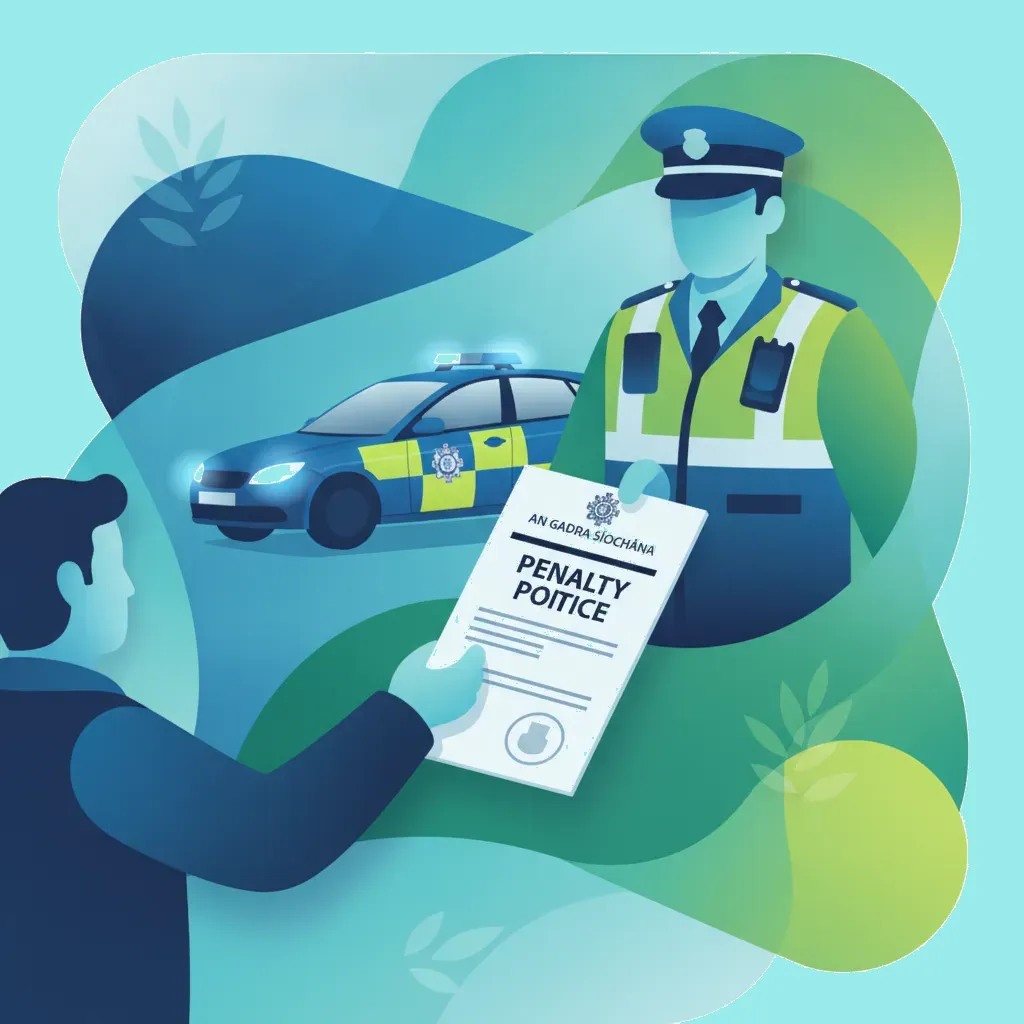
A Fixed Charge Notice (FCN) is an administrative sanction issued by the Garda Síochána (the national police service) for specific, less severe traffic violations. The primary purpose of the FCN system is to resolve minor offences efficiently without burdening the court system.
An administrative notice and fine issued by the Garda Síochána for specific road traffic offences. Paying the fine within the mandated timeframe resolves the offence without a court appearance, though any associated penalty points will still be recorded on your driving record.
When a traffic violation is detected—either by a Garda officer on patrol, a safety camera (such as a GoSafe van), or an automated system—an FCN is generated and sent to the registered owner of the vehicle.
The payment system follows a strict statutory timeline:
The First 28 Days (Standard Period): You have 28 days from the date of the notice to pay the base fine amount (for example, €80 for standard speeding violations).
Days 29 to 56 (Surcharge Period): If you do not pay within the first 28 days, you have an additional 28 days to pay. However, the fine increases by a 50% surcharge (for example, an €80 fine becomes €120).
After 56 Days (Court Summons): If payment is not received by the 56th day, the administrative option expires, and a court summons is automatically issued.
Ignoring an FCN is a serious mistake. Once the 56-day period passes, you lose the legal right to resolve the matter administratively.
If the case proceeds to the District Court, you face:
If you were not the person driving the vehicle when the offence occurred, you must complete the declaration section on the FCN, nominating the actual driver within 28 days. Failing to nominate the driver or providing false information is an independent offence that carries heavy penalties.
The Penalty Points System is designed to identify, deter, and penalize repeat offenders. It acts as a continuous log of a driver's behaviour on the road.
Points added to a driver’s National Driver Licence Service (NDLS) record when they commit specific driving offences. Accumulating a set number of points within a three-year period triggers an automatic driving disqualification.
When you pay an FCN for a point-carrying offence, or when you are convicted of such an offence in court, the Department of Transport is notified. The points are then formally recorded on your National Driver Licence Service (NDLS) record.
Even though points cease to be active after three years, they remain on your physical record for an additional year (four years total) for administrative purposes, though they cannot be counted toward disqualification during that fourth year.
Ireland employs a two-tiered threshold system to protect road users, placing stricter standards on inexperienced drivers:
This lower threshold reflects the statistical reality that inexperienced drivers are at a higher risk of collision. If you hold a learner permit or a novice licence, a single serious infraction or two minor ones can result in an immediate driving ban.
Penalty point values are directly proportional to the danger an offence poses. Some common Category B offences and their points include:
| Offence Description | Points on Payment of FCN | Points on Court Conviction |
|---|---|---|
| Exceeding the posted speed limit | 3 | 5 |
| Holding a mobile phone while driving | 3 | 5 |
| Failure to wear a seatbelt (driver or passenger) | 3 | 5 |
| Driving a vehicle without a valid NCT certificate | 3 | 5 |
| Disobeying a stop sign or yield sign | 3 | 5 |
| Driving on a motorway with a learner permit | 2 | 4 |
A driving disqualification is a legal order that completely prohibits you from operating any motor vehicle on public roads for a specified period.
If you reach the point threshold (12 points for full licences, 7 points for learner/novice drivers), the NDLS will issue a notification of automatic disqualification.
For severe traffic violations, judges have the power (and often the statutory obligation) to issue immediate driving bans, regardless of how many penalty points the driver currently has.
Mandatory disqualifications are commonly applied for:
Driving while disqualified is not a minor traffic infraction; it is a serious criminal offence. If you are caught driving while serving a disqualification ban:
To ensure road safety, different government-authorized agencies handle different aspects of legal compliance on Irish roads.
The Garda Síochána is the primary body responsible for enforcing traffic laws, preventing dangerous driving, and executing road safety checks.
An officer of the Garda Síochána possesses broad statutory powers under the Road Traffic Acts:
The National Car Testing Service (NCT) is the private partner authorized by the Road Safety Authority (RSA) to conduct mandatory, periodic roadworthiness tests on passenger cars in Ireland.
A compulsory safety inspection that passenger cars must pass to ensure they meet basic environmental and mechanical safety standards. Driving without a valid NCT is an offence that results in penalty points, fines, and potential vehicle seizure.
Understanding the nuances of traffic laws prevents accidental non-compliance and keeps your record clean.
A very common misunderstanding is that paying a Fixed Charge Notice settles the matter entirely, meaning no penalty points will be applied. This is incorrect. Paying the fine merely prevents you from going to court. The legal consequences of the offence, including the recording of penalty points on your NDLS record, still occur.
Some drivers assume that traveling just slightly over the speed limit (for example, 55 km/h in a 50 km/h zone) does not carry points. Under Irish law, there is no official margin of error. Any recorded speed above the posted limit can trigger an FCN with 3 penalty points.
Penalty points do not disappear all at once at the end of a calendar year. Each set of points operates on its own individual rolling three-year timeline based on the date of the offence.
For example, if you receive 3 points in January 2024, 3 points in June 2024, and 6 points in March 2026, you will hit the 12-point threshold and face disqualification in March 2026, even though the first points were acquired over two years prior.
Many drivers believe that once they pass their practical driving test, they are immediately subject to the 12-point limit. However, for the first two years of holding your full Category B driving licence, you are legally classified as a "Novice." You must display "N" plates on your vehicle, and your disqualification threshold remains restricted to 7 penalty points.
The penalties, points, and inspections detailed in this lesson are not merely administrative burdens; they are vital road safety measures.
By respecting the enforcement agencies and maintaining a clean driving record, you protect your mobility, keep your insurance costs manageable, and contribute to a safer environment for all road users.
The Irish penalty points system is a graduated enforcement tool managed by the NDLS, designed to identify and penalize repeat traffic offenders. A Fixed Charge Notice handles minor offences administratively, with 28 days to pay the base fine, a 50% surcharge between days 29–56, and automatic court summons thereafter. Penalty points are recorded 28 days after notification and remain active for three years, triggering disqualification at 12 points for full licence holders but only 7 points for learner permit and novice drivers. The Garda Síochána holds broad powers including vehicle stops, roadside testing, and immediate vehicle seizure under Section 41, while the NCT ensures vehicles meet mandatory roadworthiness standards. Understanding these enforcement mechanisms is essential for both passing the theory test and maintaining a clean driving record.
A short set of high-value points that capture the most important learning from this lesson.
Paying a Fixed Charge Notice resolves the fine but penalty points are still recorded on your NDLS driving record.
Penalty points remain active for three years from the date they are officially recorded, not from the date of the offence.
Learner permit and novice drivers face disqualification at just 7 penalty points, compared to 12 points for fully licensed drivers.
The Garda Síochána has statutory powers to stop vehicles, conduct alcohol/drug testing, and seize vehicles under Section 41 of the Road Traffic Act.
Driving while disqualified is a criminal offence that can result in arrest, vehicle seizure, fines up to €5,000, and imprisonment.
Explore all units and lessons included in this driving theory course.
FCN payment windows: 28 days at base rate, days 29–56 with 50% surcharge, court summons after 56 days.
Penalty points take effect 28 days after the notification letter date, not on the day of the offence.
Novice driver status lasts for the first two years of holding your first full licence and requires displaying N plates.
NCT testing intervals: first test at 4 years, then every 2 years until age 10, then annually.
Ignoring an FCN leads to higher fines (up to €1,000+), doubled penalty points, and a permanent court conviction.
Assuming that paying an FCN means no penalty points will be added—the fine and the points are separate consequences.
Believing there is a tolerance margin for speeding—any speed above the posted limit can trigger an FCN with 3 points.
Forgetting that points operate on individual rolling three-year timelines, so points acquired at different times do not expire together.
Overlooking that 'Novice' status applies for two full years after passing the test, meaning the 7-point threshold still applies.
Not nominating the actual driver on an FCN within 28 days when the registered owner was not driving—failing to do so is a separate offence.
Lesson content overview
A short set of high-value points that capture the most important learning from this lesson.
Paying a Fixed Charge Notice resolves the fine but penalty points are still recorded on your NDLS driving record.
Penalty points remain active for three years from the date they are officially recorded, not from the date of the offence.
Learner permit and novice drivers face disqualification at just 7 penalty points, compared to 12 points for fully licensed drivers.
The Garda Síochána has statutory powers to stop vehicles, conduct alcohol/drug testing, and seize vehicles under Section 41 of the Road Traffic Act.
Driving while disqualified is a criminal offence that can result in arrest, vehicle seizure, fines up to €5,000, and imprisonment.
Explore all units and lessons included in this driving theory course.
FCN payment windows: 28 days at base rate, days 29–56 with 50% surcharge, court summons after 56 days.
Penalty points take effect 28 days after the notification letter date, not on the day of the offence.
Novice driver status lasts for the first two years of holding your first full licence and requires displaying N plates.
NCT testing intervals: first test at 4 years, then every 2 years until age 10, then annually.
Ignoring an FCN leads to higher fines (up to €1,000+), doubled penalty points, and a permanent court conviction.
Assuming that paying an FCN means no penalty points will be added—the fine and the points are separate consequences.
Believing there is a tolerance margin for speeding—any speed above the posted limit can trigger an FCN with 3 points.
Forgetting that points operate on individual rolling three-year timelines, so points acquired at different times do not expire together.
Overlooking that 'Novice' status applies for two full years after passing the test, meaning the 7-point threshold still applies.
Not nominating the actual driver on an FCN within 28 days when the registered owner was not driving—failing to do so is a separate offence.
Explore search topics learners often look for when studying Penalties, Penalty Points System and Enforcement Agencies. These topics reflect common questions about road rules, driving situations, safety guidance, and lesson level theory preparation for learners in Ireland.
Browse additional driving theory lessons that cover connected traffic rules, road signs, and common driving situations related to this topic. Improve your understanding of how different rules interact across everyday traffic scenarios.
Understand the core concepts of safe and responsible driving, including driver awareness and defensive techniques. This guide explores the legal and social requirements for maintaining a clean driving record and protecting vulnerable road users according to the Irish Rules of the Road.
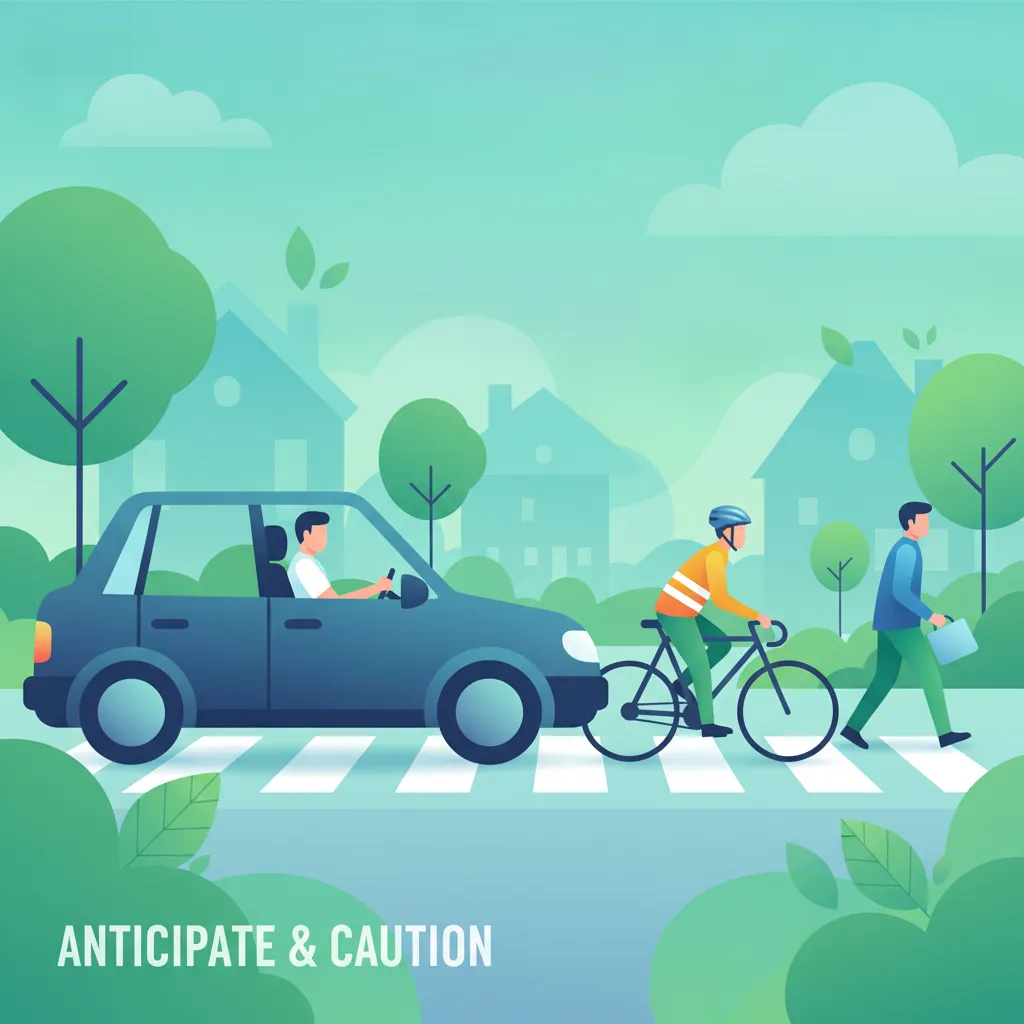
Safeguarding vulnerable road users requires more than simple obedience to traffic signs; it demands a defensive driving mindset. This lesson summarizes safe practices, including scanning far ahead in urban areas, keeping massive safety margins in wet weather, and executing thorough blind spot checks before reversing. By anticipating the unpredictable movements of others, you can prevent accidents and support a safe road culture.

Defensive driving prepares you to react safely when facing unexpected mechanical failures or immediate road hazards. This lesson explains how to execute an emergency stop using Anti-lock Braking Systems (ABS) and how to recover from front and rear-wheel skids on slippery roads. You will learn the importance of remaining calm, avoiding panic-steering, and applying controlled evasive actions to prevent collisions.

This lesson teaches how to cultivate a proactive defensive riding mindset, focusing on situational awareness and constant hazard scanning. It describes the system of motorcycle control, encouraging riders to anticipate potential mistakes from other drivers, pedestrians, and cyclists. Motorcyclists will learn to position themselves defensively, leaving clear escape routes in all driving environments.

School zones and pedestrian crossings require high driver alertness and strict compliance with local speed limits in Ireland. This lesson details the legal rules of zebra and pelican crossings, explaining driver requirements when amber warning beacons are flashing. Drivers will study safety procedures for dropping off or picking up children, preventing common blind-spot accidents near schools.

Ireland uses a structured training program called Essential Driver Training to ensure all learners acquire fundamental driving habits before booking their practical test. This lesson explains the twelve mandatory EDT lessons, the role of an Approved Driving Instructor, and how your progress is documented in an official logbook. Mastering these practical modules alongside your theory test preparation creates a highly effective pathway to becoming a safe driver.

This lesson analyzes the crucial role of rider attitude, mental focus, and psychological factors in preventing motorcycle collisions on Irish roads. It addresses how overconfidence, fatigue, and peer pressure can negatively impact a rider's decision-making process and elevate risk levels. Motorcyclists will explore strategies to maintain a defensive mindset, exercise patience, and practice active situational awareness under all traffic conditions.

Irish driving theory demands that drivers keep to the left-hand side of the road unless overtaking or turning right. This lesson explains how to maintain consistent lane discipline on multi-lane roads, how to perform safe lane changes, and the dangers of drifting. You will learn the safety sequence of checking mirrors, checking blind spots, signalling, and smoothly executing a lane change without disrupting trailing traffic.

Drivers bear the legal responsibility of ensuring that all passengers under seventeen years of age are properly secured in the vehicle. This lesson covers Ireland's strict seatbelt laws and the requirement to use an EU-approved child restraint system appropriate for the child's height and weight. You will learn how to locate ISOFIX anchorage points, fit child seats correctly, and deactivate passenger airbags when using rear-facing seats.

Driving at night presents severe challenges due to reduced visibility, driver fatigue, and headlight glare from oncoming vehicles. This lesson teaches you how to manage your headlights, use road edge markers to steer through dark curves, and look away from oncoming bright lights. You will learn to drive within the range of your headlights and remain highly alert for pedestrians or cyclists not wearing reflective gear.

Arriving at or being involved in a road traffic collision requires immediate, structured action to protect lives and prevent secondary crashes. This lesson covers how to safely secure an accident scene, activate hazard warning lights, place a warning triangle, and contact emergency services on 112. You will learn your legal duties to stop and share details, along with basic life-saving first aid principles for crash victims.
Learn the legal implications and safety risks associated with alcohol, medication, and driver fatigue. This module explains how substance impairment affects reaction times and decision making behind the wheel, following official Irish road safety and enforcement regulations.
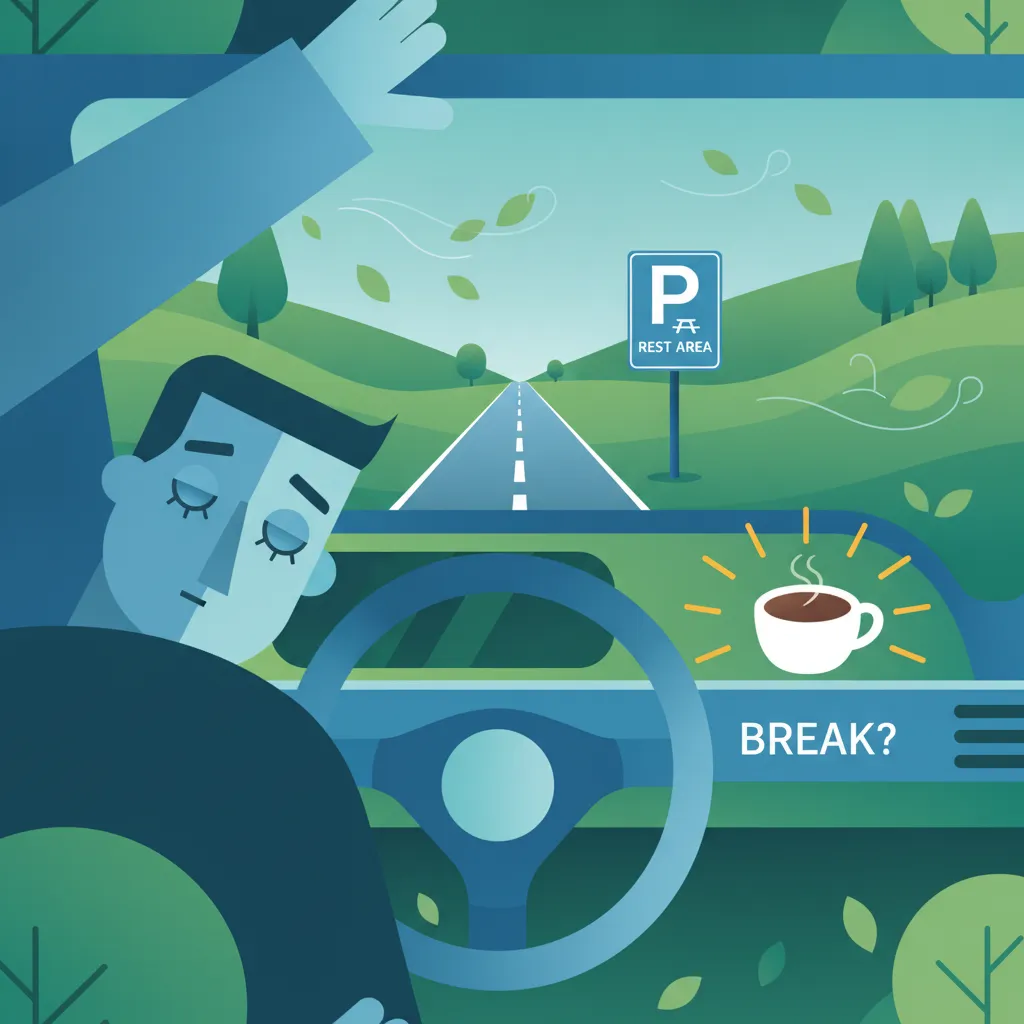
Driver fatigue is a silent killer on the roads, often causing drivers to drift out of lanes or experience catastrophic micro-sleeps. This lesson outlines the early warning signs of sleepiness, such as frequent yawning, heavy eyelids, and difficulty remembering the last few kilometres driven. You will learn effective prevention strategies, including planning regular rest stops, taking caffeine breaks, and never driving tired.

Driver fatigue and visual distractions are major contributors to commercial passenger vehicle accidents on national transport networks. This lesson explores the physiological indicators of drowsiness, the benefits of healthy sleep habits, and strategies for avoiding digital distractions. It emphasizes strict compliance with professional driver hours to maintain alertness and safe operations.
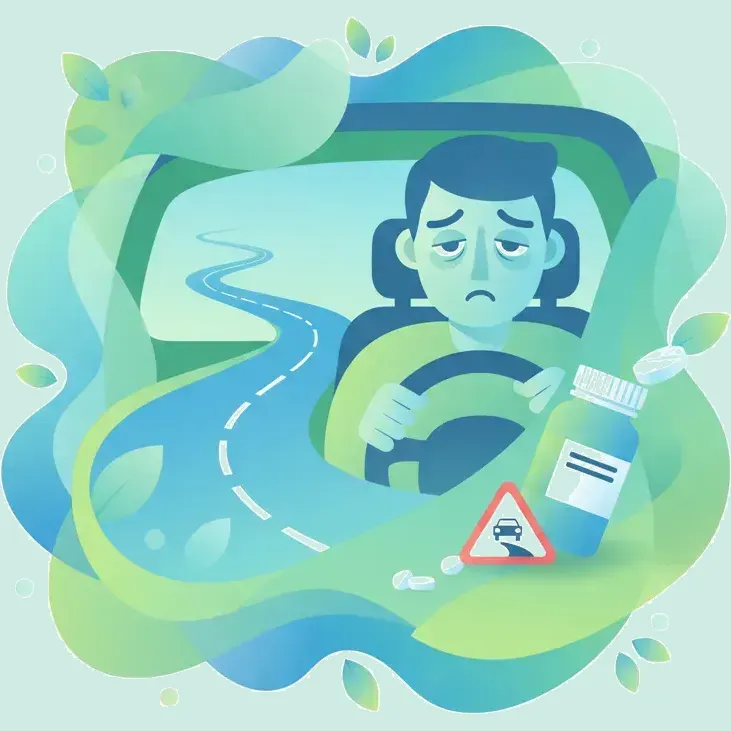
Driving under the influence of illegal drugs or impairing prescription medication is a major contributor to road traffic accidents in Ireland. This lesson details how officers conduct roadside oral fluid tests for substances like cannabis and cocaine, and the legal penalties for driving while impaired. You will learn to read warnings on over-the-counter medicine labels and assess your fitness to drive before taking medication.

This lesson details the statutory blood alcohol concentration limits in Ireland and the severe penalties for operating a motorcycle under the influence. It explains the physiological effects of alcohol, illicit drugs, and everyday prescription medication on vision, reaction speed, and overall coordination. Motorcyclists will understand how chemical impairment fundamentally alters risk assessment and vehicle control.
Find clear answers to common questions learners have about Penalties, Penalty Points System and Enforcement Agencies. Learn how the lesson is structured, which driving theory objectives it supports, and how it fits into the overall learning path of units and curriculum progression in Ireland. These explanations help you understand key concepts, lesson flow, and exam focused study goals.
Generally, a learner or full licence holder who accumulates 12 penalty points within any three-year period will be automatically disqualified from driving for six months. However, for learner permit holders, the threshold can be lower under specific circumstances.
Yes, penalty points typically remain on your driving record for three years. They are only removed once this period has elapsed, provided no further disqualification has occurred during that time.
A fixed charge notice allows you to pay a fine and accept penalty points to avoid court proceedings. If you fail to pay the notice or if the offence is of a more serious nature, the matter may be referred to court, which can lead to higher fines, a criminal record, or extended disqualification.
Yes, the penalty points system applies to all drivers in Ireland, including those holding a learner permit. Accumulating points as a learner can lead to a licence disqualification, just as it would for a fully qualified driver.
Use the practice question search tool to pinpoint specific topics, road signs, or rules you need to master for your official Driver Theory Test. Refine your study strategy and ensure comprehensive preparation for all aspects of the Irish driving exam. Start your focused revision now and build confidence for your learner permit test.