
This lesson explores the essential legal dimensions and weight constraints for Category C goods vehicles on Irish roads. Understanding these limits is critical for safe operation, protecting public infrastructure, and passing your theory test.
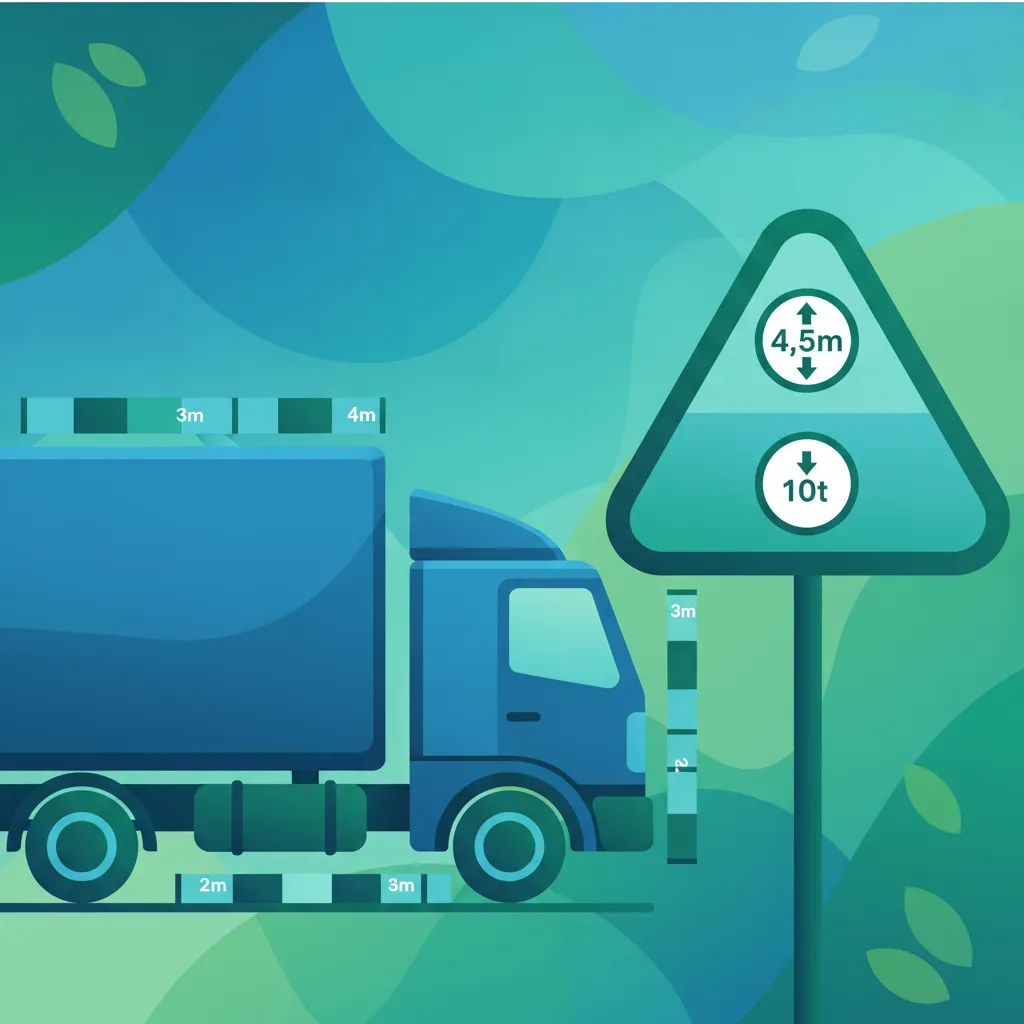
Lesson content overview
Operating a heavy goods vehicle (HGV) on public roads carries a high level of responsibility. Because of their massive size and weight, goods vehicles interact with physical infrastructure—such as bridges, tunnels, and road surfaces—much more intensely than passenger cars. This lesson details the statutory limits on width, height, length, and weight that apply to HGVs under Irish transport laws.
Understanding these physical and legal boundaries is critical for passing the official Irish Category C Goods Vehicle Driver Theory Test. It is also a fundamental pillar of professional driving. Violating these limits can cause devastating structural damage, severe safety hazards, and major legal penalties.
The Road Traffic (Construction, Equipment and Use of Vehicles) Regulations establish strict dimensional limits for goods vehicles. These rules ensure that large vehicles can safely negotiate the curves, lanes, and structures of the national road network without endangering other road users or damaging the environment.
The maximum legal width for standard heavy goods vehicles in Ireland is 2.55 metres. This measurement includes the body of the vehicle and any load-retaining structures, but excludes essential safety accessories such as lateral projection mirrors and tyre pressure indicators.
For temperature-controlled vehicles (refrigerated trucks with thick, insulated side walls), the maximum permissible width is slightly extended to 2.60 metres.
Wider vehicles naturally reduce the clearance space within standard driving lanes. If you operate a vehicle at or near the 2.55-metre limit, you must remain acutely aware of lateral space, especially on narrow regional roads and when passing vulnerable road users like cyclists or pedestrians.
The statutory height limit for vehicles on Irish roads is 4.50 metres. Any vehicle or vehicle combination exceeding this height cannot be driven on public roads without a special permit or a designated clearance route.
This height limit is designed to prevent collisions with overhead structures, such as bridge spans, utility lines, and signs. Drivers must remember that a vehicle's height can change. For example, a vehicle is taller when completely unladen due to the suspension rising, or when carrying a high, uneven load.
The statutory length limits depend heavily on the vehicle's configuration:
Exceeding these lengths without a specific abnormal load permit is a serious violation of Irish transport law. Long vehicles require a much wider turning circle and pose unique challenges when negotiating roundabouts and urban junctions.
Understanding how a vehicle’s weight is calculated and restricted is essential for safe operation and legal compliance. In Ireland, weight limits are determined by both manufacturer specifications and statutory regulations.
The maximum permissible total weight of the vehicle, including the vehicle body, engine, fluids, fuel, driver, passengers, and the entirety of the payload. It is also referred to as the Maximum Authorised Mass (MAM).
The weight of the empty vehicle with all its standard equipment, fuel, and lubricants, but without any driver, passengers, or cargo.
The maximum weight of cargo that the vehicle can legally carry. It is calculated by subtracting the actual tare weight (plus driver/passenger weight) from the Gross Vehicle Weight limit.
Overloading an HGV is one of the most dangerous infractions a professional driver can commit. When a vehicle exceeds its rated GVW, its physical handling characteristics change dramatically:
It is entirely possible for a vehicle's total weight to be under the legal Gross Vehicle Weight limit while still being illegal and dangerous due to an overloaded axle. Axle weight limits protect the physical road surface and ensure the vehicle maintains sufficient steering grip and braking traction.
Under the Road Traffic Regulations, specific limits apply to individual axles and axle groups:
When loading a vehicle, the driver must ensure the payload is distributed evenly across the cargo bed.
If too much weight is placed at the very rear of the truck, it acts as a lever, lifting the front steering axle. This reduction in steering axle load decreases steering control and makes front-wheel braking highly inefficient.
Conversely, if the load is placed too far forward, the front axle becomes overloaded. This damages the suspension and makes steering heavy and unresponsive.
Important Legal Warning: As a Category C professional driver, you are legally responsible for the vehicle's load. If you are stopped at an RSA weighbridge and found to have an overloaded axle, you—the driver—will face penalties, regardless of who loaded the vehicle at the warehouse. Always verify your axle weights before departing.
Collision with overhead infrastructure, commonly referred to as a "bridge strike," is one of the most destructive and expensive accidents involving HGVs. Bridge strikes disrupt railway and road transport networks, cause structural failures, and can result in catastrophic injuries or fatalities.
When planning a route or driving an HGV, you must apply the following safety principles to avoid overhead collisions:
Know Your Exact Vehicle Height: Never guess your vehicle's height. Measure it physically, including any loaded equipment, and display the height clearly inside the driver's cab where it is visible from the steering position.
Heed All Road Signs: Look for advance warning signs indicating low bridges. In Ireland, height restriction signs display the maximum safe clearance in both metric (metres) and imperial (feet/inches) measurements.
Understand Clearance Tolerances: A bridge signposted at 4.4 metres will only allow safe passage for vehicles below that exact measurement. Do not assume there is an extra safety margin.
Watch for Road Resurfacing: Be aware that road resurfacing can raise the roadbed, reducing the actual clearance of a bridge without the signage being immediately updated.
Prepare for Route Detours: If your vehicle height is 4.5 metres, you must never attempt to pass under a bridge signposted at 4.5 metres or lower. Stop immediately in a safe location and seek an alternative route.
Tunnels in Ireland, such as the Dublin Port Tunnel or the Limerick Tunnel, have active electronic height-detection systems. If a vehicle exceeding the maximum height tries to enter, sensors trigger warning lights, sirens, and barriers to stop the truck.
Attempting to enter a restricted tunnel with an over-height vehicle will cause massive traffic disruptions, vehicle damage, and severe legal prosecution.
The practical application of weight and dimension limits is influenced by external driving conditions and vehicle states.
In heavy rain, snow, or thick fog, visibility is severely compromised. This makes it difficult to read overhead bridge signs, height-restriction warnings, or road-side weight limit markers. Under poor visibility, you must reduce your speed to give yourself extra time to read road signs and react safely.
Irish national motorways are generally designed to accommodate maximum-dimension HGVs. However, regional, local, and urban streets often have severe restrictions.
Narrow lanes, tight corners, and historic stone bridges make driving a maximum-width (2.55m) or maximum-length (12m/18.75m) vehicle highly challenging. You must plan your routes in advance to ensure your vehicle is physically compatible with the roads you will use.
Operating a maximum-width HGV leaves very little margin for error inside standard lanes. When passing cyclists, pedestrians, or motorcyclists, a wide vehicle can easily crowd them.
You must allow extra lateral clearance—at least 1.5 metres in speed zones over 50 km/h—and never encroach on designated cycle paths or footpaths.
Understanding how dimensional and weight limits apply in real-world scenarios helps prevent hazardous driving mistakes.
To ensure legal compliance and safe operation, always remember these key figures and rules:
By memorising these statutory limits, understanding the physical dynamics of heavy vehicle loading, and respecting overhead clearances, you will protect both road infrastructure and your professional driving record.
This lesson covers the statutory dimensional and weight limits for Category C goods vehicles in Ireland under the Road Traffic Regulations. Key limits include maximum width of 2.55m (2.60m for refrigerated), height of 4.50m, rigid length of 12.00m, articulated length of 16.50m, and road train length of 18.75m. Weight concepts explained include Gross Vehicle Weight, tare weight, payload, and permissible axle loads, with specific limits for steering, drive, tandem, and triaxle configurations. The lesson emphasises that overloading creates dangerous physics—increased braking distance, reduced stability, and structural strain—while highlighting bridge strike prevention, tunnel safety systems, and the driver's personal legal responsibility for load compliance at RSA weighbridges.
A short set of high-value points that capture the most important learning from this lesson.
The maximum legal width for standard heavy goods vehicles is 2.55 metres (2.60 metres for refrigerated vehicles) and the statutory height limit is 4.50 metres.
Rigid Category C vehicles have a maximum length of 12.00 metres, articulated combinations reach 16.50 metres, and road trains can extend to 18.75 metres.
Gross Vehicle Weight (GVW) is the total legal maximum including vehicle, driver, fuel, and payload; payload is calculated by subtracting tare weight from GVW.
Axle weight limits vary by type: steering axles typically allow 6–8 tonnes, single drive axles permit 10 tonnes (11.5 tonnes with air suspension), and tandem axle groups range from 11.5 to 20 tonnes.
Bridge strikes and tunnel collisions with over-height vehicles cause severe infrastructure damage, traffic disruption, and substantial legal penalties for drivers.
Explore all units and lessons included in this driving theory course.
Vehicle height changes with load state—unladen vehicles sit higher due to raised suspension, and uneven loads can further alter the effective height.
Axle weight distribution matters independently of total GVW—a vehicle can be under its gross limit while still having an illegally overloaded individual axle.
Drivers are personally responsible for load compliance—even if warehouse workers loaded the vehicle incorrectly, penalties fall on the driver at weighbridge inspections.
Road resurfacing can reduce actual bridge clearance without updated signage, so never assume a posted clearance is accurate.
Irish height restriction signs display both metric (metres) and imperial (feet/inches) measurements—verify your exact cab height before every journey.
Assuming a bridge clearance includes a safety margin—the posted measurement (e.g., 4.4m) is the actual maximum vehicle height permitted.
Leaving axle weight distribution to chance—concentrating heavy cargo at the rear lifts the steering axle, reducing steering control and braking efficiency.
Failing to physically verify vehicle height before departure—driver estimates of height are unreliable and can lead to bridge strikes.
Confusing tare weight with gross vehicle weight—tare is the empty vehicle weight, while GVW includes everything including payload and driver.
Assuming all roads accommodate maximum-dimension vehicles—narrow rural lanes, tight urban junctions, and historic structures often have severe restrictions.
Lesson content overview
A short set of high-value points that capture the most important learning from this lesson.
The maximum legal width for standard heavy goods vehicles is 2.55 metres (2.60 metres for refrigerated vehicles) and the statutory height limit is 4.50 metres.
Rigid Category C vehicles have a maximum length of 12.00 metres, articulated combinations reach 16.50 metres, and road trains can extend to 18.75 metres.
Gross Vehicle Weight (GVW) is the total legal maximum including vehicle, driver, fuel, and payload; payload is calculated by subtracting tare weight from GVW.
Axle weight limits vary by type: steering axles typically allow 6–8 tonnes, single drive axles permit 10 tonnes (11.5 tonnes with air suspension), and tandem axle groups range from 11.5 to 20 tonnes.
Bridge strikes and tunnel collisions with over-height vehicles cause severe infrastructure damage, traffic disruption, and substantial legal penalties for drivers.
Explore all units and lessons included in this driving theory course.
Vehicle height changes with load state—unladen vehicles sit higher due to raised suspension, and uneven loads can further alter the effective height.
Axle weight distribution matters independently of total GVW—a vehicle can be under its gross limit while still having an illegally overloaded individual axle.
Drivers are personally responsible for load compliance—even if warehouse workers loaded the vehicle incorrectly, penalties fall on the driver at weighbridge inspections.
Road resurfacing can reduce actual bridge clearance without updated signage, so never assume a posted clearance is accurate.
Irish height restriction signs display both metric (metres) and imperial (feet/inches) measurements—verify your exact cab height before every journey.
Assuming a bridge clearance includes a safety margin—the posted measurement (e.g., 4.4m) is the actual maximum vehicle height permitted.
Leaving axle weight distribution to chance—concentrating heavy cargo at the rear lifts the steering axle, reducing steering control and braking efficiency.
Failing to physically verify vehicle height before departure—driver estimates of height are unreliable and can lead to bridge strikes.
Confusing tare weight with gross vehicle weight—tare is the empty vehicle weight, while GVW includes everything including payload and driver.
Assuming all roads accommodate maximum-dimension vehicles—narrow rural lanes, tight urban junctions, and historic structures often have severe restrictions.
Explore search topics learners often look for when studying Maximum Dimensions and Weight Limits. These topics reflect common questions about road rules, driving situations, safety guidance, and lesson level theory preparation for learners in Ireland.
Browse additional driving theory lessons that cover connected traffic rules, road signs, and common driving situations related to this topic. Improve your understanding of how different rules interact across everyday traffic scenarios.
Learn how proper load placement influences vehicle stability and handling characteristics for heavy goods vehicles. This guide explains the physics of weight distribution across axles, how to prevent cargo shift, and the importance of maintaining proper front-steering axle pressure for safe operation on Irish roads.
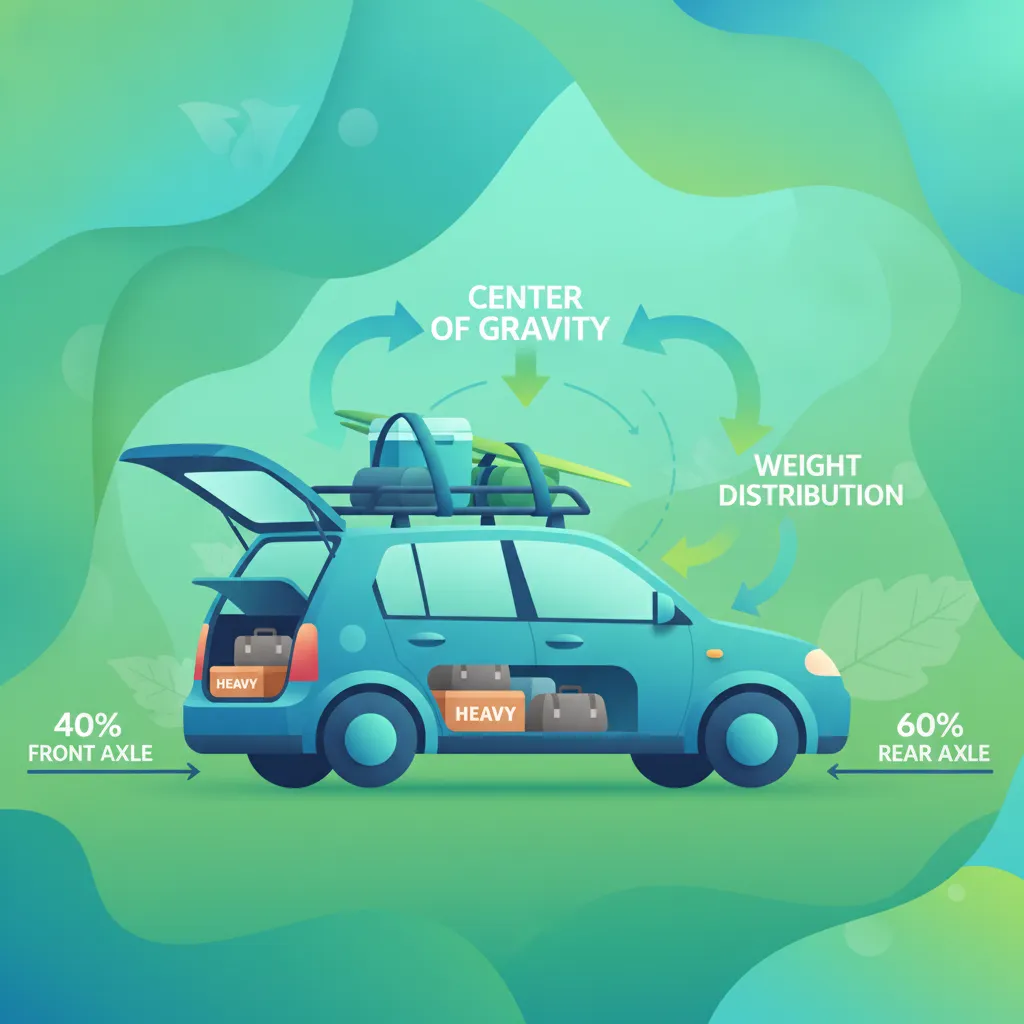
This lesson explains the physical principles of weight distribution and axle overloading on heavy commercial vehicles. It examines how a high centre of gravity increases tipping risks during cornering and alters overall braking effectiveness. Drivers will discover methods for positioning cargo to distribute weight evenly, ensuring optimal steering control and stable vehicle dynamics.

As passenger numbers change throughout a service shift, a heavy vehicle suspension, center of gravity, and steering responsiveness adapt dynamically. This lesson covers load balancing, the physical risks of overloading, and how uneven weight distribution compromises stability during turns. Drivers will learn to perform regular axle weight assessments to comply with Irish transport safety rules.
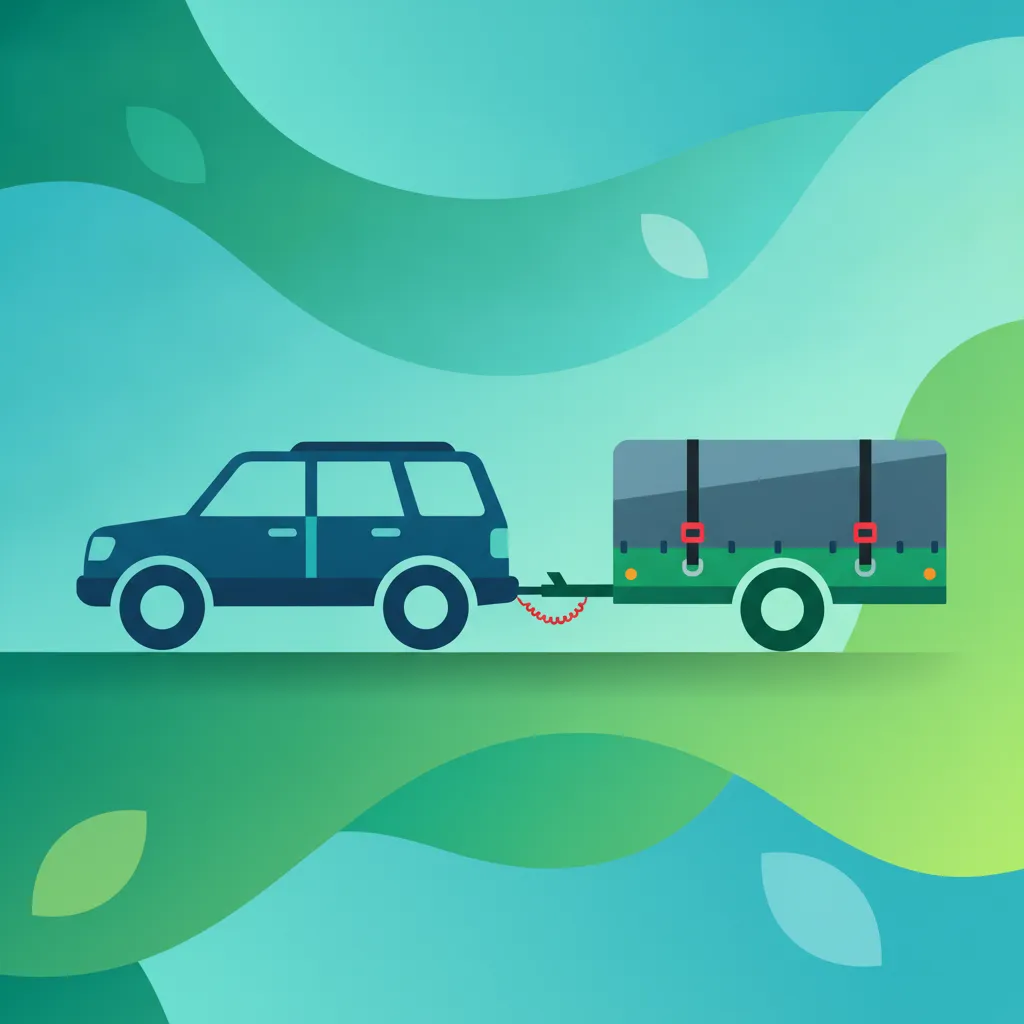
Carrying heavy loads or towing trailers significantly alters a car's handling, acceleration, and braking characteristics. This lesson outlines the physics of load distribution, explaining why you must secure cargo to prevent shifting and keep the vehicle's centre of gravity low. You will learn about legal roof rack weight limits, safe trailer coupling practices, and how to adjust your driving style when towing.
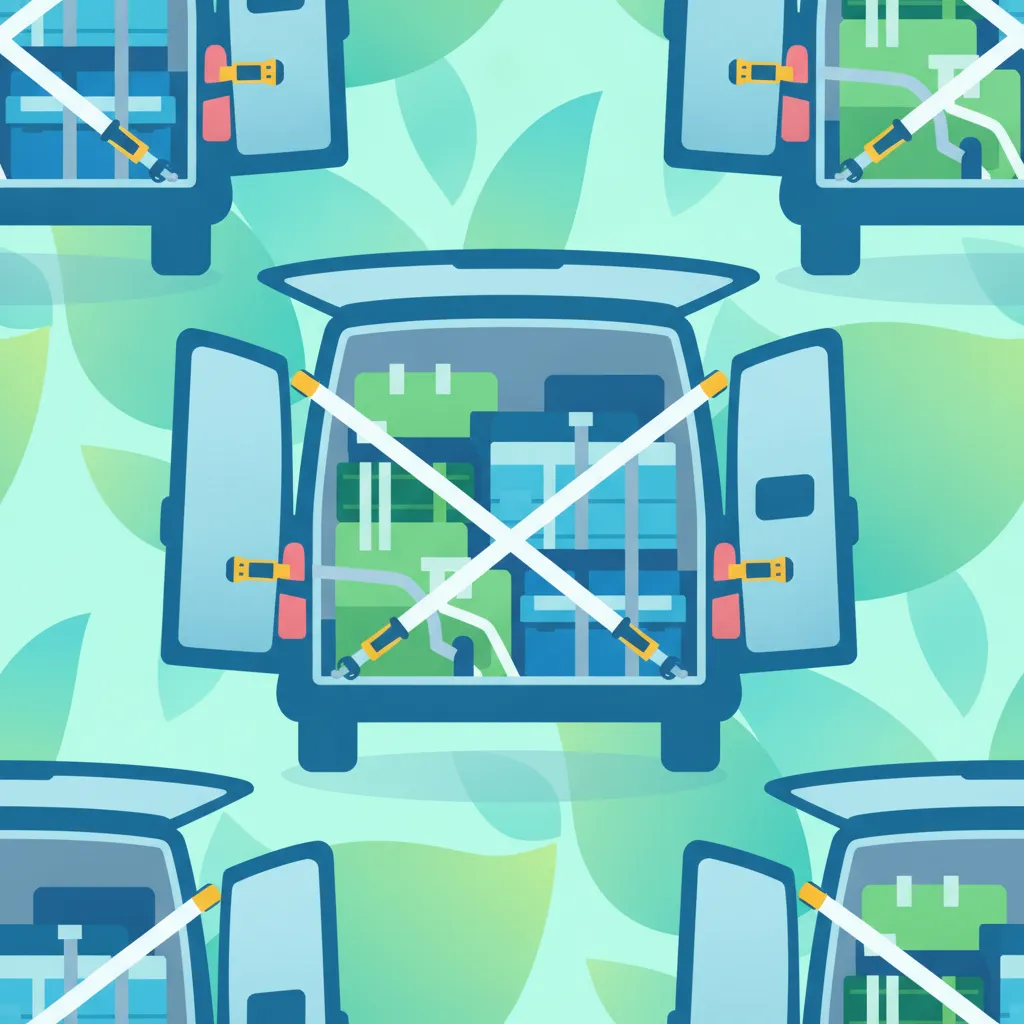
This lesson focuses on the practical mechanics of securing goods to prevent kinetic shift during sudden braking or evasive steering manoeuvres. It teaches the correct use of tensioning straps, chains, blocking bars, and friction-increasing mats according to Irish safety guidelines. Drivers will learn to perform rigorous pre-trip and en-route checks to guarantee that cargo remain secure throughout the transit.
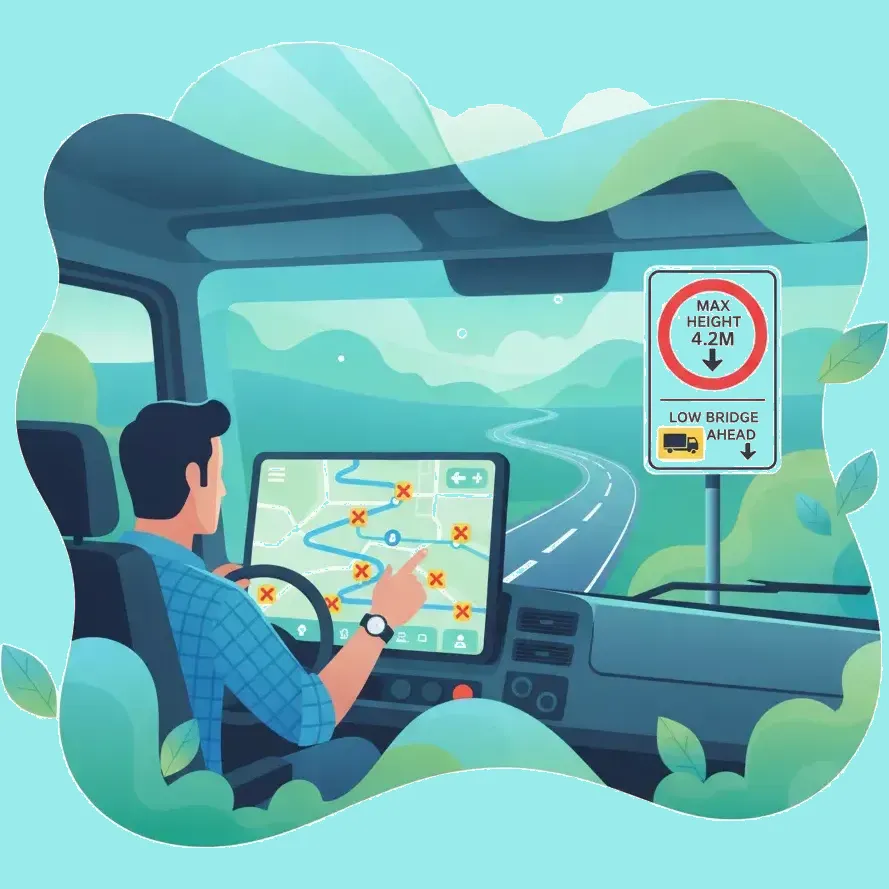
This lesson teaches professional drivers how to systematically map out travel routes that are compatible with heavy vehicle dimensions. It covers the limitations of consumer-grade GPS systems and emphasizes the use of specialized truck navigation systems that account for low bridges and load restrictions. Drivers will also learn to plan for congestion, access timing regulations, and proper entrance paths into commercial zones.
Understand the criteria for selecting safe driving routes for heavy goods vehicles, including identifying road-specific height and weight restrictions. This lesson provides an overview of how to navigate road infrastructure safely and avoid hazards such as low bridges and narrow routes commonly found across the national road network.
This lesson teaches professional drivers how to systematically map out travel routes that are compatible with heavy vehicle dimensions. It covers the limitations of consumer-grade GPS systems and emphasizes the use of specialized truck navigation systems that account for low bridges and load restrictions. Drivers will also learn to plan for congestion, access timing regulations, and proper entrance paths into commercial zones.

This lesson focuses on the physical mechanics of long-wheelbase and articulated vehicles when executing turns in restricted spaces. It explains concepts like swept path, rear overhang, and turning circles, which must be accounted for to prevent side-swiping collisions. Drivers will discover strategic route-planning techniques to avoid congested urban layouts and unsuitable rural corridors.

This lesson explains the extensive blind spots of heavy goods vehicles, buses, and other large trucks on Irish roads. It teaches Category AM riders how to maintain safe following distances and position themselves where truck drivers can see them. Proper space cushion management is emphasized to protect riders from the wind turbulence of passing trucks.

This lesson explores the legal frameworks and structural limitations that govern maximum vehicle weights on specific bridges and underground routes. It explains local authority by-laws, city-centre heavy vehicle exclusion zones, and environmental restrictions across major urban centres in Ireland. Drivers will learn to identify safe alternative bypass routes when encountering weight-restrictive public structures.
Find clear answers to common questions learners have about Maximum Dimensions and Weight Limits. Learn how the lesson is structured, which driving theory objectives it supports, and how it fits into the overall learning path of units and curriculum progression in Ireland. These explanations help you understand key concepts, lesson flow, and exam focused study goals.
Knowing your exact height is vital because Ireland has many low bridges and tunnels. A driver who ignores these signs risks serious accidents, costly damage to their vehicle, and potential prosecution.
Weight limits for Category C vehicles are strictly enforced based on the number and spacing of axles to protect road infrastructure. You must ensure your load does not exceed the Maximum Permissible Weight (MPW) for each axle set to remain legal and safe.
Yes, regulatory road signs will explicitly state the limit in metres for height or tonnes for weight. These are mandatory signs that every Category C driver must be able to recognize instantly during their theory test and on the road.
Absolutely. Heavier vehicles require significantly longer distances to stop, especially when fully loaded. This lesson ties into unit five, but understanding your gross weight is the first step in managing braking safety.
Use the practice question search tool to pinpoint specific topics, road signs, or rules you need to master for your official Driver Theory Test. Refine your study strategy and ensure comprehensive preparation for all aspects of the Irish driving exam. Start your focused revision now and build confidence for your learner permit test.