
This lesson explores the physical movement of large goods vehicles, focusing on how length and weight influence your turning capabilities. You will learn to calculate swept paths and effectively plan routes to avoid low bridges, narrow corridors, and weight-restricted zones across the Irish road network.

Lesson content overview
Operating a heavy goods vehicle (HGV) under a Category C or CE licence in Ireland requires far more than basic steering skills. Because of their immense physical scale, long wheelbases, and high gross weights, large vehicles demand precise operational planning and an advanced understanding of spatial mechanics. Navigating historic Irish towns, narrow rural corridors, and complex urban roundabouts requires a professional driver to accurately calculate the physics of vehicle movement before initiating any turn.
This lesson explores the essential principles of heavy vehicle turning dynamics—including turning radius, turning circles, swept paths, and rear overhang. It also covers strategic route planning, helping you avoid infrastructure damage, prevent side-swiping collisions, and protect vulnerable road users.
A heavy vehicle does not follow the same path as a passenger car. When a car turns, the rear wheels follow almost the exact track of the front wheels. In contrast, an HGV exhibits off-tracking—where the rear wheels cut inward, describing a tighter radius than the front steering wheels.
Understanding the mathematical and physical limits of your vehicle is critical to maintaining safety and avoiding collisions with roadside infrastructure, pedestrians, and other vehicles.
The turning radius is defined as the minimum semi-circular path a vehicle can describe when its steering wheel is turned to full lock.
Because the rear wheels of a rigid or articulated truck do not steer, they "cut" the corner. The longer the wheelbase (the distance between the front steering axle and the drive axles), the greater the difference between the inner and outer turning radii.
The distance measured between the center of the front steering axle and the center of the rear drive axle (or the center point of a rear tandem/tri-axle bogie). A longer wheelbase directly increases both off-tracking and the required turning radius.
The turning circle represents the total 360-degree diameter of the path traced by the outer front wheel when the steering is held at full lock.
Under EU and Irish Road Vehicle Regulations (RVR), standard commercial vehicles must be constructed so they can complete a full 360-degree turn within a defined outer circle and an inner concentric circle. This ensures that even the largest heavy goods vehicles remain capable of navigating standard public infrastructure like roundabouts and junctions.
If your vehicle's turning circle exceeds the space available at a particular junction or roundabout, you cannot safely execute the turn without encroaching on other lanes, mounting the kerb, or reversing—all of which introduce substantial safety risks.
The swept path is the total envelope of space occupied by the entire outline of the vehicle (including mirrors, cargo, and body overhangs) as it executes a turn. This is the single most critical concept to master to prevent side-swiping collisions.
Inner Boundary: Determined by the track of the rear-most wheels cutting inside the turn (off-tracking).
Outer Boundary: Determined by the path of the front outer corner of the vehicle cab swinging wide.
Dynamic Clearance: The extra margin required when the vehicle is in motion to account for body roll, load shifting, and uneven road surfaces.
A common driver error is assuming that if the wheels clear an obstacle, the rest of the vehicle will too. In reality, the body of the truck sweeps a path significantly wider than the tyre tracks. On tight urban corners, a vehicle's swept path can easily extend into adjacent lanes, oncoming traffic corridors, or onto pedestrian footpaths.
Rear overhang is the distance from the centre of the rear axle (or the pivot point of the rear bogie assembly) to the extreme rear edge of the vehicle or trailer body.
The lateral outward movement of the rear-most portion of the vehicle or trailer in the opposite direction of the turn.
When you steer sharply to the left, the rear overhang swings out to the right. This "kick-out" can easily reach 1 to 1.5 metres depending on the vehicle's construction and loading state.
The Danger of Tail-Swing: Tail-swing occurs in the driver's blind spot. If you steer away from a kerb too quickly, the rear overhang can swing over the pavement, striking pedestrians, traffic signs, or lamp posts. In multi-lane urban environments, a sudden turn can cause the rear of your trailer to side-swipe a vehicle in the adjacent lane.
The physical length of your trailer or container dramatically alters your turning kinematics. A standard 13.6-metre semi-trailer carrying a 40-foot container has a much larger swept path than a rigid Category C truck or a shorter drawbar configuration.
A longer trailer amplifies the off-tracking effect, requiring the driver to "swing wide" before initiating a turn. Drivers must remain acutely aware of their trailer’s pivot points and adjust their steering timing accordingly.
Operating an HGV successfully requires proactive route planning. Attempting to navigate a heavy vehicle on a route designed for passenger cars often leads to bridge strikes, gridlock, and severe structural damage.
Before setting off on any journey, professional drivers must plan their route using reliable HGV-specific tools and resources, rather than standard consumer satellite navigation systems.
A major cause of bridge strikes and stranded HGVs is the use of standard car GPS units. Car navigation systems do not account for:
Always use dedicated commercial vehicle navigation systems, cross-referenced with official transport maps, local authority truck routes, and physical road signs.
The space your vehicle requires and your ability to control its swept path change based on dynamic environmental and operational conditions.
Wet, icy, or greasy road surfaces significantly reduce tyre traction. If you attempt to negotiate a sharp turn too quickly in poor weather, your front steering tyres can lose grip, causing the vehicle to understeer and plow straight ahead. Alternatively, your drive axles can lose traction, leading to a jackknife in articulated vehicles.
Always reduce your speed before entering a turn, particularly in wet or icy conditions.
An overloaded or poorly secured load can shift laterally during a turn. This dynamic load shift alters the vehicle's handling, expands its dynamic swept path, and increases the risk of a rollover. High-sided vehicles carrying loads with a high centre of gravity (such as hanging meat or liquids in tankers) must take sharp bends and roundabouts at speeds well below the posted limit.
Pedestrians, cyclists, and motorcyclists often do not understand the mechanics of HGV turns. They may stand close to the edge of a footpath or attempt to filter along the inside of a turning truck, unaware that the vehicle's rear wheels will cut inward or that its rear overhang will swing outward.
Professional Driver Tip: If you cannot see a cyclist's face in your mirrors, they cannot see you. Always assume a cyclist or pedestrian might be positioned in your blind spots during a turn and proceed with extreme caution.
To operate a Category C vehicle safely on Irish roads, you must treat your vehicle's physical dimensions as dynamic factors rather than static measurements.
This lesson teaches Category C drivers the essential physics of HGV turning mechanics, including off-tracking, swept path, turning radius, and rear overhang. Understanding these concepts is critical because HGVs require significantly more road space than passenger cars and have blind spots that can endanger vulnerable road users. Effective route planning using HGV-specific navigation and physical road sign checks is essential to avoid infrastructure damage, bridge strikes, and collisions. Drivers must actively manage both the inner cut-in of rear wheels and the outer swing of the cab, while accounting for weather, loading conditions, and dynamic factors that expand the vehicle's actual swept path.
A short set of high-value points that capture the most important learning from this lesson.
HGVs exhibit off-tracking where rear wheels cut inside the front steering path during turns, unlike passenger cars
The swept path is the total space your vehicle occupies through a turn, including mirrors, cargo, and body overhangs—managing both inner cut-in and outer swing is critical
Rear overhang creates tail-swing that extends 1–1.5 metres in the opposite direction of your steering
Route planning must account for vehicle height, weight, width, and length restrictions before every journey
Standard car GPS systems do not account for HGV-specific restrictions and are a major cause of bridge strikes and stranded vehicles
Explore all units and lessons included in this driving theory course.
Off-tracking means rear wheels follow a tighter path than front wheels—anticipate this when positioning
Tail-swing swings opposite to your turn direction—watch your mirrors for pedestrians and vehicles on the outside of corners
If you cannot see a cyclist's face in your mirrors, they cannot see you—assume VRUs are in your blind spots
To square a tight turn, allow the front cab to travel further into the junction before turning the steering wheel hard
Wet roads reduce tyre traction—reduce speed before entering turns to prevent understeer or jackknife
Misjudging rear overhang and striking street furniture, lamp posts, or adjacent vehicles when turning or pulling away
Turning too early and mounting the kerb due to improper lane positioning at junctions
Relying on standard car GPS units that do not account for low bridges, weight limits, or tight turning radii
Ignoring height, weight, width, and length restriction signs and attempting to force the vehicle down unsuitable routes
Turning too quickly, creating excessive lateral force that can shift cargo, damage suspension, or cause rollover
Lesson content overview
A short set of high-value points that capture the most important learning from this lesson.
HGVs exhibit off-tracking where rear wheels cut inside the front steering path during turns, unlike passenger cars
The swept path is the total space your vehicle occupies through a turn, including mirrors, cargo, and body overhangs—managing both inner cut-in and outer swing is critical
Rear overhang creates tail-swing that extends 1–1.5 metres in the opposite direction of your steering
Route planning must account for vehicle height, weight, width, and length restrictions before every journey
Standard car GPS systems do not account for HGV-specific restrictions and are a major cause of bridge strikes and stranded vehicles
Explore all units and lessons included in this driving theory course.
Off-tracking means rear wheels follow a tighter path than front wheels—anticipate this when positioning
Tail-swing swings opposite to your turn direction—watch your mirrors for pedestrians and vehicles on the outside of corners
If you cannot see a cyclist's face in your mirrors, they cannot see you—assume VRUs are in your blind spots
To square a tight turn, allow the front cab to travel further into the junction before turning the steering wheel hard
Wet roads reduce tyre traction—reduce speed before entering turns to prevent understeer or jackknife
Misjudging rear overhang and striking street furniture, lamp posts, or adjacent vehicles when turning or pulling away
Turning too early and mounting the kerb due to improper lane positioning at junctions
Relying on standard car GPS units that do not account for low bridges, weight limits, or tight turning radii
Ignoring height, weight, width, and length restriction signs and attempting to force the vehicle down unsuitable routes
Turning too quickly, creating excessive lateral force that can shift cargo, damage suspension, or cause rollover
Explore search topics learners often look for when studying Vehicle Length, Turning Radius and Route Planning. These topics reflect common questions about road rules, driving situations, safety guidance, and lesson level theory preparation for learners in Ireland.
Browse additional driving theory lessons that cover connected traffic rules, road signs, and common driving situations related to this topic. Improve your understanding of how different rules interact across everyday traffic scenarios.
Learn how to manage the specific risks associated with urban goods vehicle deliveries, including interactions with pedestrians and cyclists in congested areas. This lesson explains how to identify blind spots, manage vehicle space, and navigate restricted urban traffic environments safely to avoid common accidents.
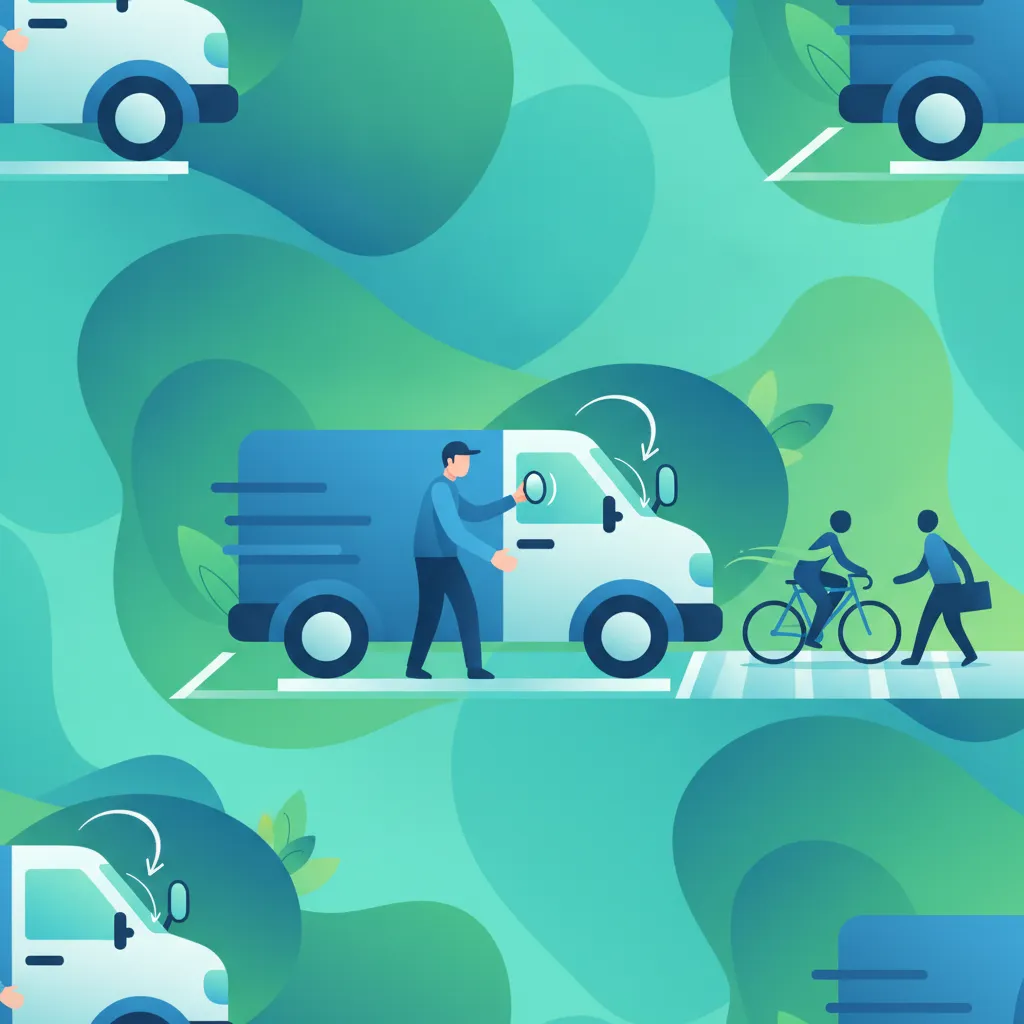
This lesson addresses the unique environmental and logistical challenges faced during delivery stops in commercial town and city centers. It covers the legal frameworks governing municipal loading zones, double-parking hazards, and temporary pedestrian-only street restrictions. Drivers will acquire practical skills for managing traffic build-up, utilizing visual spotters, and securing the vehicle while unloading cargo.

Driving large vehicles through dense city traffic requires outstanding lane discipline, spatial awareness, and consistent patience. This lesson teaches drivers how to utilize public bus corridors, manage tight yellow box intersections, and handle narrow city streets. It focuses on predicting traffic pattern shifts to maintain service timetables while minimizing fuel waste and driver stress.

Irish rural routes are often narrow, lacking central markings, and bordered by tall hedges that restrict forward visibility on sharp bends. This lesson teaches drivers how to negotiate blind curves, anticipate slow-moving agricultural machinery, and respond to wandering farm animals. Drivers will learn to regulate vehicle speed proactively, maintaining a safe stopping margin in rural areas.
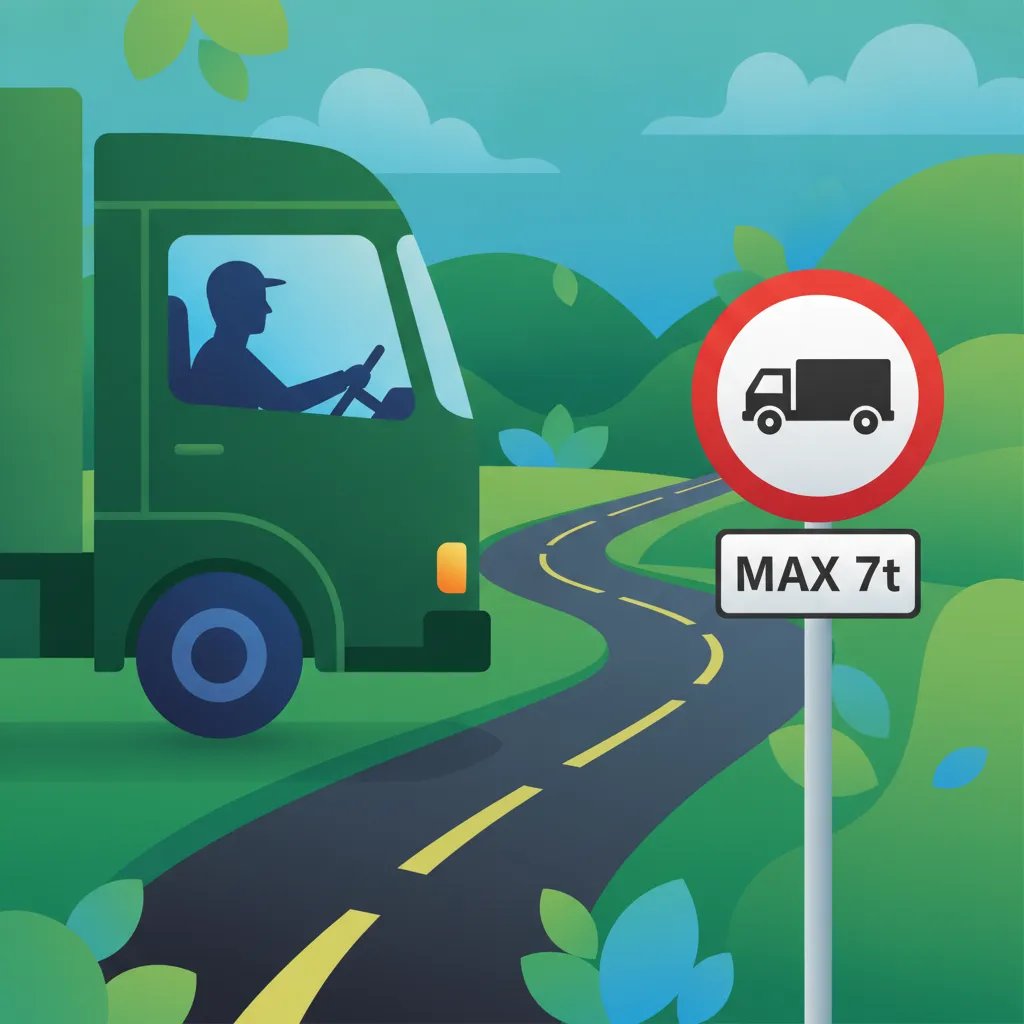
This lesson details the exact visual indicators, symbols, and text used on Irish traffic signs to communicate regulatory restrictions for heavy vehicles. It covers signs denoting height clearances, narrow bridges, and width-limited streets that require immediate driver diversion. By recognizing these specialized warnings early, professional drivers prevent costly structural collisions and traffic offences.
Large passenger vehicles must maintain consistent lane positioning to prevent side-swipe incidents and sustain smooth urban traffic patterns. This lesson covers standard lane selection rules, safe overtaking procedures, and how to use designated public transit corridors correctly. Drivers will learn the importance of checking mirrors continuously and planning lane changes well in advance.
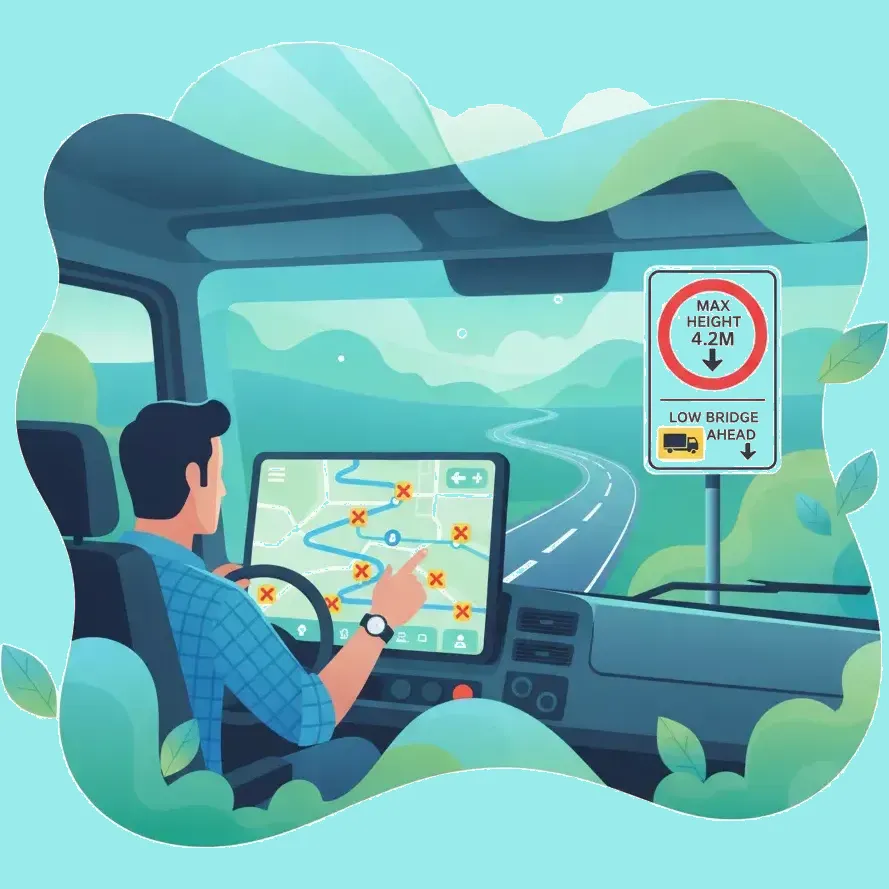
This lesson teaches professional drivers how to systematically map out travel routes that are compatible with heavy vehicle dimensions. It covers the limitations of consumer-grade GPS systems and emphasizes the use of specialized truck navigation systems that account for low bridges and load restrictions. Drivers will also learn to plan for congestion, access timing regulations, and proper entrance paths into commercial zones.

Driving a coach through narrow urban streets or historic Irish town centers demands precise spatial judgment and low speed control. This lesson covers turning radii, rear tail-swing physics, and managing overhangs when navigating around tight, permanent obstacles. Drivers will learn to assess clearance gaps accurately, reducing damage risks to the vehicle exterior and public infrastructure.

This lesson covers the absolute legal requirement for professional drivers to keep, update, and display essential transit and driver paperwork. It details the role of the Driver Certificate of Professional Competence, vehicle registration documents, transport logs, and insurance certs. Drivers will learn how to present clear records to Irish Road Safety Authority officers and Gardai during compliance inspections.

This lesson outlines the legal and safety requirements for maintaining proper lane discipline on multi-lane roads, roundabouts, and motorways in Ireland. It teaches drivers how to account for lane width, manage trailer off-tracking, and position the cab to prevent encroachment on neighboring lanes. Drivers will master safe lane-changing strategies, signaling protocols, and traffic merging techniques.
This lesson provides a comprehensive overview of the Irish penalty points system with a specific focus on commercial goods vehicles. It details how enforcement agencies like the Road Safety Authority and Garda Síochána monitor driver compliance and conduct roadside checks. Learners will examine the specific heavy vehicle offences that result in severe fines, penalty points, or immediate licence suspension.
Understand the technical requirements for maintaining correct lane discipline with articulated vehicles and long-wheelbase trucks. This lesson breaks down the physics of turning at complex junctions, explaining how to execute safe maneuvers while accounting for off-tracking and maintaining awareness of surroundings in multi-lane traffic.
This lesson outlines the legal and safety requirements for maintaining proper lane discipline on multi-lane roads, roundabouts, and motorways in Ireland. It teaches drivers how to account for lane width, manage trailer off-tracking, and position the cab to prevent encroachment on neighboring lanes. Drivers will master safe lane-changing strategies, signaling protocols, and traffic merging techniques.
Large passenger vehicles must maintain consistent lane positioning to prevent side-swipe incidents and sustain smooth urban traffic patterns. This lesson covers standard lane selection rules, safe overtaking procedures, and how to use designated public transit corridors correctly. Drivers will learn the importance of checking mirrors continuously and planning lane changes well in advance.

This lesson addresses the mechanical dynamics of turning long-wheelbase and articulated commercial vehicles at intersections, junctions, and roundabouts. It covers the necessity of deep cornering lines, early mirror checks, and correct signaling to warn vulnerable road users of wide turn maneuvers. Drivers will learn how to minimize rear cut-in and ensure the entire vehicle clears urban obstacles safely.

Irish driving theory demands that drivers keep to the left-hand side of the road unless overtaking or turning right. This lesson explains how to maintain consistent lane discipline on multi-lane roads, how to perform safe lane changes, and the dangers of drifting. You will learn the safety sequence of checking mirrors, checking blind spots, signalling, and smoothly executing a lane change without disrupting trailing traffic.
This lesson describes the legal regulations and driving conventions for operating heavy commercial vehicles on motorways and high-speed dual carriageways. It explains specific Irish motorway rules, including bans on heavy goods vehicles occupying the outer overtaking lanes. Drivers will learn to manage high-speed slip-road merging, maintain safe spacing buffers, and anticipate long-range changes in overall traffic flow.
This lesson details the exact visual indicators, symbols, and text used on Irish traffic signs to communicate regulatory restrictions for heavy vehicles. It covers signs denoting height clearances, narrow bridges, and width-limited streets that require immediate driver diversion. By recognizing these specialized warnings early, professional drivers prevent costly structural collisions and traffic offences.
This lesson teaches professional drivers how to systematically map out travel routes that are compatible with heavy vehicle dimensions. It covers the limitations of consumer-grade GPS systems and emphasizes the use of specialized truck navigation systems that account for low bridges and load restrictions. Drivers will also learn to plan for congestion, access timing regulations, and proper entrance paths into commercial zones.

The length of a commercial passenger vehicle creates a wide rear-wheel track offset, requiring drivers to swing wide during tight turns. This lesson teaches cornering mechanics, mirror adjustment guidelines, and how to check blind spots for cyclists on the inside lane. Drivers will master intersection control, preventing collisions with stationary street furniture or curbs.
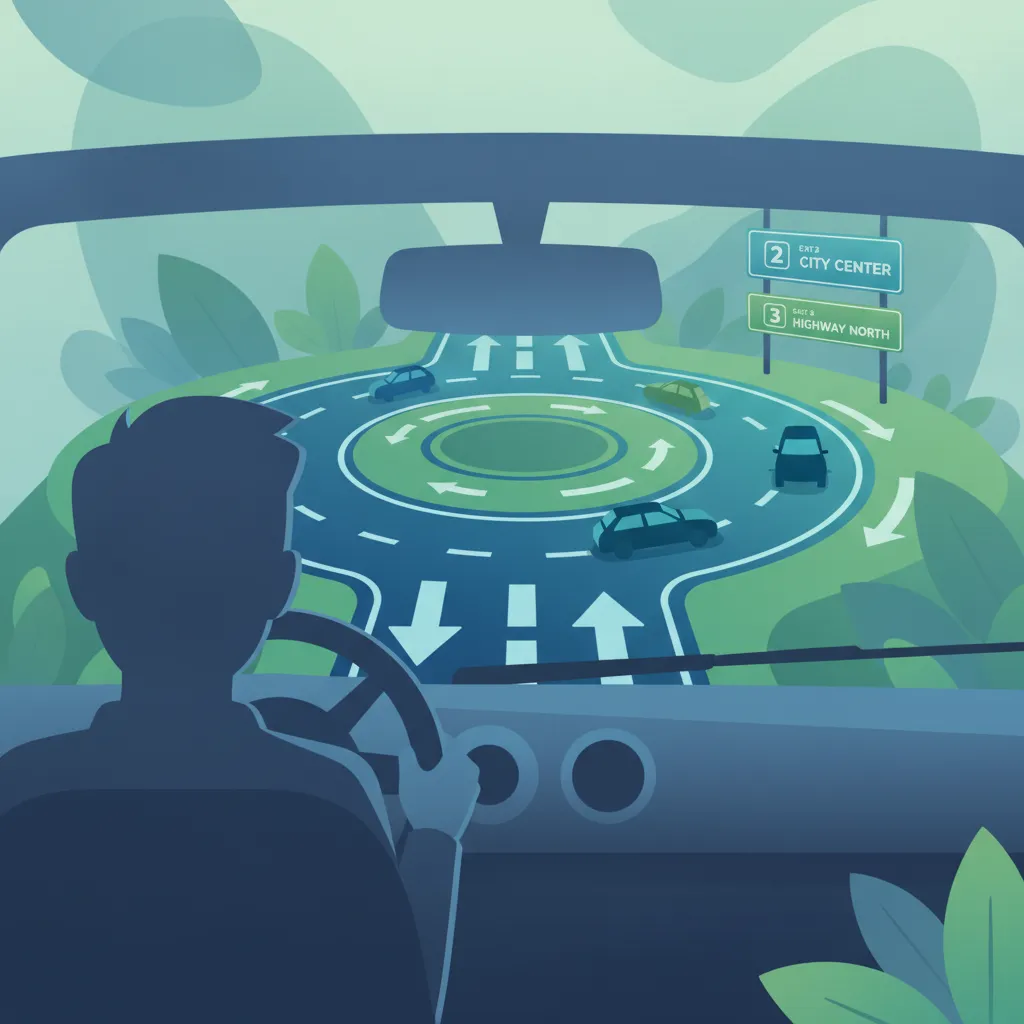
Navigating multi-lane roundabouts requires precise lane selection, continuous scanning, and timely signaling. This lesson teaches you the 'clock rule' for determining which lane to enter, how to yield to traffic already on the roundabout from your right, and when to activate your left indicator to exit. Mastering these procedures minimizes lane-drift accidents and ensures a seamless flow of traffic on busy roundabouts.
Motorways are designed for safe, high-speed travel, but require strict adherence to lane discipline and specific regulations. This lesson explains that the left lane is for normal driving, while middle and right lanes are strictly for overtaking slower traffic. You will learn how to identify motorway exits, use the hard shoulder during absolute emergencies, and understand the legal restrictions placed on learner permit holders.
Find clear answers to common questions learners have about Vehicle Length, Turning Radius and Route Planning. Learn how the lesson is structured, which driving theory objectives it supports, and how it fits into the overall learning path of units and curriculum progression in Ireland. These explanations help you understand key concepts, lesson flow, and exam focused study goals.
The swept path is the area a vehicle occupies while turning. Because long vehicles 'cut the corner' with their rear wheels, failing to account for this can lead to mounting kerbs or side-swiping other vehicles. The exam tests your awareness of this spatial footprint.
Always consult official Irish road maps and specialized HGV navigation tools that incorporate height and weight limit data. Be observant of regulatory signage indicating weight limits or low bridge heights before entering towns or narrow rural roads.
Rear overhang is the distance the vehicle extends behind the rear wheels. When turning, this part of the vehicle swings out in the opposite direction, which can strike pedestrians, cyclists, or street furniture if you are not tracking the movement.
Yes, regulatory road signs for length, width, height, and weight are common on Irish roads. You must learn to recognize these specific circular or rectangular restriction signs, as ignoring them can lead to legal penalties and hazardous situations.
Use the practice question search tool to pinpoint specific topics, road signs, or rules you need to master for your official Driver Theory Test. Refine your study strategy and ensure comprehensive preparation for all aspects of the Irish driving exam. Start your focused revision now and build confidence for your learner permit test.