
This lesson examines the vital relationship between heavy goods vehicle dimensions and the physical constraints of Irish road networks. You will learn how vehicle length, height, and weight influence road space occupation, bridge safety, and tunnel clearance. Understanding these factors is essential for safe route planning and passing the Category C Driver Theory Test.

Lesson content overview
Operating a heavy goods vehicle (HGV) in Ireland requires a deep understanding of how your vehicle’s physical footprint interacts with the surrounding environment. Category C vehicles—rigid trucks with a maximum authorised mass (MAM) exceeding 3,500 kg—occupy significantly more physical space and exert immensely greater forces on infrastructure than passenger cars.
Navigating Ireland’s diverse road network, which transitions rapidly from modern multi-lane motorways to narrow, winding regional and local roads (bóithre réigiúnacha and bóithre áitiúla), demands absolute precision. This lesson explores the structural, physical, and safety implications of driving large vehicles, focusing on pavement wear, bridge and tunnel safety, and negotiating tight, restricted spaces.
To operate a heavy commercial vehicle safely and responsibly, professional drivers must internalise three core principles. These principles bridge the gap between abstract legal limits and the physical reality of the road.
The size of a vehicle must remain proportionate to the road space it occupies. When a vehicle’s dimensions approach or exceed the physical limits of the lane, the driver must proactively compensate by adjusting speed, lateral positioning, and route choice to prevent lane encroachment and collisions.
The gross weight of a vehicle must be distributed evenly across all axles according to manufacturer and legal specifications. Correct distribution prevents excessive, localized downward force, protecting both the vehicle's suspension and the underlying road pavement from structural failure.
An HGV driver must maintain a continuous dynamic buffer zone—both lateral and vertical—around the vehicle. This margin accounts for vehicle body roll, wind buffeting, surface unevenness, and unexpected maneuvers by other road users.
The physical length of a Category C vehicle changes how it behaves during turns, roundabouts, and tight maneuvers. Understanding the geometry of your vehicle's path is essential to preventing collisions with roadside infrastructure, pedestrians, and other vehicles.
When an HGV negotiates a turn, the rear wheels do not follow the exact path of the front steering wheels. Instead, they cut inward toward the center of the turn. This phenomenon is known as off-tracking or low-speed off-tracking.
The area between the path of the front outer wheel and the path of the rear inner wheel is called the swept path. The longer the wheelbase (the distance between the front axle and the rear drive axles), the wider the swept path will be.
Crucial Safety Notice: Never assume that standard turning radii apply equally to all configurations. A vehicle carrying an unevenly distributed load or towing a drawbar trailer will exhibit altered turning dynamics, requiring a significantly wider approach path to prevent lane encroachment.
Irish road surfaces are engineered to withstand millions of load cycles, but the rate of pavement degradation increases exponentially as axle weights rise.
Road damage is not linear; it is governed by the Fourth Power Law (often referred to as the structural damage relationship). This law states that the damage caused to a road pavement by an axle is proportional to the fourth power of the load carried by that axle.
For example, a standard passenger car axle carries approximately 0.5 tonnes. An HGV drive axle can legally carry up to 10 or 10.5 tonnes in Ireland. Because of the fourth power relationship, a single passage of a fully loaded 10-tonne HGV axle can cause thousands of times more pavement wear than a standard passenger car.
To protect the national road asset, Irish legislation strictly limits gross vehicle weights and individual axle loads. Under the Road Traffic (Construction and Use) Regulations, standard single drive axles are typically restricted to 10 or 11.5 tonnes depending on suspension types (road-friendly air suspension is favored as it reduces dynamic impact forces).
Distribute the Load Evenly: Position heavy cargo over the axles according to the vehicle’s loading plan. Avoid placing all the weight at the very rear or the very front of the cargo area.
Utilise Lift Axles Appropriately: If your vehicle is equipped with a lift axle, ensure it is lowered when the vehicle is loaded. Keeping a lift axle raised while carrying a heavy load overloads the remaining active axles, violating the law and damaging the road.
Monitor Your Gross Vehicle Weight (GVW): Regularly use weighbridges to confirm your vehicle does not exceed its plated weight limits.
Bridges and tunnels represent some of the most critical and vulnerable points on the Irish transport network. Structural failure or physical collision at these points can result in catastrophic loss of life, severe network disruption, and astronomical repair costs.
When a vehicle crosses a bridge, it exerts two types of forces:
A speeding, overloaded HGV creates high-frequency dynamic forces that can exceed the bridge’s design limits, leading to micro-fractures in concrete and fatigue in steel girders. This is why many older arches and bridges carry strict speed limits alongside weight restrictions.
In Ireland, bridges with physical limitations are clearly signposted. Drivers must be highly vigilant when approaching low overpasses, railway bridges, or arch structures.
Exceeding a posted weight limit is a severe offence. Many historical stone arch bridges on rural regional roads are structurally incapable of carrying modern 32-tonne or 44-tonne configurations.
Bridge Strike Warning: Bridge strikes (especially involving railway overpasses managed by Iarnród Éireann) are a major safety hazard in Ireland. A bridge strike can derail trains, collapse structural spans, and lead to immediate prosecution and loss of your professional Driver CPC qualification. Always know the precise height of your vehicle, including any temporary loads, crane attachments, or empty containers.
Irish law requires all vehicles exceeding 3 metres in height to have a legible, easily adjustable height notice clearly visible to the driver in the cab. You must update this indicator every time you change trailers, load tall cargo, or adjust your vehicle configuration.
Irish roads frequently feature localized bottlenecks where the physical width of the road decreases sharply. Navigating these requires excellent spatial awareness and defensive driving strategies.
A gauntlet point is a fixed narrow point on a road where the width of the carriageway is reduced to the extent that two large vehicles cannot safely pass each other at the same time. Examples include historic single-lane stone bridges, narrow canal crossings, or temporary lane restrictions within roadworks.
When approaching a gauntlet point:
Many rural regional (R) and local (L) roads in Ireland feature lane widths well below the standard 3.65 metres. In some cases, lanes may be narrower than the legal maximum width of a standard heavy vehicle (2.55 metres, or 2.6 metres for temperature-controlled vehicles).
Reduce Speed: Lower your speed to match your visual range. If an oncoming vehicle appears suddenly, you must be able to stop safely in half the distance you can see to be clear.
Adopt a Dominant but Safe Lane Position: Keep as far to the left as safe, but watch for soft verges, deep drainage ditches, and overhanging tree branches that can damage your mirrors or bodywork.
Prioritise Smaller Vehicles: If the road is too narrow for an HGV and a passenger car to pass, look for a passing bay or a wide section of the road. Be prepared to stop or, if necessary and safe, reverse to a suitable passing point.
Protect Vulnerable Road Users (VRUs): When passing cyclists, pedestrians, or horse riders in narrow lanes, slow down significantly. Do not attempt to squeeze past them. Wait until there is a clear, wide section of road where you can give them at least 1.5 metres of lateral clearance.
The physical space occupied by your HGV is not static; it expands and contracts based on external environmental factors.
Compliance with dimensional and weight regulations is a legal mandate enforced strictly by the Road Safety Authority (RSA) and An Garda Síochána.
This lesson covers how the physical dimensions of Category C vehicles interact with Irish road infrastructure, explaining technical concepts like off-tracking, swept path, and the Fourth Power Law governing road wear. It emphasises that HGV drivers must maintain continuous spatial awareness around bridges, tunnels, and narrow roads, while complying with strict height and weight limits enforced by RSA. Key procedures include updating cab height indicators, using weighbridges, lowering lift axles when loaded, and applying defensive driving techniques at gauntlet points. Understanding these principles is essential for both passing the Category C theory test and operating safely on Irish roads.
A short set of high-value points that capture the most important learning from this lesson.
HGV length causes off-tracking where rear wheels cut inward during turns, requiring a wider initial approach to prevent kerb strikes or rear-end swing collisions
Road damage follows the Fourth Power Law, meaning a 10-tonne HGV axle causes thousands of times more wear than a standard passenger car axle
Bridges face both static load (vehicle weight) and dynamic load (vibration and bouncing), making overloaded speeding HGVs a serious structural risk
Gauntlet points require early assessment and willingness to yield even with theoretical priority to prevent two wide vehicles blocking each other
Vehicle configuration changes like trailer swaps or load adjustments require immediate updating of the mandatory cab height indicator
Explore all units and lessons included in this driving theory course.
Standard HGV maximum width is 2.55m (2.6m for refrigerated vehicles), and single drive axle limits are 10 to 11.5 tonnes depending on suspension type
When turning sharply, the rear inner wheels cut toward the kerb while the rear outer corner swings in the opposite direction of the turn
Lift axles must be lowered when the vehicle is loaded—keeping them raised concentrates weight and damages roads illegally
Height and weight restriction signs on bridges are legally enforceable; bridge strikes can result in criminal prosecution and loss of Driver CPC qualification
Weather conditions like wind and wet roads increase lateral and vertical vehicle envelope, requiring increased safety margins
Assuming standard turning radii apply to loaded vehicles, which can have altered dynamics due to uneven load distribution or rear overhang
Failing to check and update the cab height indicator after changing trailers, loads, or configurations, risking bridge strikes
Not using weighbridges to verify GVW, potentially travelling overloaded and causing vehicle instability and road damage
Attempting to squeeze past vulnerable road users in narrow lanes instead of waiting for a clear wide section with 1.5m lateral clearance
Ignoring gauntlet point priority signs and committing to the narrow section when oncoming large vehicles are already present
Lesson content overview
A short set of high-value points that capture the most important learning from this lesson.
HGV length causes off-tracking where rear wheels cut inward during turns, requiring a wider initial approach to prevent kerb strikes or rear-end swing collisions
Road damage follows the Fourth Power Law, meaning a 10-tonne HGV axle causes thousands of times more wear than a standard passenger car axle
Bridges face both static load (vehicle weight) and dynamic load (vibration and bouncing), making overloaded speeding HGVs a serious structural risk
Gauntlet points require early assessment and willingness to yield even with theoretical priority to prevent two wide vehicles blocking each other
Vehicle configuration changes like trailer swaps or load adjustments require immediate updating of the mandatory cab height indicator
Explore all units and lessons included in this driving theory course.
Standard HGV maximum width is 2.55m (2.6m for refrigerated vehicles), and single drive axle limits are 10 to 11.5 tonnes depending on suspension type
When turning sharply, the rear inner wheels cut toward the kerb while the rear outer corner swings in the opposite direction of the turn
Lift axles must be lowered when the vehicle is loaded—keeping them raised concentrates weight and damages roads illegally
Height and weight restriction signs on bridges are legally enforceable; bridge strikes can result in criminal prosecution and loss of Driver CPC qualification
Weather conditions like wind and wet roads increase lateral and vertical vehicle envelope, requiring increased safety margins
Assuming standard turning radii apply to loaded vehicles, which can have altered dynamics due to uneven load distribution or rear overhang
Failing to check and update the cab height indicator after changing trailers, loads, or configurations, risking bridge strikes
Not using weighbridges to verify GVW, potentially travelling overloaded and causing vehicle instability and road damage
Attempting to squeeze past vulnerable road users in narrow lanes instead of waiting for a clear wide section with 1.5m lateral clearance
Ignoring gauntlet point priority signs and committing to the narrow section when oncoming large vehicles are already present
Explore search topics learners often look for when studying Impact of Size on Road Space and Infrastructure. These topics reflect common questions about road rules, driving situations, safety guidance, and lesson level theory preparation for learners in Ireland.
Browse additional driving theory lessons that cover connected traffic rules, road signs, and common driving situations related to this topic. Improve your understanding of how different rules interact across everyday traffic scenarios.
Learn the mechanics of off-tracking and swept path geometry for heavy goods vehicles. This guide explains how to manage wide turns and vehicle swing in urban environments to prevent collisions with roadside infrastructure and ensure safe navigation at junctions throughout Ireland.

This lesson addresses the mechanical dynamics of turning long-wheelbase and articulated commercial vehicles at intersections, junctions, and roundabouts. It covers the necessity of deep cornering lines, early mirror checks, and correct signaling to warn vulnerable road users of wide turn maneuvers. Drivers will learn how to minimize rear cut-in and ensure the entire vehicle clears urban obstacles safely.

This lesson outlines the legal and safety requirements for maintaining proper lane discipline on multi-lane roads, roundabouts, and motorways in Ireland. It teaches drivers how to account for lane width, manage trailer off-tracking, and position the cab to prevent encroachment on neighboring lanes. Drivers will master safe lane-changing strategies, signaling protocols, and traffic merging techniques.

This lesson focuses on the physical mechanics of long-wheelbase and articulated vehicles when executing turns in restricted spaces. It explains concepts like swept path, rear overhang, and turning circles, which must be accounted for to prevent side-swiping collisions. Drivers will discover strategic route-planning techniques to avoid congested urban layouts and unsuitable rural corridors.

The length of a commercial passenger vehicle creates a wide rear-wheel track offset, requiring drivers to swing wide during tight turns. This lesson teaches cornering mechanics, mirror adjustment guidelines, and how to check blind spots for cyclists on the inside lane. Drivers will master intersection control, preventing collisions with stationary street furniture or curbs.

This lesson provides a comprehensive guide to reversing large vehicles and backing trailer setups safely into loading docks and industrial bays. It analyzes the mechanical physics of trailer articulation, steering inputs, and how to utilize modern backup cameras, mirrors, and assistants. Drivers will examine critical safety protocols, including visual checks and slow-speed controls, to avoid collisions with fixed objects.
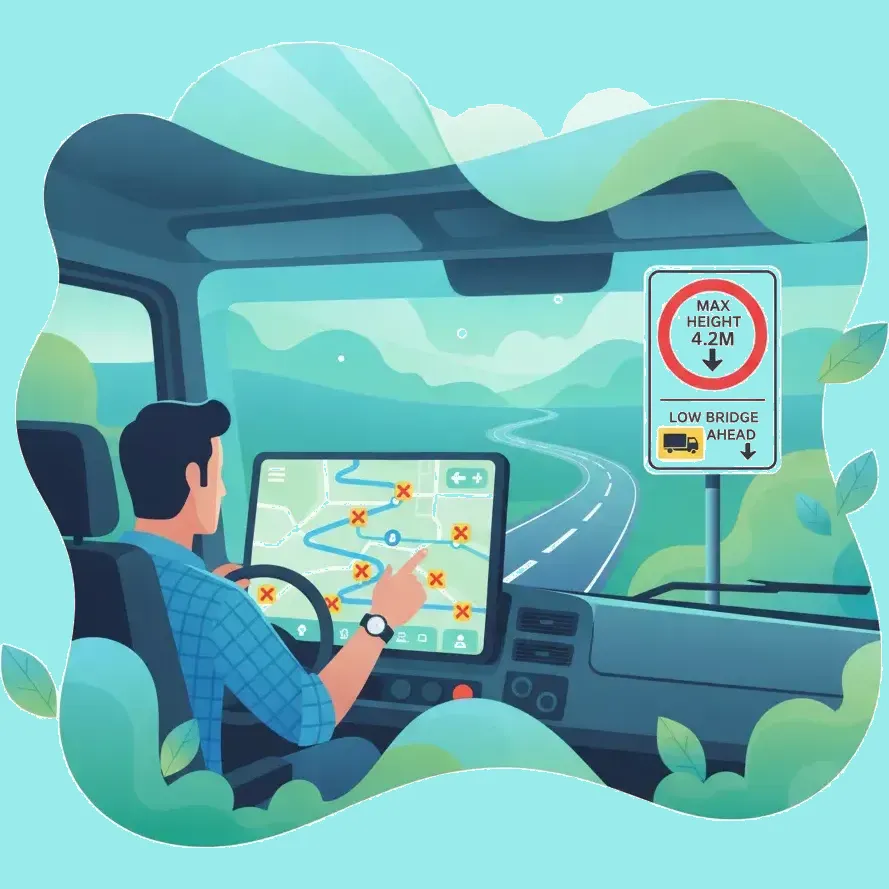
This lesson teaches professional drivers how to systematically map out travel routes that are compatible with heavy vehicle dimensions. It covers the limitations of consumer-grade GPS systems and emphasizes the use of specialized truck navigation systems that account for low bridges and load restrictions. Drivers will also learn to plan for congestion, access timing regulations, and proper entrance paths into commercial zones.
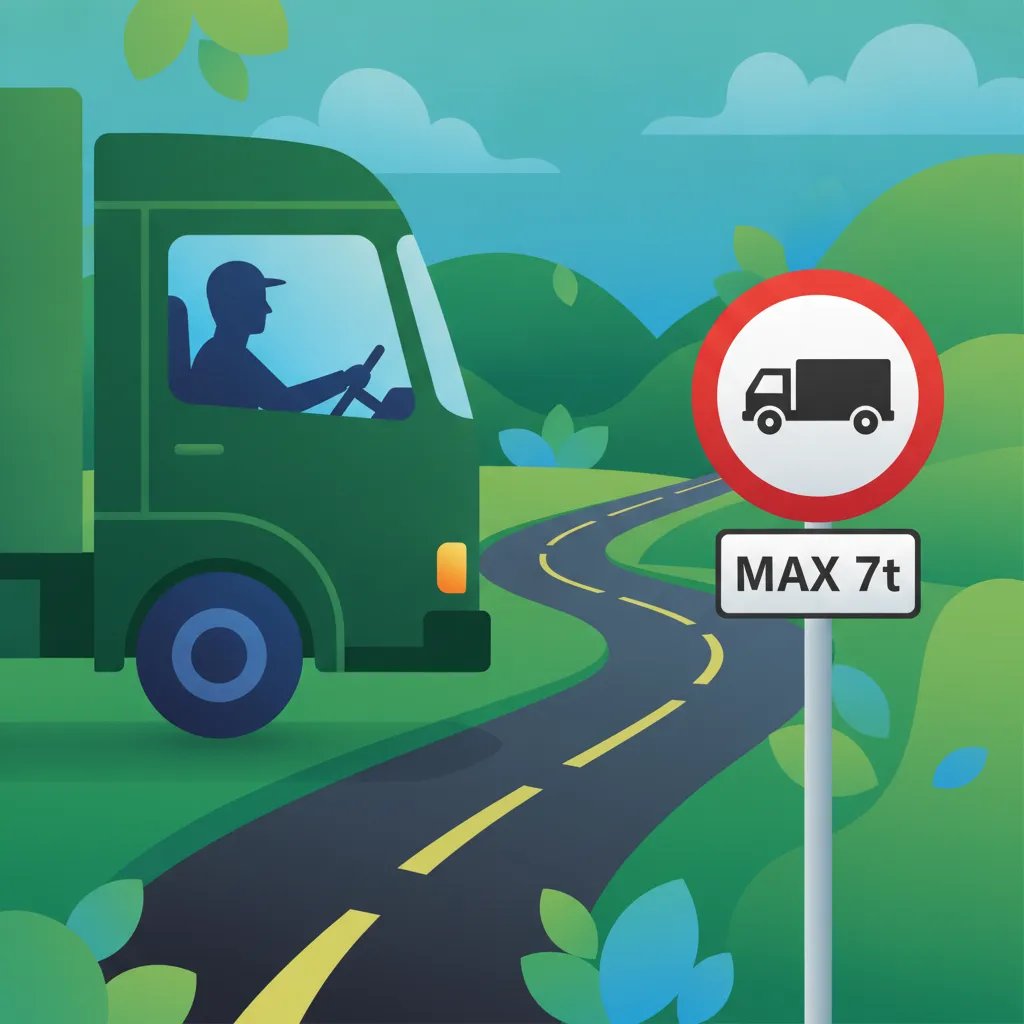
This lesson details the exact visual indicators, symbols, and text used on Irish traffic signs to communicate regulatory restrictions for heavy vehicles. It covers signs denoting height clearances, narrow bridges, and width-limited streets that require immediate driver diversion. By recognizing these specialized warnings early, professional drivers prevent costly structural collisions and traffic offences.
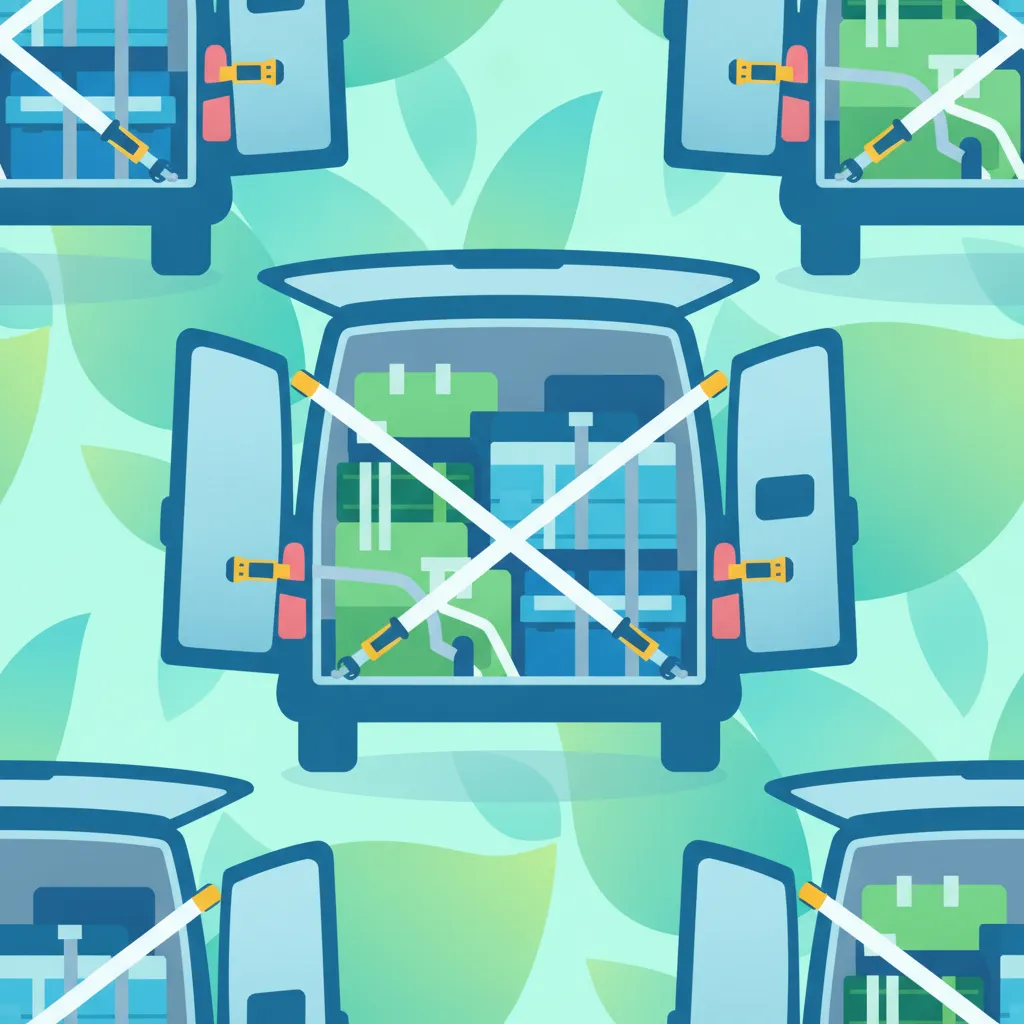
This lesson focuses on the practical mechanics of securing goods to prevent kinetic shift during sudden braking or evasive steering manoeuvres. It teaches the correct use of tensioning straps, chains, blocking bars, and friction-increasing mats according to Irish safety guidelines. Drivers will learn to perform rigorous pre-trip and en-route checks to guarantee that cargo remain secure throughout the transit.

Large passenger vehicles must maintain consistent lane positioning to prevent side-swipe incidents and sustain smooth urban traffic patterns. This lesson covers standard lane selection rules, safe overtaking procedures, and how to use designated public transit corridors correctly. Drivers will learn the importance of checking mirrors continuously and planning lane changes well in advance.

This lesson explores the safe operation of heavy transport vehicles during severe meteorological hazards typical of the Irish climate. It teaches techniques for adjusting speed and doubling following distances to prevent loss of steering traction and control on waterlogged or icy roadways. Drivers will understand how to manage lateral aerodynamic forces from crosswinds on high-sided goods vehicles.
Explore strategies for operating heavy vehicles in constrained urban areas and narrow regional roads. This overview details how to navigate gauntlet points and protect vulnerable road users during deliveries while maintaining compliance with Irish road safety regulations and infrastructure limitations.

This lesson addresses the unique environmental and logistical challenges faced during delivery stops in commercial town and city centers. It covers the legal frameworks governing municipal loading zones, double-parking hazards, and temporary pedestrian-only street restrictions. Drivers will acquire practical skills for managing traffic build-up, utilizing visual spotters, and securing the vehicle while unloading cargo.

This lesson explains the extensive blind spots of heavy goods vehicles, buses, and other large trucks on Irish roads. It teaches Category AM riders how to maintain safe following distances and position themselves where truck drivers can see them. Proper space cushion management is emphasized to protect riders from the wind turbulence of passing trucks.
This lesson teaches professional drivers how to systematically map out travel routes that are compatible with heavy vehicle dimensions. It covers the limitations of consumer-grade GPS systems and emphasizes the use of specialized truck navigation systems that account for low bridges and load restrictions. Drivers will also learn to plan for congestion, access timing regulations, and proper entrance paths into commercial zones.

Children often struggle to judge heavy vehicle speeds accurately, while elderly pedestrians may possess limited mobility or hearing impairments. This lesson addresses these unique risks, explaining how to adjust driving patterns in residential neighborhoods and near shopping districts. Drivers will learn to maintain a high safety margin, ensuring they can yield quickly to vulnerable road users.

This lesson reviews the legal definitions and safety guidelines for various categories of cargo, ranging from standard palletized goods to hazardous materials. It highlights the specific documentation, labelling, and safety equipment required by Irish and European laws for specialized transport. Drivers will learn their legal liabilities and the mandatory safety protocols corresponding to each load type.

This lesson focuses on managing the interactions between commercial goods vehicles and non-motorized or lightweight commuters. It outlines defensive driving techniques to utilize when overtaking cyclists, navigating pedestrian crossings, or negotiating shared junctions in Irish cities. Drivers will examine common cyclist behaviors at roundabouts and understand how to maintain massive safety margins to protect lives.
This lesson explores the safe operation of heavy transport vehicles during severe meteorological hazards typical of the Irish climate. It teaches techniques for adjusting speed and doubling following distances to prevent loss of steering traction and control on waterlogged or icy roadways. Drivers will understand how to manage lateral aerodynamic forces from crosswinds on high-sided goods vehicles.

Motorcycles and bicycles are often hidden from view in the large blind spots of passenger buses and coaches during turns. This lesson covers safe lateral clearances when overtaking cyclists, recognizing advanced stop lines, and sharing narrow lanes. Drivers will understand how to signal clearly, giving riders enough room to navigate safely near busy public transit corridors.

This lesson covers the absolute legal requirement for professional drivers to keep, update, and display essential transit and driver paperwork. It details the role of the Driver Certificate of Professional Competence, vehicle registration documents, transport logs, and insurance certs. Drivers will learn how to present clear records to Irish Road Safety Authority officers and Gardai during compliance inspections.

Irish rural routes are often narrow, lacking central markings, and bordered by tall hedges that restrict forward visibility on sharp bends. This lesson teaches drivers how to negotiate blind curves, anticipate slow-moving agricultural machinery, and respond to wandering farm animals. Drivers will learn to regulate vehicle speed proactively, maintaining a safe stopping margin in rural areas.
Find clear answers to common questions learners have about Impact of Size on Road Space and Infrastructure. Learn how the lesson is structured, which driving theory objectives it supports, and how it fits into the overall learning path of units and curriculum progression in Ireland. These explanations help you understand key concepts, lesson flow, and exam focused study goals.
Hitting a bridge with a high vehicle can cause catastrophic structural damage and severe accidents. As a professional driver, you are legally responsible for knowing your vehicle's height and ensuring you never enter a route with a lower clearance limit.
Many secondary roads and bridges have weight limits to prevent pavement wear and structural failure. Choosing a route that exceeds these limits is a legal offence and poses a safety risk, so you must always check for weight restriction signs before starting your journey.
Yes, the theory test often includes scenarios about narrow road points or gauntlets where large vehicles have limited space. You are expected to demonstrate knowledge of positioning and when to wait for oncoming traffic to ensure safe passage.
The primary risk is the rear-end swing or the vehicle occupying adjacent lanes to complete the turn. This creates blind spots and conflict points with smaller vehicles or cyclists, making extreme spatial awareness and signal discipline critical.
Use the practice question search tool to pinpoint specific topics, road signs, or rules you need to master for your official Driver Theory Test. Refine your study strategy and ensure comprehensive preparation for all aspects of the Irish driving exam. Start your focused revision now and build confidence for your learner permit test.