
While Dutch traffic laws set maximum speeds, your success on the CBR theory exam and your safety on the road depend on your ability to recognize when conditions demand you drive slower. This guide clarifies how factors like poor visibility, dense bicycle traffic, and narrow street layouts influence the safe speed you must adopt. Learn to prioritize real-world hazard perception over simple adherence to posted signs.
Article content overview
In the Netherlands, passing the CBR theory exam requires more than just memorizing the standard speed limits found in the traffic regulations. While you are expected to know that the speed limit in a built-up area is 50 km/h and on a motorway is 100 km/h, the reality of driving—and the core of the CBR hazard perception exam—is about judging what is "appropriate" for the situation. A driver must at all times be able to bring their vehicle to a standstill within the distance they can see to be clear, a rule often tested through scenarios involving limited visibility, vulnerable road users, or adverse weather.
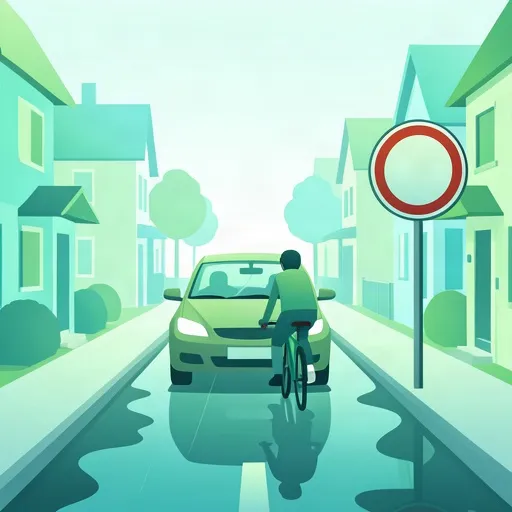
The legal speed limit acts as a ceiling, not a target. If conditions are suboptimal, driving at the maximum permitted speed can be considered reckless and potentially lead to a failed exam or, worse, a dangerous traffic situation. For instance, if you are driving through a narrow residential street where children are playing near the curb, or in heavy fog where your vision is significantly obscured, you are legally and morally obligated to reduce your speed. The CBR exam often tests this judgment by presenting video clips where a driver is moving at the legal limit, yet the situation clearly demands a much slower pace to maintain a safe stopping distance.
Several environmental factors dictate when you should ease off the accelerator. Dense bicycle traffic, common in Dutch cities, requires extra caution, especially near schools or shopping centers. When the road surface is compromised by rain, snow, or ice, your braking distance increases significantly. In these instances, you must increase your following distance and reduce your speed to ensure you have enough time to react to the vehicle in front of you.
To master the theory exam, it is vital to understand that your total stopping distance is composed of two main parts: your thinking distance and your braking distance. Your thinking distance—the distance covered during the one second it typically takes to perceive a hazard and press the brake—is directly proportional to your speed. If you are driving too fast, your thinking distance increases, meaning you will travel further before even beginning to slow down.
| Condition | Suggested Speed Adjustment | Reason |
|---|---|---|
| Heavy Rain | Reduce by 10-20% | Increased braking distance due to reduced tire grip. |
| Dense Fog | Significant reduction | Visibility is lower than your stopping distance. |
| School Zones | Drive slowly (approx 30km/h) | High risk of children stepping into the road. |
| Narrow/Residential | Maximum 30 km/h | Limited room for maneuvers and frequent hazards. |
The CBR theory exam focuses heavily on "knowledge and insight." While you need the factual knowledge of speed limits, you must demonstrate the insight to predict what other road users will do. If you see a ball rolling onto the street, the correct answer is always to release the accelerator and prepare to brake, regardless of your current speed. By anticipating these risks, you move from being a passenger-minded driver to a proactive one who understands that safe driving is dynamic.
This article clarifies that appropriate speed is determined by what you can safely stop within, not by posted limits alone. It explains that stopping distance consists of thinking distance (which grows with speed) and braking distance (which lengthens on wet or slippery surfaces). Key adjustments are required for Dutch conditions: woonerf zones demand ~15 km/h, school zones ~30 km/h, and rain or fog require substantial reductions. The CBR exam tests your insight into anticipating hazards rather than merely knowing speed numbers.
A short set of high-value points that capture the most important ideas from this article.
Legal speed limits are a ceiling, not a target—conditions often require driving significantly slower.
Your total stopping distance equals thinking distance (proportional to speed) plus braking distance.
Environmental factors like weather, visibility, and vulnerable road users all demand active speed adjustment.
CBR exam questions test your ability to anticipate hazards, not just react to them.
Dense bicycle traffic in Dutch cities is a specific condition requiring extra caution and reduced speed.
Woonerf zones require walking pace (approximately 15 km/h) with priority for pedestrians.
School zones demand slow speeds (around 30 km/h) due to unpredictable child behavior.
In heavy rain, reduce speed by 10–20% and increase your following distance.
In dense fog, significant speed reduction is mandatory because visibility is typically less than your stopping distance.
Narrow residential streets with parked cars call for a maximum of 30 km/h.
Assuming the posted speed limit is the recommended speed regardless of conditions.
Failing to anticipate a ball rolling into the street by not releasing the accelerator preemptively.
Not adjusting following distance when road surface grip is reduced by rain or ice.
Overlooking vulnerable road users such as cyclists and children near the curb.
Confusing thinking distance with braking distance—both must be considered for safe stopping.
Article content overview
A short set of high-value points that capture the most important ideas from this article.
Legal speed limits are a ceiling, not a target—conditions often require driving significantly slower.
Your total stopping distance equals thinking distance (proportional to speed) plus braking distance.
Environmental factors like weather, visibility, and vulnerable road users all demand active speed adjustment.
CBR exam questions test your ability to anticipate hazards, not just react to them.
Dense bicycle traffic in Dutch cities is a specific condition requiring extra caution and reduced speed.
Woonerf zones require walking pace (approximately 15 km/h) with priority for pedestrians.
School zones demand slow speeds (around 30 km/h) due to unpredictable child behavior.
In heavy rain, reduce speed by 10–20% and increase your following distance.
In dense fog, significant speed reduction is mandatory because visibility is typically less than your stopping distance.
Narrow residential streets with parked cars call for a maximum of 30 km/h.
Assuming the posted speed limit is the recommended speed regardless of conditions.
Failing to anticipate a ball rolling into the street by not releasing the accelerator preemptively.
Not adjusting following distance when road surface grip is reduced by rain or ice.
Overlooking vulnerable road users such as cyclists and children near the curb.
Confusing thinking distance with braking distance—both must be considered for safe stopping.
Explore related topics, search based questions, and concepts that learners often look up when studying Choosing Appropriate Speed in the Netherlands. These themes reflect real search intent and help you understand how this topic connects to wider driving theory knowledge in the Netherlands.
Find clear and practical answers to common questions learners often have about Choosing Appropriate Speed in the Netherlands. This section helps explain difficult points, remove confusion, and reinforce the key driving theory concepts that matter for learners in the Netherlands.
The CBR exam tests your insight into traffic situations. While you must know the legal maximums, you are also expected to recognize when environmental factors—like snow, fog, or cyclists—require you to reduce your speed to maintain a safe stopping distance.
Article 19 states that a driver must at all times be able to bring their vehicle to a standstill within the distance that they can see to be clear, regardless of the maximum speed limit.
The CBR uses scenario-based questions to see if you can identify a developing hazard early and proactively release the accelerator or brake, rather than waiting to see if you strictly exceed a speed limit.
No. The speed limit is a maximum, not a target. You are responsible for adjusting your speed to account for current road conditions, visibility, and the presence of other road users to ensure you can always stop safely.
Start your targeted search now to explore a vast library of official Dutch driving theory articles and guides. Reinforce your understanding of specific traffic rules or road signs to ensure you are fully prepared for your upcoming CBR theory exam. Discover comprehensive explanations tailored for success.