
Understanding how to manage your vehicle in poor visibility is a fundamental requirement for every driver in the Netherlands. This guide details the exact visibility thresholds for using front and rear fog lights and explains the dangers of improper lighting usage, such as dazzling other drivers. You will learn the necessary theoretical knowledge required to answer weather-related questions accurately during your Dutch theory test.
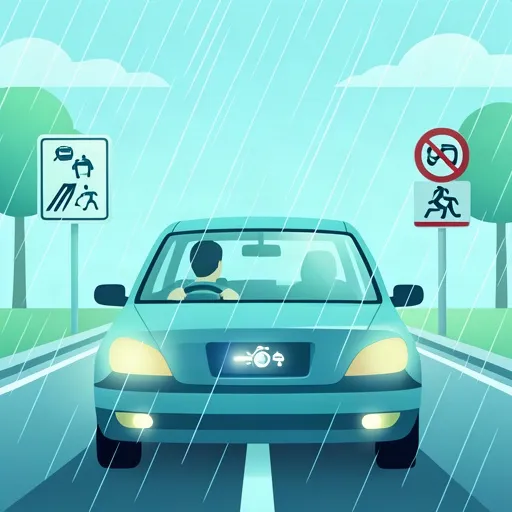
Article content overview
Navigating Dutch roads during adverse weather conditions requires more than just careful driving; it demands a precise understanding of the legal requirements for vehicle lighting and speed adaptation. The CBR theory exam frequently tests your ability to make safe, legal decisions when visibility is compromised. Whether you are dealing with heavy rainfall on a motorway or dense fog in a rural region, knowing exactly when to activate specific lighting and how to adjust your braking distance is essential for passing your exam and staying safe on the road.
One of the most common traps in the CBR theory exam involves the misuse of fog lights. Many candidates assume that because it is raining, they should turn on every light available to them. However, Dutch traffic regulations are very specific about the difference between front and rear fog lights, and failing to adhere to these thresholds can result in failing a theory question.
Never use your rear fog light in the Netherlands during rain. Rear fog lights are extremely bright and can dazzle the driver behind you, significantly increasing the risk of an accident. They are reserved strictly for conditions where visibility is severely restricted by fog or snowfall.
To determine which lights to use, you must objectively judge the distance of visibility ahead of you:
| Light Type | Visibility Condition | Permitted Weather |
|---|---|---|
| Front Fog Lights | Less than 200 meters | Fog, Rain, or Snow |
| Rear Fog Lights | Less than 50 meters | Fog or Snow ONLY |
As shown in the table above, front fog lights may be used when visibility is less than 200 meters due to rain, snow, or fog. In contrast, the rear fog light is a "last resort" measure, legally allowed only when visibility drops below 50 meters—roughly the length of a single football field—and only if that lack of visibility is caused by fog or heavy snow.
Visibility is only half the battle when weather conditions turn sour. When the road surface is wet, icy, or covered in snow, your vehicle's grip on the asphalt decreases substantially. The Dutch theory exam expects you to demonstrate "anticipatory driving," which means reducing your speed long before you encounter a hazard.
When it begins to rain after a long dry spell, the road surface can become dangerously slippery. This occurs because the initial rain mixes with oil and rubber residue, creating a slick, greasy layer. You should increase your following distance significantly in these conditions, as the braking distance of your vehicle will increase. A good rule of thumb is to double your usual following distance to ensure you have enough time to react if the vehicle in front of you brakes suddenly.
The use of high beams (groot licht) is strictly regulated to prevent blinding other road users. You are only permitted to use high beams in the dark, provided you do not dazzle oncoming traffic or the driver of a vehicle directly in front of you. In the context of the theory exam, if a question asks whether you can use high beams in foggy conditions, the answer is always a firm no. Using high beams in fog will only cause the light to reflect off the moisture particles, creating a "white wall" effect that further reduces your visibility.
To navigate your exam successfully, keep these definitions in mind when answering weather-related questions.
Article content overview
Explore related topics, search based questions, and concepts that learners often look up when studying Fog, Rain, and Snow Rules. These themes reflect real search intent and help you understand how this topic connects to wider driving theory knowledge in the Netherlands.
Find clear and practical answers to common questions learners often have about Fog, Rain, and Snow Rules. This section helps explain difficult points, remove confusion, and reinforce the key driving theory concepts that matter for learners in the Netherlands.
You may only use your rear fog light if visibility is less than 50 meters due to dense fog or heavy snowfall. It is strictly prohibited to use the rear fog light during rain.
Yes, you may use front fog lights if visibility is severely restricted due to rain, fog, or snow (typically less than 200 meters).
Rear fog lights are extremely bright and can dazzle drivers behind you, especially on wet roads where light reflects off the water, creating a safety hazard.
No, you should never use high beams in fog. The light will reflect off the water droplets in the air and create a 'white wall' effect, significantly reducing your visibility.
Start your targeted search now to explore a vast library of official Dutch driving theory articles and guides. Reinforce your understanding of specific traffic rules or road signs to ensure you are fully prepared for your upcoming CBR theory exam. Discover comprehensive explanations tailored for success.