
Understanding how to adapt your driving behavior to the challenging weather conditions often found in the Netherlands is a core requirement for passing the CBR theory exam. This guide covers the physics of reduced grip, the critical importance of increasing following distances, and the specific legal rules for fog light usage in low-visibility situations.
Article content overview
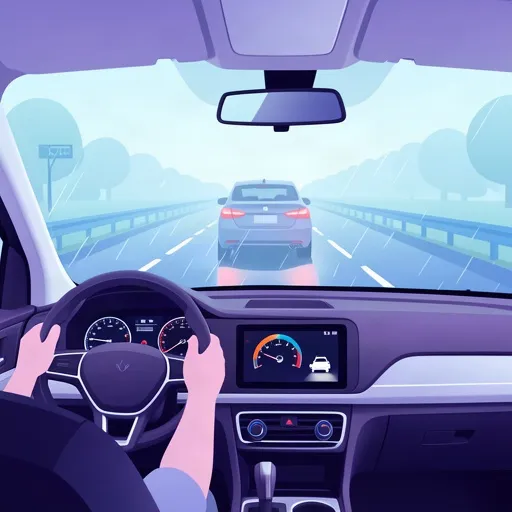
Navigating Dutch roads requires more than just knowing traffic signs; it demands a deep understanding of how environmental factors influence vehicle dynamics. In the Netherlands, where rain, fog, and winter conditions are frequent, the CBR theory exam places significant emphasis on your ability to recognize hazards and adjust your driving behavior accordingly. Understanding the physics behind reduced grip and visibility is essential for passing the hazard perception section of your test.
The Dutch climate often creates road surfaces that can be deceptively dangerous. A common scenario tested in the theory exam involves the "fat layer" that forms on the road surface during the first few minutes of rain. This layer, created by the mixture of rainwater, oil, and rubber residue from tires, significantly reduces tire grip, making the road surface exceptionally slippery. You must be prepared to reduce your speed immediately when conditions shift from dry to wet to compensate for this reduced traction.
Beyond rain, winter conditions present unique challenges. The presence of snow or ice on the roadway necessitates a drastic change in your driving approach. While some drivers rely solely on winter tires, the theory exam emphasizes that no equipment replaces the need for cautious speed and increased following distances. Driving on winter surfaces requires smooth inputs; sudden braking or acceleration can easily lead to a loss of control.
Always remember that in the Netherlands, a rear fog light is a safety tool with strict usage rules. You may only use it when visibility is less than 50 meters due to thick fog or heavy snowfall. Never use your rear fog light during rain, as the bright red light can dazzle drivers behind you and create a dangerous glare.
Your braking distance is the total distance your vehicle travels from the moment you perceive a hazard to the moment the car comes to a complete stop. In poor weather, this distance increases exponentially. As a rule of thumb, you should always double your following distance when the road is wet and increase it even further if snow or ice is present. The CBR exam often tests your judgment by asking whether a specific action is safe given the current visibility or surface conditions.
In the Netherlands, knowing when to switch on your lights is a mandatory requirement. While you may use front fog lights when visibility is less than 200 meters, the rules for rear fog lights are much more restrictive due to their potential to distract other road users. Maintaining the correct light usage is not just a legal requirement but a demonstration of your awareness of other road users.
| Weather Condition | Visibility Distance | Recommended Lighting |
|---|---|---|
| Heavy Rain | Variable | Dipped headlights |
| Thick Fog | < 200 meters | Front fog lights |
| Dense Fog/Snow | < 50 meters | Front and rear fog lights |
The CBR exam is designed to ensure you don't just memorize rules, but can apply them under pressure. Many questions will present a photograph of a road situation and ask if you would use a specific light or if you should change your speed. The trap is often the rear fog light; the exam expects you to know exactly when the 50-meter threshold is crossed. Furthermore, always prioritize safety over your own pace; if traffic behind you prevents you from overtaking or changing lanes, wait patiently until it is safe to do so.
Article content overview
Explore related topics, search based questions, and concepts that learners often look up when studying Weather Safety and Braking Distances. These themes reflect real search intent and help you understand how this topic connects to wider driving theory knowledge in the Netherlands.
Find clear and practical answers to common questions learners often have about Weather Safety and Braking Distances. This section helps explain difficult points, remove confusion, and reinforce the key driving theory concepts that matter for learners in the Netherlands.
You may use rear fog lights only when visibility is reduced to less than 50 meters due to dense fog or heavy snowfall. They are not permitted during rain.
A 'fat layer' is formed on the road surface due to accumulated oil and dust mixing with water, making the road significantly more slippery.
Front fog lights may be used when visibility is less than 200 meters due to fog, snow, or rain. You are not required to have dipped headlights on simultaneously while using them.
Because wet or slippery surfaces drastically increase your vehicle's braking distance, you need a larger gap to safely react and come to a complete stop without skidding.
Start your targeted search now to explore a vast library of official Dutch driving theory articles and guides. Reinforce your understanding of specific traffic rules or road signs to ensure you are fully prepared for your upcoming CBR theory exam. Discover comprehensive explanations tailored for success.