
Understanding the dangers of mobile device distraction is essential for all road users, as these cognitive habits directly impact safety during the CBR theory exam and beyond. This article explains why even brief moments of distraction significantly increase accident risks and how these habits are viewed by traffic authorities. By reading this, you will learn how to maintain focus and adopt safe traffic behavior that meets the standards of both the VVN practical exams and general Dutch road regulations.
Article content overview
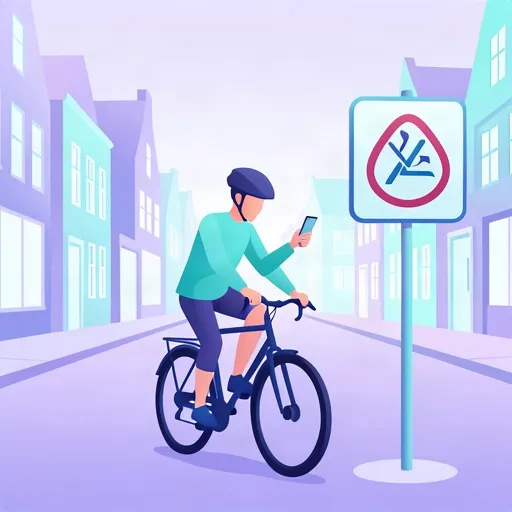
In the Netherlands, the bicycle is an integral part of daily life, serving as the primary mode of transport for millions. However, the rise of digital connectivity has introduced a significant risk to Dutch road safety: smartphone use while cycling. Whether you are preparing for your CBR theory exam or are already an experienced cyclist, it is crucial to recognize that the rules regarding distraction are not merely suggestions—they are vital for preserving life. Research shows that even holding a phone while cycling significantly impairs your perception, reaction time, and overall judgment.
Using a mobile electronic device while cycling is strictly prohibited in the Netherlands. Even holding your phone in your hand while riding can result in a significant fine.
Distraction in traffic is often underestimated by road users who believe they can multitask effectively. Scientific studies, including those by the SWOV (Institute for Road Safety Research), indicate that the risk of an accident is effectively doubled when a cyclist is distracted by a mobile device. When you are typing or reading a message, you are not just momentarily distracted; you are blind to your immediate surroundings for a duration that can cover dozens of meters.
This cognitive blindness affects your ability to perform essential traffic tasks, such as observing priority rules, noticing oncoming trams, or reacting to unexpected actions from other road users. The habit of checking a notification often occurs automatically, driven by psychological factors like boredom or social conditioning. By the time you realize a hazard exists, the opportunity to brake or steer safely has often already passed.
The state of reduced awareness where a cyclist's cognitive resources are diverted from the road environment to a mobile electronic device, resulting in diminished perception, slowed reaction times, and compromised vehicle control.
The VVN (Veilig Verkeer Nederland) practical traffic exam serves as a cornerstone for developing safe cycling habits among primary school children. Because this exam acts as a precursor to independent participation in traffic, the standards are intentionally uncompromising. A "zero-tolerance" policy is enforced: any student caught using a smartphone during the practical exam faces an immediate fail. There are no warnings, no second chances, and no retakes allowed for this infraction.
This rigorous standard is designed to drive home a singular message: safety and smartphone use are mutually exclusive. For students, parents, and future drivers, this policy highlights that traffic participation requires 100% of your attention. When you enter the road, you are part of a complex social system where one moment of inattention can lead to life-altering consequences for yourself and others.
The Dutch government and organizations like VVN promote the MONO-campaign, which advocates for "undistracted travel." The core objective is to ensure that every road user reaches their destination without the interference of mobile digital devices. This is not just about avoiding fines; it is about changing a culture where being "always on" is prioritized over the safety of the individual and the community.
Parents and adults play a critical role as role models. When children observe their parents, siblings, or peers using a phone while cycling, they subconsciously perceive this as normal, safe behavior. Breaking this cycle requires a collective effort to keep our hands on the handlebars and our eyes on the road.
Article content overview
Explore related topics, search based questions, and concepts that learners often look up when studying Smartphone Use and Cycling Safety. These themes reflect real search intent and help you understand how this topic connects to wider driving theory knowledge in the Netherlands.
Find clear and practical answers to common questions learners often have about Smartphone Use and Cycling Safety. This section helps explain difficult points, remove confusion, and reinforce the key driving theory concepts that matter for learners in the Netherlands.
No, holding a mobile electronic device while cycling is prohibited by law. It causes significant distraction and increases the risk of accidents.
Using a smartphone during the VVN practical traffic exam leads to immediate failure. There are no warnings or retakes allowed for this safety violation.
Using a phone to read or write messages can increase your risk of an accident by a factor of six, as it severely impairs your powers of perception, responsiveness, and vehicle control.
Yes, the MONO campaign encourages all road users, including cyclists, to travel without distraction by setting their phones to 'do not disturb' or keeping them out of reach while on the road.
Start your targeted search now to explore a vast library of official Dutch driving theory articles and guides. Reinforce your understanding of specific traffic rules or road signs to ensure you are fully prepared for your upcoming CBR theory exam. Discover comprehensive explanations tailored for success.